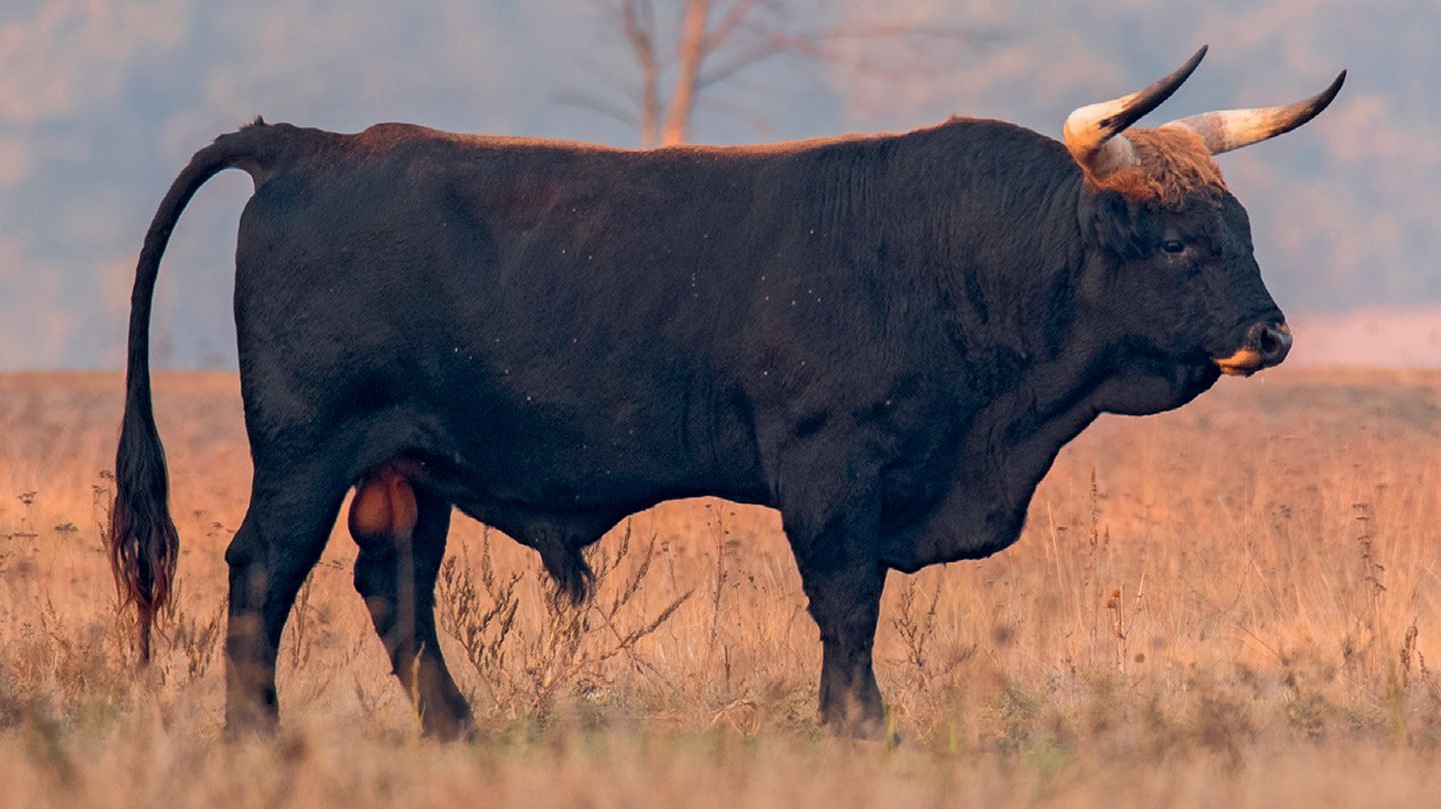
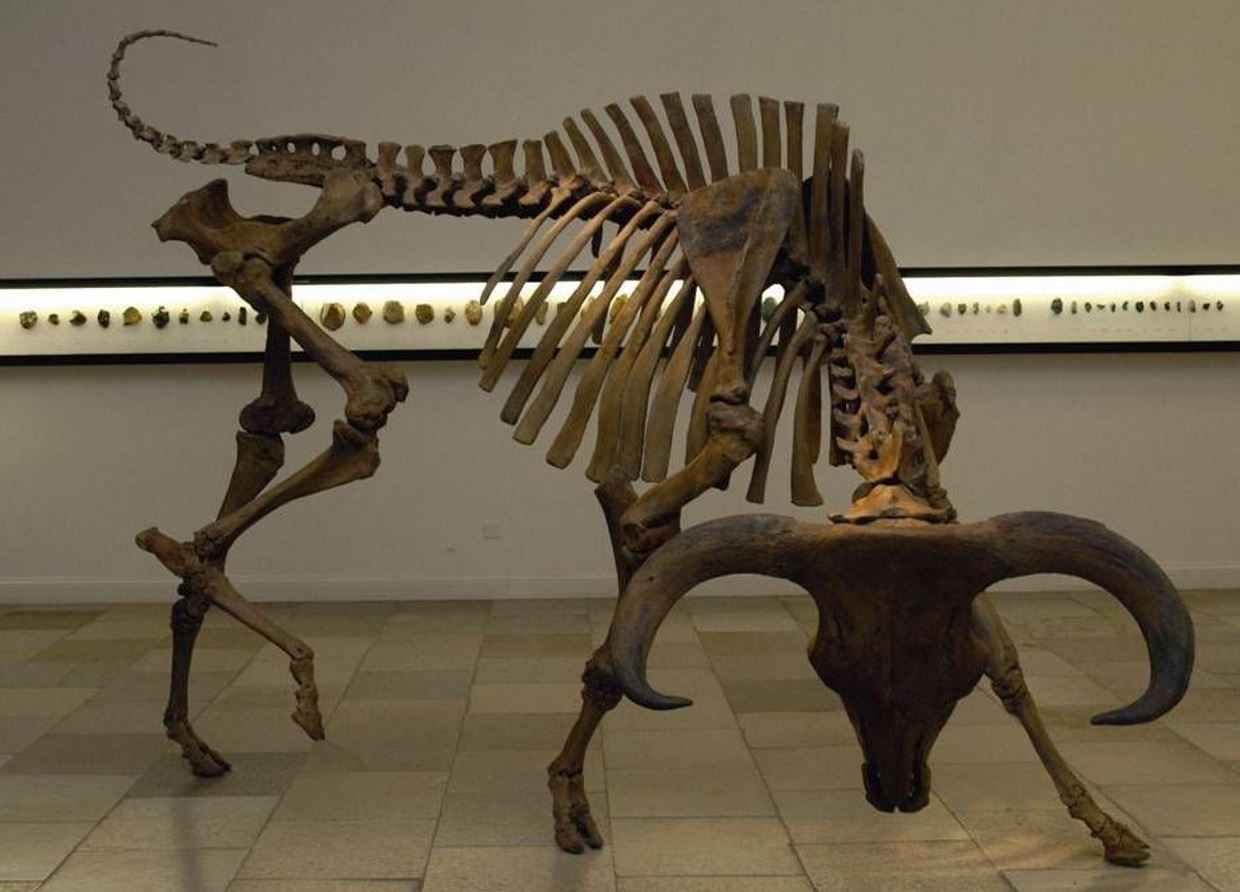
In the Bible, aurochs stand for untamable wildness and strength. Sadly, these impressive cattle have long been extinct in the Near East and probably were no longer living there by the time of the New Testament. In Europe they survived longer, but even here the last specimen died in 1672 in Poland.
In German Bible translations, aurochs are also referred to as wild oxen, wild bulls, or buffalo, and they are considered the ancestral form of domestic cattle. In Israel, the ranges of the European aurochs (Bos primigenius primigenius) and the African aurochs (Bos primigenius africanus) overlap. The exact course of their domestication by humans is unclear; various scenarios are conceivable.
Genetically, the different forms are so close to one another that they can readily be understood as different breeds of a single species (in the sense of a «biospecies»). It is also possible that the aurochs were feral forms of domestic cattle. In any case, in terms of build and temperament they were so far removed from their tamed cousins (Job 39:9–10) that agricultural use was out of the question. Possibly (depending on the dating), the wild ox described as untamable in Job 39 was also an extinct steppe bison – up to 2 meters tall and weighing 700–800 kilograms – whose fossils have been documented in Israel and the surrounding region.
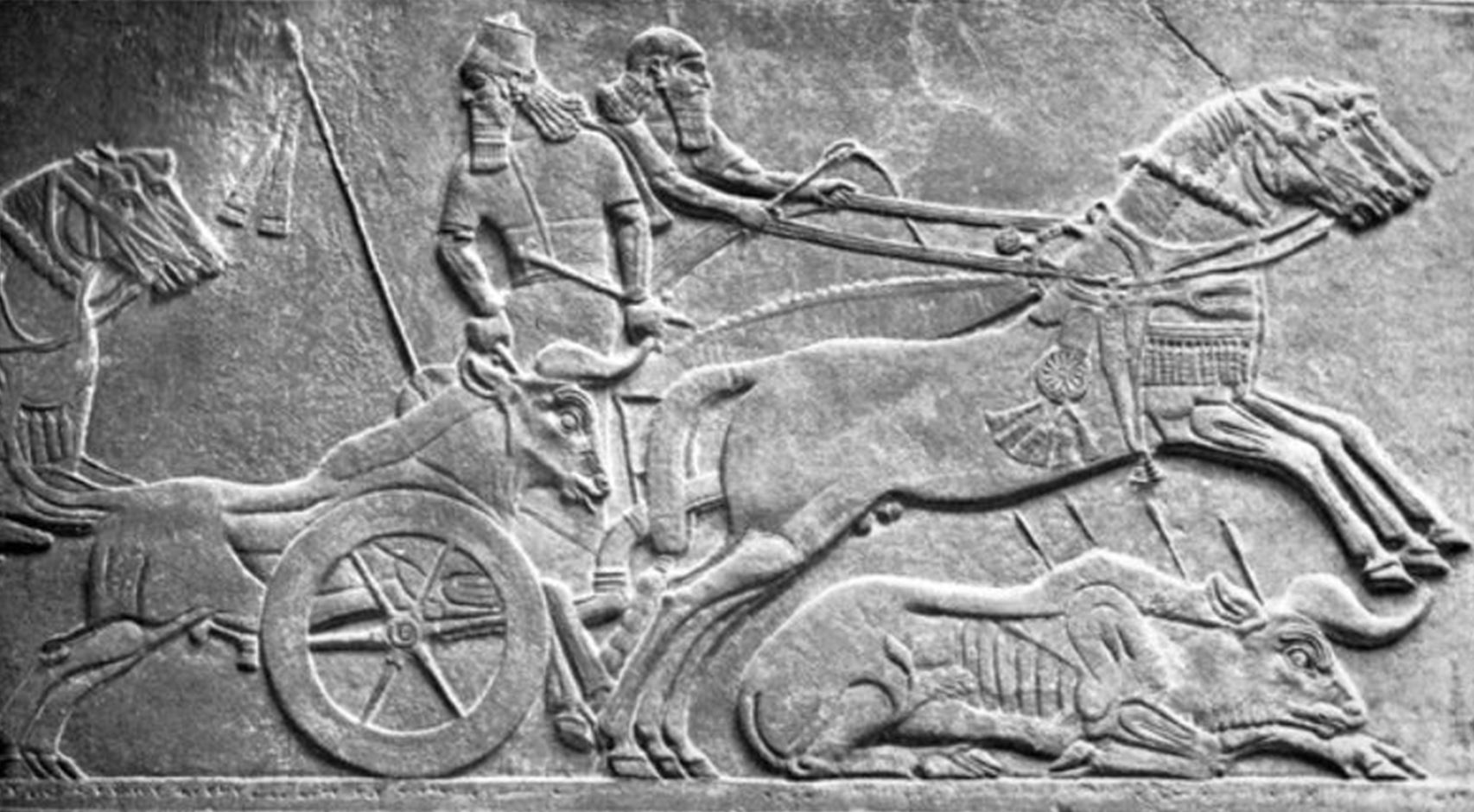
Although context and description in Job 39:9–12 had, since antiquity, clearly pointed many scholars to a bovine representative, the identification remained uncertain for a long time. In 1846, the British archaeologist Sir Austen Henry Layard uncovered a relief at Nimrud showing the Assyrian king Ashurnasirpal II hunting aurochs. The animals are labeled in Akkadian as rim / rimu, which provided philologists with clear proof of the connection to the Hebrew re’em. This word probably derives from ra’am with the meaning «exalted, raised, mighty» (cf. Zech 14:10).
Critics of the Bible, who largely regard it as myth and legend, take delight in the fact that the unicorn can be found in some older translations. Martin Luther relied on the Greek LXX, in which the Hebrew re’em is translated with monokeros, as well as the Latin translations Vetus Latina, where it is rendered as unicornis, and the Vulgate, which gives it as monoceros. All three terms denoted the «unicorn» – a horse- or goat-like animal of extraordinary wildness and strength, with a long, straight horn in the middle of its forehead, whose existence contemporary scholars were firmly convinced of. Various medical books spoke of the wondrous effects of its horn and medicines prepared from it, and world travelers such as Marco Polo (1254–1324) reported having seen it on the island of Sumatra. The Englishman Edward Webbe (1554–1590) claimed to have observed three unicorns in the private zoo of an Indian prince, and the Portuguese explorer Jerónimo Lobo (1593–1678) states that he encountered a specimen in Ethiopia. Luther therefore had no reason to doubt the existence of unicorns – especially since the anatomy attributed to them lies well within the bounds of biological possibility and «eyewitness reports» are documented even after his time (into the 18th century!).
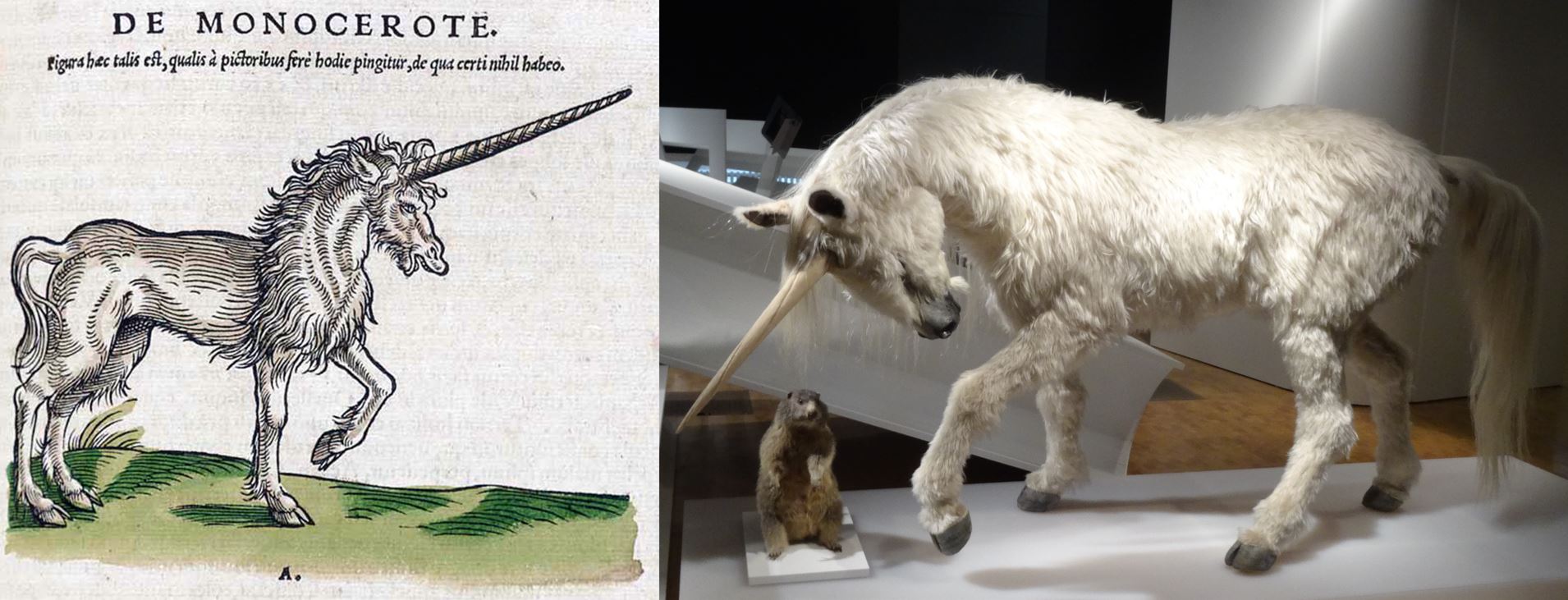
The earliest known indication of the faulty nature of this translation comes from Professor Heinrich Sander (1754–1782) of Karlsruhe. Since the author of land:läufer feels deeply committed to the concern articulated by this theologian, an extended quotation may be permitted: «By the light of natural history I am convinced that one will one day search in vain for the unicorn of the ancients in the whole of creation, as far as we know it; and further, that in all passages of the Bible where Luther and others think of the unicorn, one must understand no other animal than a kind of ox. – Whoever would regard this investigation as useless and superfluous should remember that it is the task of teachers to study the entire content of the Bible, and to apply everything that human sciences can accomplish to the clarification of this rich book, written for all people; so that we may also confront the scoffer, the doubter, and the ill-disposed and save the honor of these divine writings.» – In view of these early objections (and many that followed later), it is surprising that the necessary correction of Luther’s translation was delayed so long that even the 1912 edition still read: «Deliver me from the mouth of the lion; and from the horns of the unicorns rescue me!» (Ps 22:22; Luther 1912).
The aurochs is described most impressively by its Creator Himself: «Will the wild ox be willing to serve you, or will he spend the night at your manger? Can you hold the wild ox in the furrow with a rope, or will he harrow the valleys after you? Will you trust him because his strength is great, and leave your labor to him? Will you rely on him to bring home your seed and gather it to your threshing floor?» (Job 39:9–12).

In His «speech about creation» (Job 38–41), God repeatedly points Job to the autonomy of the animals. Originally, all of them were placed under human dominion (Gen 1:28; 2:19), but after the Fall he could exercise this dominion only in a limited way, although he was feared by the animals (Gen 9:2). Thus, although the aurochs is a cousin of domestic cattle, it would never allow itself to be tamed or become dependent on human provision (its fodder «manger») (Job 39:9). Of course, it would have been practical if Job could have harnessed its immense physical strength for heavy field work such as plowing or harrowing (Job 39:10), but that would have been a foolhardy undertaking. The question whether he would not want to try it, given that it is such a strong animal (Job 39:11), is meant ironically. Even if one managed to yoke the wild ox to a cart, it would neither pull it obediently along the desired path (Job 39:12) nor bring in the harvest with it but would disappear for good. Thus, the great strength of the aurochs remains unused. God did not intend it for humans and instead wants to show Job that humans can exercise dominion over creation and make use of it only up to the boundary God has set.
The unbridled strength of the aurochs can no more be tamed than the sinful nature of man. What is impossible with people is, however, possible with God (cf. Mt 19:26). Saul of Tarsus, for example, was like a destructive wild ox, working with all his strength against God (Acts 9:1; Gal 1:13). When God subdued him, He used the image of an oxgoad (Acts 26:14), by which He made him «the apostle Paul» – a mighty messenger, ready to place all his strength in the service of his Lord and not shrinking even from suffering. As a servant of the gospel, Paul himself applies the image to himself (1Cor 9:9–10). He brought in a mighty harvest from all nations for God.
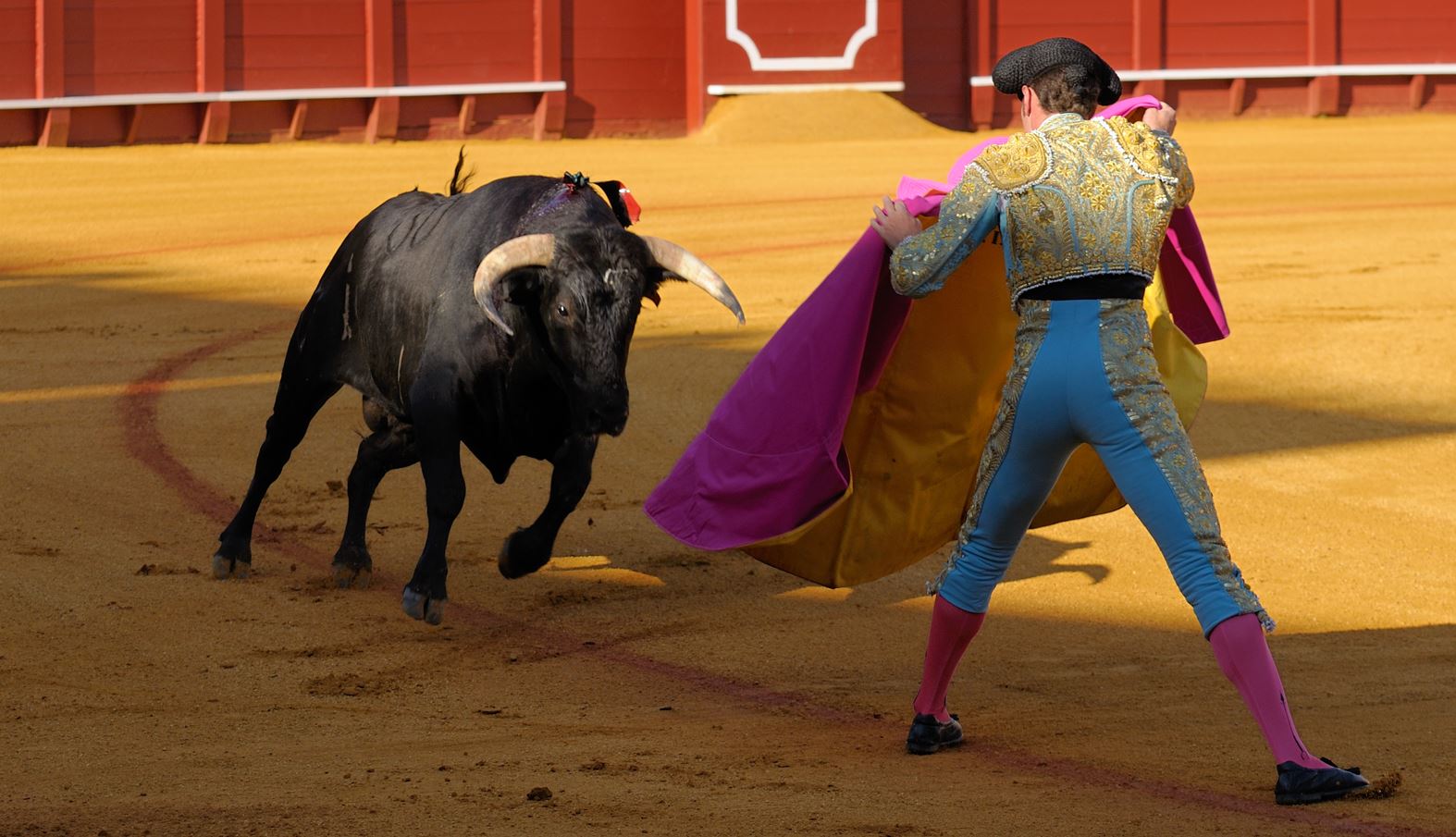
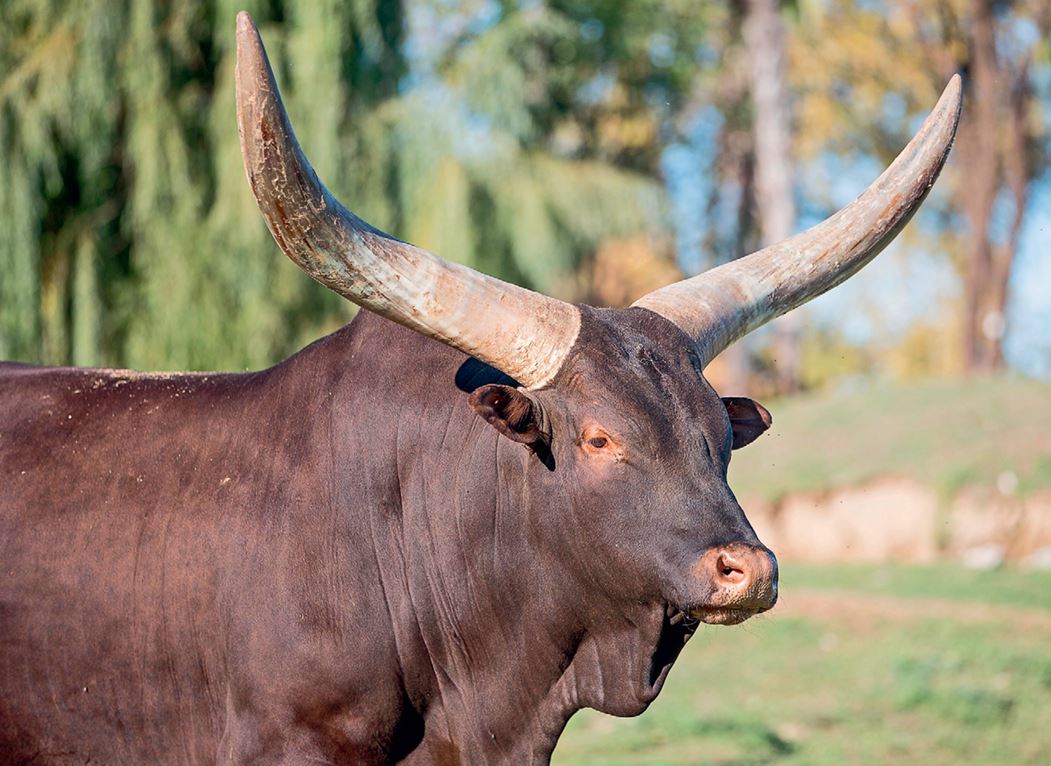
Five Bible verses refer to the mighty horns of the aurochs. In three cases, God uses them to portray His own power: «His horns are the horns of the wild ox; with them he shall gore the peoples, all of them, to the ends of the earth» (Deut 33:17; cf. Num 23:22; 24:8). In one verse He describes the power He grants to the one who trusts in Him: «But you will exalt my horn like that of the wild ox …» (Ps 92:10), and in another psalm, how the Lord Jesus, the Son of God, is delivered from the power of His enemies: «Yes, you have answered me from the horns of the buffalo» (Ps 22:21).
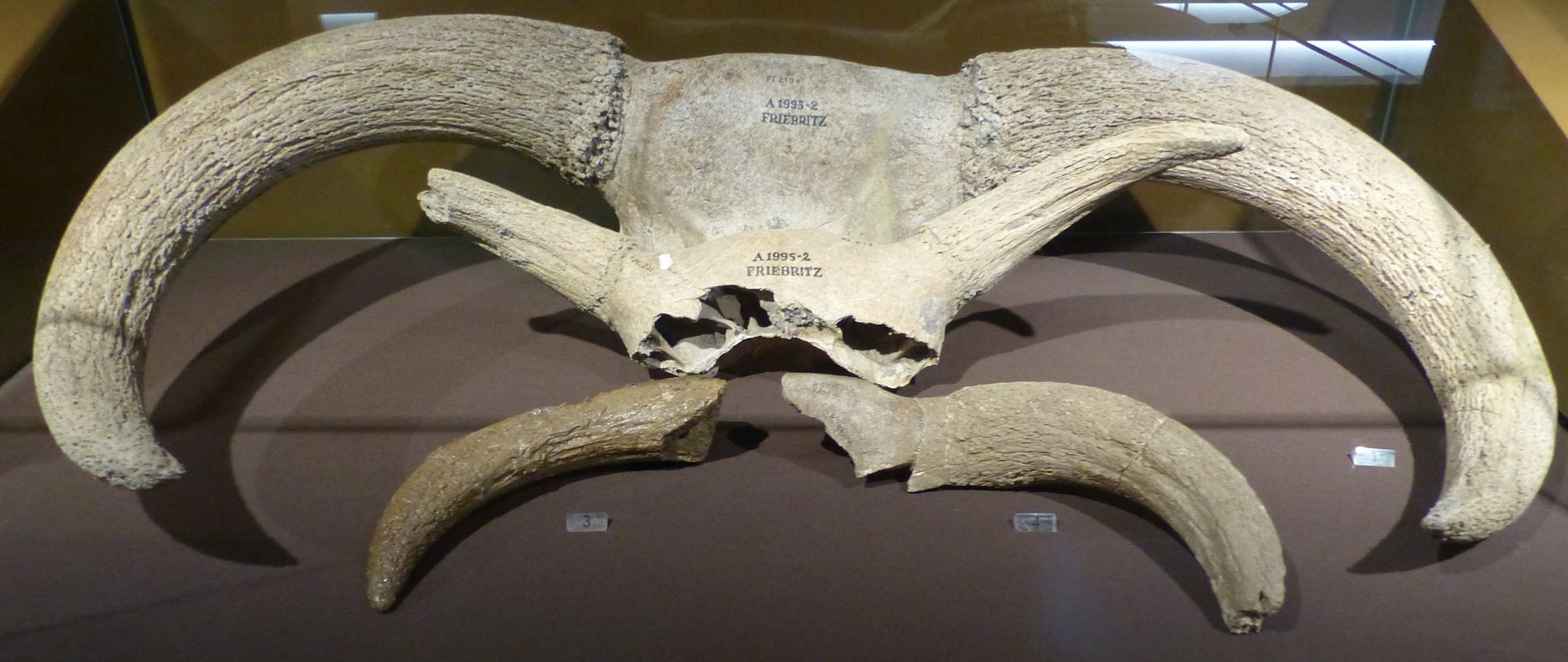
Horns were used as instruments (Ezek 7:14; Dan 3:5, 7, 10, 15) or as drinking vessels and for storing liquids (1Sam 16:1). The name Keren-happuch (Job 42:14) means «horn of eye-paint» and points to a special purpose, and the Greek name Cornelius (Acts 10) is also derived from «horn». From the horn substance (keratin), obtained not only from horns but also from claws and hooves, many useful everyday objects – such as spoons, combs, sewing needles, and similar tools – could be carved.
- God Himself is called the «horn of salvation» (2Sam 22:3; Ps 18:2). Concretely, this is revealed in the Lord Jesus, through whom God «has raised up a horn of salvation for us in the house of his servant David» (Lk 1:69) – He is the Messiah, the «horn of David» (Ps 132:17; Ezek 29:21).
- As the Lamb with seven horns, He finally appears in Revelation in perfect power. Seven is the Bible’s number of completeness (Rev 5:6).
- When God «exalts a person’s horn», it means that He grants strength and brings deliverance (1Sam 2:1, 10; Ps 75:10; 89:17, 24; 92:10; 112:9; 148:14).
- When a person «lifts up his horn (against God)», it means rebellion (Ps 75:4–5; Zech 2:4).
- Cut off, broken, or torn out horns illustrate disarming and loss of power (Ps 75:10; Jer 48:25; Lam 2:3; Dan 7:8; 8:7–8).
- The expression «I have sewn sackcloth on my skin and have thrust my horn in the dust» (Job 16:15) illustrates mourning and capitulation.
- Horns stand for rulers and peoples (Dan 7–8; Zech 2:1, 4), or more specifically: «the ten horns that you saw are ten kings» (Rev 17:12; cf. Rev 12:3; 13:1, 11; 17:3, 7, 16). Thus, in Daniel 8 two world empires (namely Medo-Persia and Greece) are presented as horned animals (ram and goat) which, filled with hatred and thirst for revenge, use all their strength to increase their power – as lies in human nature and, sadly, can still often be observed in the world today. – The Lord, by contrast, voluntarily refrained from using His «horns», His boundless power (cf. Phil 2:5–8).
God illustrates His power by the image of the wild ox’s horns – and even that is only a faint comparison. While humans (without technical aids) lack the strength to subdue a wild ox, God even makes entire mountain ranges skip like a wild ox (Ps 29:6). A wild ox would never renounce the force of its horns and give up its freedom. The brief description in the book of Job makes clear how differently God revealed Himself as man in the Lord Jesus:
- »Will the wild ox be willing to serve you, or will he spend the night at your manger?» (Job 39:9) – The Lord Jesus not only spent the night at a manger; He was even laid in a manger because there was no room for Him in the inn (Lk 2:7). He came to serve as the perfect Servant (Isa 53) and to give His life as a ransom for many (Mk 10:45).
- »Can you hold the wild ox in the furrow with a rope?» (Job 39:10) – The Lord Jesus was arrested by His enemies, bound (Mk 15:1; Joh 18:12), and led away. He allowed this to happen voluntarily, and He also went to the cross of His own accord, to give His life freely into death there (Joh 10:17–18).
- »Will you trust him because his strength is great, and leave your labor to him?» (Job 39:11) – While one cannot trust the great strength of a wild ox, we are to trust the Lord (Ps 37:5; Prov 3:5) and may know that He has accomplished the work of redemption. He was the only One who could do it – therefore we had nothing left but to «leave the work entirely» to Him in this respect.
- »Will you rely on him to bring home your seed and gather it to your threshing floor?» (Job 39:12) – The believer may trust that all spiritual fruit which, during his life, is «brought home» to heaven by the Lord Jesus is secure (Mt 6:20; Lk 12:33) and will be rewarded: «Behold, I am coming soon, bringing my recompense with me, to repay each one for what he has done» (Rev 22:12).
Sources:
Beja-Pereira, A; Caramelli, D; Lalueza-Fox, C: The origin of European cattle: Evidence from modern and ancient DNA. Proceedings of the National Academy of Sciences 2006; 103(21):8113-8118; doi: 10.1073/pnas.0509210103
British Museum: Wall Panel of Nimrud, North West Palace, Museum number: 124532. https://www.britishmuseum.org/collection/object/W_1847-0623-12
Rokosz, M: History of the Aurochs (Bos Taurus Primigenius) in Poland. Animal Genetic Resources 1995; 16:5-12; doi: 10.1017/S1014233900004582
Sanders, H: Kleine Schriften, nach dessen Tode herausgegeben von Georg Friedrich Odtz (Vom Einhorn, besonders dem Einhorn in der Bibel, vol. 1, p. 101-114). Dessau (Buchhandlung der Gelehrten) 1784
Van Vuure, T: History, Morphology and Ecology of the Aurochs (Bos Primigenius). Citeseer 2002; https://citeseerx.ist.psu.edu/document?repid=rep1&type=pdf&doi=7cd5da765261db6b99ce44361fa8078ec7951c42
WELT: Sibirisches „Einhorn“ noch nicht lange ausgestorben. Welt.de, 01.04.2016; accessed am 31.10.2023: https://www.welt.de/wissenschaft/article153896777/Sibirisches-Einhorn-noch-nicht-lange-ausgestorben.html
Image Credits:
Wikipedia: Title – Aurochs – cave painting from Lascaux / Peter 80 // Spanish bullfight / Ввласенко / Unicorn model / Adrian Michael // Unicorn depiction / National Library of Medicine // Relief – hunting the aurochs / Ealdgyth // Aurochs horns / Wolfgang Sauber
other licenses: Heck cattle (aurochs) / Shutterstock ID_1555339544 / Simon Vasut // Heck cow / Shutterstock ID_1009287322 / David Dirga // Watusi cattle / Shutterstock ID_742163947 / Saad315 // Aurochs skeleton / 84346935_3857773954263043_21854544832013 27104_n.jpg / State Museum of Prehistory Halle