Among mammals, the canids – and among them the foxes – are the most adaptable. They alone have successfully colonized all of the earth’s climate zones and are found on every continent. Their cleverness, with which they steal stores from humans and rob their supposedly well-secured coops of tame poultry, has earned them a reputation as crafty rogues in many cultures.
In Israel several species of fox occur. In addition to the red fox (Vulpes vulpes), which is found almost everywhere in Europe, Asia, and North America, there also live here the Afghan or Blanford’s fox (Vulpes cana), Rüppell’s or sand fox (Vulpes rueppellii), and the fennec or desert fox (Vulpes zerda), all of which are adapted to the hot and arid environmental conditions of desert and semi-desert.
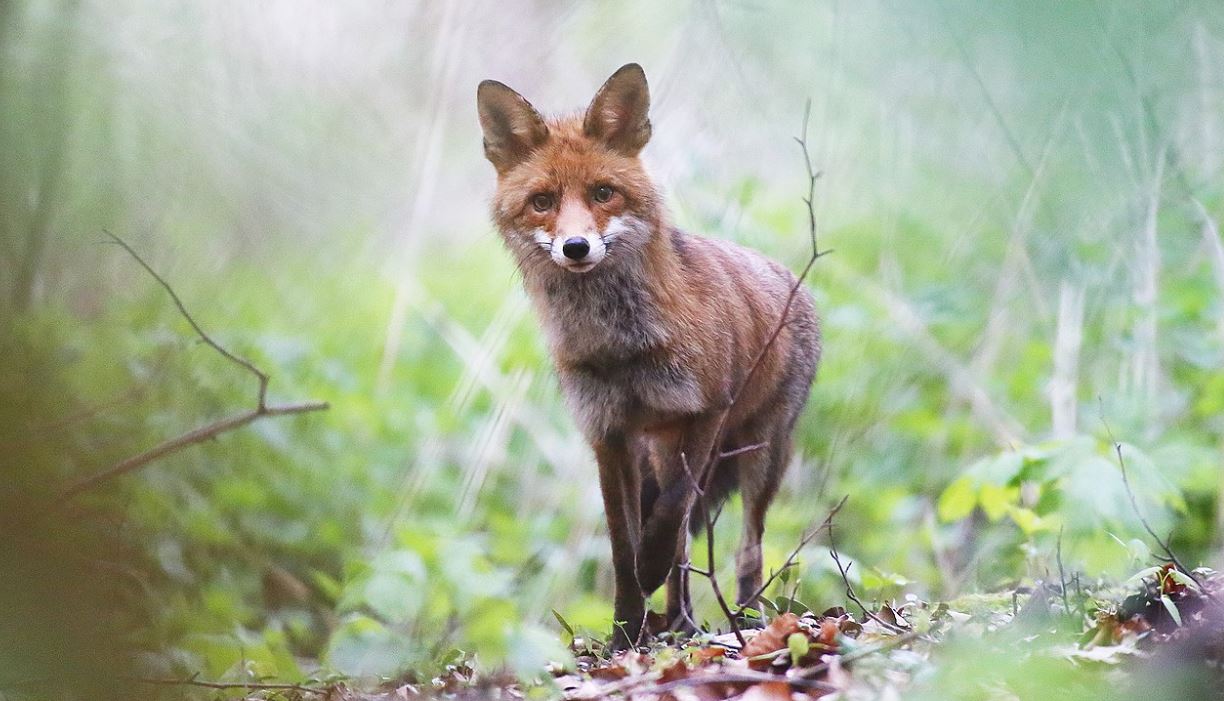
From a linguistic point of view, the same applies as was already described for the jackal: the pointed muzzle, the long tail – referred to by hunters as a «fuse» – and the elongated body shape form the basis of the Hebrew name tannin (14x), meaning «elongated». Although this term is also used for sea monsters (possibly dinosaurs) and snakes, the context in each case clearly indicates what is meant. Another name that is used and is more readily associated with the fox than with the jackal is schu’al (6x). It occurs as a personal name (1Chr 7:36) and a place name, «the land of Schual» (1Sam 13:17), and in the plural in the forms Schaalabbin (Jos 19:42), Schaalbim (Judg 1:35; 1Kgs 4:9), and Salim (John 3:23). In addition, Hazar-Schual (Jos 15:28; 19:3; 1Chr 4:28; Neh 11:27) means «courtyard of the foxes». In Greek, the designation alopex (Mt 8:20; Lk 9:58; 13:32) was probably also used for both animal species, with the jackal being far rarer in Europe than the fox.
Foxes also feed on plant matter. Some, such as the Afghan fox, even live predominantly vegetarian lives, and all have a particular fondness for sweet fruits. At times this brings them into conflict with us: « Catch for us the foxes, the little foxes that ruin the vineyards, our vineyards that are in bloom» (Song 2:15). The young animals not only eat the grapes but also gnaw on the fresh shoots and shred the bark, causing the vine to die. In this way they cause even greater damage than the adult animals.
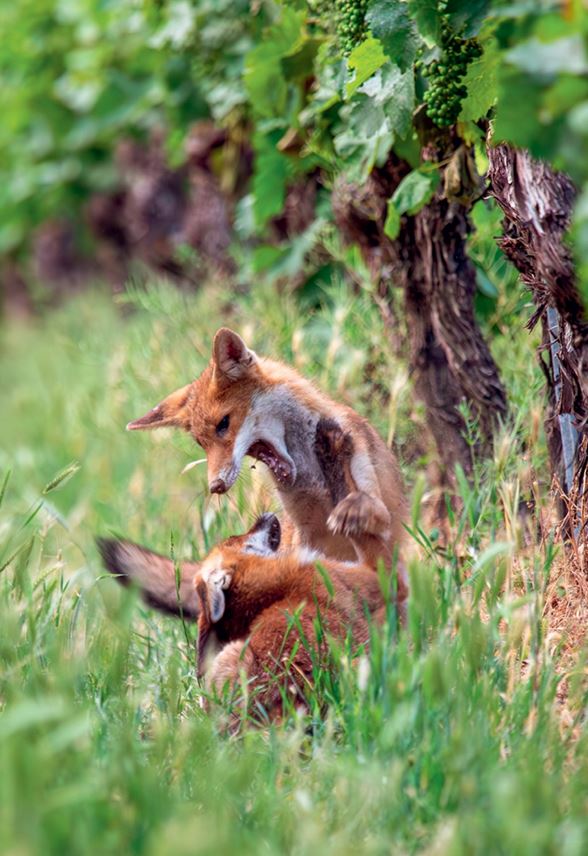
No vintner will be pleased when intruders gnaw at his vines and help themselves to his hard-earned harvest, but foxes cause far greater damage through their digging. In spring and early summer they prefer to establish their dens on slopes with loose soil and protective vegetation; a vineyard is ideal for this. A single dwelling burrow is usually not enough for them. The sand fox, for example, constructs a breeding den and several resting dens, which can have up to five entrances. With their holes and tunnels among the roots they destroy the root network of the vines, as one translation aptly describes it: « Seize the foxes for us, The little foxes that are wreaking destruction on the vineyards, While our vineyards are in blossom» (Song 2:15). As bark gnawers, grape snatchers, and mine diggers, the fox reduces yields and ruins the vineyard – but an even greater danger threatens elsewhere: foxes mark their territory with their droppings. The feces often contain larvae of the fox tapeworm (Echinococcus multilocularis), which are highly resistant. If these parasites enter the human body through the consumption of fruit or freshly pressed juice, alveolar echinococcosis can occur, a worm disease that, if untreated, is almost always fatal because the cysts grow inoperably through human organs. In addition, foxes are the most common carriers of the rabies virus, which causes rabies. Without appropriate vaccination, infection leads to death within a few weeks. It is obvious that every effort should be made to keep the vineyard free of foxes.
It is equally obvious that the Song of Songs employs a figure of speech. After all, the Song of Songs is a poetic reflection on the relationship between two lovers, not a gardening manual. But what is the meaning of this metaphor? Is it a warning addressed to the bride against young men, rival suitors (as the translations «Gute Nachricht» and «Hoffnung für alle» explain in their notes)? Let us look at the natural side of this image: foxes become active only after dusk, and much of the damage is caused by their subterranean digging. They ruin the entire area without being properly noticed. What do a few gnawed vines, some torn-off grapes, a few holes in the ground, and the occasional left-behind «little piles» amount to in a large vineyard? – These are clear indications that what is at issue here are destructive factors that are greatly underestimated. Whether one initially relates this verse to the relationship between Solomon and Shulammite or applies it to marriage and human relationships in general, one always encounters «the usual suspects»: everyone knows best which of the supposed «small lapses» he should eradicate – careless words that can ignite a great blaze (Jas 3:5), small injuries and disappointments that we do not forgive others and that then sprout within us as a «root of bitterness» (Heb 12:15), negligence and sluggishness in cultivating relationships through which the entire vineyard becomes overgrown in a very short time (Prov 24:30–34), our own lack of love and faithfulness by which we sin against others, misplaced priorities that cause us to miss the goal – and so on, and so on …
The most important relationship in a Christian’s life is that with his Lord and Savior. Here, too, it is often the small and unnoticed things that gnaw at our spiritual life and drain it of its vitality until it withers and becomes fruitless. The principle «Resist the beginnings!» is good counsel when we notice that something in our habits is coming between us and the Lord Jesus.
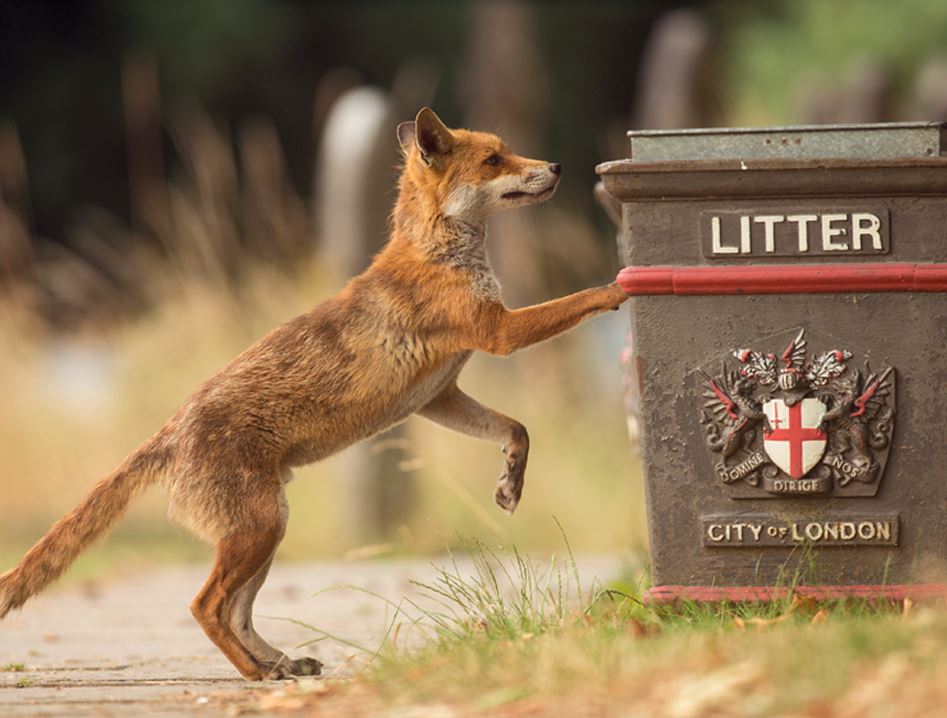
Foxes are flexible and curious, learn quickly, grasp connections, and can implement their insights in sophisticated strategies that enable them to survive in many situations. They adapt their litter size to circumstances. If sufficient food and space are available, a vixen can give birth to up to 13 pups in a single litter. Under favorable conditions, populations can therefore expand very rapidly. Particularly interesting are recent studies on adaptation to urban environments. In the metropolitan area of London more than 10,000 foxes live – more than in any natural habitat of comparable size. Apart from the occasional capture of rats and pigeons, they live exclusively on waste. This astonishing behavioral adaptability was evidently observed early on, for from ancient times the fox has been a symbol of cunning and slyness. The Lord Jesus refers to this when He speaks of King Herod Antipas: « Go tell that fox …» (Lk 13:32). The population in Galilee had come to terms with his rule, but they rejected their Messiah. By juxtaposing the cunning, predatory fox with the caring hen as an image of the Lord Jesus (Lk 13:34), Luke indicates that this was a bad bargain. The negative image of devious survival strategy was used by the prophet Ezekiel with reference to false prophets who thought only of themselves but plunged the people into disaster: « Your prophets, Israel, are like jackals among ruins» (Ezek 13:4).
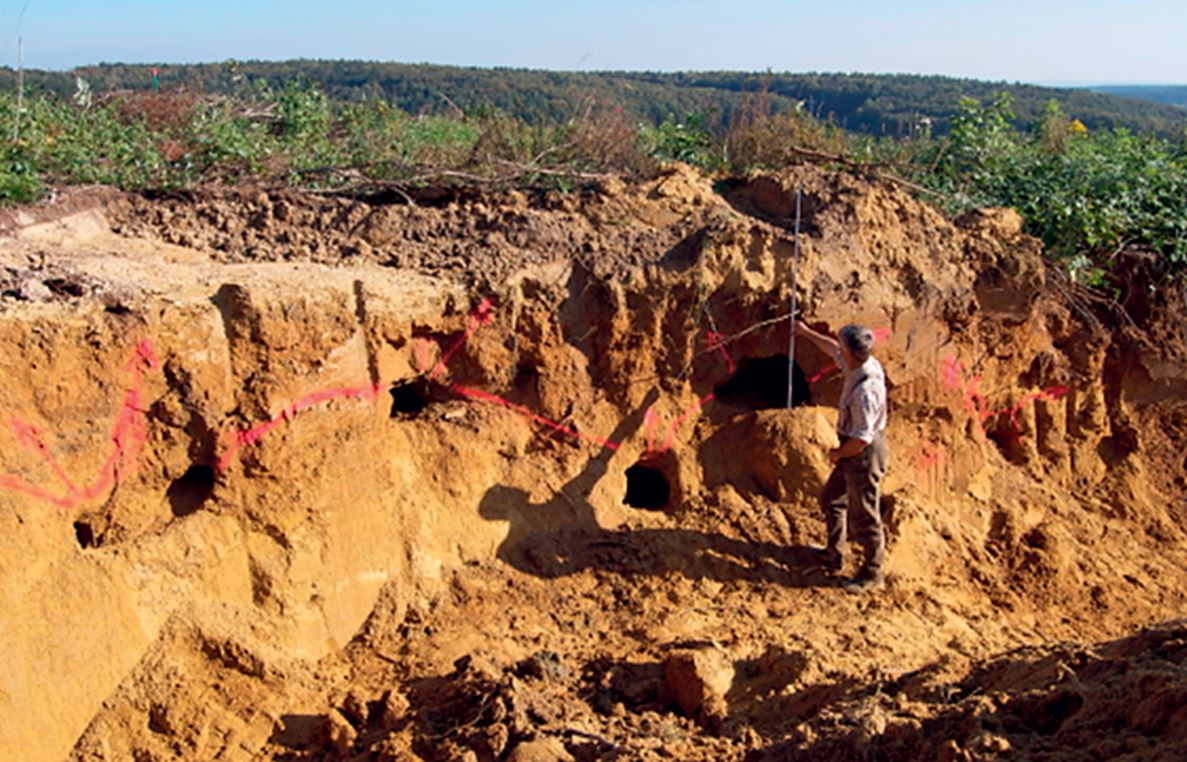
Apart from beavers, which over many generations construct vast dam systems and secure their «castles» with ingenious underwater entrances, foxes are the mammals that build the largest burrow constructions. In ideal locations one finds dens that have been inhabited for centuries, are already mentioned in old village chronicles, and even have their own names among hunters. These are complex networks of tunnels and chambers, called «pipes» and «kettles» in hunters’ jargon. The underground structure of a fox den remained largely unknown until it was examined in detail for the first time during the development of new gravel pits. What revealed itself to wildlife biologists there was astonishing: not only the dimensions of this interconnected system, which can consist of hundreds of meters of tunnels and dozens of chambers, but also ingenious basic features of the concept. Thus the tunnels leading to the living chamber always slope upward. This creates a «cold trap», and the warm air reliably collects in the area where the animals reside. Moreover, they try to avoid «dead-end tunnels» – that is, passages that end blindly – as much as possible. In this way they can repeatedly escape a pursuer (for example a «burrow dog» specially bred and trained to hunt underground) because they know the terrain. It has long been known that foxes and badgers are closely associated, frequently sharing shelter and maintaining a «truce» within it. Detailed investigation showed that although the fox leaves the heaviest development and digging work to the badger, it later dominates almost the entire complex. Because fox tunnels can be somewhat smaller than those of the badger, the fox can make use of the badger’s infrastructure, but not vice versa. Quite clever!
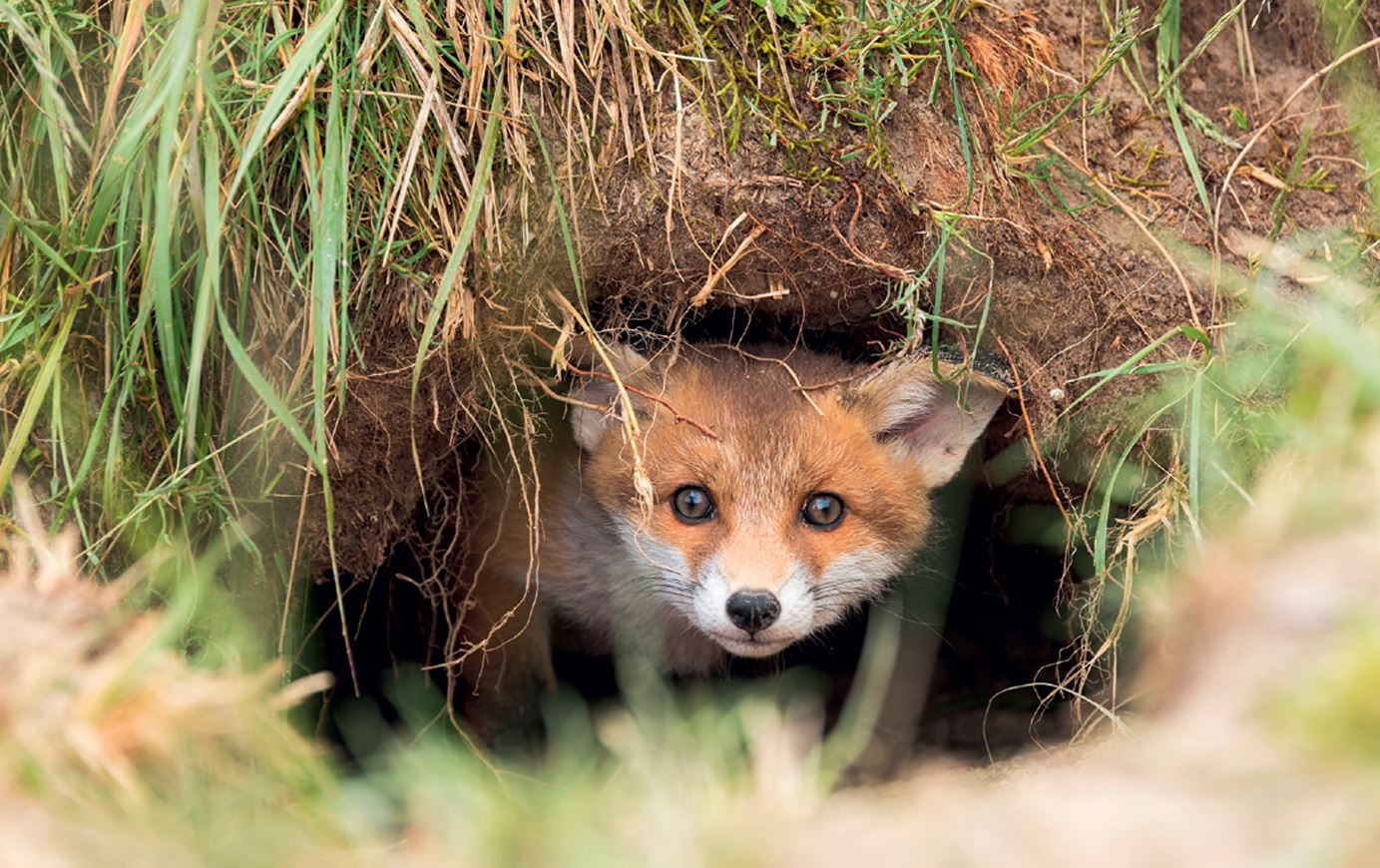
The Lord Jesus could hardly have chosen a better example when He compared His life situation with this marvel of a dwelling: « Foxes have dens … but the Son of Man has no place to lay his head» (Mt 8:20; Lk 9:58). While foxes have a place of retreat where they are naturally safe and can be hunted only with very specially bred and trained dogs, the Lord was defenselessly exposed to His enemies. There was no secluded hiding place, no «stronghold» of His followers, no «household power», no mighty clan standing behind Him, and no network of influential friends. John, a disciple and Jesus’ closest companion, describes His dwelling on earth thus: He « and did tabernacle among us» (John 1:14 YLT). It goes even further. As a man, the Lord was not only defenseless but also restless. The expression «kephalen kline» – «to lay His head» – has signal value. It occurs only in these two verses (Mt 8:20; Lk 9:58), where the Lord says that there is no place of rest for Him on earth, and then once more when He finds that place of rest – in His death: « With that, he bowed his head [klinas ten kephalen] and gave up his spirit» (John 19:30).
Sources:
Achenbach, C: Little Foxes – Small Destroyers with Great Impact! bibelpraxis.de, 06.09.2013; https://www.bibelpraxis.de/a2443.html
Geptner, VG; Nasimovich, AA; Bannikov, AG: Mammals of the Soviet Union (Red Fox, pp. 469–565; maximum litter size p. 541). Washington DC, USA (Smithsonian Institution Libraries) 1988
Harris, S: The food of suburban foxes (Vulpes vulpes), with special reference to London. Mammal Review 1981; 11(4):151–168; doi: 10.1111/j.1365-2907.1981.tb00003.x
Janko, C: Fox Den. Television program: 3sat Nano, 15.12.2011; https://www.youtube.com/watch?v=lXkQyBynsFk, accessed 10.12.2022
Kurek, P; Kapusta, P; Holeksa, J: Burrowing by foxes (Vulpes vulpes) changes soil conditions and vegetation in a European temperate forest. Ecological Research 2014; 29:1–11; doi: 10.1007/s11284-013-1094-1
Page, RJC: Dispersal and population density of the fox (Vulpes vulpes) in an area of London. Journal of Zoology 1981; 194(4):485–491; doi: 10.1111/j.1469-7998.1981.tb04596.x
Porps, BMP: Little Foxes. German Bible Society – Academic, Online Bible Commentary (OBC), accessed 31.07.2022; https://www.bibelwissenschaft.de/bibelkommentar/beitraege-im-obk/detailansicht/ch/8b01459c0707000892d30ff272def2c0
Reid, D: Catch the Foxes. Growing Christians Ministries, accessed 29.07.2022; https://www.growingchristians.org/devotions/catch-the-foxes
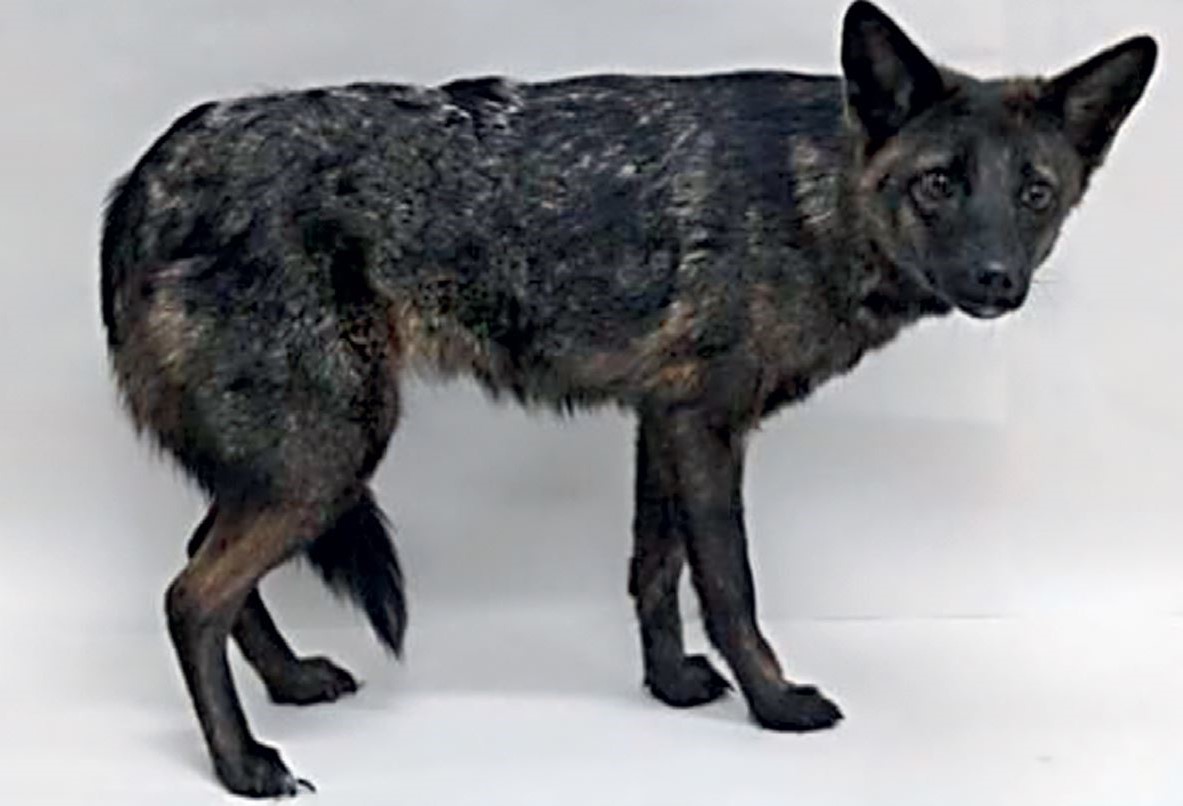
Szynwelski BE; Kretschmer R; Matzenbacher CA: Hybridization in Canids – A Case Study of Pampas Fox (Lycalopex gymnocercus) and Domestic Dog (Canis lupus familiaris) Hybrid. Animals 2023; 13(15):2505; doi: 10.3390/ani13152505
Vieweg, M: Is the Fox Really That Clever? wissenschaft.de, 14.01.2017; https://www.wissenschaft.de/erde-umwelt/ist-der-fuchs-wirklich-so-schlau
Wildlife Portal Bavaria: Fox Dens – Shedding Light on the Labyrinth. https://www.wildtierportal.bayern.de/wildtiere_bayern/115877/index.php
Image Credits:
Wikipedia: Fox in the Forest / Lutz Leitmann
Other licenses: Title Red Fox / Shutterstock ID_1818505937 / Jackie Connelly-Fornuff // Dog–Fox Hybrid «Dogxim» / BE Szynwelski et al. // Young foxes playing in a vineyard / Shutterstock ID_2326171303 / Mathias Pabst // Fox in London / Shutterstock ID_278937779 / Jamie Hall // Excavated fox den / Christof Janko