In antiquity, the range of the wild ass roughly coincided with that of the Bactrian camel and extended from the Near East far into Central Asia. Today, sizeable free-ranging populations exist only in the Gobi Desert (Mongolia, northern China). Even so, around 500 animals now live again in Israel’s Negev Desert in the Hai-Bar Nature Reserve.
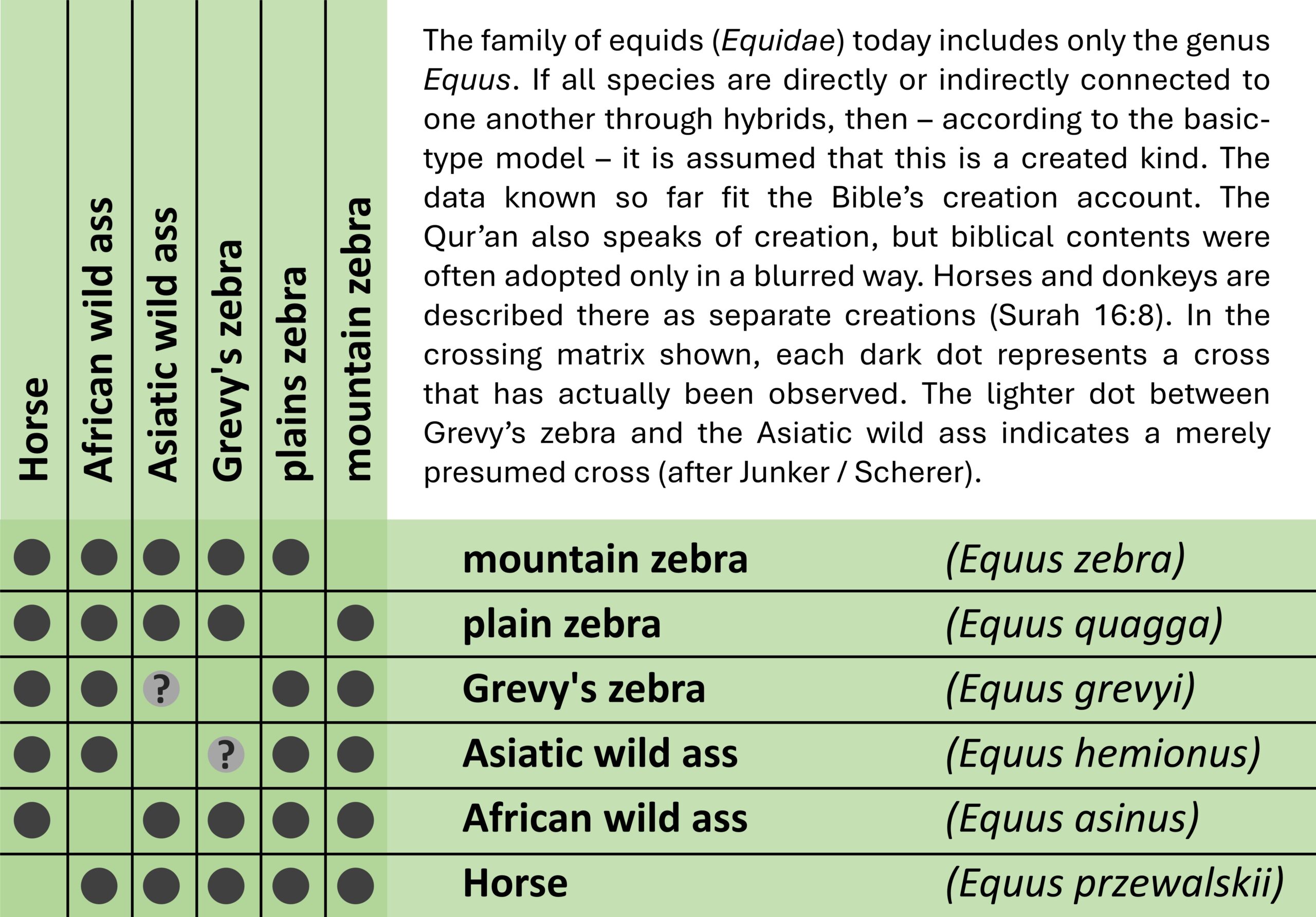
As with most ungulates, the relationships among the various equids (Equidae) are highly tangled. Horses, donkeys, their wild relatives, and zebras are genetically so close to one another that classifications have repeatedly been proposed and then discarded. This is not surprising, since they form a basic type that is connected through diverse crossbreeding among its members.
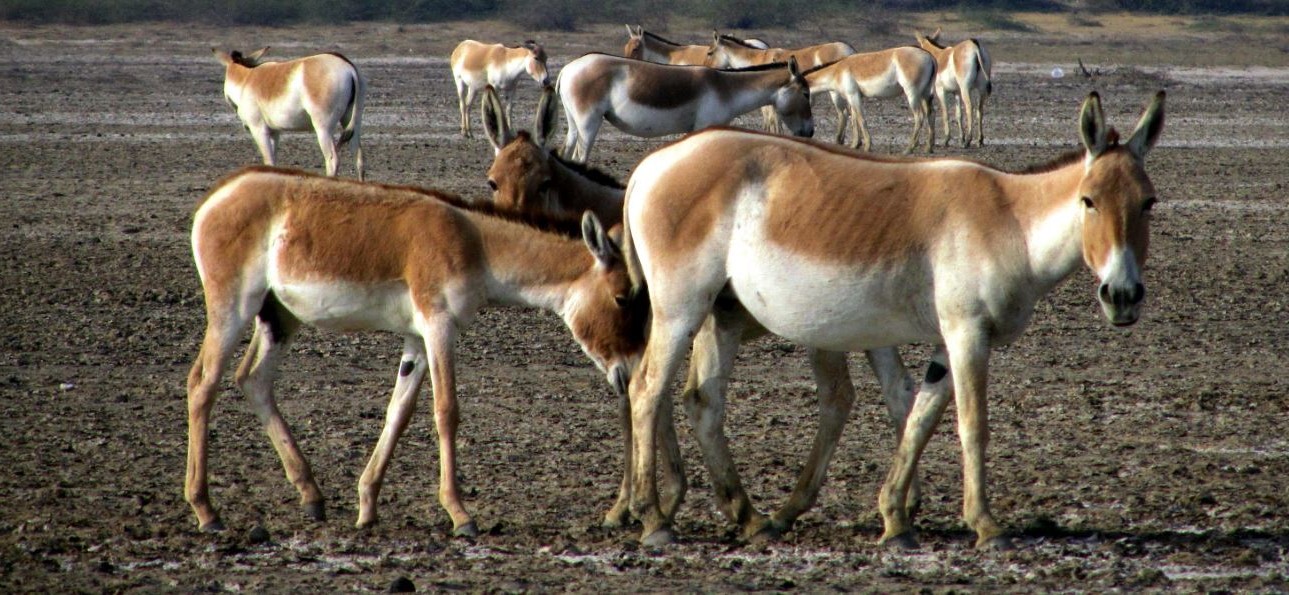
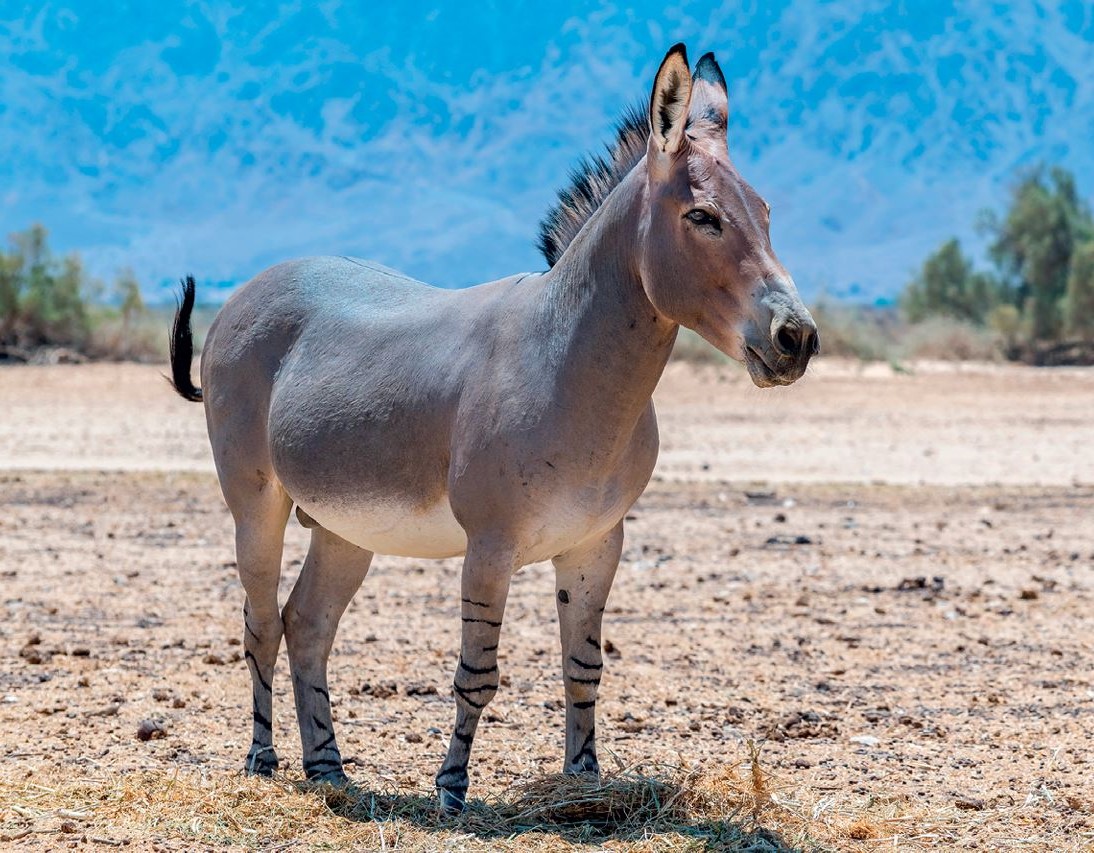
At present, the Asiatic wild ass (Equus hemionus) is regarded as a single species. The differences among the geographically widely scattered populations would thus be at the level of breeds, with the Syrian wild or half-ass, hemippe, or onager (Equus hemionus hemippus) dominating in the Near and Middle East, and the Mongolian wild ass or kulan (Equus hemionus kulan) dominating in the Central Asian steppes. Today, alongside Asiatic wild asses, African wild asses (Equus africanus somaliensis) are also kept in Israel’s Hai-Bar Yotvata wildlife reserve, though they probably were never native to Israel.
In the Bible, the wild ass is usually designated by the Hebrew word pere (10x), which in Job 39:5 occurs in poetic variation together with the designation arod. The Aramaic counterpart is arad (Dan 5:21). It also occurs as the designation of the region Arad in the Negev Desert (5x). Since this is one of Israel’s southernmost settlements, which in fact lay in «wild-ass country», this connection is obvious. The personal name «Piream» (Jos 10:3) is a poetic derivation of pere with the literal meaning «wanderer». With ajir pere (Job 11:12) the wild ass foal is designated.
As with the aurochs, a fitting description of the wild ass is also found in the book of Job. In God’s «creation speech» it says: «Who has let the wild ass go free, and who has loosed the bonds of the wild one, whose home I have made the steppe and whose dwellings the salt land? He laughs at the tumult of the city; he does not hear the shouts of the driver. What he spies out on the mountains is his pasture, and he searches after every green thing» (Job 39:5-8). Job was very familiar with the domestic donkey, the domesticated form of this hoofed animal. His possessions included 500 female donkeys (Job 1:3). He knew donkeys as reliable and enduring work animals that may sometimes be a bit stubborn, but fundamentally submit to human will. A very different character is shown by the closely related wild ass spoken of here. In contrast to the other equids, which are all herd animals, it is a solitary. It is notorious for defending its territory aggressively against any intruder. In doing so it does not even shy away from humans, so that more than one traveler has been badly attacked. Through this behavior it became a symbol of wildness and aggressiveness.
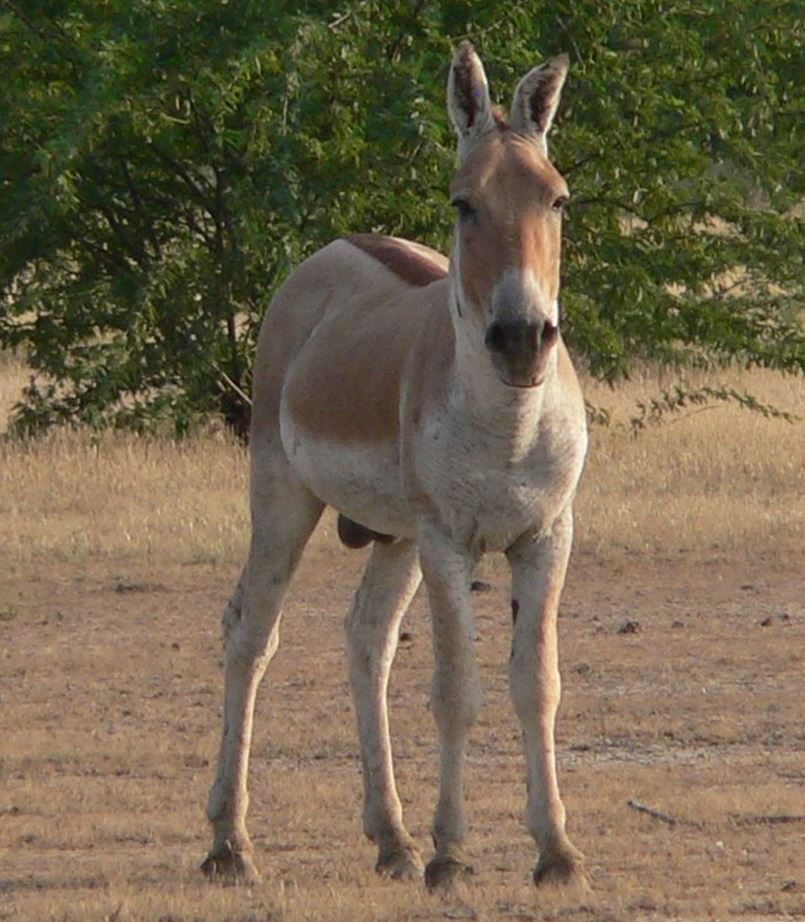
Its habitat is steppe and desert; it avoids the human cultural sphere. One might assume it longs for a proper daily ration of feed, lush pastures, and a safe stable, but for the wild ass such a way of life is out of the question. It «laughs» at its tame relatives who, heavily laden with burdens, are driven by scolding people through narrow alleys and across overcrowded market squares of noisy cities. For its freedom it gladly accepts the meager fare of its desolate environment and is content with whatever greenery it can find.
With these traits, the wild ass is an image of human nature: «Even a hollowhead gains understanding – though a man is born like a wild ass’s foal» (Job 11:12). When the Babylonian king Nebuchadnezzar exalted himself in his pride, God punished him with mental confusion, whereupon he behaved like an animal and lived among the wild asses (Dan 5:21). Yet unlike the wild ass, we humans have the possibility of coming to our senses (submitting to God and being redeemed, cf. Ex 13:13), although we are unclean (Job 14:14). The wild ass seems completely free, but in the symbolism of the book of Job there is a being that corresponds symbolically to Satan and rules over all who submit to no authority: the Leviathan «is king over all the wild beasts [literally: over all the sons of pride]» (Job 41:26).
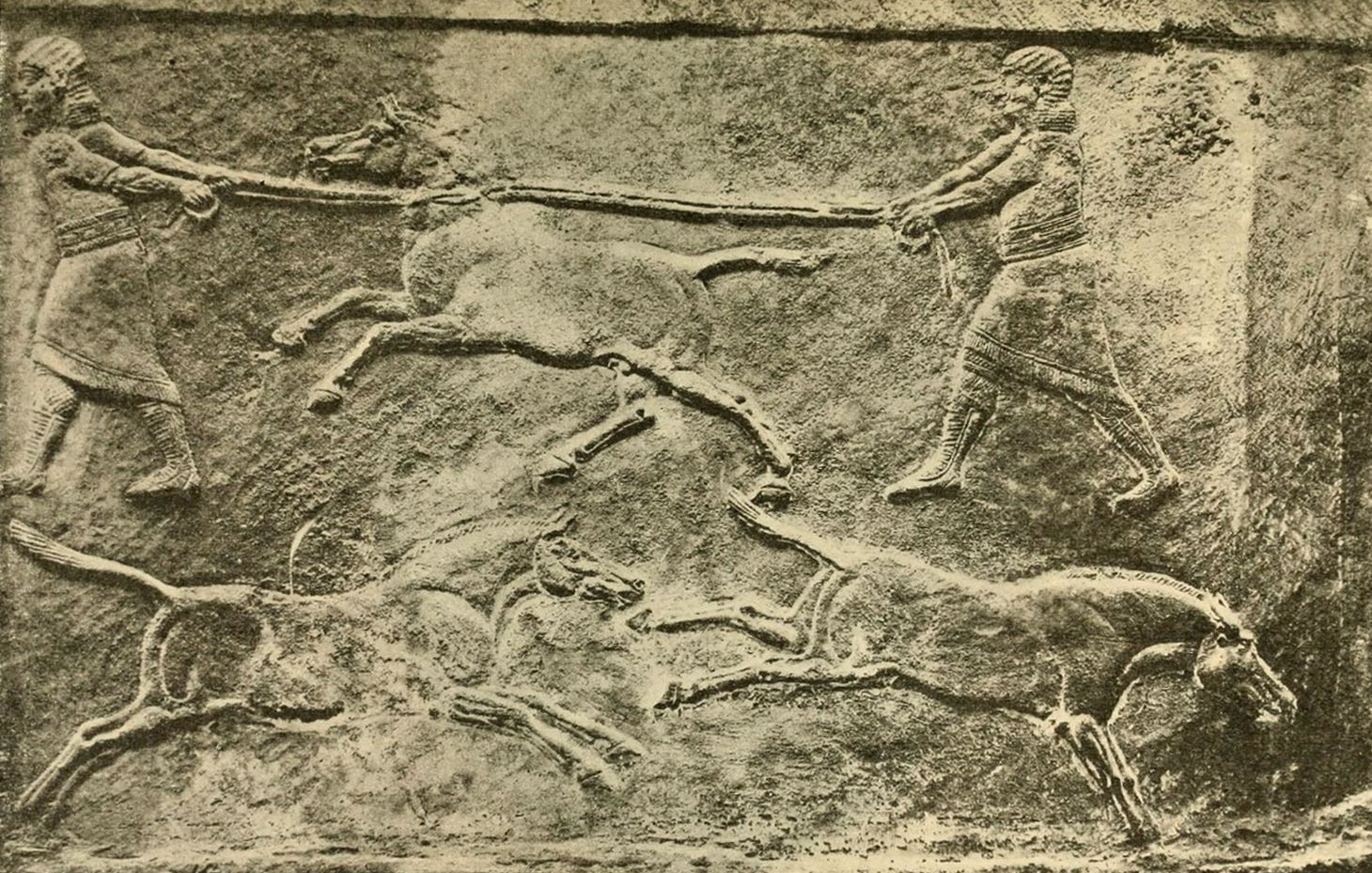
High above that, of course, enthroned is the One who created Leviathan too (Job 41:25) and all angels, including those who rebel against Him (Ezek 28:15) – Jesus Christ, the «King of kings and Lord of lords» (Rev 19:16; cf. Heb 1:6). He also reigns over those who do not acknowledge His rule and is not only Creator (Joh 1:3; Col 1:16; Heb 1:2) but Sustainer of all (Acts 17:25; 1Tim 6:13; Heb 1:3). He also gives drink to the freedom-loving wild asses in the parched steppe (Ps 104:11). That is good to know, for these combative gray animals cannot drink at will when they are found together at water sources with camels, because they are hostile to camels. As long as there is enough water and they behave quietly, they are tolerated; but when water becomes scarce, the larger and stronger hump-backed animals deny them access and sometimes injure them badly.
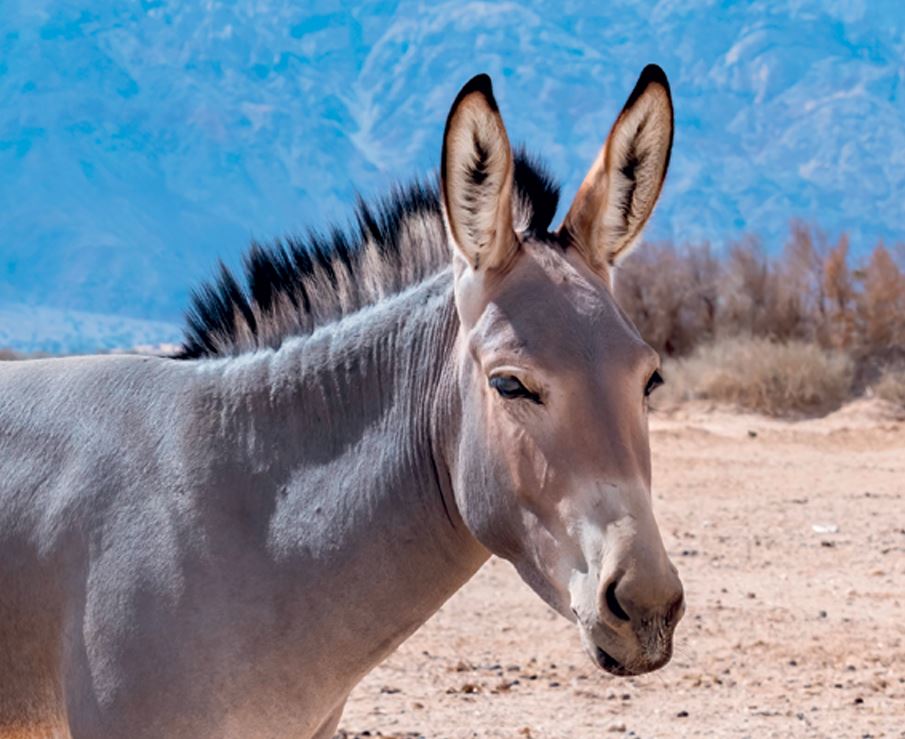
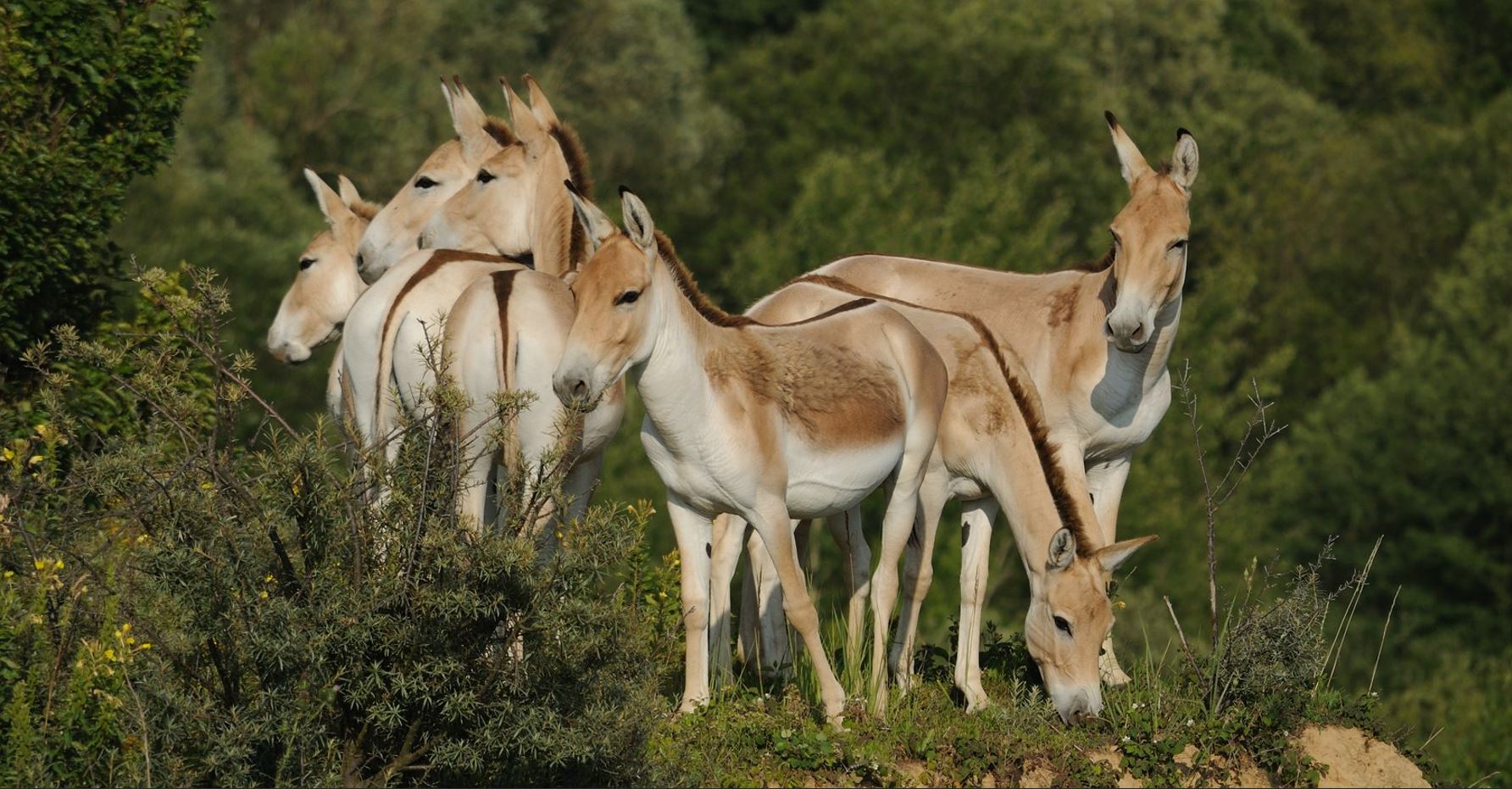
Externally, wild asses (as well as wild horses and zebras) differ from domesticated forms by two striking features: the «standing mane» and the «dorsal stripe«.
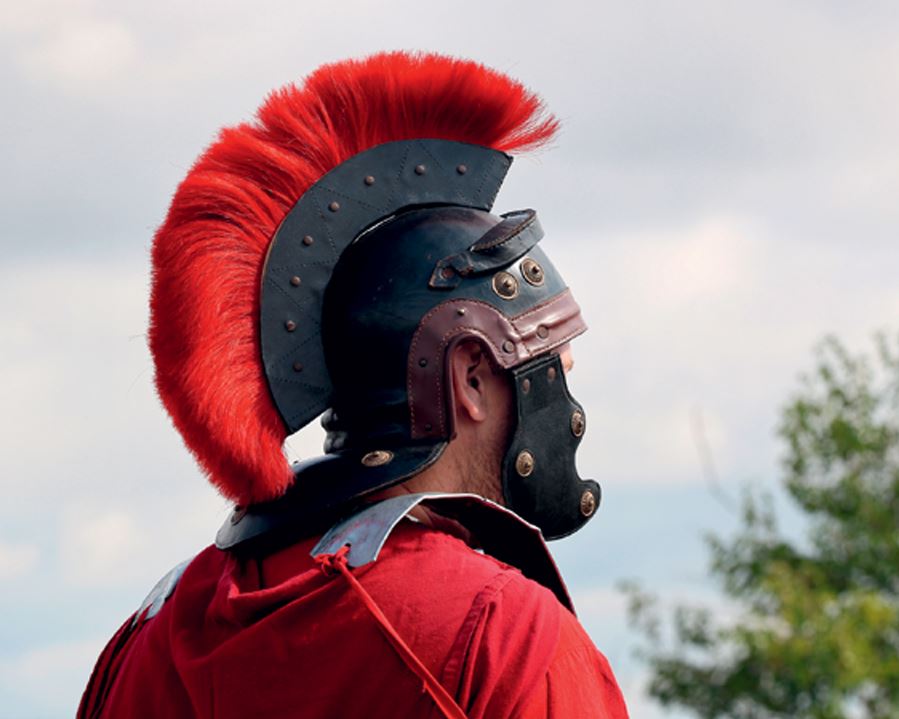
The thick, relatively short hairs of the wild ass’s mane stand upright from the neck. The term «hair-raising» has its meaning because raised hair, especially in the head and neck area, is a clear sign of aggressiveness and defensive behavior. From a biological perspective, this principle can be broadened: fanned feathers, crests, scales, spines, thorns, etc., likewise make their bearer appear larger and often count among «threat displays». Although hairstyles are subject to the extreme fluctuations of the fashion world, a «buzz cut» has always been associated with a brave, independent, self-confident, defensive, and headstrong character (especially when women wear it). That also characterizes the wild ass – but we will encounter a very different symbolism later with the horse.
The dark, narrow stripe on the coat along the spine is called a dorsal stripe. It looks like a continuation of the mane over the entire back, and one could speculate that it expresses that these animals straightforwardly follow their own will. In any case, this admittedly somewhat fanciful interpretation fits the fact that its strict course is, in the domestic donkey, in the truest sense of the word «crossed».
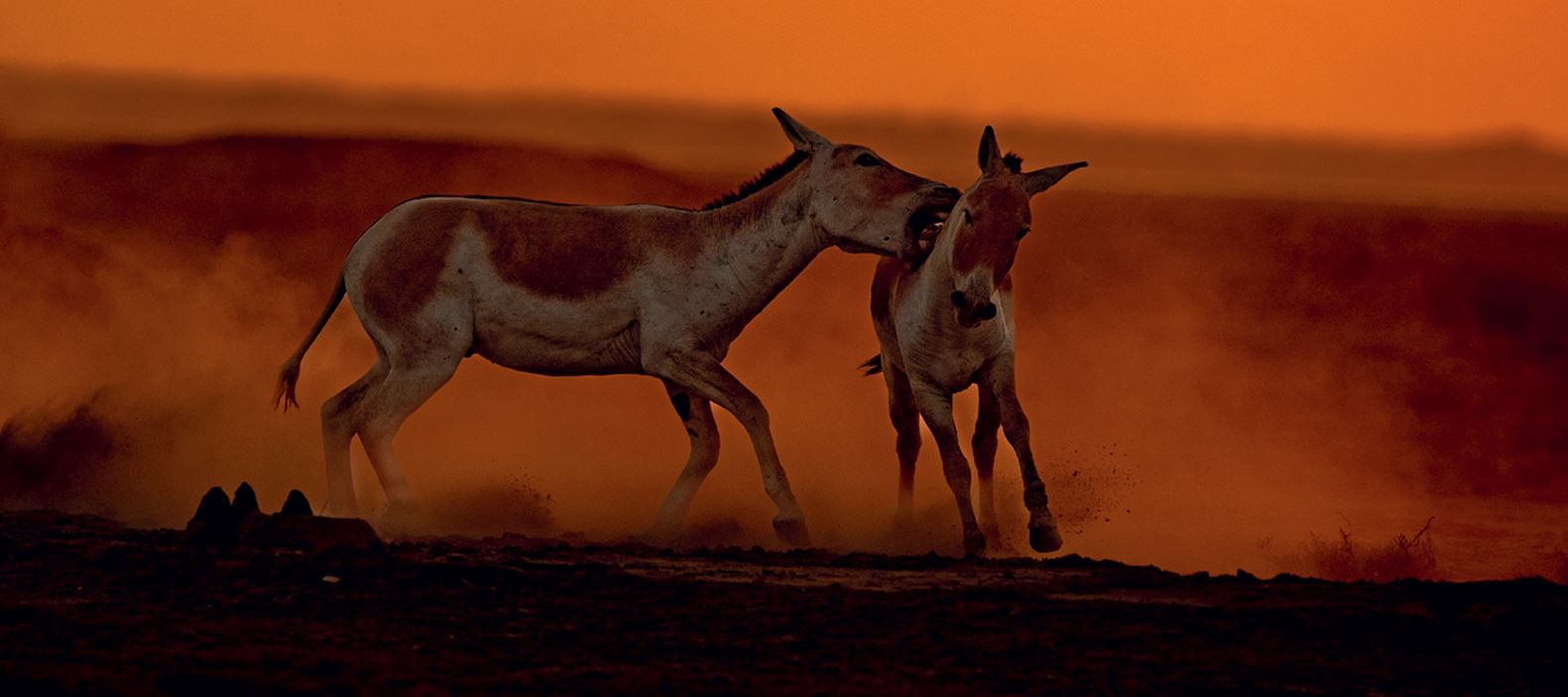
The pronounced territorial behavior of male wild asses, which defend a few hectares of barren steppe so aggressively against any intruder as if guarding a precious treasure, is taken up in the following comparison about Ishmael: «He will be a wild-donkey of a man, in conflict with everyone and fought by everyone. And he will put it over on all his brothers» (Gen 16:12). Even if the second part of the verse is translated somewhat colloquially, Ishmael and his descendants are characterized aptly. As Bedouins living largely by raiding, these desert dwellers posed a constant threat to passing trade routes and adjacent cultural regions (cf. Ps 83:4-6). Just as a wild ass attacks anyone who enters its territory, they lay in wait for travelers and caravans who ventured into the desert. Since they were well adapted to the harsh environment and knowledgeable of the terrain, after a raid they could quickly retreat again into hard-to-reach hiding places.
The equation of Arabs with the descendants of Ishmael is widespread but greatly simplified. The beginning of this family history with twelve sons from whom twelve tribes develop (Gen 25:16) does resemble the history of the people of Israel – but unlike Jacob’s family, from which a twelve-tribe people (Gk. dodekaphylon, Acts 26:7) arises, the Ishmaelites break up into multiethnic and mostly mutually hostile groups. The term «Arabs» means exactly that: «mixed peoples» (cf. 1 Kgs 10:15). In the «Book of Jubilees», a Jewish writing from the second century BC, it says: «Ishmael and his sons, and the sons of Keturah and their sons, went together and lived from Paran to the entrance of Babylon, in the whole land toward the east, in the wilderness. And they mingled with one another and were called Arabs and Ishmaelites.» Other historical sources likewise show that further intermixture with surrounding peoples occurred.
Even if direct ethnic connections of later populations to the ancient tribes are not so easy to prove, the hostility of these peoples toward Israel runs from biblical times down into the present. This age-old hostility has a spiritual meaning: «Doesn’t Scripture say that Abraham had two sons? The mother of one was a slave woman, the mother of the other was a free woman. The son of the slave woman was born as a result of human self-willed action, but the son of the free woman was born on the basis of a promise from God. All this can be understood symbolically, namely that the two women stand for two covenants. The one covenant, concluded at Sinai, gives birth to slaves; it is represented by Hagar. «Hagar» stands for Mount Sinai in Arabia and corresponds to present Jerusalem, for this Jerusalem lives in slavery with her children. But the Jerusalem above is free, and this Jerusalem is our mother. […] Now you, brothers and sisters, belong – just like Isaac – to the children God promised; you owe your life to God’s promise. And just as then the son who was born as a result of human self-willed action [= Ishmael] persecuted the son who came into the world through the working of God’s Spirit [= Isaac], so it is also today» (Gal 4:22-29).
In this passage, historical reality receives a deeper «figurative sense» (Gk. allegoroumena, v. 24). In fact, there is hardly a better example of biblical «allegory». The «wild-ass nature» fits the terms on one side: «law, slavery, son of the slave woman (Ishmael), according to one’s own will (flesh, cf. Rom 9:7-8), Hagar, Arabia, Sinai, earthly Jerusalem, old covenant, Judaism, persecutor», while on the other side stand «grace, freedom, son of the free woman (Isaac), according to God’s promise (Spirit), Sarah, heavenly Jerusalem, new covenant, church, persecuted».
Only very recently was it discovered that neither the African nor the Central Asian wild-ass stallions, but only the subspecies of the Near Eastern onagers – also native to Israel – behave territorially. Possession of one’s own territory is, for them, a prerequisite for mating. The dominant stallions of the other kinds must first pursue the mares of their harem and subdue them in wild fights before they can mate with them. The onager stallions, by contrast, live as solitary animals and normally do not leave their domain, which can be up to 25 square kilometers in size. Therefore, it is the mares in heat that roam about, lure them with hoarse rutting calls, and allow themselves to be covered willingly. The weaker stallions of all kinds roam in bachelor groups and wait for an opportunity to take over a harem of mares or to conquer a territory.
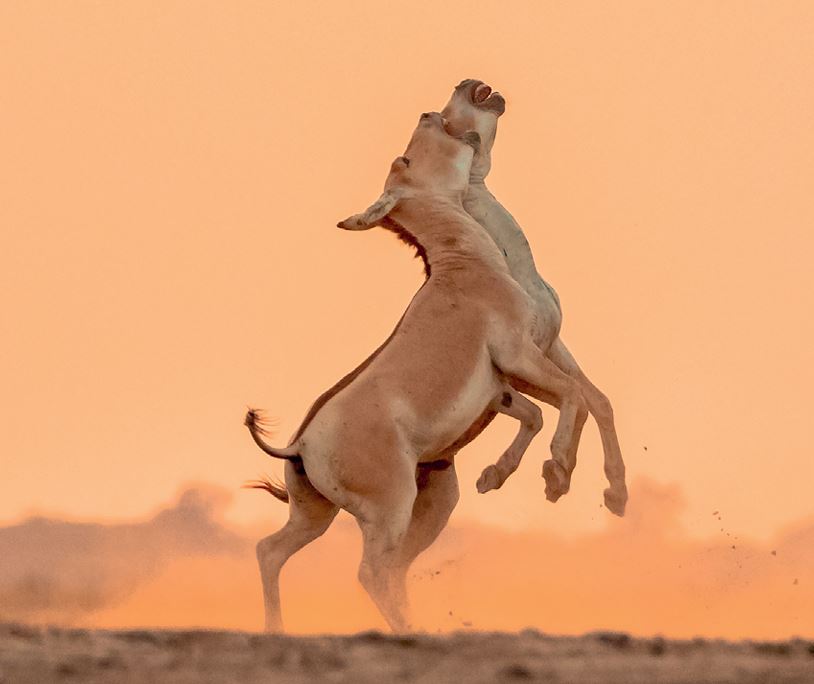
The mating behavior of these shy animals is difficult to observe, but it is already described in the Bible. Similar to the comparison with the young camel mare, the prophet Jeremiah equates the behavior of onager mares with Israel’s idolatry: «You are like a wild she-donkey that knows every track in the wilderness; in her lust she pants for air and cannot be restrained. The stallions need not search long for her; in her season of heat she is happy to be found by them. Israel, take care – you will wear out the soles of your shoes, and from all your running about your throat will dry out! But you say: Don’t stop me, it’s no use! I love strangers and must go after them!» (Jer 2:24-25). This is an apt and at the same time sobering picture for all who seek their happiness in sinful lusts instead of in God (cf. 1John 2:17).
Sources:
Geiger, G: Die Araber – Nachkommen von Ismael, dem Sohn Abrahams? Im Land des Herrn 2015; 69(4):152-156; https://www.academia.edu/19539236/Die_Araber_Nachkommen_von_Ismael_dem_Sohn_Abrahams
Geiger, G: Ismael. Diachroner Versuch einer Lokalisierung (aus: „Ägypten und Altes Testament, vol. 80, pp. 59-74). Münster (Ugarit) 2014
Israelnetz: Asiatische Wildesel wieder in Israel ansässig. 13.04.2022; https://www.israelnetz.com/asiatische-wildesel-wieder-in-israel-ansaessig
Junker, R; Scherer, S: Evolution. Ein kritisches Lehrbuch (pp. 40, fig. 3.18, crossing matrix of equids). Gießen (Weyel) 2013; http://www.evolutionslehrbuch.info/bilder/03/ekl-03-18.php
Kaczensky, P; Walzer, C: Der Asiatische Wildesel – bedrohter Überlebenskünstler in der Wüste Gobi. Zeitschrift des Kölner Zoos 2008; 51(3):147-163
Klingel, H: Observations on social organization and behaviour of African and Asiatic Wild Asses (Equus africanus and Equus hemionus). Applied Animal Behaviour Science 1998; 60(2-3):103-113; doi: 10.1016/S0168-1591(98)00160-9
Rießler, P: Jubiläenbuch oder Kleine Genesis (German translation, pp. 592; 20,12-13). Augsburg (Dr. B. Filser) 1928; https://de.wikisource.org/wiki/Jubiäenbuch_oder_Kleine_Genesis#20._chapter:_Abrahams_Vermächtnis
von Aufschnaiter, M: Der Buzzcut: Ein extrem kurzer, praktischer Haarschnitt für Männer und Frauen. accessed on 17.04.2023; https://www.perfekt-schminken.de/buzzcut-frisur
Image Credits:
Wikipedia: Group of Asiatic wild asses / Bindu Gopal Rao // Asiatic wild ass – portrait // S Ballal, Ahmedabad, India // Asiatic wild asses – group of young stallions / Michael Oppermann
other licenses: Cover – Asiatic wild ass – running / Shutterstock ID_2245887823 / Bhavya Joshi // African wild ass in Israel / Shutterstock ID_1094971025 / Sergei25 // Asiatic wild ass – standing mane / Shutterstock ID_2136452233 / Sergei25 // Roman helmet with crest / Shutterstock ID_2207838393 / Keni // Asiatic wild asses – territorial fight / Shutterstock ID_2332154305 / shivaram subramaniam // Asiatic wild asses – mating fight / Shutterstock ID_2355664393 / Devendra Rathod // Crossing matrix for equids / ekl-03-18-g.jpg / SG Wort&Wissen