The hare has only a brief appearance in the Bible, in the «dietary law», where its consumption is forbidden to the people of Israel. The justification, however, was long a subject of mockery among scholars – until it could be validated in a remarkable way in the light of science.
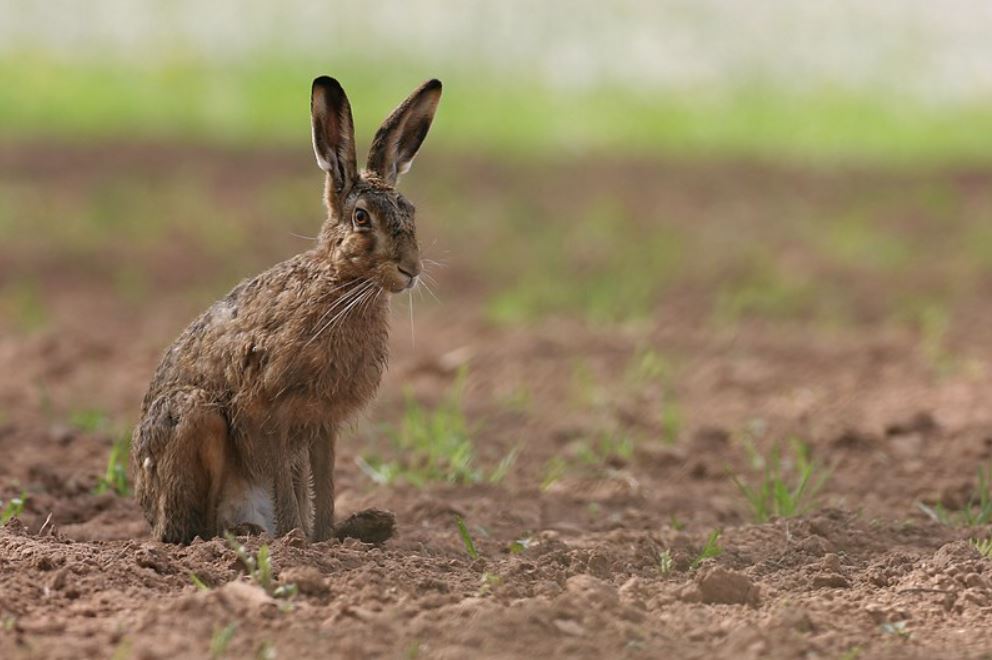
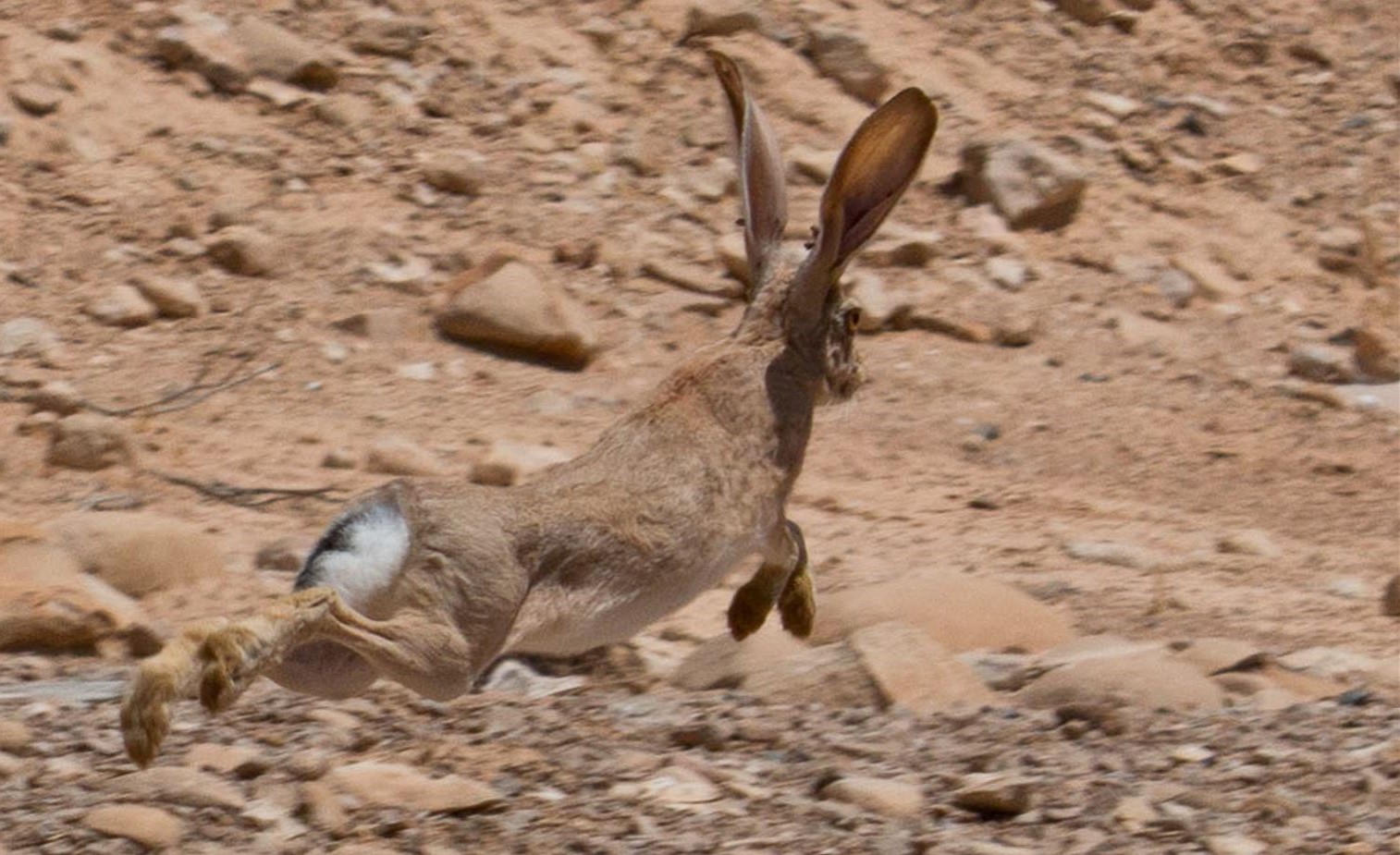
In Israel, two species of lagomorphs (Lagomorpha) occur: the European hare (Lepus europaeus) and the Cape hare (Lepus capensis). They are, however, capable of interbreeding, and it is still debated whether they should not in fact be regarded as a single species. The Cape hare clearly shows adaptations to desert conditions, whereas the European hare, which occurs throughout almost all of Europe, lacks these. For Israel, a separate subspecies of the European hare (Lepus europaeus judeae) has even been described, but in what follows we will simply speak of the hare.
Throughout the entire Near East, rabbit species have never been native – and although the European rabbit (Oryctolagus cuniculus) is an invasive species that has conquered the entire western Mediterranean region and has also colonized the island of Crete, it has so far been unable to gain a foothold in Israel. Reports of sightings are usually based on confusion with the rock hyrax (Procavia capensis), which will be discussed later.
The Hebrew designation arnebet (Lev 11:6; Deut 14:7) can clearly be assigned to the hare. Its fertility is legendary. A healthy female produces about twelve offspring each year, which themselves become sexually mature after only a few months. If natural enemies are absent, the population can virtually explode. In European countries, lagomorphs usually make up more than half of the animals taken (in hunting terminology: the «bag»).
Since the hare was not permitted to be eaten in Israel and is also very shy, it was insignificant as an animal of the field. Agriculturally, too, it was of no importance, as it does not cause major damage to fields or harvests.
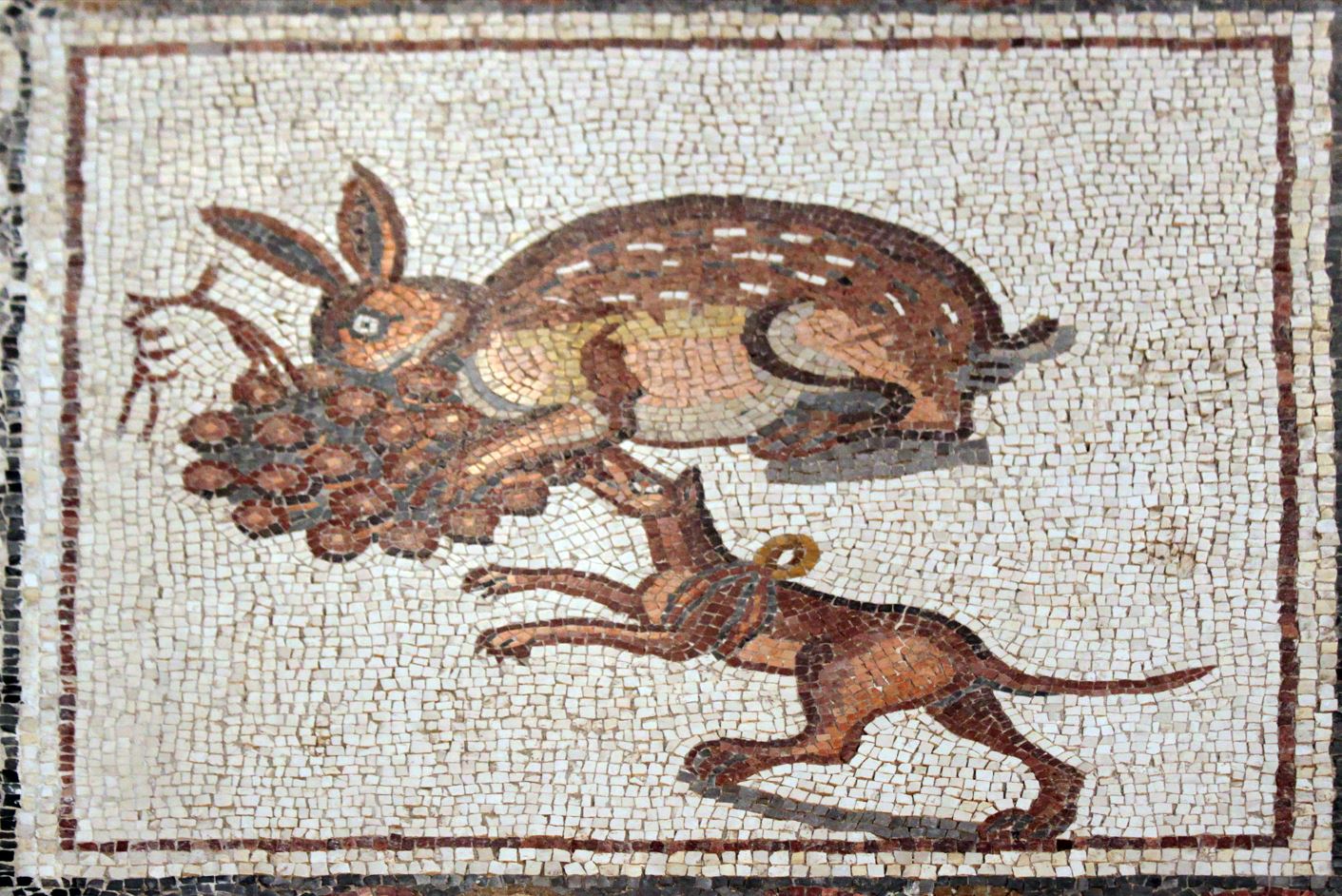
There would probably be nothing more to say about the biblical background of the hare if it were not for the note in the Law of Moses – in the two verses in which the hare is mentioned – that it is a ruminant. Generations of rabbis and theologians have puzzled over how this could be understood – for it is obvious that hares have a completely different anatomy from the ruminant suborder of even-toed ungulates, known biologically as Ruminantia. The most widespread explanation was that, in Old Testament times, the «munching» of the hare had simply been misinterpreted and confused with the chewing movements of the even-toed ungulates.
Well into the modern era, theologians played down this problem with convoluted formulations: «But natural science has long since demonstrated that the hare is not a ruminant. In ancient times it was regarded as such because, when resting, it makes movements with its mouth that are reminiscent of rumination. Against such popular classification based on obvious characteristics, science itself has no objection» (Alfons Schulz), and «They (the writers of the Bible) did not, however, teach these false notions as such, but merely employed them in order to give vivid, didactic expression to the religious idea of the creation of the universe by their God, to his omnipotence and his beauty, his goodness and his wisdom» (Albrecht Peters).
Yet this apparent contradiction was resolved almost 150 years ago. In «Grzimek’s Animal Life», a standard German reference work, it is described as follows: «In 1882, Morot published his observations on the mucus-coated “stomach pellets” of rabbits in a French veterinary journal. In addition to the normal solid droppings, these animals produce a second form of feces – soft, poorly formed pellets, which they ingest immediately after excretion and swallow without chewing. These accumulate at a specific site in the stomach (in the cardiac region) and are digested again. In this way, part of the food passes through the intestine twice and is thus more thoroughly broken down. This double digestion resembles, in a certain respect, the rumination of most families of even-toed ungulates. The soft feces (caecotrophs) are formed in the cecum and are there strongly enriched with vitamin B1; according to the studies of Scheunert and Zimmermann, they contain four to five times the amount of vitamins compared with normal feces. For lagomorphs, the “cecal” or “vitamin feces” are vital; they presumably also help them to survive longer periods of fasting under unfavorable weather conditions».
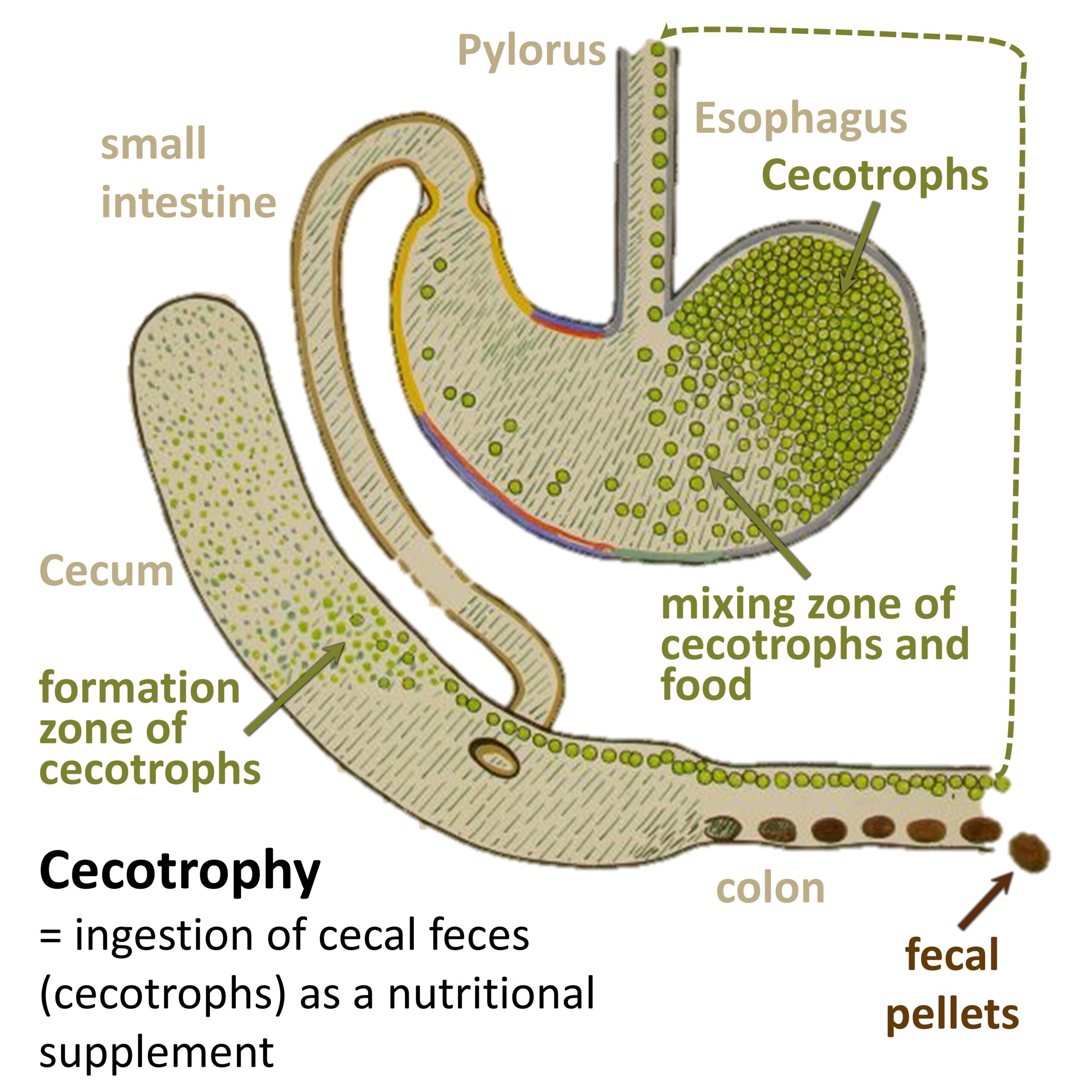
On closer inspection, the Bible is even very precise in its wording. It does state that the hare chews the cud (the expression contains the word for «bringing up»), that is, it takes up already digested food a second time – which is correct; but it does not say that it is a «ruminant» in the sense of a taxonomic classification. One can therefore say: the hare chews again, although (biologically speaking) it does not belong to the ruminants. One cannot expect a theologian to be familiar with biological specialties such as caecotrophy. But before attributing an error to the Bible, one should test one’s thesis against the current state of science – only to find that the inerrancy of Scripture also applies to seemingly marginal aspects such as statements about natural history.
Sources:
Gehrisch, B: Lepusculus Domini, Erotic Hare, Meister Lampe – Zur Rolle des Hasen in der Kulturgeschichte. Wettenberg (VVB Laufersweiler) 2005; http://geb.uni-giessen.de/geb/volltexte/2005/2398/pdf/GerischBirgit-2005-06-30.pdf
Gorzalczany, A; Avissar, M; Torgë, H: Lod, the Lod Mosaic: Preliminary Report. Hadashot Arkheologiyot: Excavations and Surveys in Israel 2016; 128. https://www.jstor.org/stable/26679195
Grzimek, B: Grzimeks Tierleben (vol. 12 „Säugetiere III“; pp. 421-422). Zürich, CH (Helmut Kindler) 1972
Junker, R: Der Hase – ein Wiederkäuer? Studiengemeinschaft Wort und Wissen 1995; Diskussionsbeitrag 1/95; https://www.wort-und-wissen.org/disk/der-hase-ein-wiederkaeuer
Hoffmann, D: Das Buch Leviticus (vol. 1; pp. 29-30). Berlin (M. Poppelhauer) 1905
Kulwich, R; Struglia, L; Pearson, PB: The effect of coprophagy on the excretion of B vitamins by the rabbit. The Journal of Nutrition 1953; 49(4):639-645; doi: 10.1093/jn/49.4.639
Morot ; CH: Mémoire relatif aux pelotes stomacales des léporidés. Recueil de Médecine Vétérinaire 1882; 59:635-646
Schulz, A: Der Hase als Wiederkäuer. Biblische Zeitschrift 1911; 9:12-15
Scheunert, A; Zimmermann, K: Bakterielle Synthese im Blinddarm und Koprophagie Beim Kaninchen. Archiv für Tierernaehrung 1952; 2(1-6):217-222; doi: 10.1080/17450395209424645
Image Credits:
Wikipedia: Cape hare in the Judean Desert / MinoZig // Floor mosaic with hare and hunting dog / anagoria // European hare in a field / Hans-Jörg Hellwig
other licenses: Title – European hare / Shutterstock ID_1959135373 / Mario Plechaty Photograph