
Although there are no native monkeys in the Near East, they are mentioned in the Bible as exotic imported goods that reached Israel together with other luxury items aboard King Solomon’s Tarshish fleet.
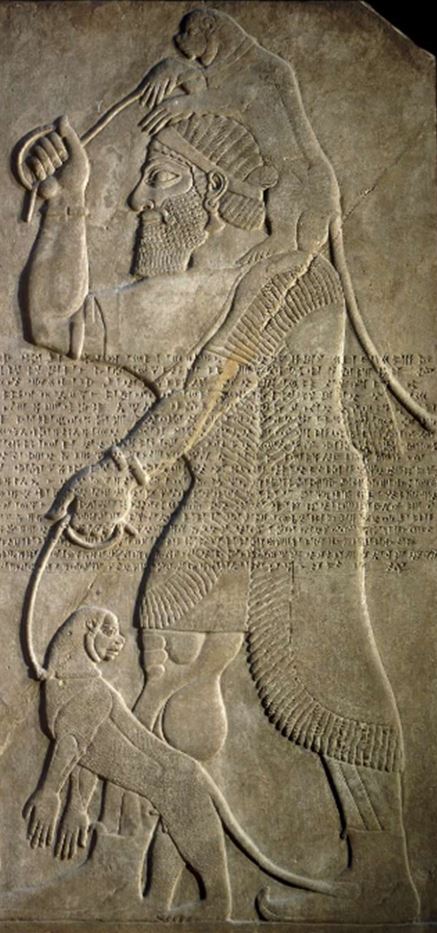
Under King Solomon, long-distance trade flourished in the Israelite kingdom: «For the king had a fleet of Tarshish on the sea together with the fleet of Hiram; once every three years the fleet of Tarshish used to come, bringing gold and silver, ivory, monkeys, and peacocks» (1Kgs 10:22; cf. 2Chr 9:21). These ships may have sailed as far as distant Sri Lanka, or at least called at transshipment ports along the coast of the Indian Ocean, where encounters with Sinhalese merchants took place. The peacocks mentioned certainly originate in Sri Lanka and are referred to in the verse by their locally used name tukki. The long duration of the sea voyage also points to a great distance. Finally, until modern times there were large populations of the Ceylon elephant (Elephas maximus maximus), whose ivory was exported, and some scholars also trace the Hebrew word kof, meaning monkey, back to its Tamil name.
If these assumptions are correct, the Southern Hanuman langur (Semnopithecus priam) would be a plausible candidate. They live as cultural followers in human settlements and are regarded in India and Sri Lanka as embodiments of the deity Hanuman – and therefore as sacred and inviolable. Their Greek name Semnopithecus means «venerable monkey» (cf. venerable = semnos: Tit 2:2). They do indeed behave calmly and with dignity and are so accustomed to living alongside humans that palaces appear to them as a «natural habitat».

Also conceivable, but less likely in this context, is that the monkeys were hamadryas baboons (Papio hamadryas). These were, however, widespread in neighboring Egypt, with which there was intensive overland trade, and therefore would not have needed to be imported by ship from far away. Moreover, they are less suitable as pets because they are intrusive, quickly become aggressive, and can then be extremely dangerous.
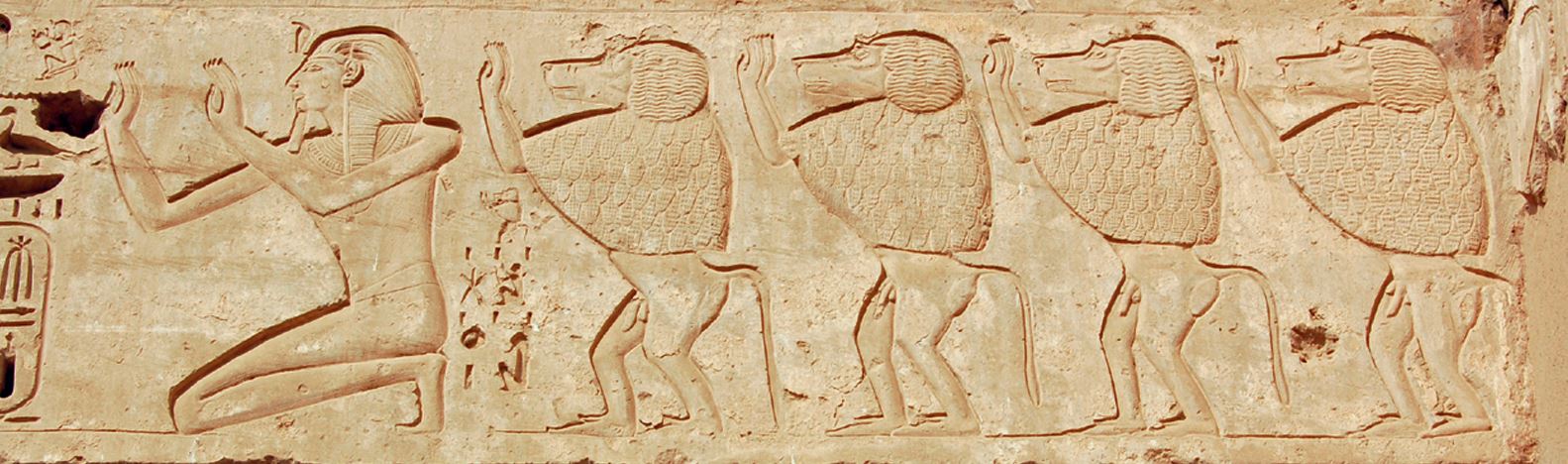

It would be fascinating to know why Solomon had monkeys brought to his royal court of all things. Since the Bible portrays him as a versatile student of nature (1Kgs 5:13), who examined creation with the self-understanding that «It is the glory of kings to search out a matter» (Prov 25:2), it is reasonable to assume that he saw in these animals interesting objects of study. Whether there are scientific reasons why modern evolutionary biology «turns man into an ape» is discussed in other articles, but their study is indeed instructive, since in many respects they behave in a human-like manner. Solomon the philosopher would surely have been interested to hear how easily these monkeys (both langurs and baboons) can be captured. One merely needs to place something desirable before their eyes into a firmly tied clay jar, whose opening is just wide enough for the outstretched monkey hand to pass through. The curious monkey will, as soon as it believes itself unobserved, seize the first opportunity to reach in and retrieve it. Only then does it realize that it can no longer pull its clenched fist back through the narrow opening. At that moment the monkey catcher emerges from hiding and approaches. The monkey screeches and tugs at its prize, but its grasping reflex is so strong that it cannot let go. Without any great haste, the catcher can now slip a rope around it, secure it with practiced movements, and lead it away. This «stupid» behavior of otherwise very intelligent animals appears incomprehensible and has led to «Affenfalle» and «monkey trap» becoming established terms in psychology. One can imagine why – for in some respects we are more similar to monkeys than we would like.
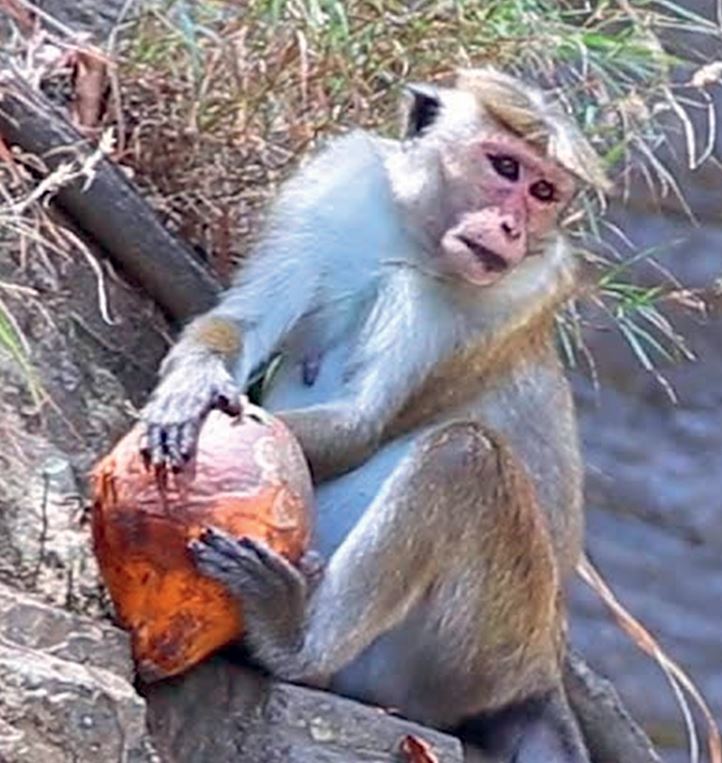
Although we usually consider ourselves rational and reflective, our actions are sometimes governed by addictions, drives, fears, and false priorities – which we may recognize, yet do not want to relinquish despite impending disaster and against our better judgment – until it is too late. Especially when money, possessions, honor, and power are in view, reason often fails to restrain ambition. Therefore it is good to keep this verse always before our eyes: «What good is it for someone to gain the whole world, and yet lose or forfeit their very self?» (Lk 9:25).
Sources:
Gandhi, A: Catch me if you can: Monkey capture in Delhi. Ethnography 2012; 13(1):43-56; doi: 10.1177/1466138111431512
Jolly, CJ; Phillips-Conroy, JE; Müller, AE: Trapping Primates (pp. 110-120); in “Field and Laboratory Methods in Primatology”; Cambridge, GB (Cambridge University Press) 2003
Morris, HM: The Ape Cargo. Accessed on 29 June 2023; https://www.icr.org/article/ape-cargo
Scholl, B: Affe = Mensch? Ein Überblick über verhaltensbiologische Unterschiede zwischen Affen und Menschen. W+W Special Paper 2018; B-18-1; https://www.wort-und-wissen.org/wp-content/uploads/b-18-1_affe-mensch.pdf
Tristram, HB: The Natural History of the Bible (p. 37). London, GB (Society for Promoting Christian Knowledge) 1877
Image Credits:
Wikipedia: Title – Southern Hanuman Langur – sitting / Pavithra Sudhan // Southern Hanuman Langur – portrait / Vishmitha Hewamarambage
other licenses: Relief from Egypt with baboons / Shutterstock ID_1990714781 / BasPhoto // Hamadryas baboon baring its teeth / Shutterstock ID_1426484075 / Vladimir Wrangel // Phoenician merchant with two monkeys / ape-trading.jpg / British Museum