It may seem surprising to encounter a chapter on snakes at the end of a list of «animals of the field». And rightly so, because the snakes we know today would not fall under that heading, either in the Bible or according to our present-day understanding of biological classification. But there is an enigmatic predecessor model that truly belongs here. Let us take a look at the ancestor of snakes …
«Now the serpent was more cunning than any animal of the field that the LORD God had made» (Gen 3:1). One could also translate: «the most cunning animal of all the animals of the field» – so it is clearly counted among them and belonged to the original creation, which God collectively described as «very good».

Moreover, it evidently even held a certain position of precedence among them and probably moved about on legs, like all the others (cf. Gen 3:14). Its outward appearance cannot be reconstructed. Possibly the creature looked «dragon-like». Hints in that direction are the later equation, and the fact that sea monsters as well as dragons and serpents are designated with the same Hebrew word tannin (elongated).
The manner in which the serpent is introduced here is remarkable. While it is not mentioned at all in the two chapters before, it is then simply called ha-nachasch – «the serpent», as though one ought to know it. In fact, everything about its description is unusual and mysterious. On the one hand, it was an animal created like all the others; on the other hand, it was superior to all the other animals, thus standing closest to humankind – and it even spoke! Yet since the pronouncement of judgment over the serpent (Gen 3:14–15) does not say that it would fall silent, one can assume that God’s adversary is speaking through the animal here; he is «the great dragon, the ancient serpent, who is called the devil and Satan» (Rev 12:9; cf. also 20:2).
Since the serpent in its former form no longer exists, it must remain open whether Satan used this animal because it was especially intelligent, so to speak as the perfect disguise – or whether this specific specimen only received its special quality through Satan. Although the Hebrew adjective arum (wise / cunning) is used in the book of Proverbs in eight verses for genuine, godly wisdom, it is rightly understood in Genesis 3:1 (and also in Job 5:12; 15:5) under the dangerous aspect of craftiness. This is also made clear by a small play on words that is easily missed because of the chapter break: «And they were both naked [arommim], the man and his wife, and were not ashamed. Now the serpent was more cunning [arum] than any animal of the field …» (Gen 2:25; 3:1). In Hebrew, both words consist in their base form of the same consonants and are thus formally identical. The human being was as God had created him – «very good», innocent, unsuspecting, and transparent. All of this is reflected in «nakedness without shame». But the serpent was cunning, evil, seductive – and behind the masquerade stood Satan himself.
It almost seems as though, through God’s judgment, the serpent is in a sense «stripped bare» and its fallen nature is meant to remain visible, while God lovingly clothes and covers the human being. In contrast to all «higher animals», today’s snakes are «naked» to an astonishing degree. They carry almost nothing on their bodies – neither legs nor tails, fins, suckers, or wings; neither hair nor feathers, claws, spines, horns, crests, antennae, eyelashes, or auricles.
In contrast to a creature of extraordinary intelligence, today’s snakes are instinct-driven and predictable in their behaviors and reactions – similar to machines. Apart from mating rituals, there are hardly any social interactions. Males and females are outwardly rarely distinguishable. Almost all species lay eggs (the adder and the smooth snake native to our region, as live-bearing snakes, are among the exceptions) and then leave the offspring to themselves.
As if to make it clear that the serpent would never again take up speech, they are all deaf and mute. Apart from a faint hiss or snort, they produce nothing with their mouths. Astonishingly, they have no body odor, and not even their excretions smell. They can move quickly and almost silently over nearly any surface (Prov 30:18–19), but they can also remain completely motionless in one position for weeks. As cold-blooded animals they take on the ambient temperature. They have neither facial nor eye muscles. For that reason their expression is rigid and their eyes are immobile. They have no eyelids and therefore can neither blink nor close their eyes. Their eyes are always open, which gives the impression that they never sleep and are always watching us. In fact, it has been found that even during rest phases they continue to perceive their surroundings. Most snakes have good low-light vision, and many can even detect infrared radiation and thus «see» heat. Since they can also feel their way along, many species are equally active by day and by night.
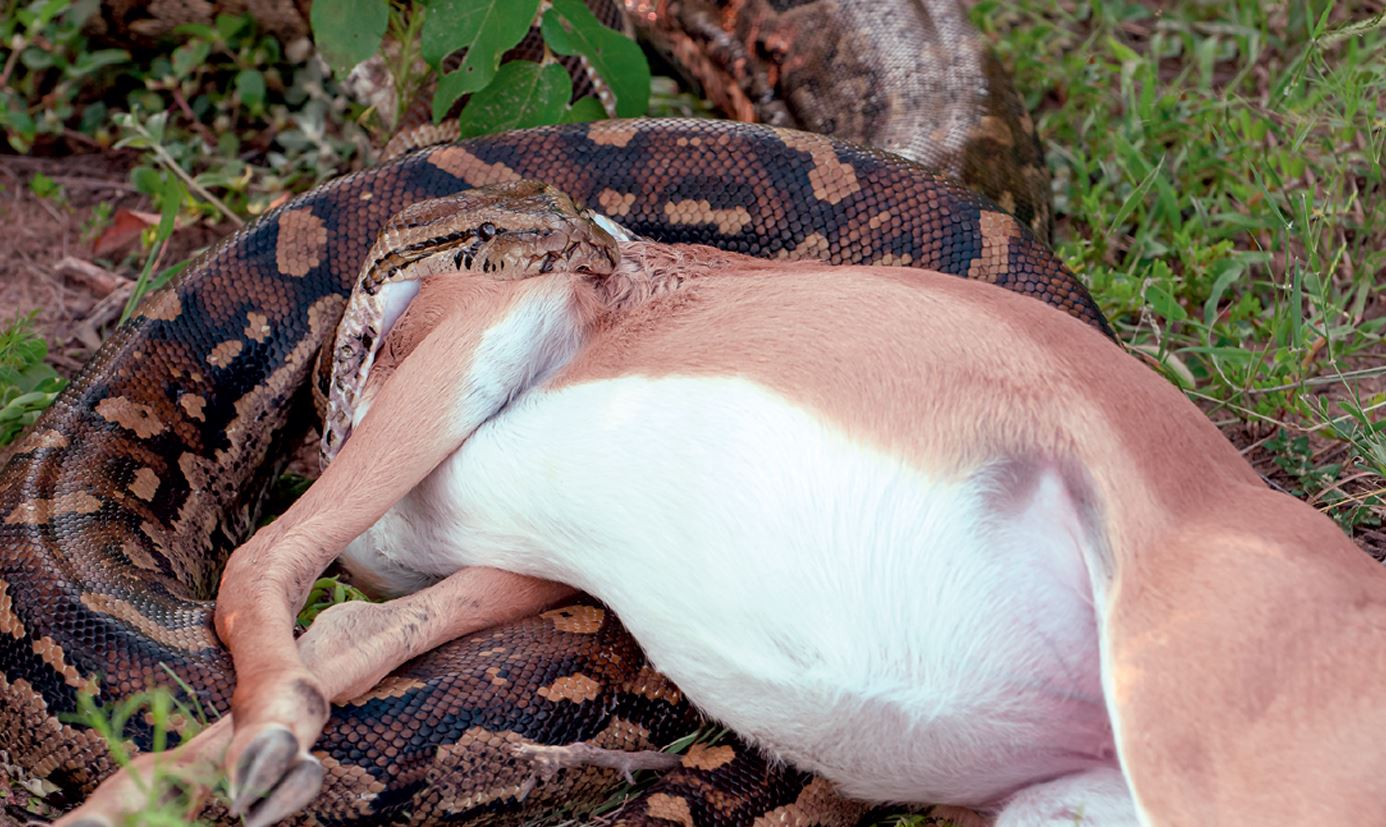
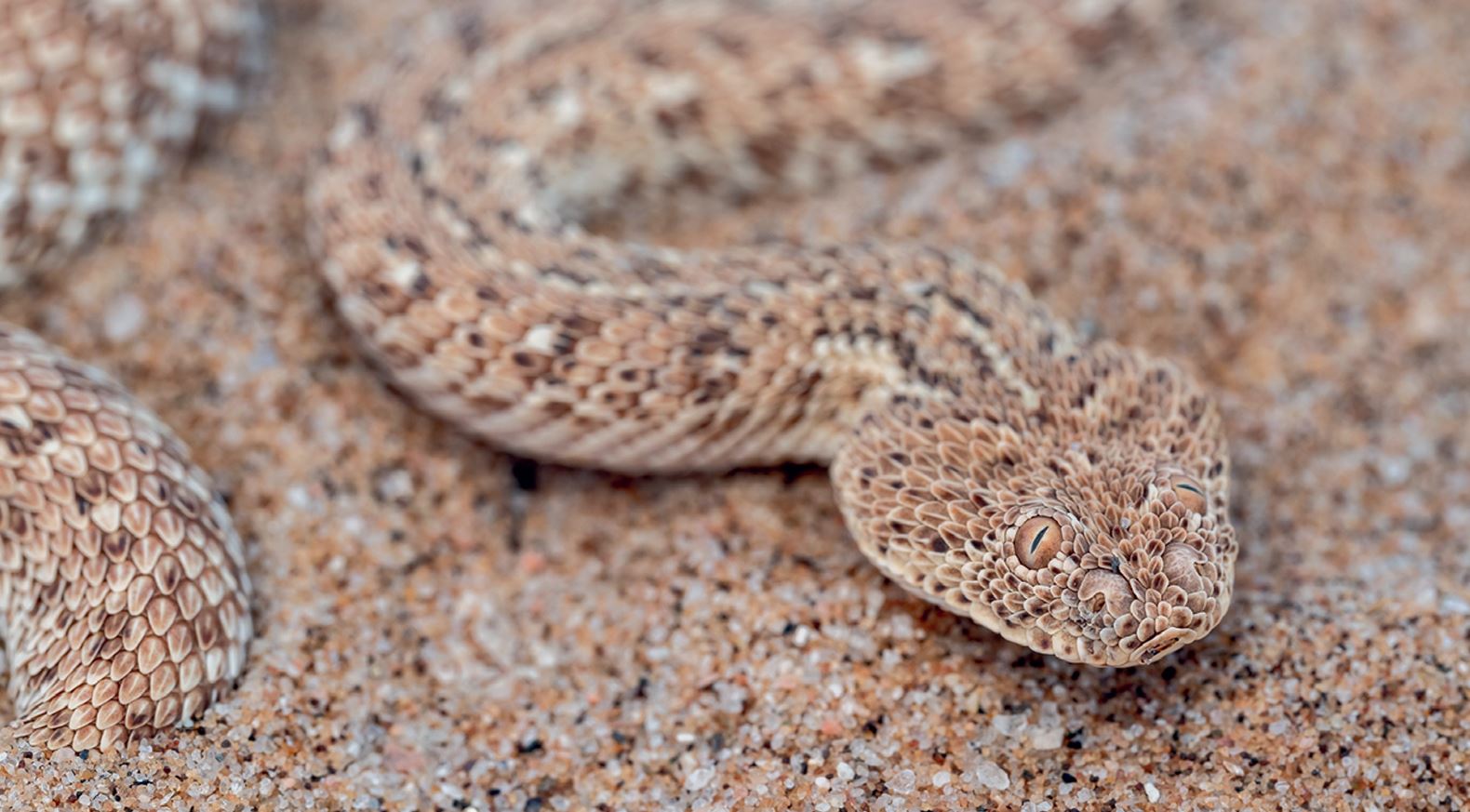
All of them are carnivores that usually stalk their prey from ambush, then hurl themselves upon it in a flash in order to envenom it or constrict it. With their flexible bodies – often colored for camouflage – they can hide well. They burrow into sand, leaves, or mud, or wait in thickets, on branches, in rock crevices, or in earth holes for a favorable opportunity. Although they are feared among animals, they sometimes exert an inexplicable fascination upon them, so that the victims occasionally freeze as if turned to stone and can be overwhelmed without resistance.
Ever-watchful, hidden-lying-in-wait, silently and swiftly gliding, venomous and constricting hunters – without character, without sexual markers, without facial expression and feelings, without care and cohesion, without voice, without smell, and without warmth – it really does seem as though God had pulled out the impersonal, elongated, simple, and scaly core of the excellent original creature, to let it live on in the mode of existence of today’s snakes. Little wonder that many people feel a pronounced aversion to snakes, especially since their venom claims around 140,000 lives every year – far more than any other larger animal.
Through our human perception and interpretation of snake traits, God underscores their symbolic significance. In doing so, we usually unconsciously transfer criteria by which we experience people as likable or unlikable onto animals. If, for example, someone were to stare at us incessantly with a completely expressionless and motionless face and did not even blink, we would find that eerie and frightening.
A sober biological view of today’s snakes, however, arrives at a quite different result: they are absolutely fascinating creatures. Their scaly skin, which by no means feels moist, slimy, and cold but rather firm, dry, and (depending on the ambient temperature) usually even warm, occurs in every conceivable color and in most cases bears beautiful geometric patterns and markings.

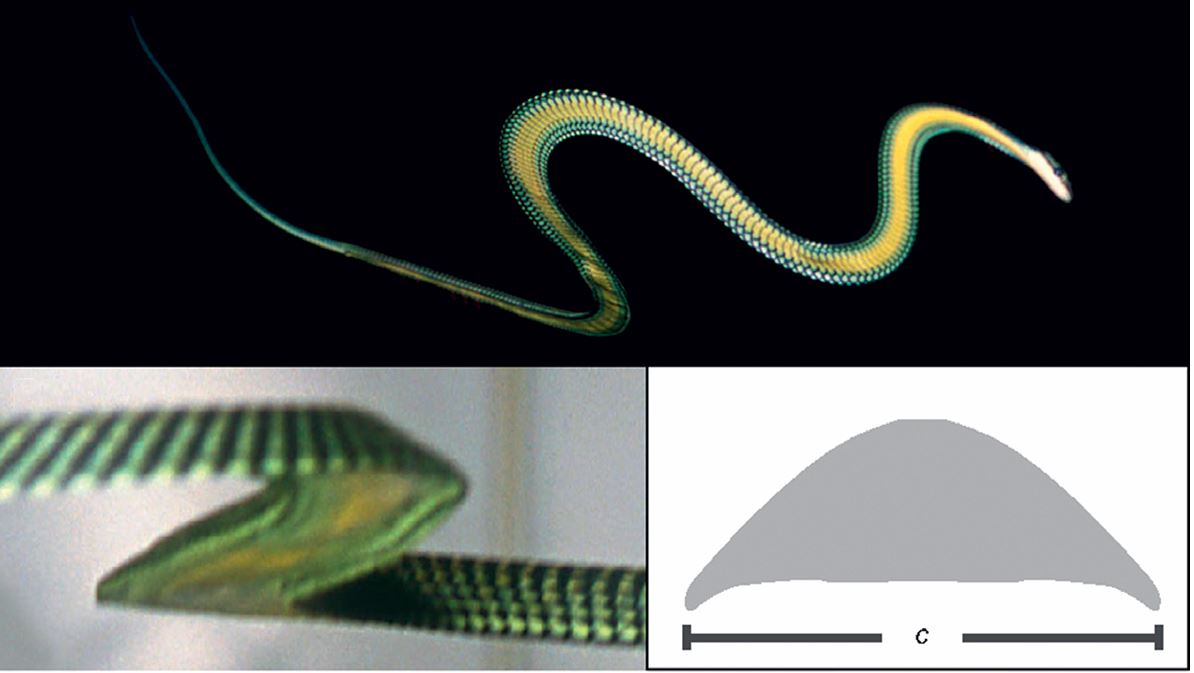
The simplicity of their body plan, their lack of demands, and their adaptability are impressive. As cold-blooded (exothermic) animals they do not occur in polar regions, in the summit zones of high mountain ranges, or in permanently cold water, but otherwise there are no habitats they have not conquered. Whether steppes, deserts, jungles, swamps, bogs, mountains, caves, streams, rivers, lakes, islands, and warm seas – one finds them almost everywhere. There is no other suborder of animals that, with the same overall appearance, could adapt to such different environments. Because of their special mode of locomotion, they can make good progress on virtually any natural terrain, often even at high speed. The sidewinder rattlesnake reaches up to 29 km/h with a special slithering technique. Many species can climb, most can swim well, and paradise tree snakes are even said to be able to «fly». Well – at least they can flatten themselves and glide from tree to tree, after all up to 30 meters!
The Lord Jesus calls on his followers: «Behold, I send you out as sheep in the midst of wolves; therefore be wise as serpents» (Mt 10:16). Since the cognitive performance of today’s snakes does not in the least point to special intelligence, the question arises what is meant here by «wise». The Greek word phronimos does indeed mean «wise, prudent, farsighted» in a positive sense in the New Testament, but in the LXX it is also used in Genesis 3:1. The biological traits mentioned could be the key here. With this comparison, the Lord exhorts the disciples, in a hostile environment, to act vigilantly, optimally adapted, quiet, and inconspicuous – a behavior that God has given snakes through their instincts.
At this point, the concern is only with the contrast between the original serpent and the forms living today. Which species are native to the Levant and the Middle East, what (significant!) role the serpent plays as a real creature, its pronounced symbolism in the Bible, as well as biological evolutionary history – these are topics of another article. From the consequences of the temptation and the further fate of the serpent it becomes clear how, through the influence of the «one who throws into confusion» (Greek: diabolos), a designation of the devil, God’s originally good order of creation is turned upside down.
After the Fall, the serpent loses its position of precedence over the other animals: «Because you have done this, you are cursed more than all livestock and more than every animal of the field. On your belly you shall go, and dust you shall eat all the days of your life.» (Gen 3:14). This is an expression of deepest humiliation. Hence it is said of Israel’s defeated enemies: «they shall lick the dust like the serpent, like the crawling things of the earth» (Mic 7:17; cf. Ps 72:9; Isa 49:23). Today, then, it stands in rank beneath the other land animals. For the other animals, the curse of «eating and being eaten» will in the future largely be lifted, «but dust shall be the serpent’s food» (Isa 65:25), and it will continue to live in its hole and crawl on its belly. Its judgment is final. Yet in the future kingdom of peace no danger will proceed from it: «And the nursing child shall play over the hole of the cobra, and the weaned child shall stretch out his hand toward the den of the viper» (Isa 11:8) – a parallel to the spiritual reality that Satan will then be bound for a thousand years and can do no harm on the earth (Rev 20:2). Thus the serpent mirrors the story of Satan, who as the «morning star» (Isa 14:12), the «seal of perfection» (Ezek 28:12), and the «anointed guardian cherub» (Ezek 28:14) had a position of precedence among the angels before he is cast down and humbled beneath them (Isa 14:15; Ezek 28:17). Here another interesting parallel can be observed: the first part of the judgment on the serpent (being cursed, crawling on the belly, eating dust; Gen 3:14) primarily concerns the actually existing creature; the second part (enmity with the woman and her offspring, crushed head; Gen 3:15) concerns the spirit behind it, namely Satan, the adversary. Likewise, the prophetic oracles of judgment mentioned at first refer to real kings of Babylon (Isa 13:1–14:11) and Tyre (Ezek 26:1–28:19) who rebelled against God, but then the message goes beyond them and refers to Satan, the driving force behind these kingdoms (Isa 14:12–15; Ezek 28:11–19).

In his special relationship to God, the human being even had a position of precedence among all creatures. After the Fall he, as a mortal being, was «made a little lower than the angels» (Ps 8:6). Nor could he thereafter exercise in full the dominion entrusted to him over all animals (Gen 1:28), although animals generally fear him (Gen 9:2). He does not do justice to his responsibility and ruins creation.
The woman was placed at the man’s side so that, together with him, she might rule over creation in a good way. After the Fall it is difficult for her to submit to the man, who now rules over her in an unhealthy way (Gen 3:16). Because he abuses his position, deep rifts yawn between the sexes in every culture (rifts that are not overcome by the fact that today people increasingly try to deny and redefine the clear existence and purpose of the two sexes).
In fact, in the serpent’s temptation a pattern can be recognized that is as destructive as ever. The points of attack of human susceptibility to temptation are listed in 1John 2:16: «the desire of the flesh and the desire of the eyes and the pride of life». Together they are described as «all that is in the world», where «world» in this context is the God-opposed system in which Satan is described as prince (Joh 12:31; 14:30; 16:11) or even «god» (2Cor 4:4). Satan knows the weak points of humankind very well and tailors his tactics precisely to them. It is not entirely easy to distinguish these «three engines of immorality» from one another; the transitions sometimes appear fluid. Nevertheless, they can be characterized and brought together with the situation in the Garden of Eden as described in Genesis 3:6:
The desire of the flesh focuses on the relationship of one’s own body to the material environment. It is about the question «What do I have? What can I get?», that is, bodily needs and cravings – satiety, pleasure, comforts, and possessions. Eve and Adam saw that the forbidden tree would be «good for food» and desired to eat from it.
The desire of the eyes focuses on the relationship to other people and events. It is about the question «What do I experience? What do I find out?», that is, emotional needs, sensations, feelings, and communication – the experience of new, exciting, and interesting things. The tree was «a delight to the eyes», and they felt the lure of making a new experience, of crossing a boundary.
The pride of life focuses on the intellectual relationship to other people and to God. It is about the questions «Who am I? How do others see me? To whom do I submit?», and thus about mental and spiritual needs as well as attaining recognition and power. The tree seemed to them «desirable to make one wise» – and the serpent even held out to them the prospect of becoming like God.
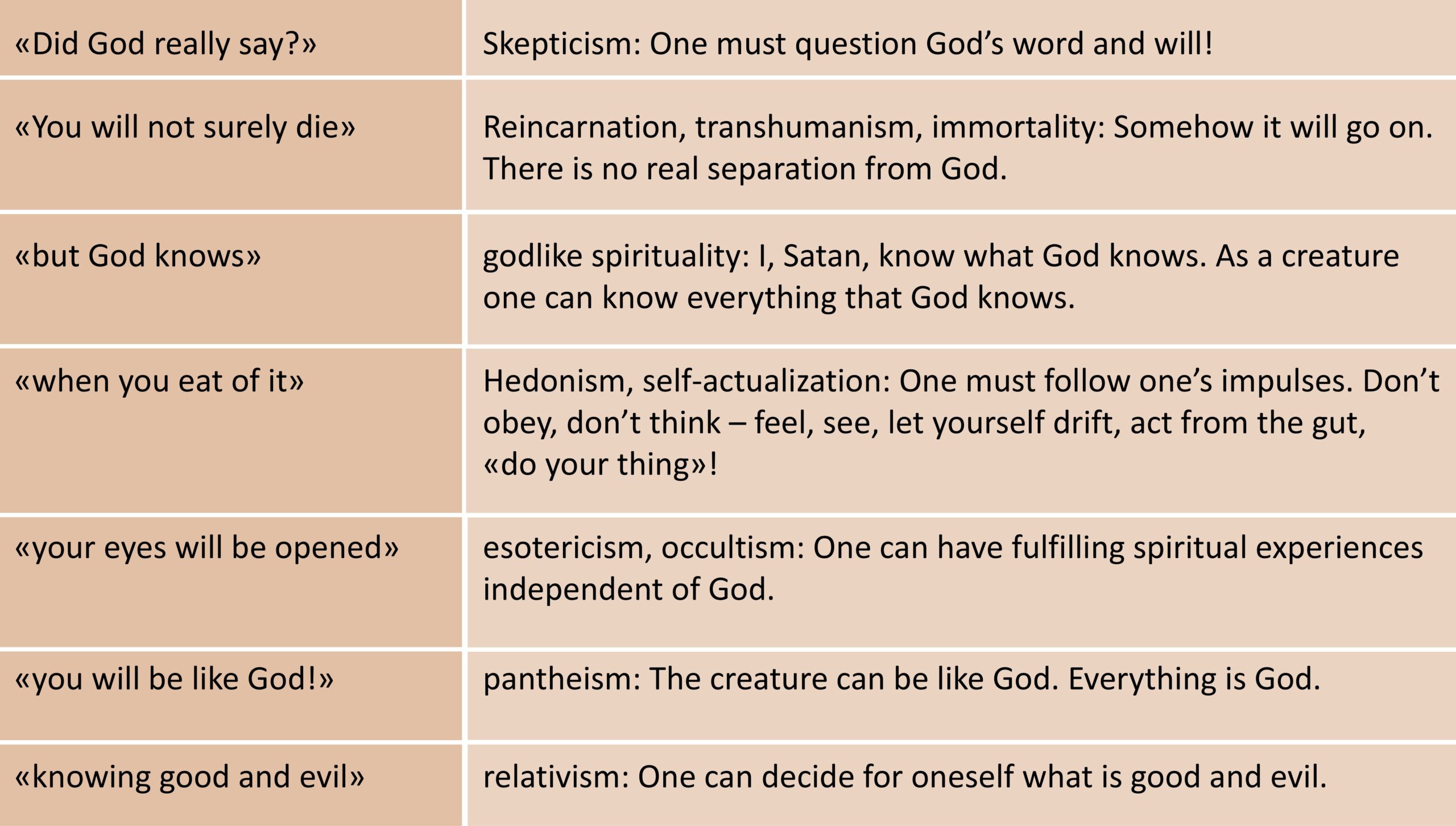
Alongside religious systems and idol cults that spread through Satan’s influence in all ethnicities and cultures, since the serpent’s speech in Genesis 3:2–5 the «7 lies that we humans believe» have also been in circulation:
The bad news is that the conflict with Satan continues: «From now on I will put enmity between you and the woman, and between your offspring and her offspring» (Gen 3:15). Although there are many snake species that can be dangerous to humans (700 venomous and about 100 particularly dangerous), it is obvious that this prophecy, too, does not refer to the reptile but to Satan, the adversary. In Eden he had proved himself a liar and a «murderer from the beginning» (Joh 8:44). Everyone who follows him in his rebellion and does not turn back to God is Satan’s spiritual offspring. Even if that sounds very harsh, for human beings there are only these two options: «the children of God and the children of the devil» (1John 3:10). Then, in Genesis 3, there is an unexpected grammatical break. With reference to the woman, it does not speak of «offspring» (plural) but of «offspring» (singular).
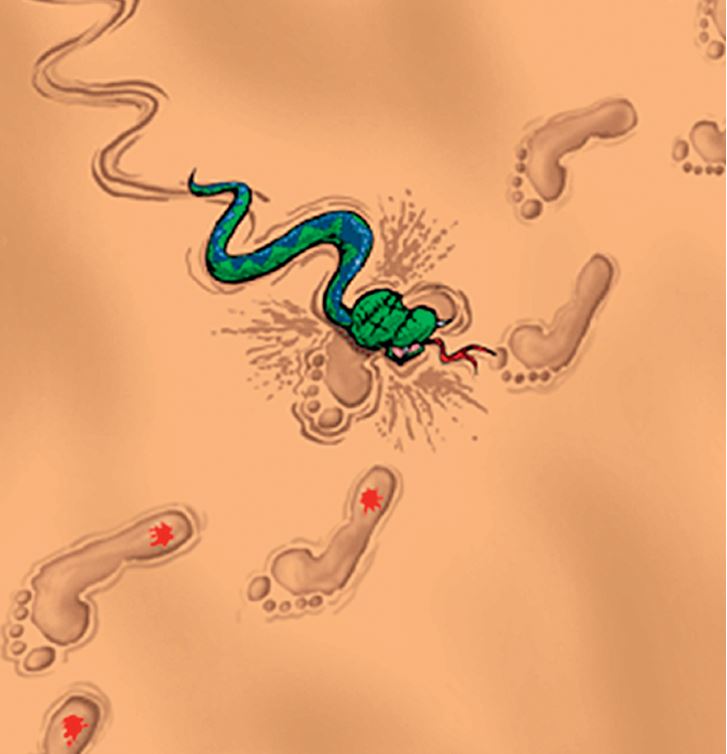
The good news is that the «serpent-conqueror» is announced in the same breath as the curse on the serpent: «He shall bruise your head, and you shall bruise his heel» (Gen 3:15). This HE is the offspring of the woman. He is the one who has defeated Satan. Many further hints at the Redeemer follow this first one. In speaking with Abraham, God recalls this promise: «and through your offspring all the nations of the earth will be blessed» (Gen 22:18). At first one might think of Isaac, through whom the «line of blessing» was carried forward. But the deeper meaning is revealed in the New Testament: «So it is with God’s promises to Abraham. If we look at them more closely, we find: God gave his promise to Abraham and to his offspring. It does not say: “to Abraham and to his offspring”, as though many were meant. God expressly says: “to your offspring”, that is, to one single person. This One is Christ» (Gal 3:16).
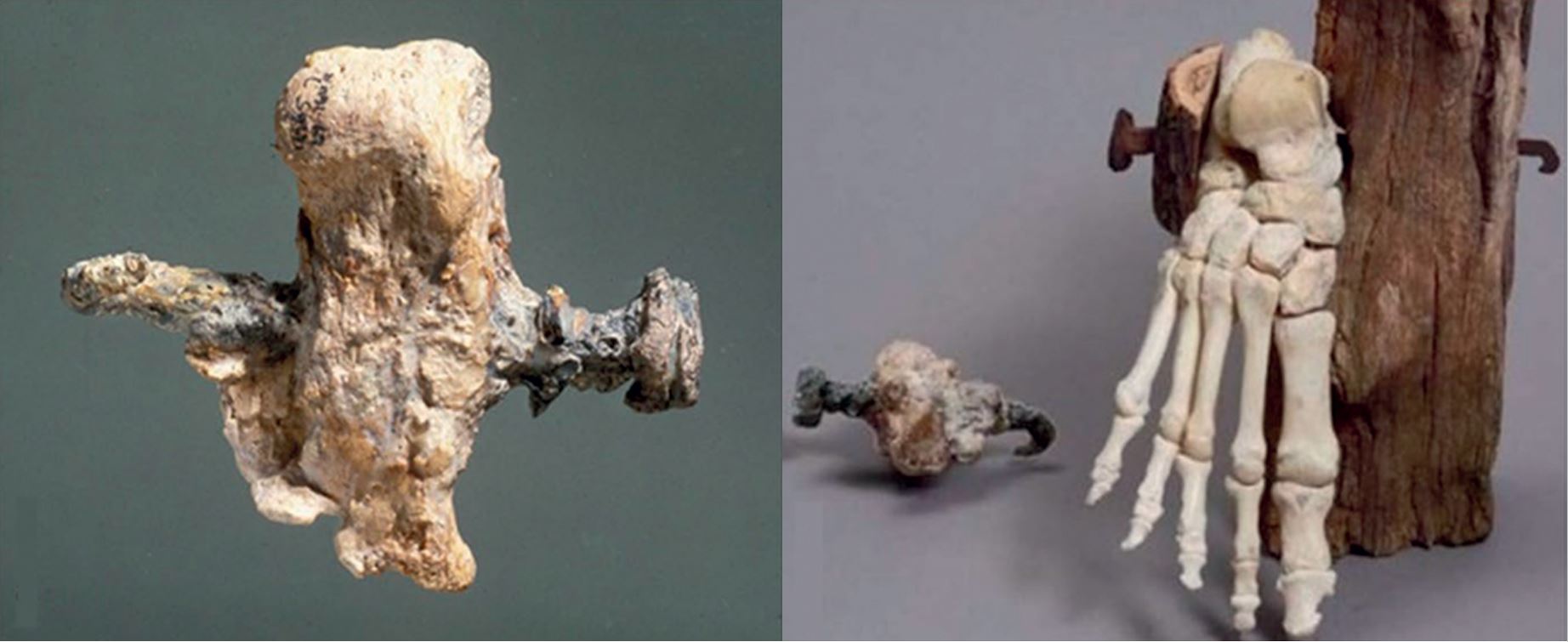
Although this promise of God, right at the very beginning of world history, is a cause for joy and gratitude, we also learn, sadly, that it would not be an easy victory: the serpent would bite the offspring in the heel. The meaning of this statement is clear: constrictor snakes do not usually bite their prey, and harmless snakes at most nip their captor in the hand. Only dangerous venomous snakes behave that way – and their bite is deadly. This was fulfilled when the Lord Jesus, pierced in heel bone and hands by Roman nails, gave his life on the cross to ransom all people (1Tim 2:6). He died although there was no wrongdoing for which Satan could have accused him: «the ruler of this world is coming, and he has nothing in me» (Joh 14:30). «So through death he could render powerless the one who exercises power by means of death, namely the devil» (Heb 2:14). Satan is thus a defeated enemy, and we may expect the complete fulfillment of the oldest prophecy: «It will not be long before the God of peace has crushed Satan under your feet» (Rom 16:20).

The imagery of the Bible illustrates that every human being since Adam has been bitten by the serpent and infected with the deadly venom of sin. Everyone is doomed to death and is heading toward judgment for his own accumulated guilt. But Holy Scripture also indicates how simple salvation is: «And the LORD said to Moses: Make yourself a fiery serpent and set it on a pole; and it shall come to pass that everyone who is bitten, when he looks at it, shall live» (Num 21:8). Whoever believed the words of God and looked at the raised copper likeness of the cause of his death – the venomous serpent – remained alive. The Lord Jesus applies this story to himself and explains how we can be saved today: «And as Moses lifted up the serpent in the wilderness, so must the Son of Man be lifted up, that everyone who believes in him may not perish but have eternal life. For God so loved the world that he gave his only begotten Son, that everyone who believes in him may not perish but have eternal life. For God did not send his Son into the world to judge the world, but that the world might be saved through him» (Joh 3:15–17). God «desires all people to be saved and to come to the knowledge of the truth» (1Tim 2:4) – and whoever has not yet believed in his Son Jesus Christ can still change that TODAY.
Sources:
Biz, C; Refolo, M; Zinnarello, FD: A historical review of calcaneal fractures: from the crucifxion of Jesus Christ and Don Juan injuries to the current plate osteosynthesis. International Orthopaedics 2022; 46:1413-1422; doi: 10.1007/s00264-022-05384-3; https://d-nb.info/1269252038/34
Brauer, M: 140.000 Tote durch Schlangenbisse. Stuttgarter Nachrichten, 07.05.2019; https://www.stuttgarter-nachrichten.de/inhalt.schlangen-fast-140-000-tote-jaehrlich-durch-schlangenbisse.c4b94a04-6d26-4c1e-9525-96f41b6f34b7.html
Collins, J: A Syntactical Note (Genesis 3:15): Is the Woman’s Seed Singular or Plural? Tyndale Bulletin 1997; 48(1):139-148; doi:10.53751/001C.30353
Holden, D; Socha, JJ; Cardwell, ND: Aerodynamics of the flying snake Chrysopelea paradisi: how a bluff body cross-sectional shape contributes to gliding performance. Journal of Experimental Biology 2014; 217:382-394; doi: 10.1242/jeb.090902
Johnson, K: A Garden Divine: Beware of Snake. New York Times, 17.07.2014; https://www.nytimes.com/2014/07/18/arts/design/back-to-eden-at-the-museum-of-biblical-art.html
Lange, B: Der geheimnisvolle Held der Bibel (pp. 11-35). Dillenburg (Christliche Verlagsgesellschaft Dillenburg) 2022
Ojewole, AO: The Seed in Genesis 3,15: an Exegetical and Intertextual Study. Andrews University 2000; Dissertations #116; https://digitalcommons.andrews.edu/dissertations/116
http://www.reptile-database.org (official taxonomy of reptiles); accessed 31.10.2023
WHO: Snakebite envenoming. World Health Organization; accessed 22.10.2023: https://www.who.int/health-topics/snakebite#tab=tab_1
Yi, H: Wie die Schlangen das Gleiten lernten. Spektrum.de Magazin, 16.05.2018
Image Credits:
Wikipedia: distribution map of snakes / User:Sarefo
other licenses: Title – snake portrait / shutterstock ID_498020899 / HarrisD // Southern African rock python / shutterstock ID_1534959209 / Gulliver20 // Peringuey’s adder – well camouflaged / shutterstock ID_2395483063 / Wirestock Creators // Pagoda with dragon images / shutterstock ID_432709177 / martinho Smart // Memorial to the bronze serpent – Nebo / shutterstock ID_1572921697 / Munzir Rosdi // Artwork – serpent with legs / The_Serpent_before_the_Fall_Mark_Dion_2014.jpg / Gina Fuentes Walker // Gliding flight of the paradise tree snake / Schlangengleitflug.jpg / Holden et al. // Saviour crossing / Saviour_crossing.jpg / AiG – Dan Lietha // Diagram of nails at the cross / Kreuznagel-Fersenbein.jpg / Carlo Biz