A figurative comparison long posed a riddle: «Like a partridge that broods over eggs it did not lay, so is one who acquires wealth unjustly; in the middle of his days he must leave it behind, and in the end he is a fool!» (Jer 17:11).
The partridge owes its Hebrew name kore («caller») to its piercing calls, which carry far and wide and are referred to in hunting terms as «luring calls». Comparisons with other Semitic languages and references in various ancient sources leave no doubt about this identification. The German name likewise means «calling bird».
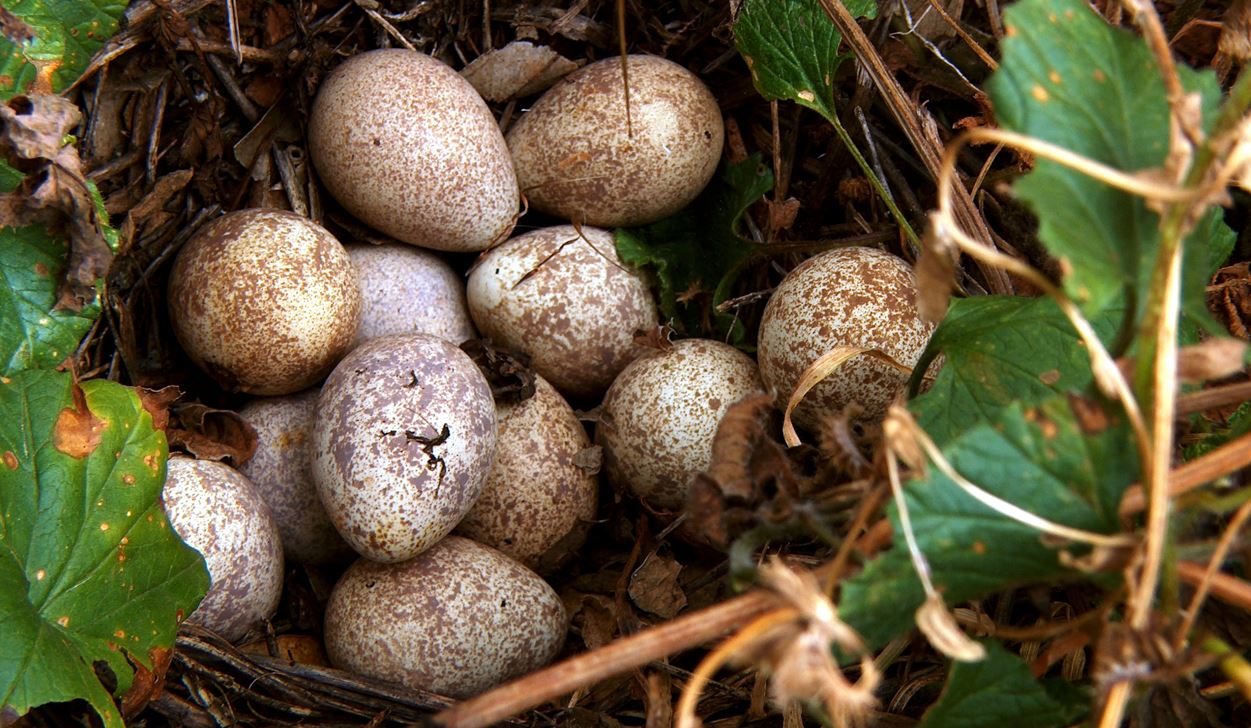
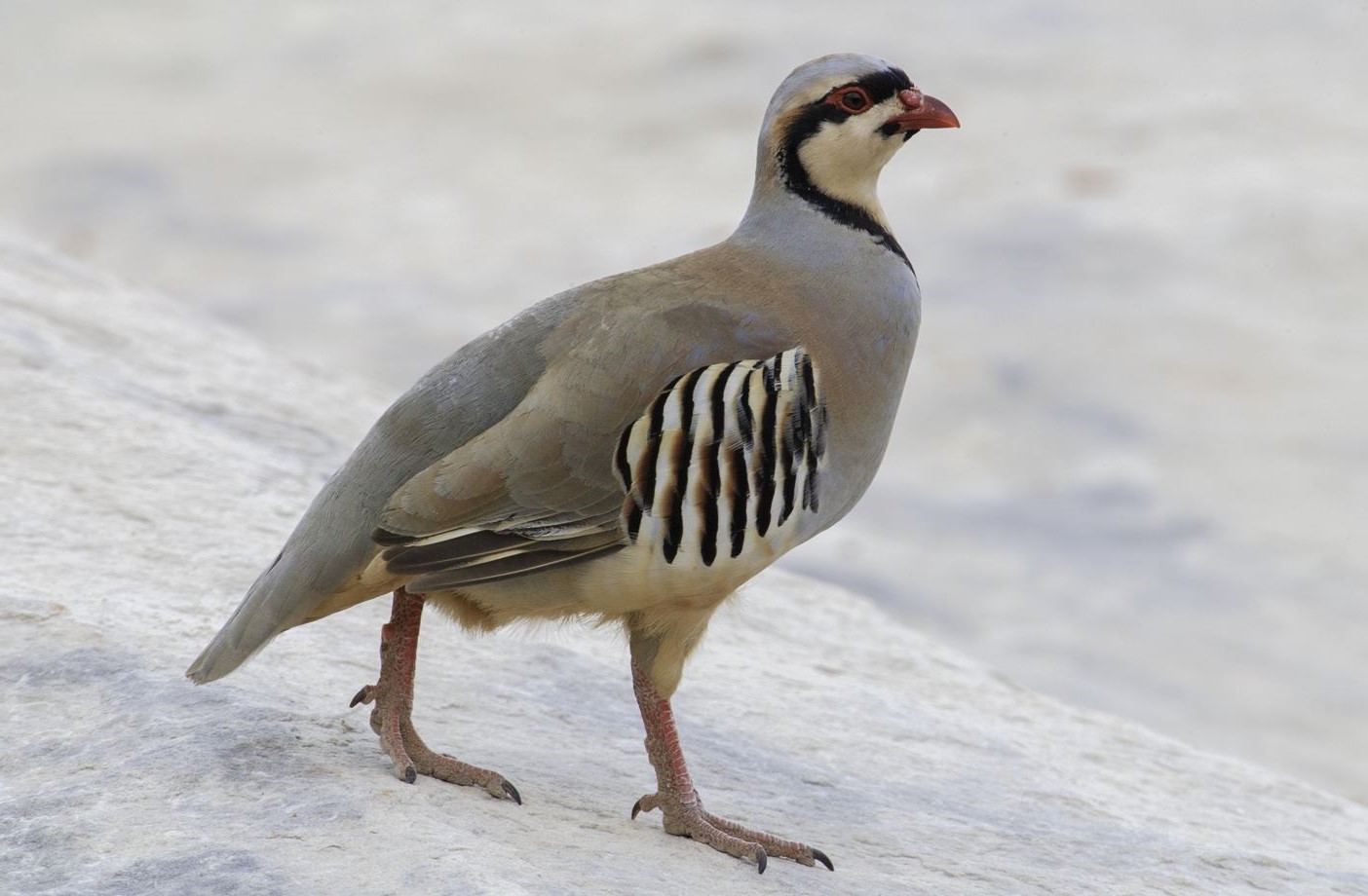
Although the partridge (Perdix perdix) has been known to hunters and naturalists of the Western world since ancient times, the description given by the prophet Jeremiah was never observed. It was known, however, that partridges can hatch up to 24 (their own!) eggs in a single clutch—something unique in the bird world. Thus, it was assumed that the «simple ancients» could not imagine that a partridge might lay such a large number of eggs itself, and so the legend arose that it gathered them by stealing. Yet since there is not a single known case where a mistaken folk belief or false natural description found its way into the Bible, this would be a remarkable exception.
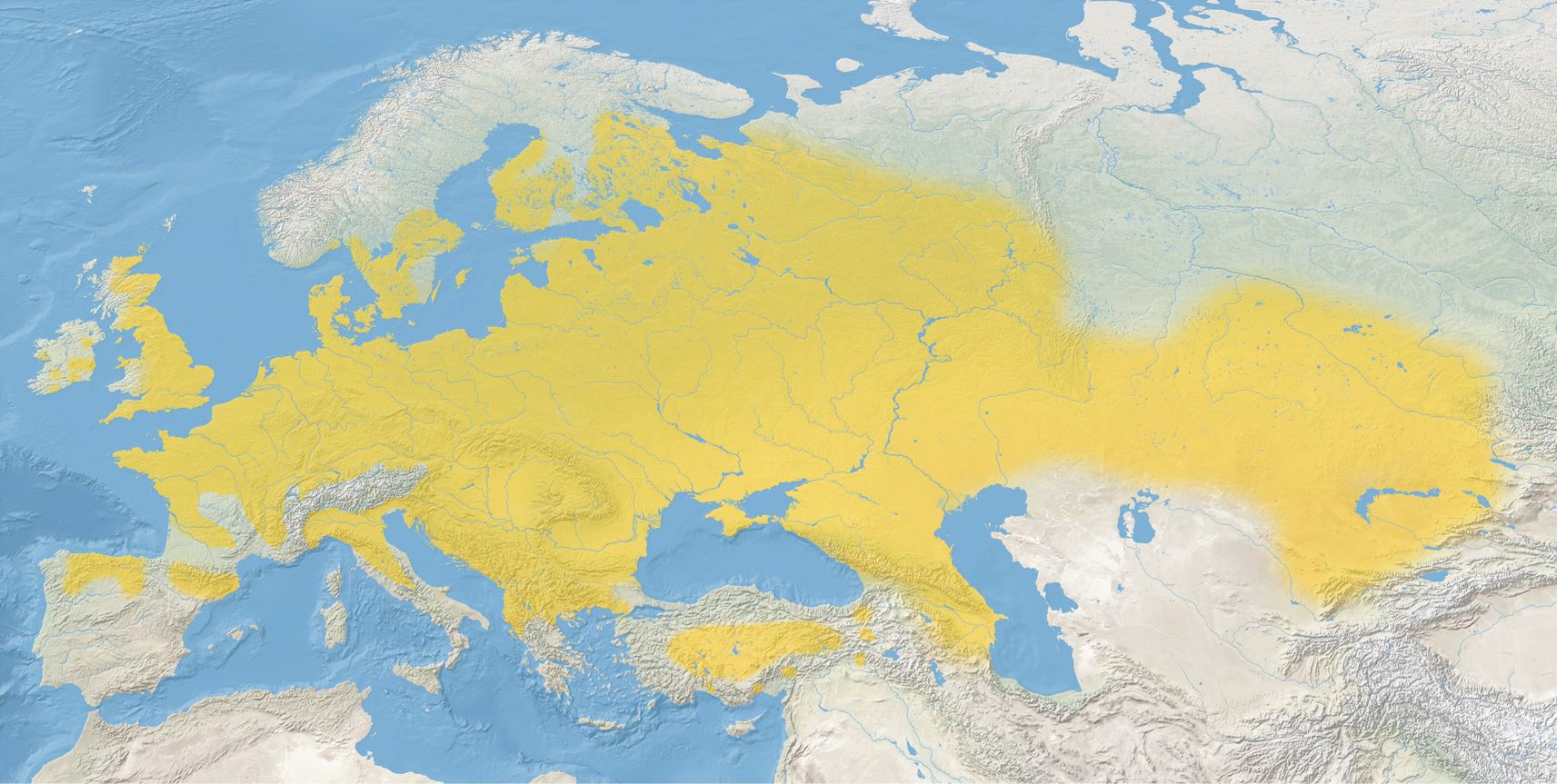
The solution to the riddle: the bird in question is not Perdix perdix, which is not found in the Near East at all, but Perdix heyi (or Ammoperdix heyi), the very similar Arabian sand partridge, which is widespread in the dry semi-deserts of Israel, Egypt, and Saudi Arabia. Among these birds, «intraspecific brood parasitism» is known. This means that «single» females—those fertilized by an unfaithful male—or females that have lost their partner or nest simply lay their eggs in another bird’s nest.
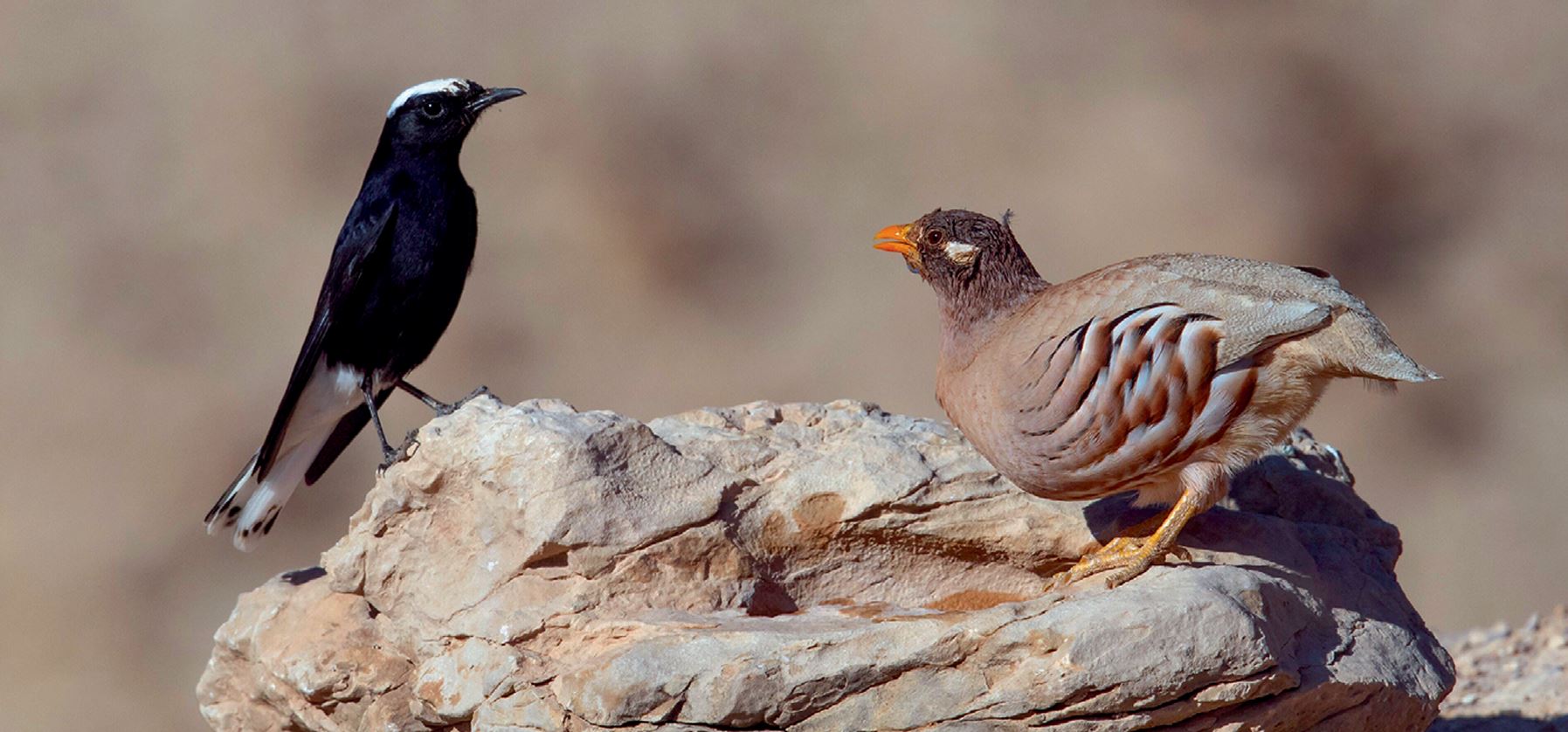
It even happens that females from «stable circumstances» (reliable partner, impeccable nest) resort to this dubious method, apparently because they are «too lazy» to brood. The foster mother, who provides protection and warmth for the eggs, that are not their own, and proudly regards her numerous clutch, is the one deceived and invests in another lineage.
Newly hatched sand partridge chicks are precocial: they leave the nest just a few hours after hatching, once their feathers have dried, to search for food on their own. It is reported that these step-children then follow the call of their biological mother and run away from their foster mother.

Jeremiah uses this image to illustrate that wealth not acquired or regarded in the proper way deceives a person. The Lord Jesus also speaks of the «deceitfulness of riches» (Mt 13:22; Mk 4:19). It is a double curse: those who chase after wealth and fail to gain it feel cheated and believe they have missed their happiness, while those who have accumulated wealth wonder why they still remain empty and unhappy. Those who believed they had at least gained security through their riches recognize the deception only at the end, when their soul is required of them and they stand exposed as fools (cf. Lk 12:16–21).
Although all members of the pheasant family can fly, they generally make little use of this ability. Thus, sand partridges are almost always «on foot». Remarkably, even in great danger they often seem to forget that they can take to the air and first attempt to flee by running. If a pursuer surprises them with high speed, it is often too late to escape by flying. In Egypt, they are hunted with greyhounds, which chase after them so swiftly that they are caught before they can take off.
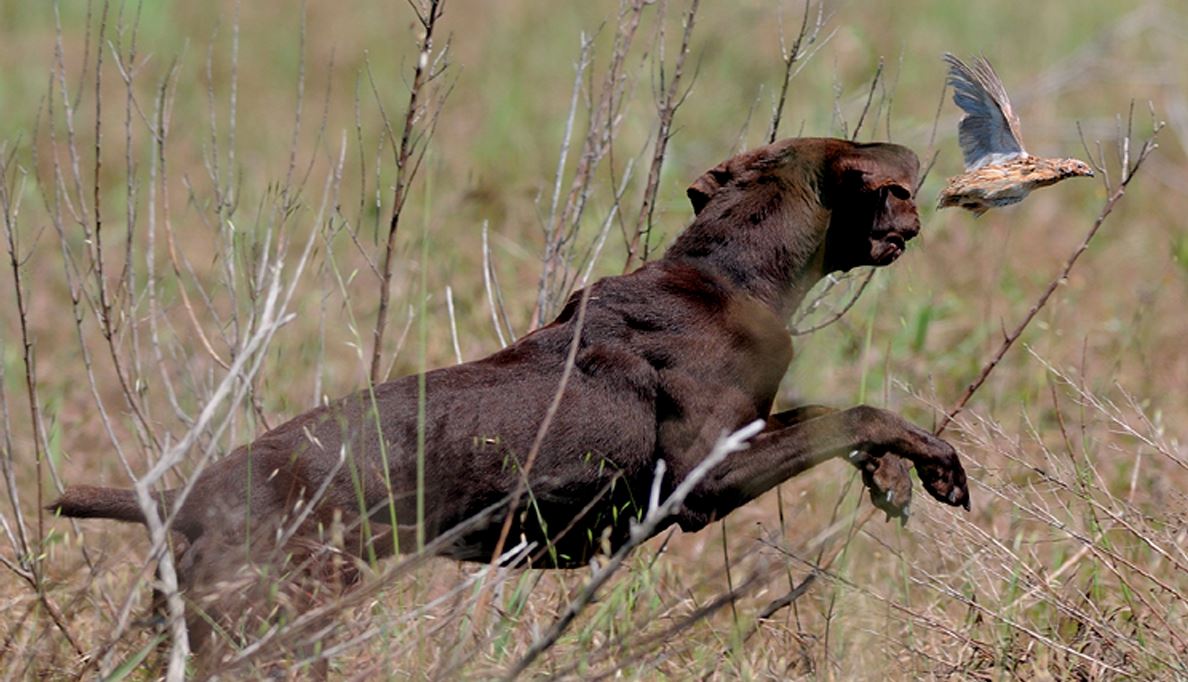

Taking off is very strenuous for them, and they only ever fly short distances. The desert inhabitants have studied their behavior well, and Bedouin boys amuse themselves by repeatedly flushing the birds until they collapse from exhaustion and allow themselves to be captured. This method of hunting has likely been practiced for many centuries, for David already referred to it when addressing King Saul, who pursued him relentlessly through the wilderness: «Why does my lord pursue his servant? For what have I done? Why chase me like a partridge in the mountains?» (1Sam 26:20). And yet he could have risen and gained «freedom», for shortly before he had crept by night into the camp of his enemies and stood with one of his elite warriors over the sleeping Saul but spared his life.
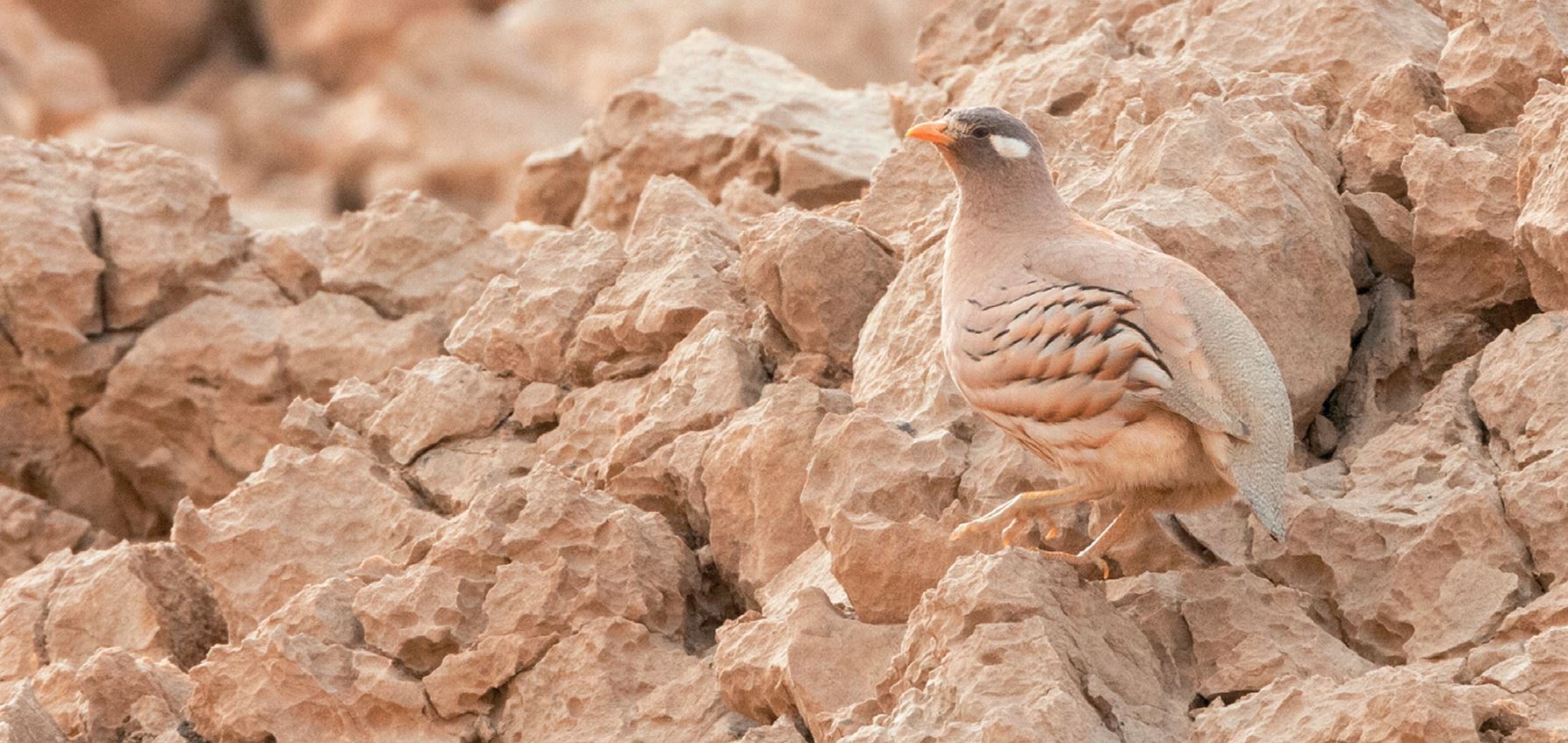
David, who had already been anointed king of Israel when he was driven through the Judean hills like a sand partridge by his adversaries, in many ways points to Jesus Christ, the «Son of David». He too was opposed and pursued with deadly hatred, as described in Lamentations 3:52: «They hunted me down like a bird, those who were my enemies without cause.» He had the opportunity to «take flight» and escape his enemies (or to restrain them), yet it is written of Him that, «being in the form of God, he did not consider equality with God something to be grasped» (Phil 2:6 SB). A thief acquires his loot unlawfully, hides it, and hoards it. The Lord Jesus was rightfully God, revealed it, and relinquished His divine rights and power when He gave His life willingly (Joh 10:18).
In the case of the sand partridge, weak escape instincts and limited intelligence may be responsible for its failure to make use of its «right» to fly away; the Lord Jesus, however, consciously subordinated His natural «will to survive» to the will of His Father (Mt 26:39–44) and encourages us to adopt the same attitude (Phil 2:5).
Sources:
Berchorius, P: Incognitus apertius cognitus sive, 1721; p. 155
Brehm, A: Der Windhund (pp. 592-599). Brehms Thierleben. Allgemeine Kunde des Thierreichs Leipzig (Verlag des Bibliographischen Instituts) 1884. http://www.zeno.org/nid/20007930968
Cornelii a Lapide, C: Commentaria in Jeremiam Prophetam Cap XVII. Typis, ac noviter sumptibus Hieronymi Albritii, 1717; vol. 6, p. 508
Pieper, EO: Rebhuhn, Perdix perdix. https://www.wildhueter–st-hubertus.de/rebhuhn-2
Reusner, N: Tiere der Luft: Perdix. Emblemata 1567; IV:843-845
Rohwer, FC; Freeman, S: The distribution of conspecific nest parasitism in birds. Canadian Journal of Zoology 1989; 67(2):239-253. doi.org/10.1139/z89-035
Valerianus, P: De Perdice. Hieroglyphica, sive de sacris Aegyptiorum aliarumque gentium litteris commentariorum libri LVIII 1556; Liber XXIV:175-177. https://digi.ub.uni-heidelberg.de/diglit/valeriano1604/0065
Wronski, T: The seasonality of group size and group composition of sand partridge (Ammoperdix heyi) in the Ibex Reserve, Saudi Arabia. Turkish Journal of Zoology 2012; 36(2): 223-229 doi:10.3906/zoo-1008-5
Yom-Tov, Y: Intraspecific Nest Parasitism in Birds. Biological Review 1980; 55:93-108. doi.org/10.1111/j.1469-185X.1980. tb00689.x
Website with comprehensive information on bird feathers: https://www.featherbase.info/de/home
Website with all known bird species: https://avibase.bsc-eoc.org/avibase.jsp?pg=home&lang=DE
Image credits:
Wikipedia: Distribution map of the partridge / Maximilian Dörrbecker (Chumwa)
other licenses: Partridge clutch / AdobeStock_3880661.jpeg / Luis Bras // Dog hunting partridge / AdobeStock_36402310.jpeg / José 16 // Dog catching partridge / AdobeStock_212333660.jpeg / Vitalii_Mamchuk // Sand partridge defending its clutch / agefotostock_AIK-MRA1970.jpg / Markku Rantala // Sand partridge chicks at water / agefotostock_ALM-E647D6.jpg / Eyal Bartov // Partridge / shutterstock_604694855.jpg / serkan mutan // Arabian sand partridge, well camouflaged / shutterstock_1948233085.jpg / Agami Photo Agency