The quail (Coturnix coturnix) is a small gallinaceous bird that lives very much in concealment. Although it is native to and widespread across Central Europe, it is rarely encountered in the wild. This is because, as its name already suggests, it is extremely vigilant («The quail keeps watch all night») and avoids any contact with humans.
In addition, it is usually active only in the late evening or early morning hours and spends the day hidden away. In Israel, the selav appears only as a migratory or winter visitor and is a popular game bird. Its eggs are also highly prized, and it is mentioned exclusively in connection with the provision of the people in the wilderness (Ex 16:13; Num 11:31–32; Ps 105:40).

Even if you don’t see it—you can hear it from far away. The call of the male, known in hunting terminology as the «quail’s call,» can be heard from about half a kilometer away. It is hardly surprising that a bird one never sees but constantly hears would be named after its call. Curiously, this distinctive sequence of sounds is perceived and interpreted differently everywhere.
A Wikipedia entry—unfortunately available in only a few languages—notes that the English hear wet-my-lips (or weet-my-feet, quick-me-dick), while the French understand paye-tes-dettes («pay your debts!») and are struck with a guilty conscience. Spaniards, apparently less imaginative, hear only pal-pa-la. Whether the Dutch, with kwik-me-dit, or the Luxembourgers, with bek-de-rek, perceive anything specific remains unclear to the author. On the other side of the border, however, people once interpreted Bück-den-Rück («hunch your back!») and Flick-de-Bücks («mend the trousers!») as a «motivational call» for tardy farmhands and maids. In old German bird books, the quail is called pick-per-wick. Even its scientific name, co-tur-nix, is almost certainly onomatopoetic. As different as the vowels and consonants may be, they all share the same short-syllabled staccato of a dactylic rhythm.

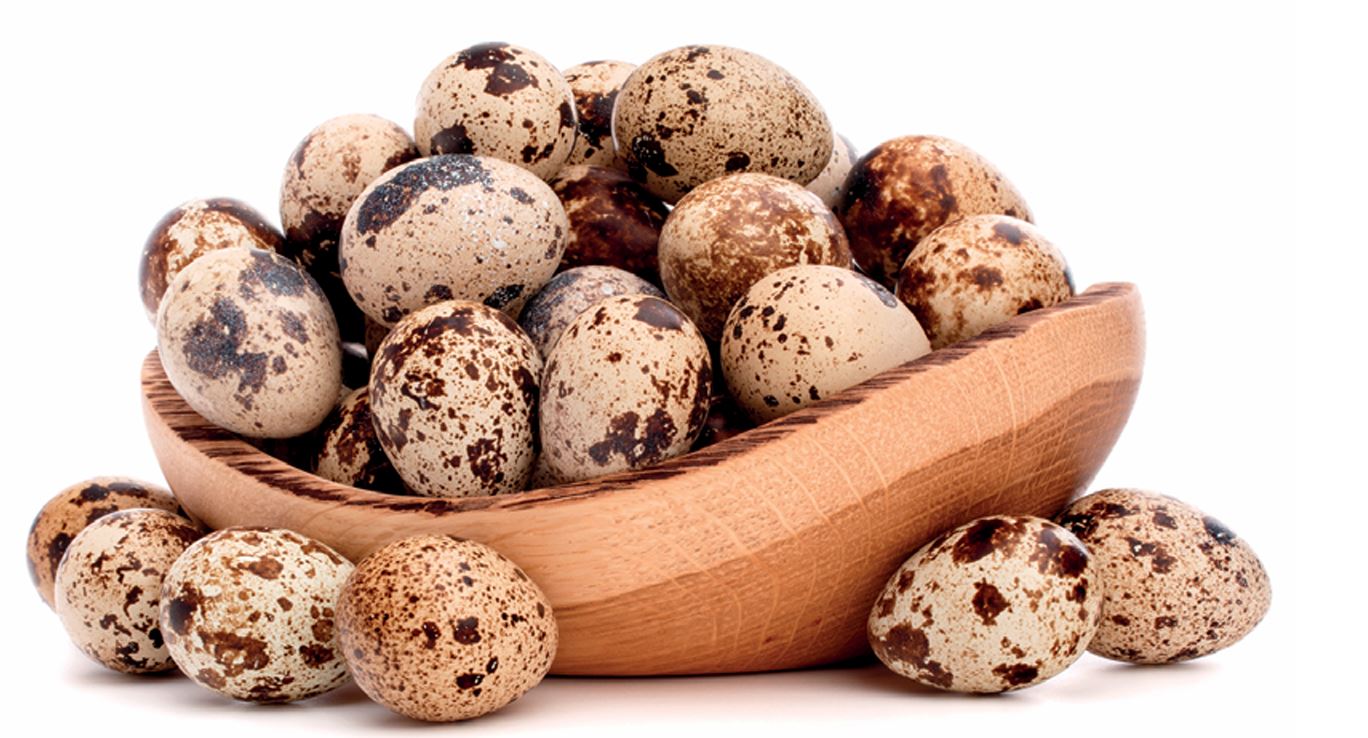
The male quail mates with every female that responds to his call. Nesting and incubation are then entirely the female’s responsibility. A single clutch may contain up to twelve eggs and is incubated for three weeks. Fortunately for the overburdened hen, she does not have to feed the young: they are precocial, able to run about and feed themselves just a few hours after hatching. At three weeks, they are fully capable of flight, and after only ten weeks they can reproduce themselves. This makes them the earliest maturing birds! Since females occasionally brood twice in succession, it is easy to calculate how the quail population can practically explode in a favorable summer.
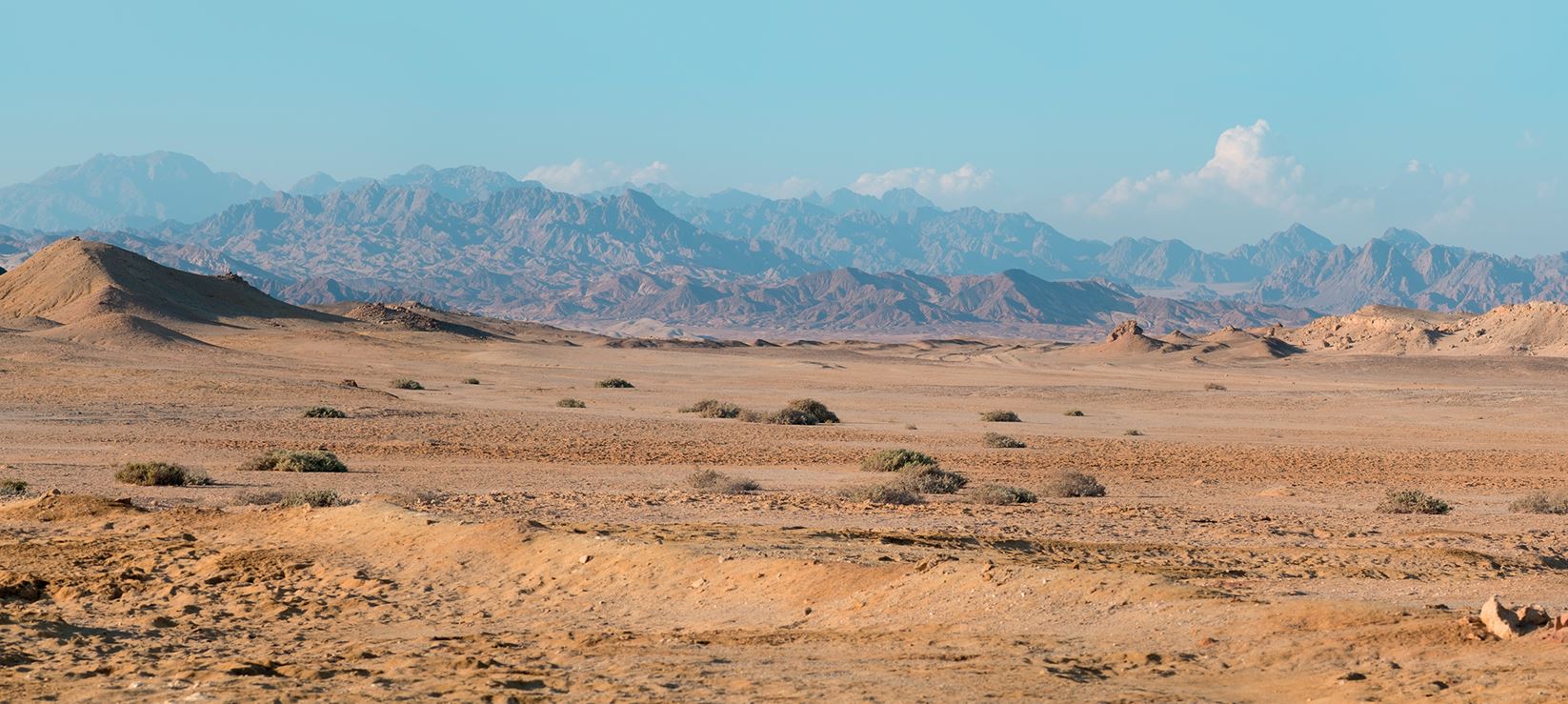
For wintering, quails migrate from Europe deep into Africa, often following the course of the Nile over long distances. They do not need to detour via the Levant but can cross the open Mediterranean. The vast flocks that twice covered the camp of the Israelites (Ex 16; Num 11) were likely birds in migration. It is possible that in both instances God used natural circumstances to provide for and discipline His people. In any case, there are reports that quail flocks—flying even at night and orienting themselves by the stars—can become disoriented by unexpected lights and land as a precaution. A large number of campfires or the brightly shining pillar of fire in the center of the camp could have had the same effect. Yet it remains God who directs the course of events: «They asked, and he brought quails» (Ps 105:40).
The second time, however, poisoning occurred, and many Israelites died while eating the quail. In medicine, poisoning from quail meat is called «coturnism» after the bird’s Latin name. Since quail has always been a prized game bird highly valued by gourmets, this phenomenon has been known for millennia and remains puzzling. Various plant toxins have been suspected of accumulating in the birds to dangerous levels, but none of these theories has been confirmed. Another hypothesis suggests that toxins form in the muscles of quail under physical exhaustion. The following article from the newspaper «Weltwoche» (May 3, 1978) may support this:
>> At four in the morning, the phone rang aboard the supertanker “Star of Bahrain” cruising through the Mediterranean: “Captain, come quickly to the bridge! Entire squadrons of birds are attacking us!” When Captain James Reed rushed onto the deck, he was struck with terror. Much like in Alfred Hitchcock’s horror film “The Birds,” his deck was flooded with a single hopping, screaming mass of birds. They poured through windows and hatches into the engine rooms and cabins, while more and more squadrons of quail kept landing. The reason for this “attack” soon became clear: a severe storm was sweeping in from the north-northwest. The globe-trotting quails had recognized it before the sailors and sought refuge on the ship. Once the worst of the storm had passed, some sailors went out to procure “fresh poultry for the galley.” But twelve hours after the meal, all hell broke loose aboard. Nearly all crew members suffered from “severe seasickness.” Breathing difficulties and speech disorders followed, limbs went numb, and eventually paralysis set in. Three sailors died. Like a ghost ship, the tanker drifted near Naples. <<
„Weltwoche“, 03.05.1978

That muscle toxins likely trigger coturnism is further supported by the fact that cases in Morocco and Spain occur only in spring, when the birds return from Africa and have had to struggle through sandstorms over the Sahara and «medicanes» over the Mediterranean. In Egypt, by contrast, cases occur only in autumn after the birds’ Mediterranean crossing, while spring migrations follow the safer route along the Nile, sparing them stress and toxicity.
The biblical account of the second «quail miracle» is remarkable: «And a wind from the LORD went forth and drove quails in from the sea and let them fall beside the camp, about a day’s journey on this side and a day’s journey on the other side, all around the camp, and about two cubits above the surface of the ground. And the people rose up all that day and all night and all the next day, and gathered the quails; he who gathered least gathered ten homers [2,200 liters correspond to about 5,000 quails, at roughly 100 g per bird totaling half a ton]; and they spread them out for themselves all around the camp. While the meat was still between their teeth, before it was chewed, the anger of the LORD was kindled against the people, and the LORD struck the people with a very great plague. So that place was called Kibroth-hattaavah, because there they buried the people who had craved.» (Num 11:31–35)
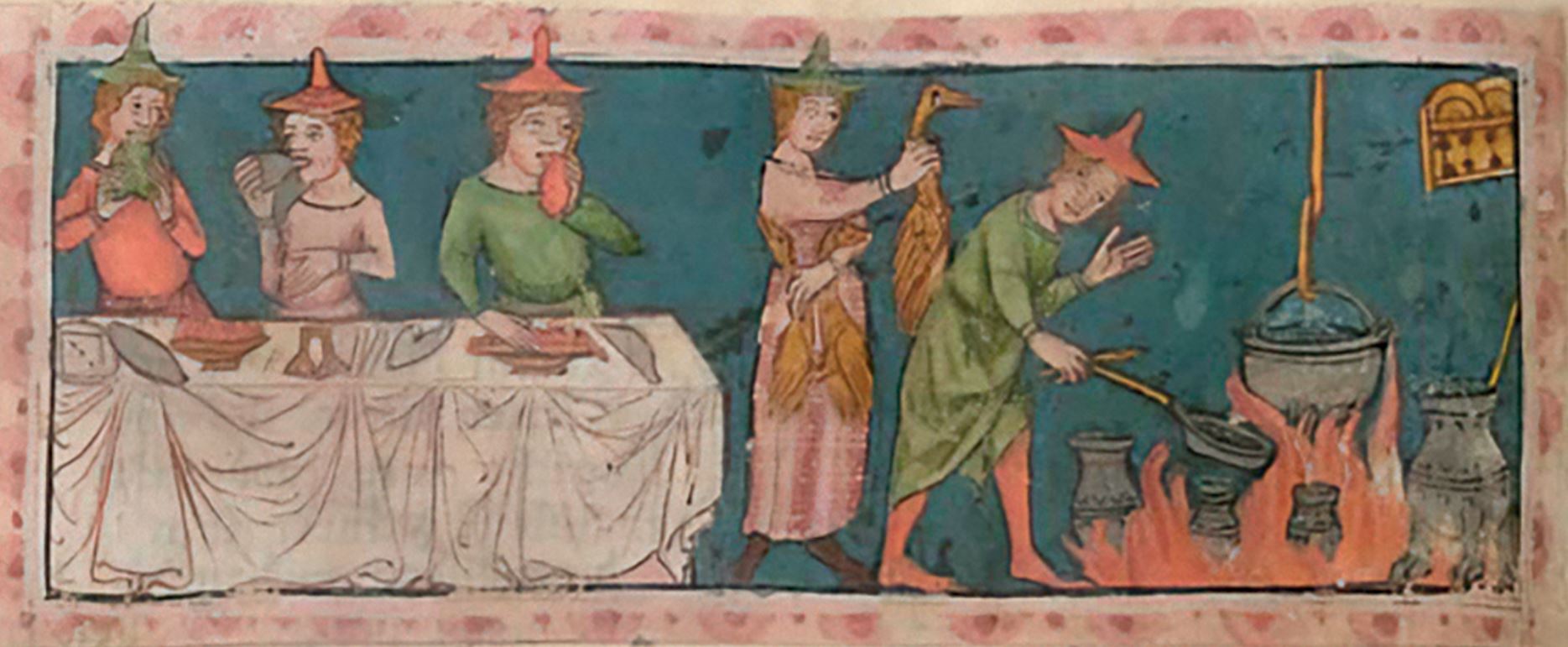
On the one hand, God uses natural circumstances—such as the quail’s enormous reproductive capacity, their mass occurrence during migration, and their susceptibility to being exhausted and carried by the wind—to place meat directly at the people’s feet. On the other hand, in His judgment He makes it clear that the punishment for dissatisfaction and greed comes directly from Him and has nothing to do with natural coturnism. The people die by His hand before they have even chewed and consumed the meat: «They gave way to their craving in the wilderness and tested God in the desert; so he granted them their request, but sent a plague against their lives» (Ps 106:14.15).
What was so wrong with the «craving for meat» that God sent death among the people along with the quails? Listening to them in the wilderness, one notices their longing for Egypt: «in the land of Egypt… when we sat by the pots of meat, when we ate bread to the full!» (Ex 16:3) and «We remember the fish we ate in Egypt for free, the cucumbers, the melons, the leeks, the onions, and the garlic; but now our soul is dried up; there is nothing at all but this manna to look at» (Num 11:5–6). In doing so, they idealize the past. «The good old days are nothing more than a mixture of bad memory and good imagination» (W. Wiersbe). In Egypt, nothing was free—they were fed in order to perform the harshest slave labor, beaten, and deprived of their children.
The manna contained everything they needed and was a complete staple food. When they first tasted it, it seemed like «cakes with honey» (Ex 16:31). Two years later, it tasted only like «oil cakes» (Num 11:8), and after nearly forty years they grumbled: «Our soul loathes this miserable food» (Num 21:5). Increasing familiarity, the desire for variety, and finally open rejection of what God provides—these warn us today, who know God’s gifts, the Lord Jesus, the Holy Spirit, and the Bible, and who face the same danger. Let us ask the Lord Jesus that we may experience Him, recognize the work of the Spirit, continually marvel at His Word anew, and savor its wonderful taste: «How sweet are your words to my taste, sweeter than honey to my mouth!» (Ps 119:103).
Sources:
Bileis, AG; Kastanakis, S; Giamarellou, H: Acute Renal Failure After A Meal of Quail. The Lancet 1971; 702
Dröscher, VB: …und der Fisch schleuderte Jona an Land (pp. 63-69). München (Goldmann) 1990; includes the quotation from the newspaper «Weltwoche» dated May 2, 1978
Korkmaz, I; Güven, FMK; Eren, SH: Quail consumption can be harmful. The Journal of Emergency Medicine 2011. 41(5):499 502; doi: 10.1016/j.jemermed.2008.03.045
Kost, W: Wachtel (Coturnix coturnix) „wassert“ im Roten Meer. Vogelwarte – Zeitschrift für Vogelkunde 1967; 24:40-41
Lewis, DC; Metallinos-Katzaras, E; Grivetti, LE: Coturnism: Human Poisoning by European Migratory Quail. Journal of Cultural Geography 1987; 2:51-65; doi: 10.1080/08873638709478507
Navara, KJ; Nelson, RJ: The dark side of light at night: physiological, epidemiological, and ecological consequences. Journal of Pineal Research 2007; 43:215-224. doi:10.1111/j.1600-079X.2007.00473.x
Rückert, F: Der kleine Haushalt – Gedichte. Meißen (Verlag der Truhe) 1921
Schüz, E: Vom Vogelzug, Grundriß der Vogelzugskunde. Frankfurt (Schöps) 1952
Tsironi, M; Andriopoulos, P; Xamodraka, E: The patient with rhabdomyolysis: Have you considered quail poisoning? Journal of Canadian Medical Association 2004; 171(4):325
Image credits:
Wikipedia: Quail in the forest / Raniero Massoli Novelli // Book illustration of a quail feast / Bavarian State Library
other licenses: calling male quail / AdobeStock_23282190.jpeg / Tom B // roasted quail / AdobeStock_186984059.jpeg / Ruslan Mitin // quail / shutterstock_181831904.jpg / feathercollector // bowl with quail eggs / shutterstock_526923559.jpg / Nattika // Sinai desert / shutterstock_1079337401.jpg / Wahoo