With tukki one most likely refers to the Blue Peacock (Pavo cristatus), which has been kept as a domesticated bird since antiquity (1Kgs 10:22; 2Chr 9:21). In Tamil, spoken in Sri Lanka—the homeland of the peacock—it is called tokai. It is assumed that traders introduced it to Israel under this name during the time of Solomon.
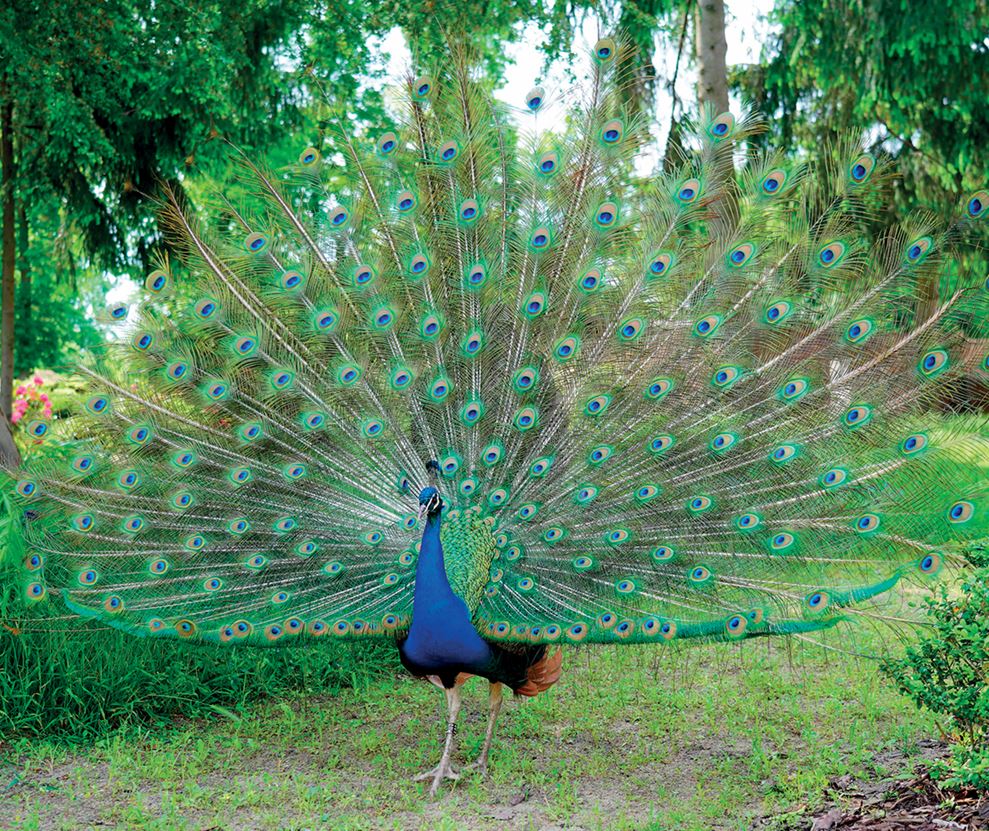
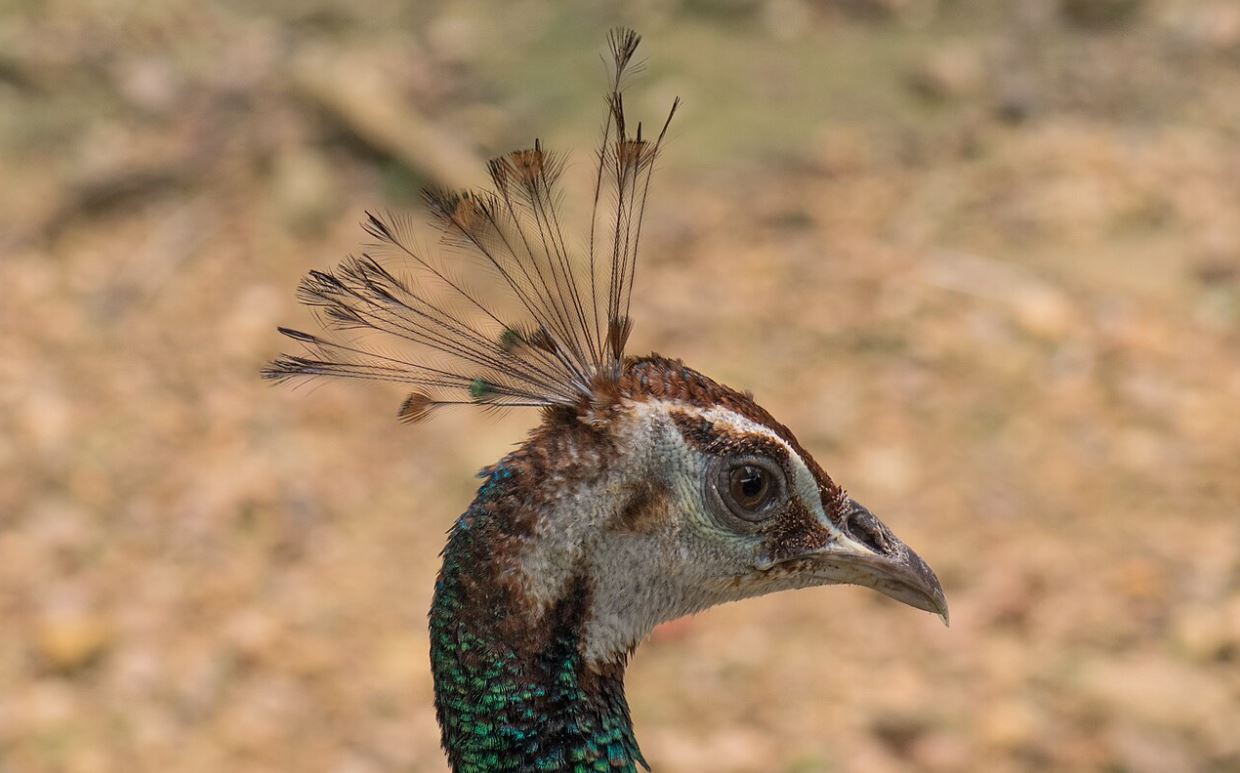
Because of its spectacular plumage, it was kept as an ornamental bird. To this day, it has not become native to Israel and continues to live there only under human care. However, it can be allowed to roam freely, as it is faithful to its location and voluntarily returns every evening to its habitual roost. The peacock is considered a symbol of vanity, pride, and luxury. The sight of it displaying its train is impressive. In hunters’ jargon, it is then called a «train-fanning peacock». The long tail feathers greatly restrict the male’s ability to fly, and the bright colors make it very difficult for it to hide. According to the handicap principle, it is precisely this disadvantage that makes it attractive to females. Whoever survives despite such opulent display must be «a real specimen».
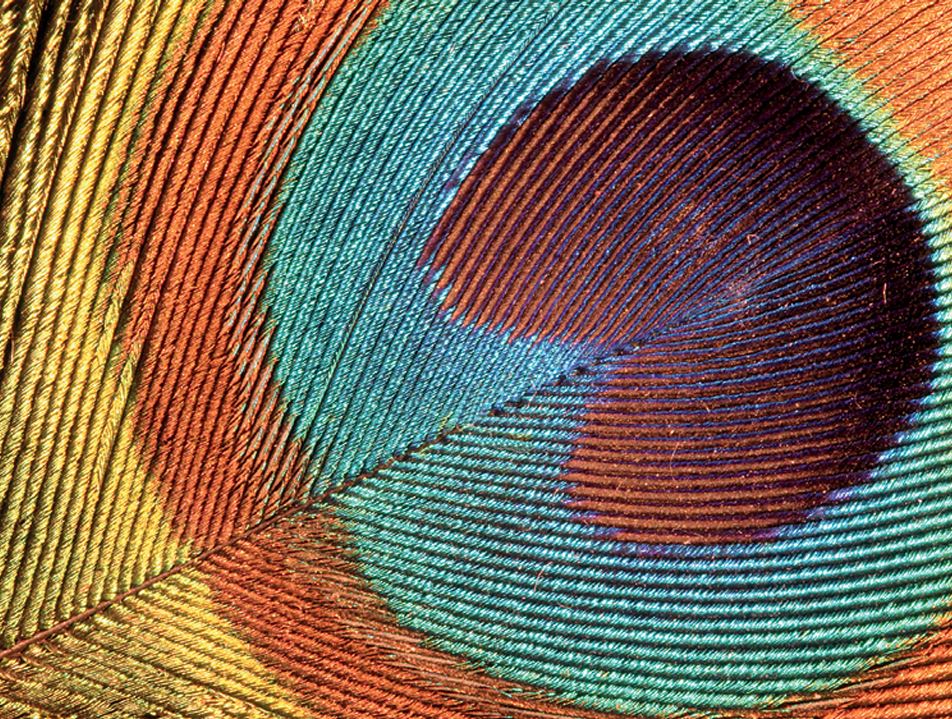
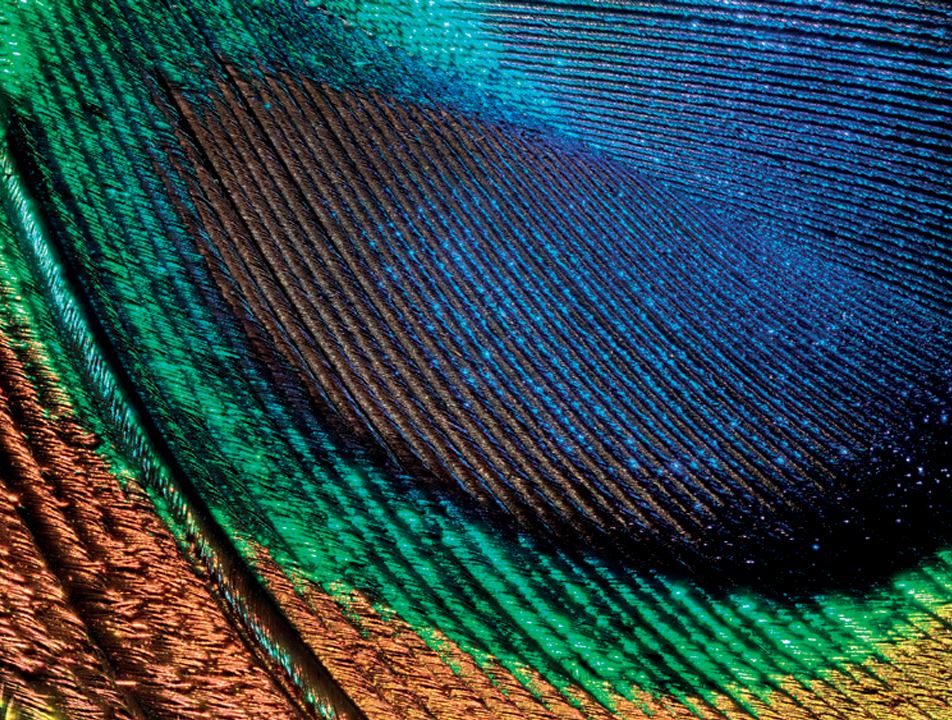
The blue crest on its head, the brilliantly glowing neck and breast plumage, and the «peacock eyes» in its tail feathers shimmer with iridescence. This means they reflect light—like a soap bubble—so that it glimmers in all the colors of the rainbow depending on the angle of incidence. When the peacock struts about in sunlight, it creates a magnificent spectacle. The underlying optical effects have been studied very precisely, leading to fascinating discoveries: the microstructure of the feather surfaces breaks down and reflects incoming light in grids with precisely defined spacing. One can only marvel at such lavish beauty. In other species, one can see that things can be much simpler. When structures are far more elaborate than necessary to fulfill their function, this can be described as «playful complexity» and seen as a «design signal». The Creator shows that He is concerned with more than the mere fulfillment of biological functions.
Sources:
Freyer, P; Wilts, BD; Stavenga, DG: Reflections on iridescent neck and breast feathers of the peacock, Pavo cristatus. Interface Focus 2018; 9:20180043; doi: 10.1098/rsfs.2018.0043
Weiss, IM; Kirchner, HOK: The peacock’s train (Pavo cristatus and Pavo cristatus mut. alba) I. structure, mechanics, and chemistry of the tail feather coverts. Journal of Experimental Zoology 2010; 313(A):690-703; doi: 10.1002/jez.641
Image credits:
Wikipedia: Female peacock / Thomas Quine // Peacock eye (top) / MichaelMaggs // Peacock eye (bottom) / Thomas Bresson
other licenses: Title – Portrait of a peacock / shutterstock_412807438.jpg / Rosalba Matta-Machado // Peacock displaying train / shutterstock_1760326532.jpg / Mariola Anna S.