The passerines (Passeriformes), with 5,700 species out of a total of about 9,700, form the largest order of birds. With the exception of the tyrant flycatchers (Tyranni), which occur mainly in South America, and the New Zealand wrens (Acanthisitti), they all belong to the songbirds (Passeri).
For this reason, the terms «passerines» and «songbirds» are often used interchangeably. All of them can fly, sing, see well, and hear very well. Their overall appearance is always a variation on the typical «little bird» pattern. Anyone asked on the spot to draw a «bird» will usually put something similar on paper. When the Bible mentions the zippor («twitterer») without further specification, we may assume that songbirds are meant, well represented by the sparrow. The individual species were probably hardly distinguished from one another, since little importance was attached to them. Below are a few species that occur in Israel and have something to tell us.
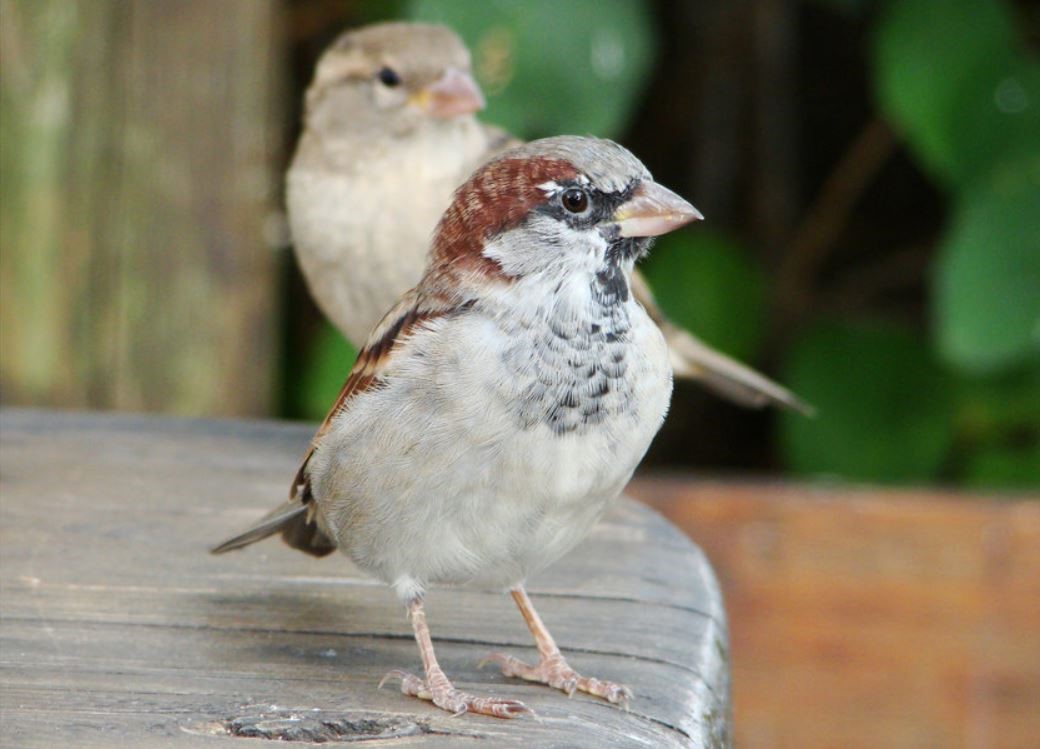
The house sparrow (Passer domesticus), also simply called the sparrow, is the quintessential «everyday bird.» It is the most widely distributed species of all, numbering 1.6 billion individuals, and as a «commensal» species has sought the proximity of human settlements for as long as anyone can remember. It is found everywhere, is small, inconspicuous, and easy to catch—an apt symbol for what is held in low esteem. «Are not two sparrows sold for a cent?» (Mt 10:29)—and if you take four, you even get one thrown in for free (Lk 12:6). Even if the monetary value of the assarion, rendered in German Bible translations as cent, groschen, or pfennig, amounted to 1/16 of a day’s wage, meaning that a single bird today would cost more like €5 than one cent, the point remains the same. The sparrow comes flying along like a cheap snack—«and yet not one of them is forgotten before God», the same verse says. Wild birds are «outlaws» in the literal sense—they can fly wherever they want, no one seems to take notice of them, care for them, or protect them; they are practically fair game. Yet if the infinitely great God knows the fate of every little bird, how much more are we human beings close to His heart. To Him we are infinitely more «valuable than a whole flock of sparrows» (Mt 10:30).

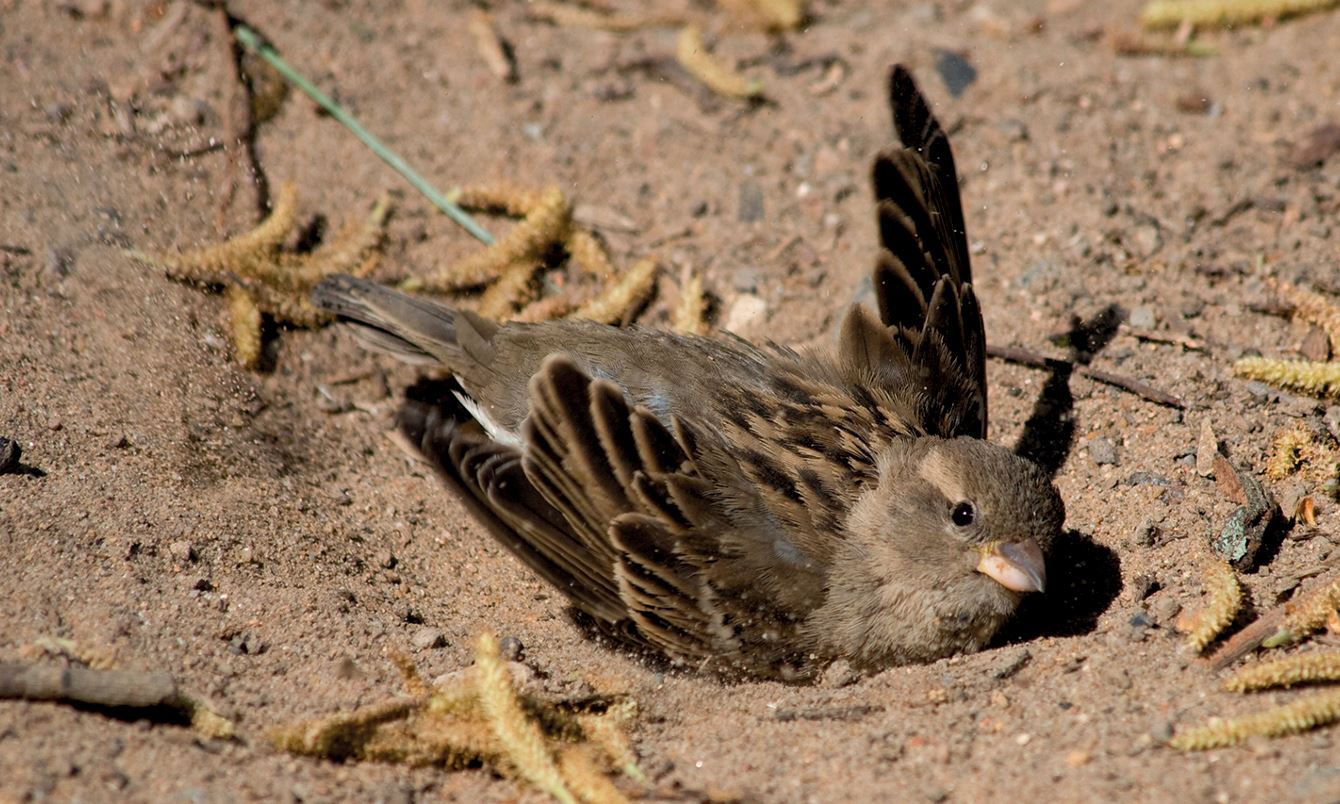
In sayings such as «A sparrow in the hand is better than a dove on the roof» or «using a cannon to shoot sparrows,» the sparrow likewise stands for something of little value and no significance. When a person who behaves foolishly is called a «sparrow brain,» however, the comparison is not especially apt, since sparrows are among the bird species credited with above-average intelligence. The «dirty little sparrow» may also be based on a misunderstanding. Sparrows like taking dust baths, which help rid them of clinging parasites.
On the other hand, this bad reputation may also cling to them because their nests are completely filthy by the end of the breeding season. Their restless fluttering, their unmelodious peeping, and their pushiness—the fact that they do not quite jump directly onto your plate is about all that can be said in their favor—mean that most descriptions do not portray them very flatteringly. And yet their carefree attitude is held up to us as an example. Luther puts it in his vigorous way: «Is it not a great shame for us that Christ appoints the birds as our teachers and that we must learn from them? … They show you that you make mammon your god and abandon the true God.»
The fieldfare (Turdus pilaris) is widespread throughout the Mediterranean region and has been eaten with relish since antiquity. It is not explicitly mentioned, but in Israel too it is among the birds that were caught with snares and nets and ended up in the kitchen.
Near the author’s hometown, on the shore of the Eschbach Reservoir in Remscheid, a stone expiatory cross stands in the forest. It commemorates the violent death of a money courier who was traveling along the old military road from Cologne to Dortmund when he was attacked and beaten to death by two robbers. As he lay dying, he pointed to the sky and groaned with his last strength: «The birds will bring it to light!» A short time later, the murderers stopped at an inn in nearby Bergisch-Born and had fieldfares served to them there, locally called Krammetsvögel. When they were served, one of the two joked recklessly: «Well, this ones won’t betray us anymore.» The innkeeper overheard their conversation and informed the magistrate. The robbers were arrested and later sentenced and hanged in Cologne.

It has not been handed down what prompted the victim to make his exclamation, but perhaps it pointed in a similar direction to this saying of Solomon: «Do not curse the king, even in your thoughts. And do not curse the rich, not even when you are alone in your bedroom. The birds in the sky could carry your words away; winged messengers could reveal what you have said» (Eccl 10:20). The saying used for a secret that has been blurted out—«the sparrows are whistling it from the rooftops»—probably also goes back to this verse. The small songbirds, which seem to be everywhere, see well, and hear exceptionally well, are an apt image of God’s omnipresence and omniscience. They remind us that He sees, hears, and will reveal everything we hope to hide: «But there is nothing covered up that will not be revealed, and hidden that will not be known. Therefore whatever you have said in the dark will be heard in the light, and what you have whispered in the inner rooms will be proclaimed on the housetops» (Lk 12:2–3).
Since 2017, the movement «Birds Aren’t Real» has proclaimed that birds have long since been replaced by electronic drones that spy on all humanity. This is more internet satire than a genuine conspiracy theory, but there really are considerations—perhaps even more than considerations by now?—about making use of birds’ unobtrusiveness and mobility in the construction of modern «reconnaissance devices.»

When people hear the term «migratory birds,» many immediately think of geese, cranes, storks, and starlings, which can be seen (and often heard) traveling in striking formations and large flocks. Yet many songbirds are also among these travelers, some of them setting out for very distant regions. They usually do so inconspicuously, however, travel alone, and remain almost unnoticed along the way. Since little attention was paid to their migratory behavior for a long time and they are difficult to observe, interesting details are only now becoming known, as transmitters have become so tiny that even small birds can be equipped with them.
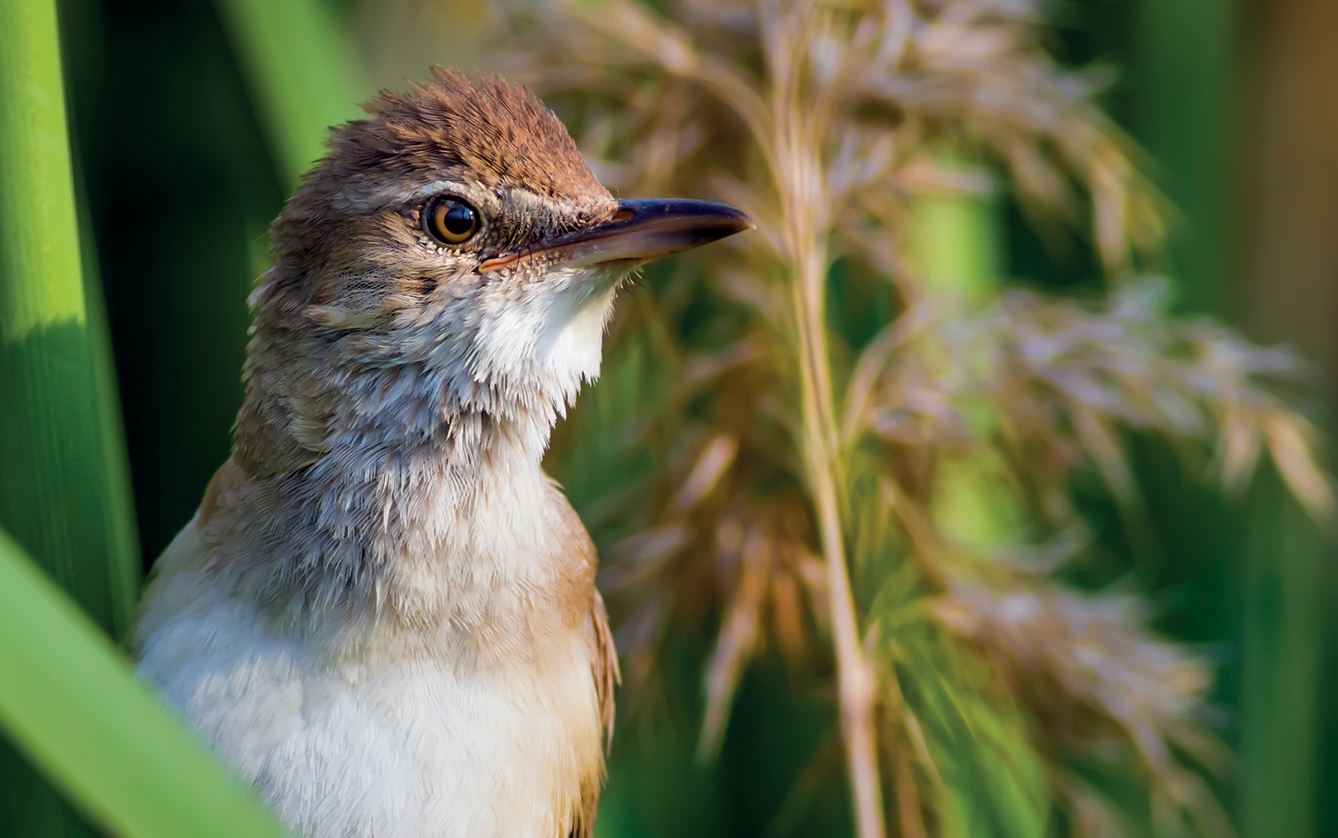
It caused quite a stir when a research group published the flight data of the great reed warbler (Acrocephalus arundinaceus) in May 2021. The tracked birds had set off from central Sweden and were heading for their winter quarters in southern Africa. In doing so, they crossed the Sahara Desert—at flight altitudes of up to 6,300 meters! Presumably they are safe there from falcons, which on the hunt usually do not ascend beyond 3,500 meters. Perhaps the cool air up there also helps them avoid overheating in the blazing sun beneath a cloudless sky. For night flights, however, they descend again to a more comfortable 2,000 meters. No wonder they are not seen: a single bird of this size can no longer be detected with the naked eye at an altitude of just 500 meters. The great reed warbler prefers shoreline thickets and reed belts along lakes and rivers as its habitat and also occurs occasionally in Israel (as a resident bird), though mostly as a traveler on a stopover.
In the parables of the «kingdom of heaven,» the Lord describes the tiny mustard seed, which quickly shoots up and becomes a tree in which even birds nest (Mt 13:32; Mk 4:32). It is obvious that they have a symbolic meaning in this context. What that meaning is, however, depends on the interpretive framework.
Those who see in the rapid growth of the tree the «success story of Christianity,» which fills the whole world and permeates it with its blessings like the leaven in the next parable, interpret the birds as a positive symbol for all who find refuge in its branches. In a very similar way, the good reign of the Babylonian king Nebuchadnezzar is described: «Its leaves were beautiful, its fruit abundant, and in it was food for all. The animals of the field found shade under it, the birds of the sky lived in its branches; all living creatures were fed from it» (Dan 4:9).
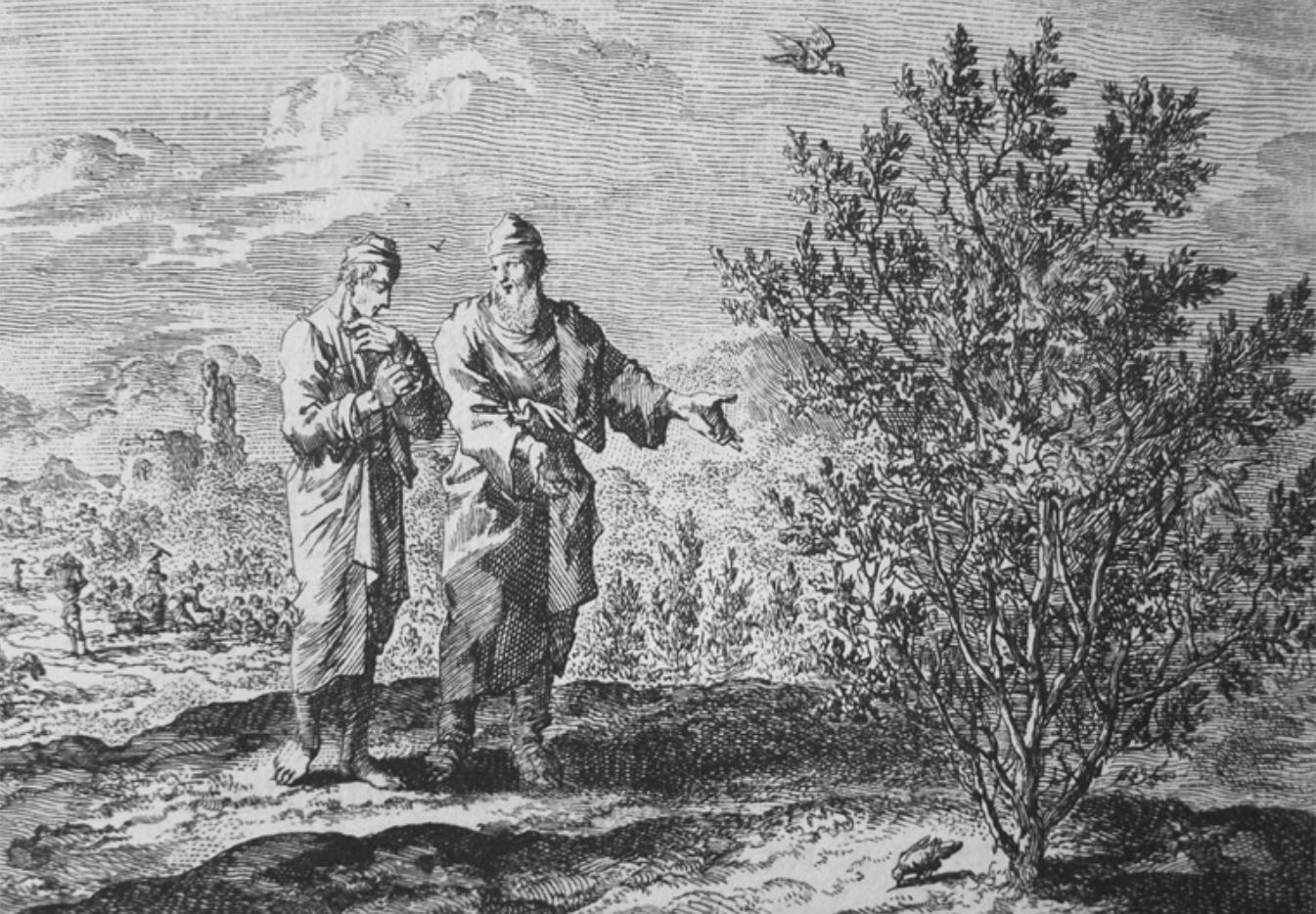
Those, however, who divide salvation history into different «dispensations» recognize in the rapid growth the outward form of Christianity, which has dominated the world’s religions for centuries. Within it, however, false teachings and dead religiosity spread, leading all the way to total apostasy, as depicted in the following parable of the leaven. The next two parables show that what is genuine—the true believers—is hidden, like the treasure in the field and the pearl that was found. These four passages are framed by two further parables, the «weeds among the wheat» and the «good and bad fish,» which show that in the end a distinction will be made between what is genuine and what is not. In the introductory parable of the «sower and the four soils,» the birds already appear as pests that snatch away the seed of the word of God (Mt 13:4; Mk 4:4). It would be strange if just a few verses later they were to be associated positively. Rather, it is natural to assume that the birds in the great tree of Christendom also represent negative spiritual influences that ultimately ruin everything. This would correspond to the description of the judgment on apostate Christendom: «Fallen, fallen is Babylon the great! She has become a dwelling place of demons and a haunt of every unclean spirit, a haunt of every unclean and hateful bird» (Rev 18:2).
When the Lord Jesus directs our gaze to the birds, it is first of all to illustrate God’s care for His creatures: «Look at the birds! They do not sow, they do not reap, and they do not gather into barns. Yet your heavenly Father feeds them. And you—are you not worth much more than they?» (Mt 6:26). We do not know whether birds were visible at that moment to which the Lord Jesus referred. In any case, among the resident species in Israel there is not a single one that stores provisions. Given the mild climate and diverse habitats, that is simply not necessary. This does not mean, however, that birds generally do not store food; rather, the central point is that God provides for and sustains them (like all His creatures). In Israel, this happens without stockpiling; elsewhere, not always.
One bird that is not mentioned by name but occurs in Israel both then and now is the Syrian woodpecker (Dendrocopos syriacus), which only specialists can distinguish from the more familiar great spotted woodpecker (Dendrocopos major). Both species are very flexible in their dietary needs, manage well both as insect eaters and as vegetarians, and «do not build barns.» Yet within the same subfamily there is an American relative, the acorn woodpecker (Melanerpes formicivorus), which practices the most elaborate food storage in the entire animal kingdom. It uses a large, dead tree as its storage medium. In summer it spends a great deal of time chiseling small, conical holes into it. Then it collects acorns and hammers them into these holes. It proceeds so skillfully that afterward the acorn is wedged so tightly that no predator can pull it out again. Sometimes it has to try a little back and forth to determine how best to place its prize. The holes are deliberately of slightly different sizes, so there is always a fit somewhere. The acorn must not be damaged under any circumstances; otherwise it will rot later and become inedible. As if that were not enough work, it must also regularly check whether all the acorns are still firmly in place. Over time they dry out and shrink slightly. If it notices that its treasures are beginning to wobble, it pulls them out and inserts them into a smaller hole.
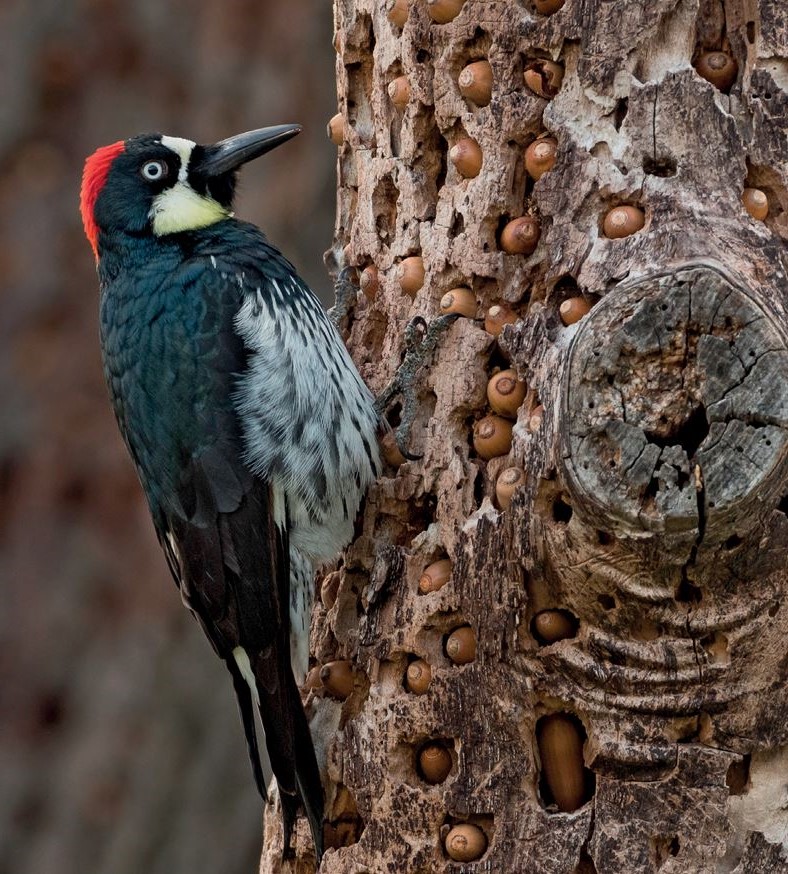
In such a storage tree, more than 50,000 acorns may eventually be lodged. An entire woodpecker family works day after day to expand, maintain, and guard the collection. When the season of abundant acorns is over and the meager remnants of fruit beneath the leaves rot into humus, the feasting continues for the woodpeckers. Their favorite food—a complete diet rich in carbohydrates and proteins—is available to them year-round.
This small comparison illustrates that there is no «one-size-fits-all» approach. In some cases, we can and should do nothing other than leave a matter to God: «You will not need to fight in this battle; take your position, stand still, and see the salvation of the LORD on your behalf» (2Chr 20:17). In other situations, it may be wise and right to provide, to take precautions, to save, or to insure oneself. That is why we are also pointed to the ants, for they gather «…during the summer and store up their provisions at harvest […] they are a people not strong, yet they prepare their food in the summer» (Prov 6:6; 30:25). The only conclusion to be drawn is that in the end it does not depend on us, but on God, to grant success, to provide, and to preserve: «The horse is made ready for the day of battle, but the victory belongs to the LORD» (Prov 21:31).
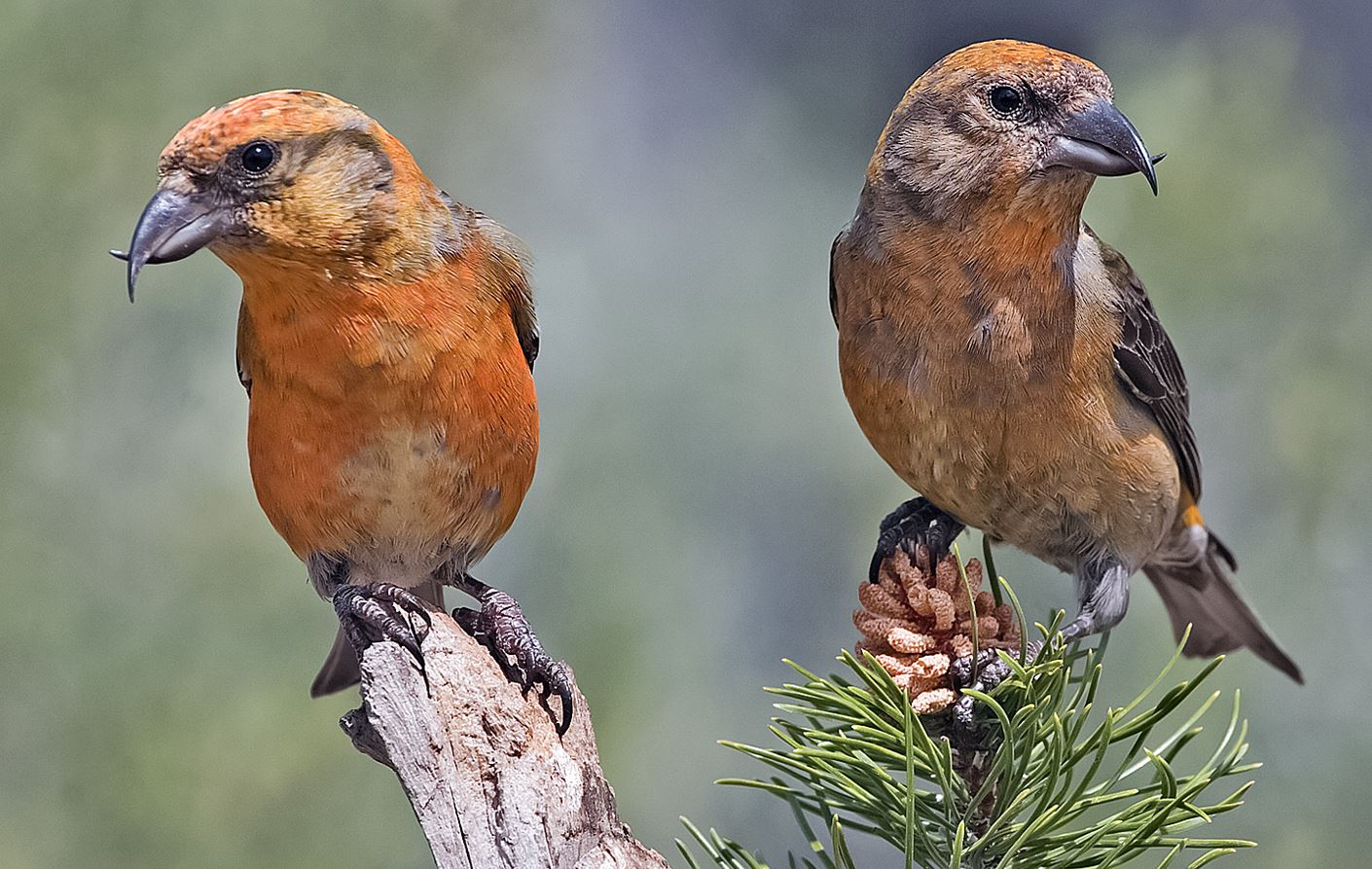
Crossbills (Loxia) are not mentioned by name in the Bible, but they do occur in Israel. The songwriter Manfred Siebald captured them in these clever verses. He reminds us that, amid all our research, wonder, and technical discussions about birds, we must not forget the most important thing: to speak of their Creator, who died on the cross for us.
Sources:
Anzinger, F: Unsere Kreuzschnäbel im Freien und in der Gefangenschaft. Ilmenau (Aug. Schröters) 1895
Freeman, BG; Mason, NA: The Geographic Distribution of a Tropical Montane Bird Is Limited by a Tree: Acorn Woodpeckers (Melanerpes formicivorus) and Colombian Oaks (Quercus humboldtii) in the Northern Andes. PLoS ONE 2015; 10(6):e0128675; doi: 10.1371/journal.pone.0128675
Gaberle, S: Neue Verschwörungstheorie: „Birds aren’t real“. Futter Zeitung August 19, 2019; https://futter.kleinezeitung.at/neue-verschwoerungstheorie-birds-arent-real
Koenig, WD; Benedict, LS: Size, Insect Parasitism, and Energetic Value of Acorns Stored by Acorn Woodpeckers. The Condor 2002; 104(3):539-547; doi: 10.1093/condor/104.3.539
Luther, M: D[oktor] Martin Luthers Evangelien-Auslegung (4th ed., pp. 187–188). Göttingen (Vandenhoeck & Ruprecht) 1973
Peake, E: Birds aren’t real and this man wants the world to know. The New Statesman, 12.10.2021
Schell, O: Bergische Sagen. (p. 233) Elberfeld (A. Martini & Grüttesien) 1905
Sjöberg, S; Peddersen, L; Malmiga, G: Barometer logging reveals new dimensions of individual songbird migration. Journal of Avian Biology 2018; e01821; doi: 10.11111/jav.01821
Sjöberg, S; Malmiga, G; Nord, A: Extreme altitudes during diurnal flights in a nocturnal songbird migrant. Science 2021; 372(6542):646-648; doi: 10.1126/science.abe7291
Stone Cross Eschbachtalsperre:
https://web.archive.org/web/20050817082644
http://www.bergisch-born.de/geschichte/steinernekreuz.htm
Image Credits:
Wikipedia: Pair of sparrows / Dimitri L. Lindenwald // Stone Cross Eschbach Reservoir / Stephanie Scheffler // Parable of the mustard seed / Phillip Medhurst // Red crossbills / Elaine R. Wilson
other licenses: Title – Songbird group / shutterstock_2109943211.jpg / Bonnie Taylor Barry // Protest against bird surveillance / IMG_4208-1038×778.jpg / Peter McIndoe // Sparrow taking a dust bath / shutterstock_34154095.jpg / Vishnevskiy Vasily // Fieldfare / shutterstock_2020730270.jpg / SanderMeertinsPhotography // Great reed warbler / shutterstock_529845928.jpg / Greens and Blues // Acorn woodpecker at storage tree / shutterstock_1053571040.jpg / Hayley Crews // Roasted sparrows / 2DRGW46.jpg / Xavier Dealbert