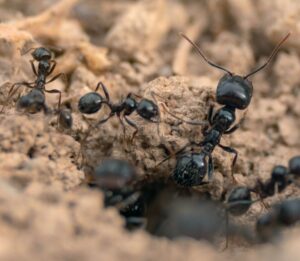
As with many other animals that were unknown in Europe, Bible translations used various names of familiar native species to designate an animal of which one only knew that it lives on and among rocks.
The Hebrew word shafan (Lev 11:5; Deut 14:7; Ps 104:18; Prov 30:26) denotes the rock hyrax or desert hyrax (Procavia capensis), more precisely its subspecies Procavia capensis syriaca, which occurs in Syria, Israel, Jordan, and Lebanon. It is assumed to derive from the same word root as zaphan (e.g., Jos 2:4; Ps 27:5), which means something like «sheltered, hidden, safely stored».
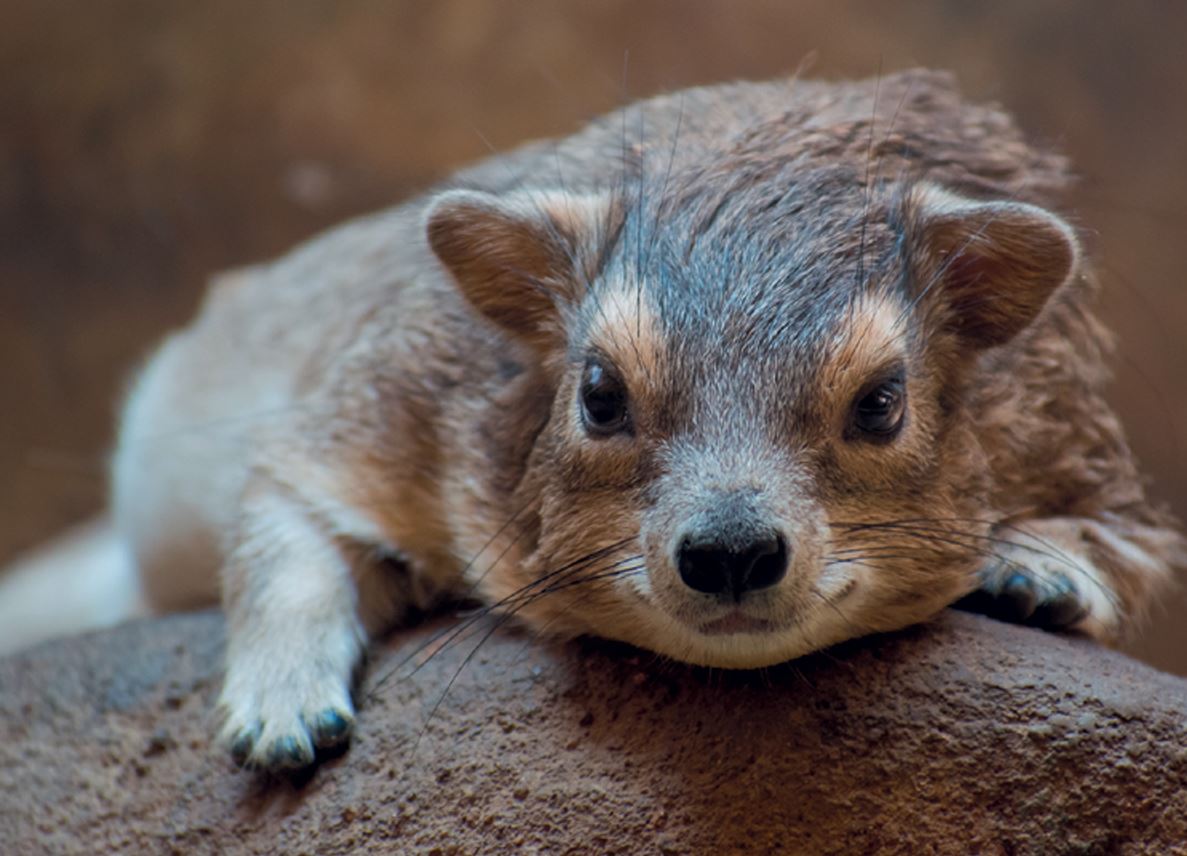
They are pronounced exotics for which various synonyms have circulated over the course of history. The Latin name Procavia suggests a relationship with the guinea pig; their Greek name hyrax also denotes the shrew. In the LXX they are rendered once as choirogryllios (Lev 11:6) and another time as dasypous (Deut 14:7), both of which designate the hare. Luther translates «rabbit», and other German Bibles render «rock badger» or «marmot». From a biological classification standpoint, however, all these names are misleading, because the order of hyraxes (Hyracoidea) is genetically far removed from rodents such as mice, marmots, hares, and rabbits, and even farther removed from carnivores like the badger. Anyone who wants to represent all organisms in a single «tree of life» will find little joy in this oddity and must assign it to an outer group with other eccentrics. From today’s perspective, the elephant and the manatee (!) are the closest relatives of the hyrax. How these rather different forms are supposed to have diverged from one another in relatively short geological time, however, remains a mystery.
Shaphan (24×) also occurs as a personal name. An important Judean government official at the time of King Josiah bore this name, and he is mentioned several times later because his descendants likewise held high offices. In 2Kgs 22:14, mouse (Akbor), mole rat (Huldah), and rock hyrax (Shaphan) occur as names in a single verse – as if that had been fashionable at the time.
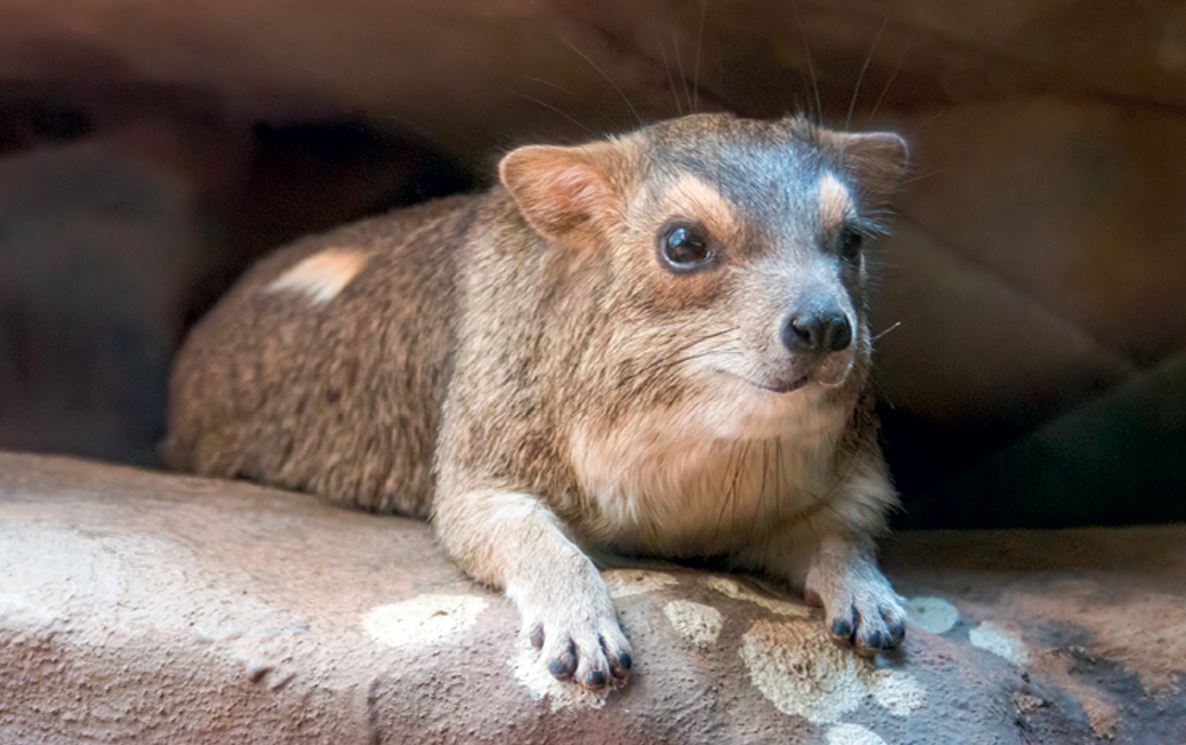
The distinctive biological status mentioned above manifests itself in many ways. Rock hyraxes occur only where suitable rocks with crevices and caves are present – similar to marmots. They feed exclusively on plants and have separate ruminant stomachs, which is why they were counted among the ungulates until the nineteenth century. In the twentieth century they were removed from that group again, together with elephants and manatees, and declared near-ungulates (Paenungulata). Their social behavior resembles that of meerkats, and their appearance (here one must agree with Luther) that of rabbits – with a split upper lip, nibbling movements, and fluffy fur. Regarding their continuously growing «tusks», however, they resemble elephants, hippopotamuses, pigs, and other animals.
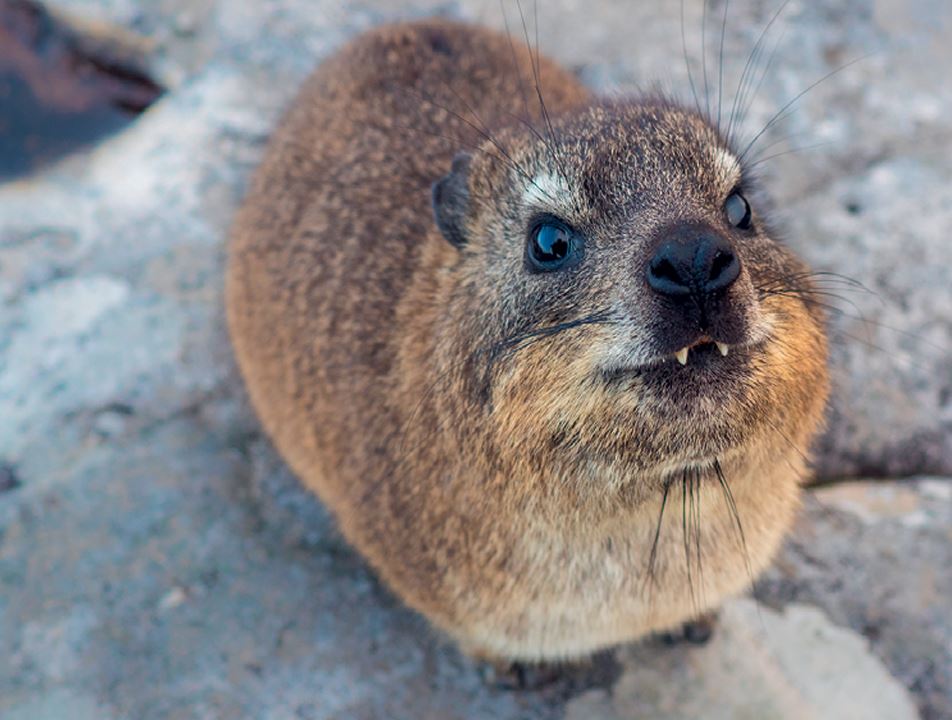
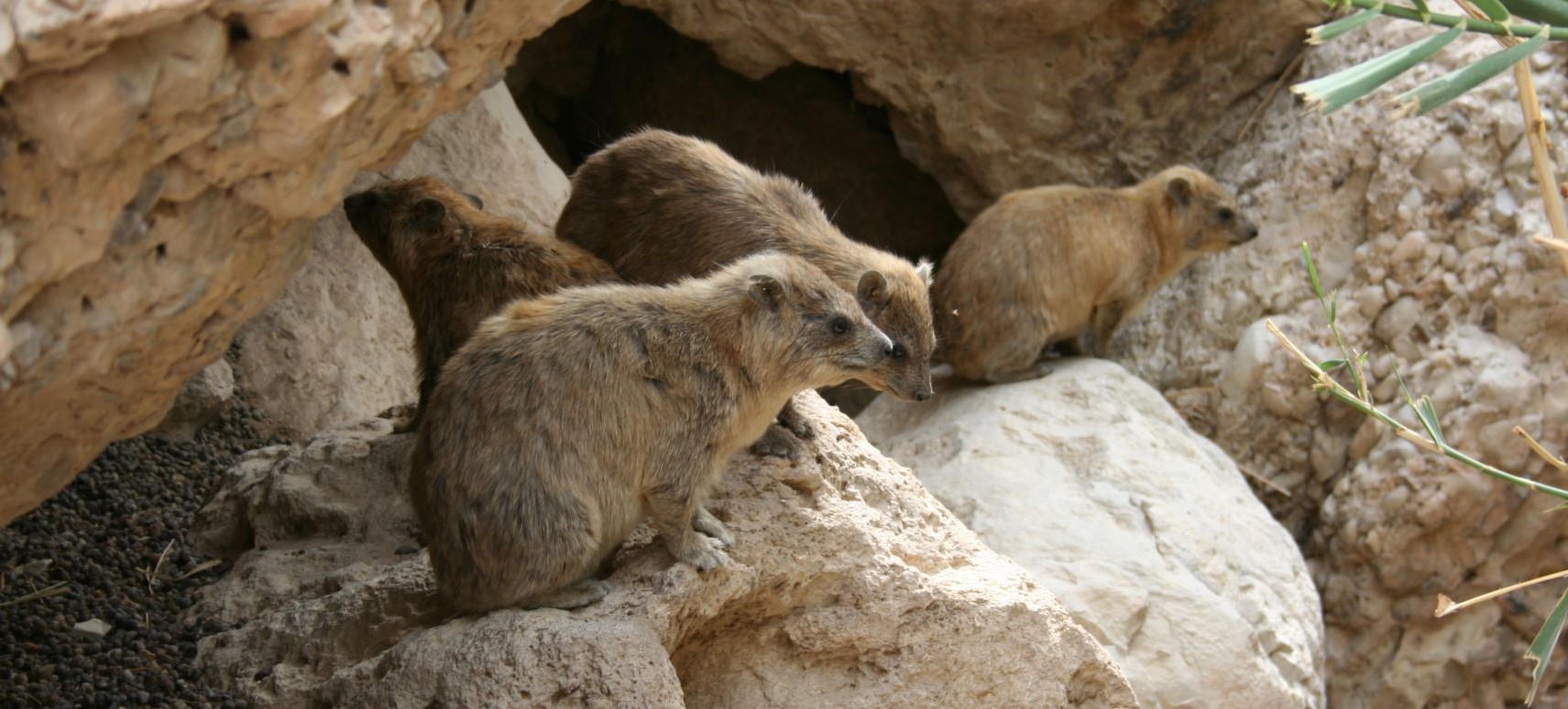
In the dietary laws they are declared unclean (Lev 11:5; Deut 14:7), which made them of no interest as game. But that is not all: two further verses bring something remarkable to light. In the book of Proverbs, Agur describes four kinds of animals that he calls «the little ones of the earth», which, though inconspicuous, are «exceedingly wise» (Prov 30:24). Of the rock hyraxes it says: «a people not mighty, yet they make their home in the rocks» (Prov 30:26). Many interpreters have understood this verse to mean that the wisdom of the rock hyrax consists in building its dwelling on the rocks. This was then readily linked with the «wise builder» (Mt 7:24). But if one studies the habits of these animals, it becomes clear that this interpretation is far-fetched and that a more accurate translation would be: «they live among the rocks» (cf. Contemporary English Version, CEV). The rock hyrax builds nothing on the rocks – indeed, it can neither build nor dig, for its feet, which anatomically are actually hooves, are not suited for that at all. Instead, at night it seeks shelter in the crevices and caves between and beneath the rocks, as is aptly described elsewhere: «The high mountains are for the wild goats; the rocks are a refuge for the rock badgers» (Ps 104:18). This skillful hiding may have given it its name.
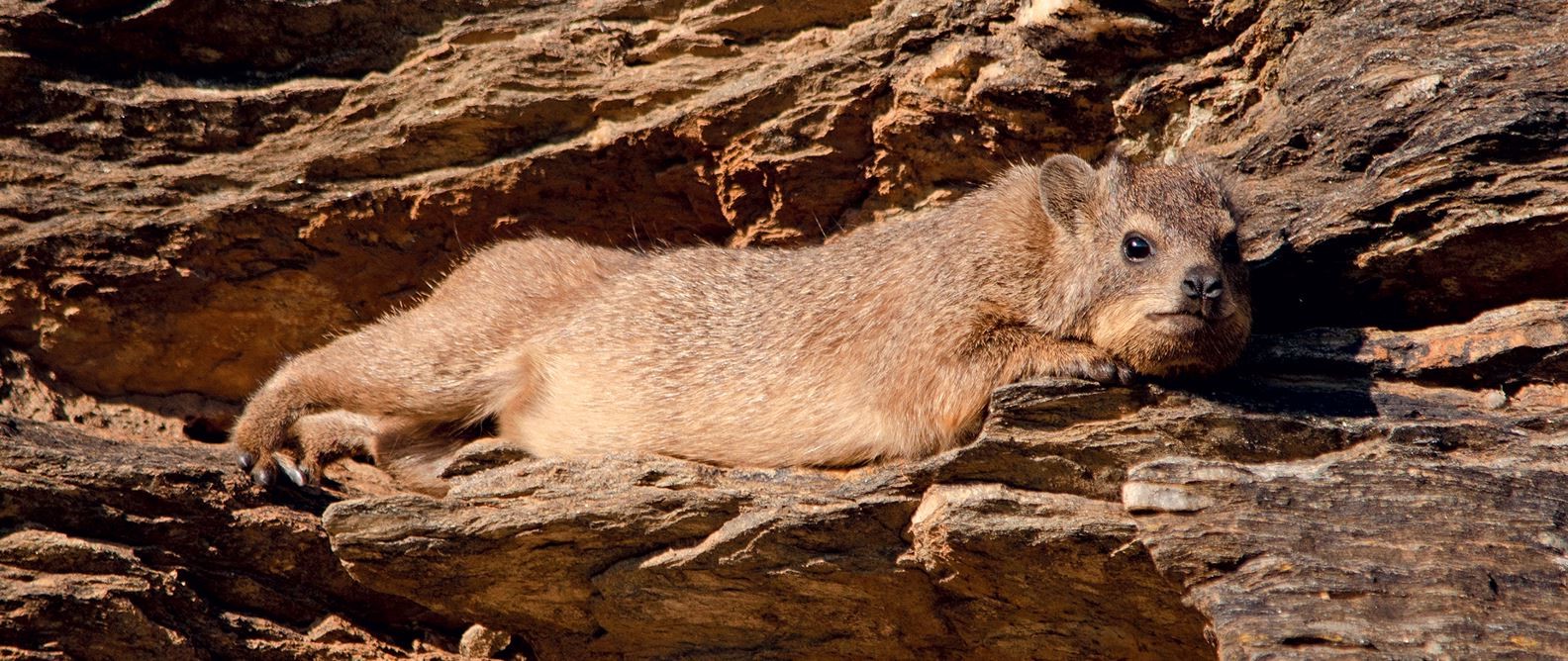
What is astonishing about the way of life of rock hyraxes is that in their barren environment they operate with a very efficient energy metabolism. They spend less than an hour a day foraging for food. This works for three reasons: first, they are inactive and asleep for most of the day, which is why the Boers in South Africa call them «slaper» (sleeper). Second, while doing so they lie on bare rock in blazing sunshine and let themselves be warmed; and third, they have a strongly fluctuating body temperature and drop into a kind of «hibernation» every night in their cool caves. Agur marvels that they spend virtually the entire day on the rock – that is, without cover – although they are completely defenseless (and not particularly fast either). Why can these appetizing layabouts afford to doze in the sun all day under the hungry eyes of circling birds of prey, stalking big cats, and dangerous snakes?
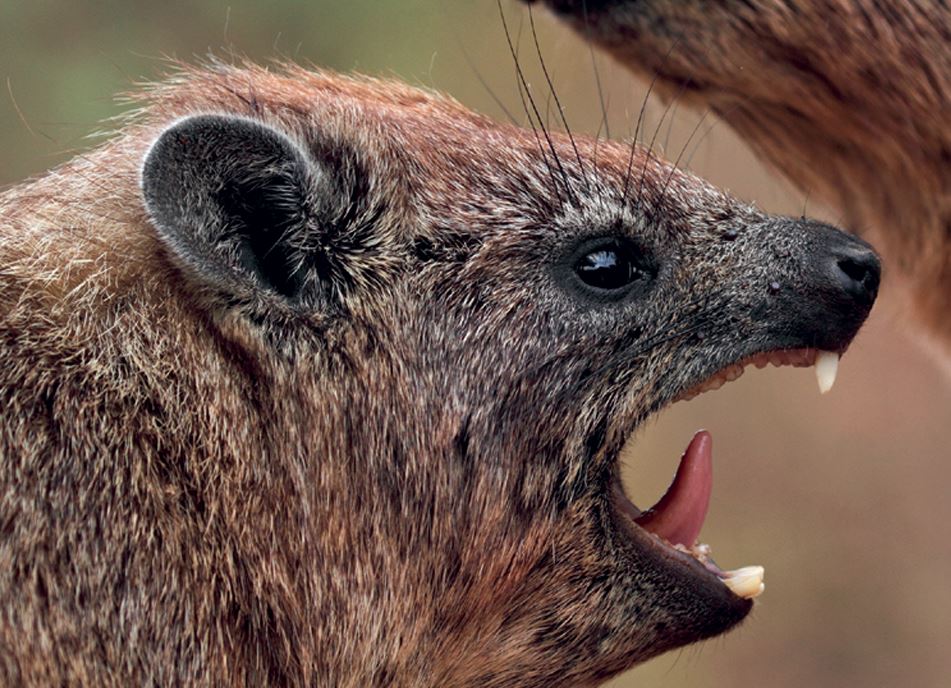
Several adaptations are required for this: first, some animals are always on watch while the others sleep. Second, the sentinels can specify very precisely, with different calls, what kind of threat is approaching and from which direction; and finally, they possess a brilliant device that is unique in this form: the eye of the rock hyrax has an additional sunshade (umbraculum) that slides protectively over the pupil in strong light. As a result, the sentinel can look directly into the blazing sun and detect approaching birds of prey. Part of their proven hunting strategy is to attack in a dive with the high sun behind them. In doing so, their profile is smallest, the shadow hardly moves on the ground, and their prey is dazzled by the sun – except with the rock hyrax, where this does not work! When the alarm sounds, the sunbathing is abruptly interrupted and the entire colony disappears in a few leaps into their «air-raid shelters».
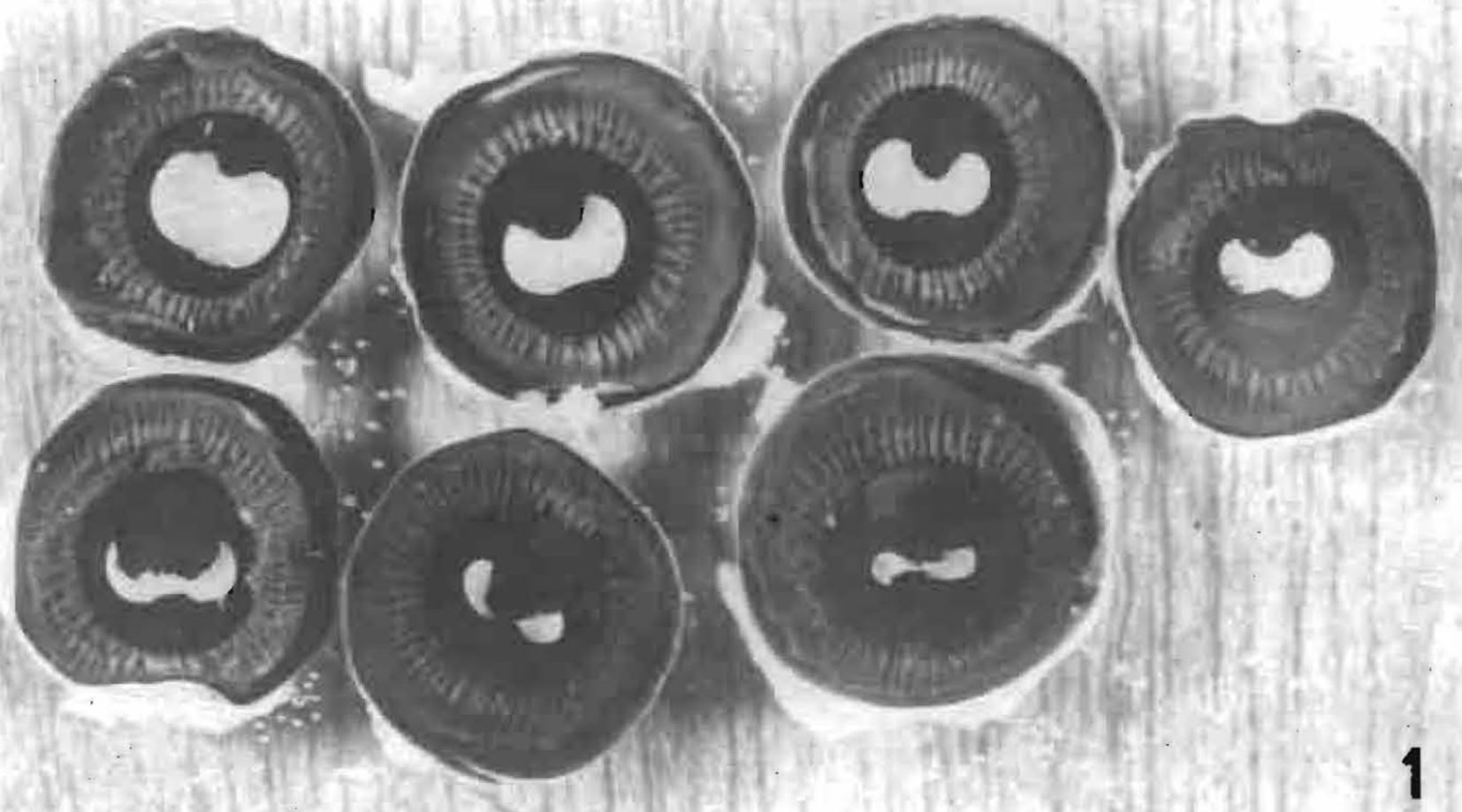
The special light-protection mechanism of the rock hyrax is not mentioned in the Bible, but it illustrates what happens spiritually to people at regeneration. They can suddenly «with unveiled face behold the glory of the Lord» (2Cor 3:18). Moses already asked God: «Please show me your glory!», but had to hear: «You cannot see my face, for man shall not see me and live» (Ex 33:18,20). But in the Lord Jesus, «who is the image of the invisible God» (Col 1:15), exactly that became possible: «No one has ever seen God; the only Son, who is himself God and lives in closest fellowship with the Father, has made him known» (Joh 1:18). That is why He could answer His disciple Philip, who voiced a similar wish to Moses: «Whoever has seen me has seen the Father» (Joh 14:9). If people do not believe the message of Jesus, «they cannot see the bright light of the gospel – the light in which Christ shines, who is the image of God» (2Cor 4:4). Only when a person turns around and God – the Father, the Son, and the Holy Spirit – comes to dwell in him (cf. Joh 14:18,20,23) does he step of his own accord into the light (Joh 3:20,21). «For God, who said, “Let light shine out of darkness,” has shone in our hearts, to give the light of the knowledge of the glory of God in the face of Jesus Christ» (2Cor 4:6) – and we rejoice: «For with you is the fountain of life; in your light we see light» (Ps 36:9).
Sources:
Brown KJ; Downs, CT: Basking behaviour in the rock hyrax (Procavia capensis) during winter. African Zoology 2007; 42(1):70-79; doi: 10.1080/15627020.2007.11407379
Eley, RM: The hyrax: a most mysterious mammal. Biologist 1994; 41(4):141-144; https://www.researchgate.net/profile/Robert-Eley/publication/235622778_The_hyrax_-_a_most_mysterious_mammal/links/542fa4f20cf277d58e91fa1f/The-hyrax-a-most-mysterious-mammal.pdf
Johnson, GL: I. Contributions to the comparative anatomy of the mammalian eye, chiefly based on ophthalmoscopic examination (S. 27). Philosophical Transactions of the Royal Society of London 1901; Series B, Containing Papers of a Biological Character, 194:1-82; doi: 10.1098/rstb.1901.0001
Koren, L; Geffen, E: Complex call in male rock hyrax (Procavia capensis): a multi-information distributing channel. Behavioral Ecology and Sociobiology 2009; 63:581-590; doi: 10.1007/s00265-008-0693-2
Kruger, DJD; Weldon, C; Minter, LR: Morphology of the elygium and developing umbraculum in the eye of Amietia vertebralis tadpoles. Journal of Morphology 2013; 274:551-556; doi: 10.1002/jmor.20115
McNairn, IS; Fairall, N: Metabolic rate and body temperature of adult and juvenile hyrax (Procavia capensis).
Comparative Biochemistry and Physiology Part A: Physiology 1984; 79(4):539-545; doi: 10.1016/0300-9629(84)90444-4
Millar, RP: An unusual light-shielding structure in the eye of the dassie, Procavia capensis Pallas (Mammalia: Hydracoidea). Annals of the Transvaal Museum 1973; 28(11):203-206; doi: 10.10520/AJA00411752_258
Remmers, A: Die Herrlichkeit Zions. Ermunterung & Ermahnung 2015; Issue 9
Taylor, CR; Sale, JB: Temperature regulation in the hyrax. Comparative Biochemistry and Physiology 1969; 31(6):903–907; http://www.sciencedirect.com/science/article/pii/0010406X6991799X
Image Credits:
Wikipedia: Rock hyrax in Israel / Mike Bannert
other licenses: Title – Rock hyrax climbing in rocks / shutterstock ID_1295395708 / Francois Du Toit // Rock hyrax showing teeth / shutterstock ID_1192810159 / James Gibb // Rock hyrax to cuddle / shutterstock ID_1163278840 / Kate Kony // Rock hyrax sunbathing / shutterstock ID_1691149912 / Bryony van der Merwe // Rock hyrax calling / shutterstock ID_61229197 / Mogens Trolle // Refuge in the rocks / shutterstock ID_1872522847 / Danny Ye // Umbraculum / Umbraculum.jpg / Northern Flagship Institute