Bright yellow, gooey – and astonishingly smart: an exotic organism that fits into no category blows apart our picture of the «primitive» single-celled organism. Without a brain, without nerves, and yet capable of learning, deciding, and solving complex problems, this shape-shifting being stirs up biology, mathematics, and philosophy alike. It divides, fuses, wanders, calculates, and possesses an astonishing repertoire of crisis strategies. What at first appears to be an unremarkable, run-of-the-mill single-celled organism turns out to be a life-form with astounding intelligence. This article guides us through its biographical options.
Jena, 1874. At the oak desk in his study at the «Grand Ducal and Ducal Saxon University of Jena» Professor Dr. Ernst Heinrich Philipp August Haeckel sits before a blank white sheet of drawing paper. Enthusiastic about Darwin’s theory of descent, having met Darwin personally in England, he is working on a book of his own in which he wants to explain the descent of man from the animal kingdom. As a highly gifted artist, he is able to furnish his monograph with excellent illustrations – but where should he begin his family tree? What are the «border-crossers» between plant and animal – living beings, that is, that possess at least one characteristic of animals (independent movement, for example, was considered such a trait), but are otherwise so primitive that they reveal no complex structures at all? The professor believes he has found the right candidates in the amoebas. Even with a simple microscope, he can observe how these little drops of slime slowly wobble through the image, reacting to various stimuli and constantly changing their shape – which is why they were also called «little changing animals.» From this simple starting form, «higher» life must presumably have developed.
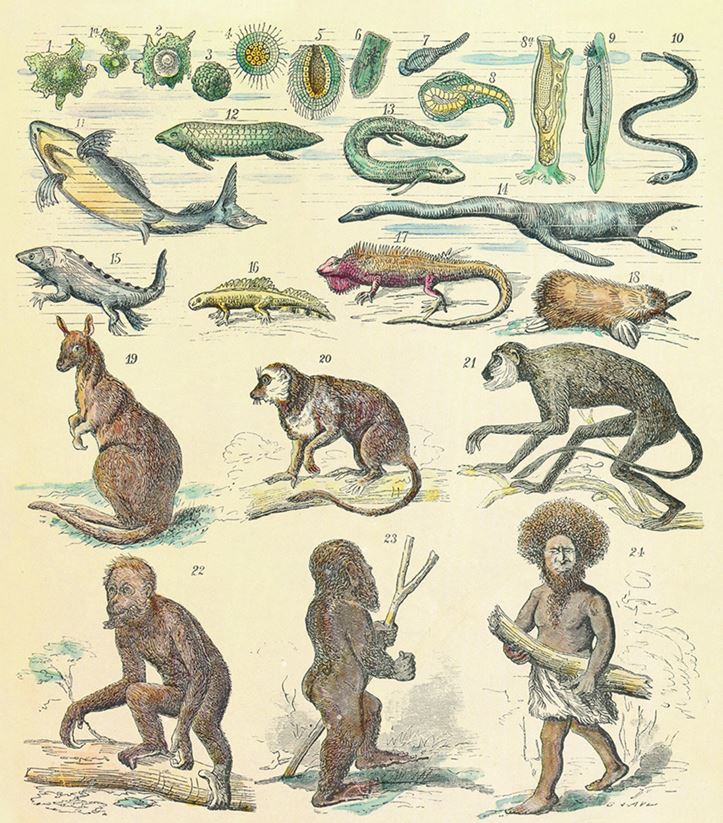
To this day, amoebas are classified in the kingdom Protista (= firstlings), in the group Protozoa (= primordial animals), and are regarded as precursors of multicellular living beings. The idea that we are dealing here with primitive organisms, however, belongs on the scrap heap of science. In fact, one may rightly claim the opposite: they are the most capable cells of all! While 210 different cell types in our body must divide the work among themselves, since each individual cell performs only a few functions, a protist cell does everything on its own. None of our body cells can perform its function outside the body or even survive there on its own for any length of time. When compared at the cellular level – which is quite natural in the case of single-celled organisms – the tiny shape-shifter proves to be a marvel.
The British mathematician Bertrand Russell once wrote: «A process which led from the amoeba to man appeared to the philosophers to be obviously a progress – though whether the amoeba would agree with this opinion is not known.» Apart from the question of whether this process ever took place at all, a closer look still leaves open the question of in what sense an amoeba should be expected to «make progress» since it is already excellently adapted to its living conditions. Let us dive into the microcosm and accompany Physarum polycephalum, a «changing being» par excellence, one that one simply has to grow fond of. Since the name is somewhat complicated, we can simply call him Pepe here.
He first meets us as a scattered lone fighter: a 20–50 micrometer-long amoeba in a drop of water under the microscope. At first glance, one sees a flat blob that is constantly in motion, while large and small, light and dark vesicles and granules swarm back and forth inside it. Closer observation of these processes shows that he is flowing across the glass surface of the microscope slide. On the side where movement is taking place, little bulges appear; the granular soup streams into them, they swell like a balloon being inflated, and in the process stretch farther and farther forward. At the same time, wrinkles and folds appear at the other end, while the «rear end» detaches and is drawn along.
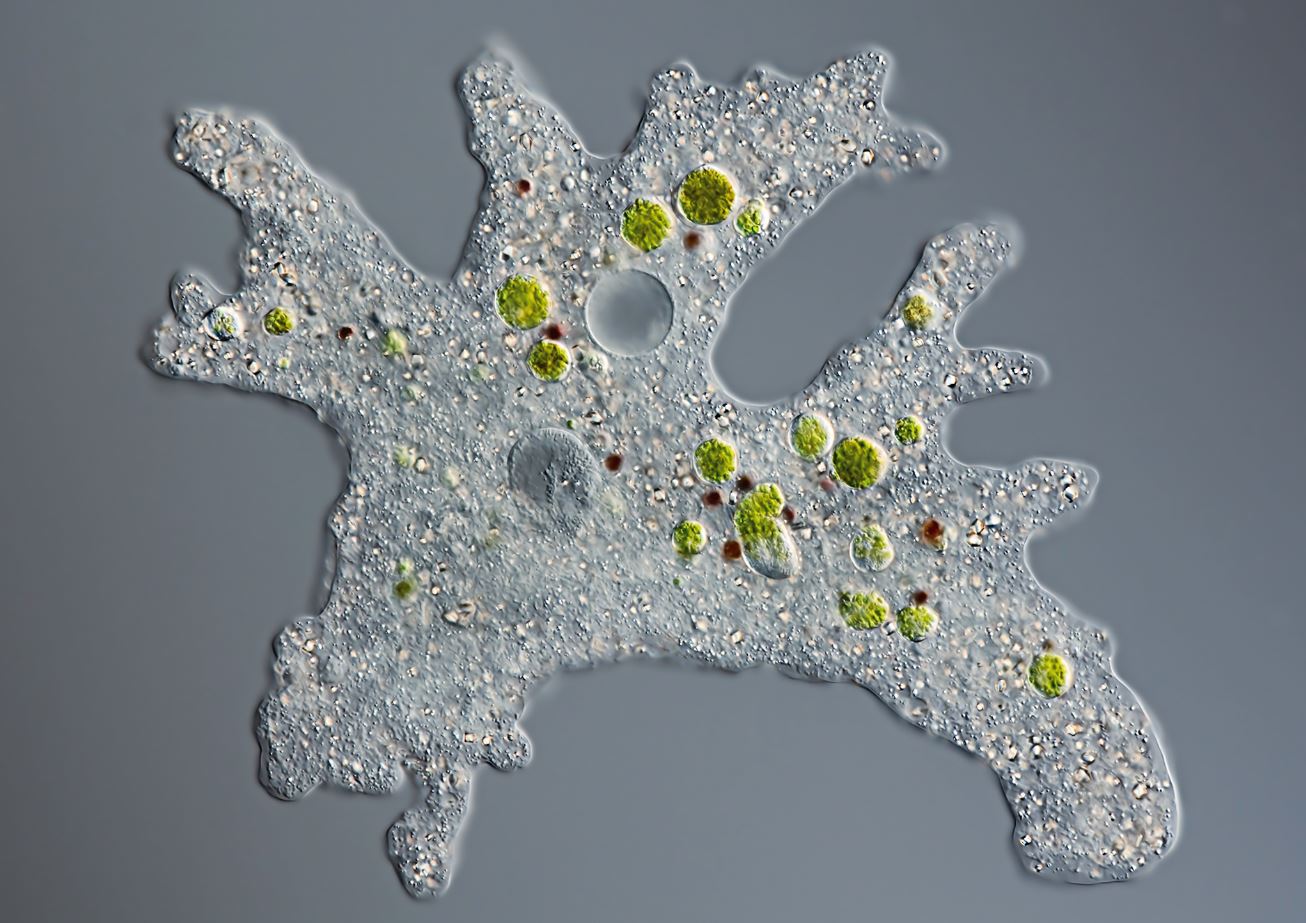
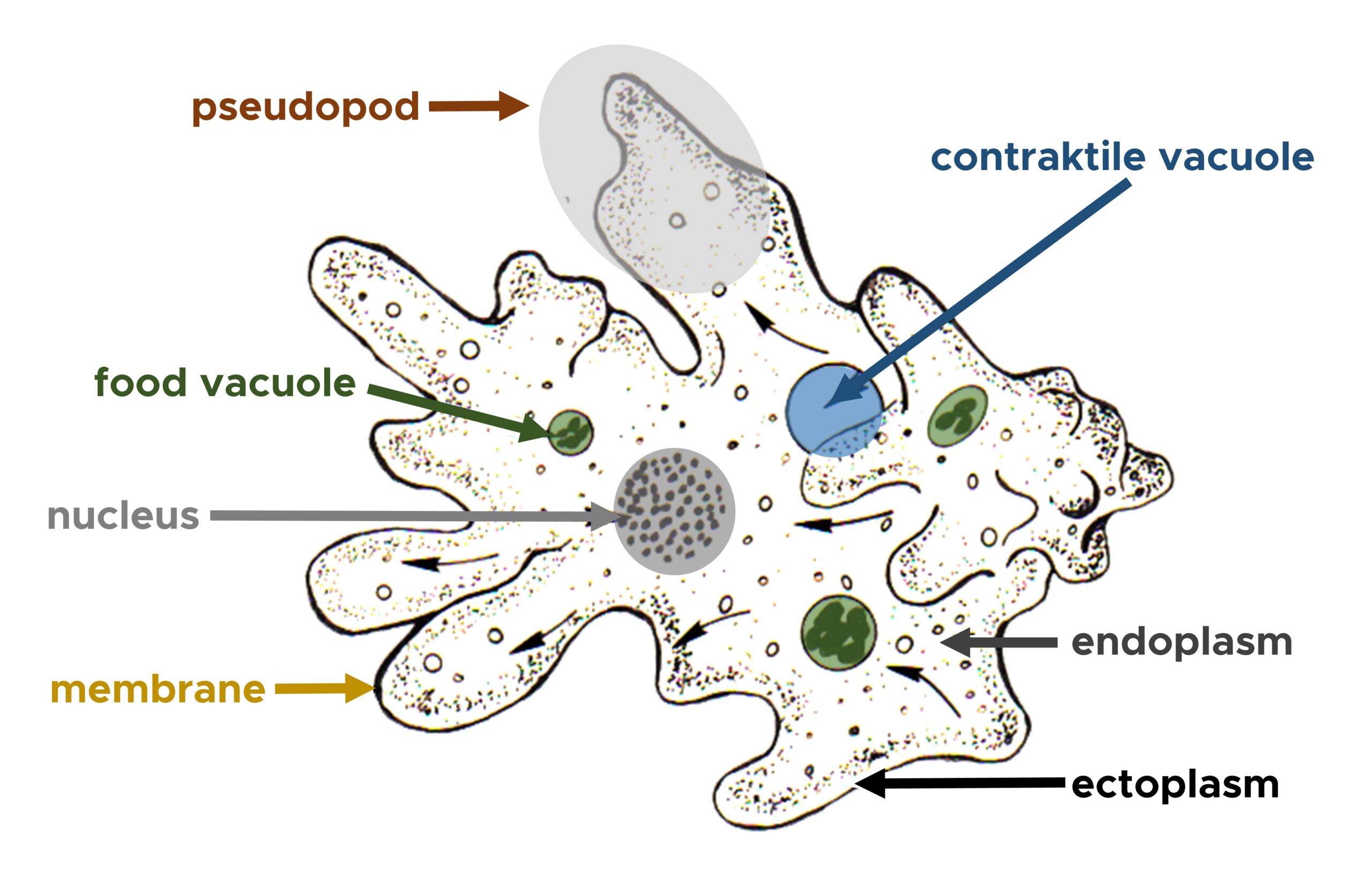
A study of his movement patterns reveals that he systematically explores his surroundings, searches for food, and avoids light. The membrane surrounding him is not simply a «bag of slime“ but a true multifunctional tool, densely packed with a wide variety of receptors. Some respond to chemical signals, serving as tongue and nose, pointing the way to food and warning of danger. Others respond to mechanical stimuli and thus enable the perception of pressure, touch, flow, and temperature, while still others react to light. Each receptor sends its findings into the cell in the form of messenger substances. Since their concentration decreases the farther they spread, it becomes clear from which direction they came. In this way, they also carry spatial information. Taken together, the colorful mixture of messenger substances represents all aspects of the outside world that matter to an amoeba. On this basis, in a permanent «molecular-democratic» voting process, it decides on its further direction.
But besides movement and perception, the membrane also serves as a digestive system. When the wandering goo encounters an object it considers usable, it forms a «mouth» at the point of contact in a flash and flows around it on all sides with its pseudopodia (as the bulges and protrusions are called in technical jargon). As soon as these touch again, they fuse with one another and – whoosh! – the prey, for example a bacterium or a small alga, is floating inside the amoeba enclosed in a membrane vesicle. In this way, a little «stomach» has formed, into which various enzymes are now introduced; these dissolve the contents and transport away the nutrients. With unfamiliar food, it may experiment a little longer until it becomes clear how best to tackle it. The enzyme mix that has proven successful is then produced in advance, because one little bite rarely comes alone. If, by mistake, something wholly indigestible should once have become a guest, that is no great problem – the vesicle simply migrates back to the inner wall, fuses with it, and releases the contents back outside. The same happens with the leftovers of suitable food, so that the membrane functions as an excretory organ. With this final step in the feeding process, known in biology as «phagocytosis» the mouth-stomach-intestine-anus vesicle simply becomes part of the outer covering again. Of course, the wrinkled skin sac performs many further services. Certain substances are transported into or out of the cell as needed; some biomolecules are deliberately fished for; and gas exchange, necessary for respiration, also takes place through the membrane.
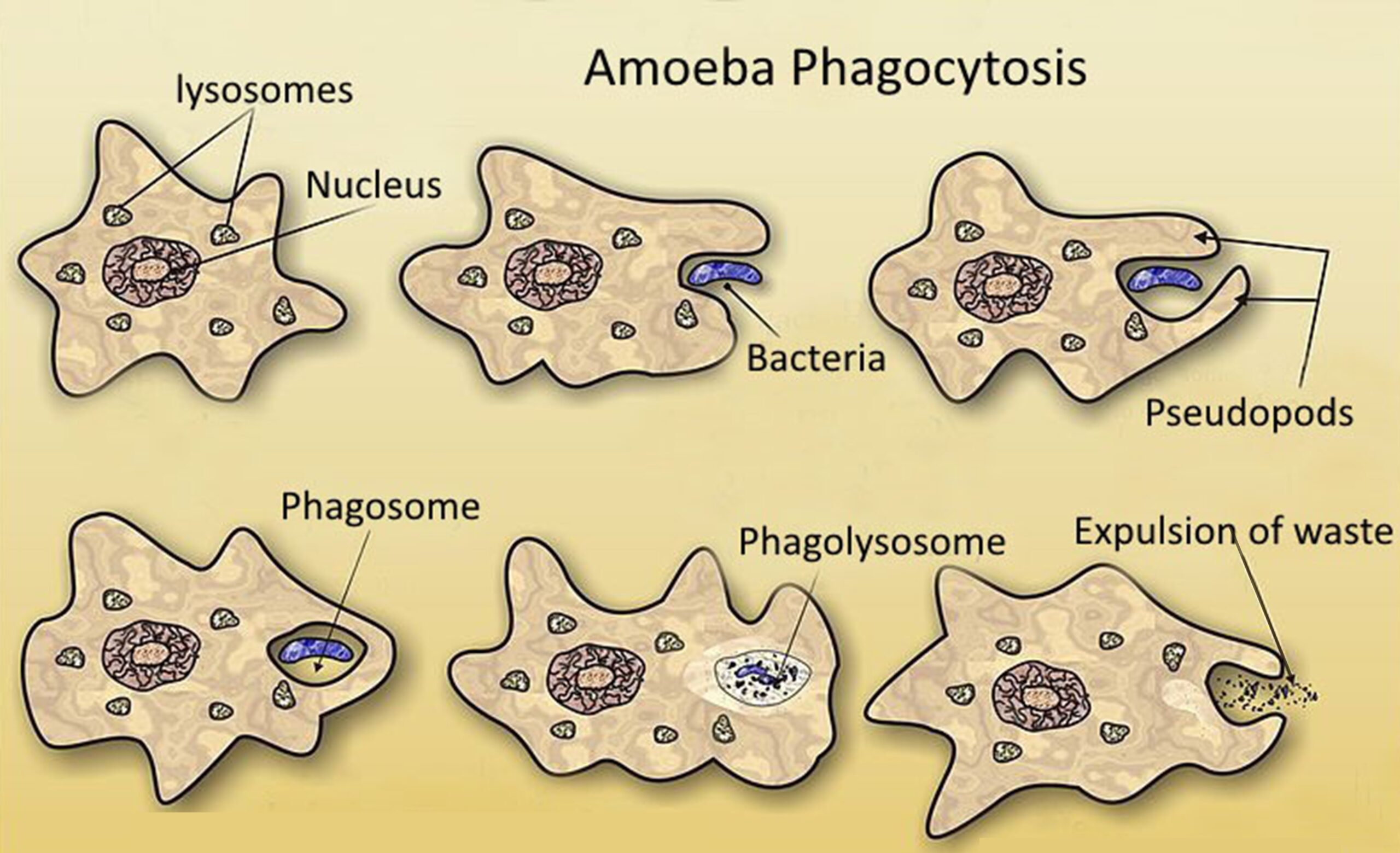
With this capture trick, our little friend could also drink, incidentally, simply by incorporating a drop of liquid without prey. But that is rarely necessary. On the contrary: since he lives in freshwater but is very «salty» inside, water constantly seeps into him from the outside through every crack and pore. He would swell up and burst if his «bilge pump“ known as the «contractile vacuole“ did not run around the clock. Its rhythmic pumping movements cost him a great deal of energy and are easy to see under the microscope. An inexperienced observer might therefore take this structure for the amoeba’s «heart“ but in function it corresponds to the kidney.
All the processes and systems described are ingenious and highly complex; nevertheless, like many other cell organelles that have not even been mentioned yet, they belong to the basic equipment of every run-of-the-mill amoeba. «Amoeba» is a collective term describing the lifestyle of a very diverse group of single-celled organisms. Some of them carry out photosynthesis and seek the light, while our friend prefers darkness. They can do without phagocytosis, while he would starve. Some species hide in shells, while he, like most amoebas, goes about naked. Others live in the sea and, in saltwater, need no contractile vacuole, while he would burst if his failed for even a short time. Still others are parasites and pathogens of animals and humans, up to and including the brain-eating killer amoeba, while he harms no one. The simple reason we are now taking a closer look at him in particular is that he is the only one that has so far been examined in detail. (God alone knows what surprises the world of microorganisms still has in store for us.)
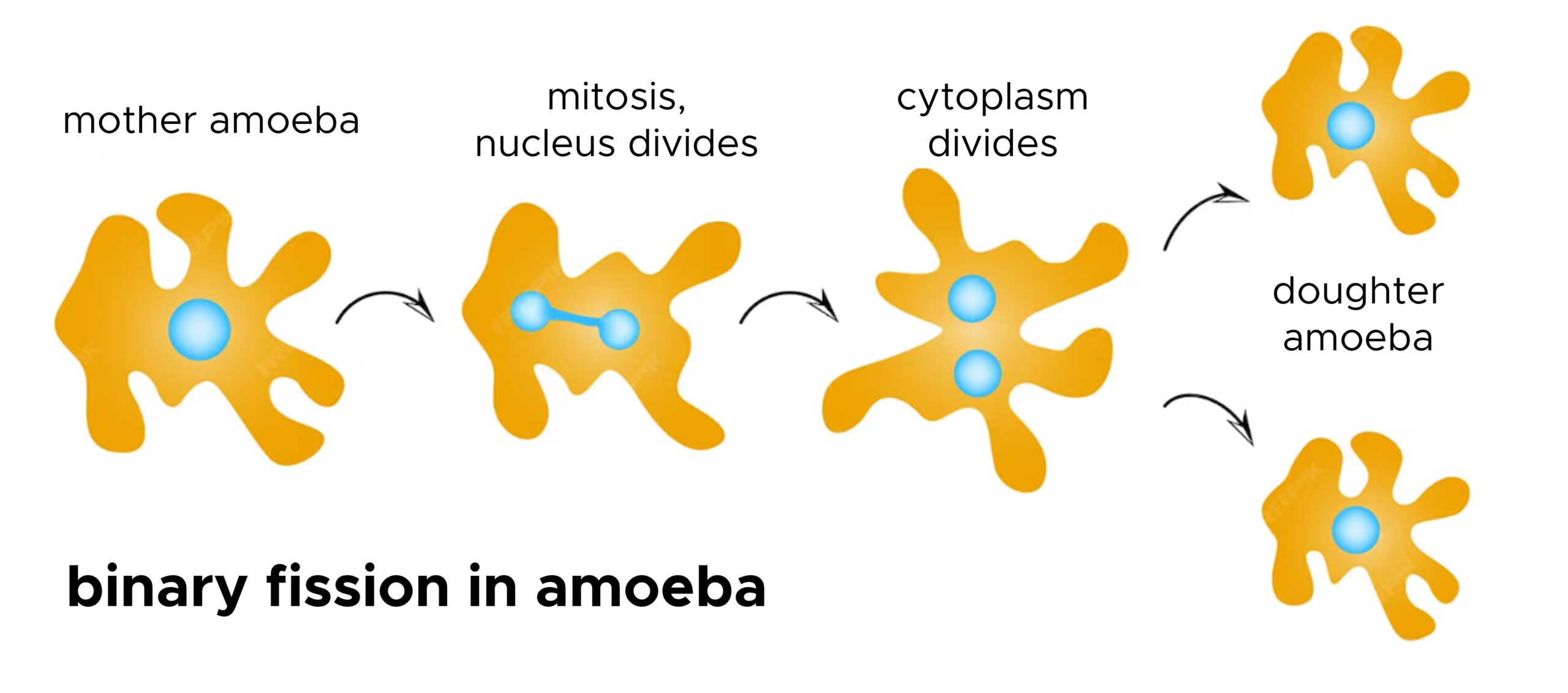
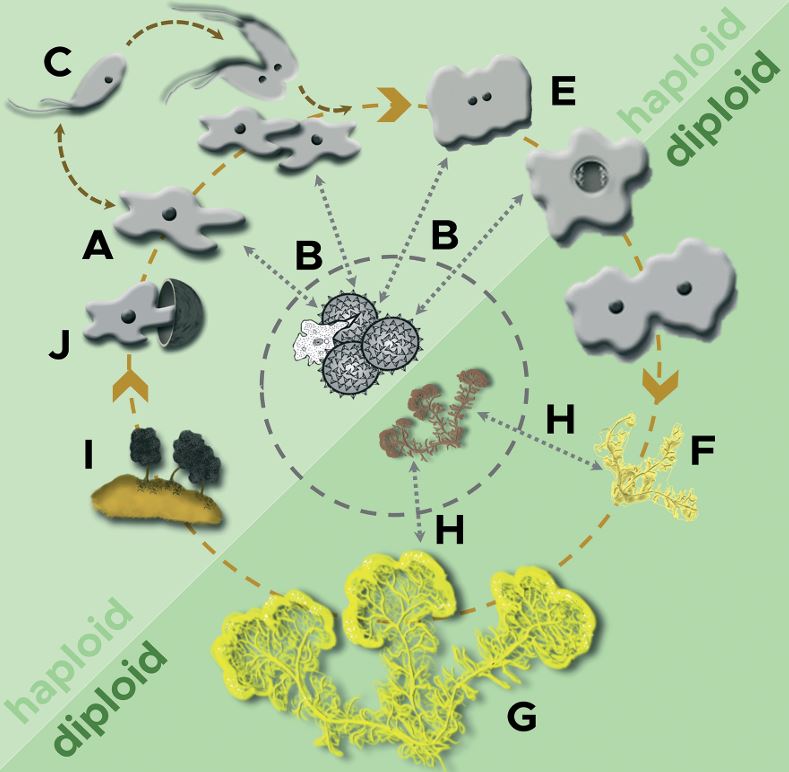
If Physarum polycephalum is kept on a moist glass or plastic plate and supplied with sufficient food, a «keep going» according to «Plan A» – as in «amoeboid lifestyle» – offers him everything he needs to be happy. He could theoretically live this way «forever» because he is «potentially immortal.» Once he has taken in so much food that he has grown to almost twice his original size, he simply copies all vital structures and information, divides the supplies brotherly, constricts in the middle, and divides (which of the two is now «our friend»?). With a good supply of food, the whole process takes only a few hours: 2, 4, 6, 8 … there are more and more. They would conquer the world if it were moist enough everywhere and if there were not already so many other beings swarming there, some of which feed on amoebas.
If his little refuge is allowed to dry out, one can observe how he carries out frantic remodeling work and then shrivels into a small gray button. But do not worry – nothing has happened to him. He has merely activated the emergency program «Plan B» enclosing himself in a little armored sphere and shutting down all activities. In this form, called a «cyst» he endures dryness, heat, and cold for a long time. If, after several years, water is added again, it takes less than half an hour before the armor bursts open, our little friend flows out again, and unfolds to full size as though nothing had happened. Incidentally, he can use this survival strategy in various situations. Even when he has the «feeling» that someone wants to poison him, or is quite certain that there is nothing left to eat anywhere in his surroundings, he cautiously walls himself in and waits for better times.
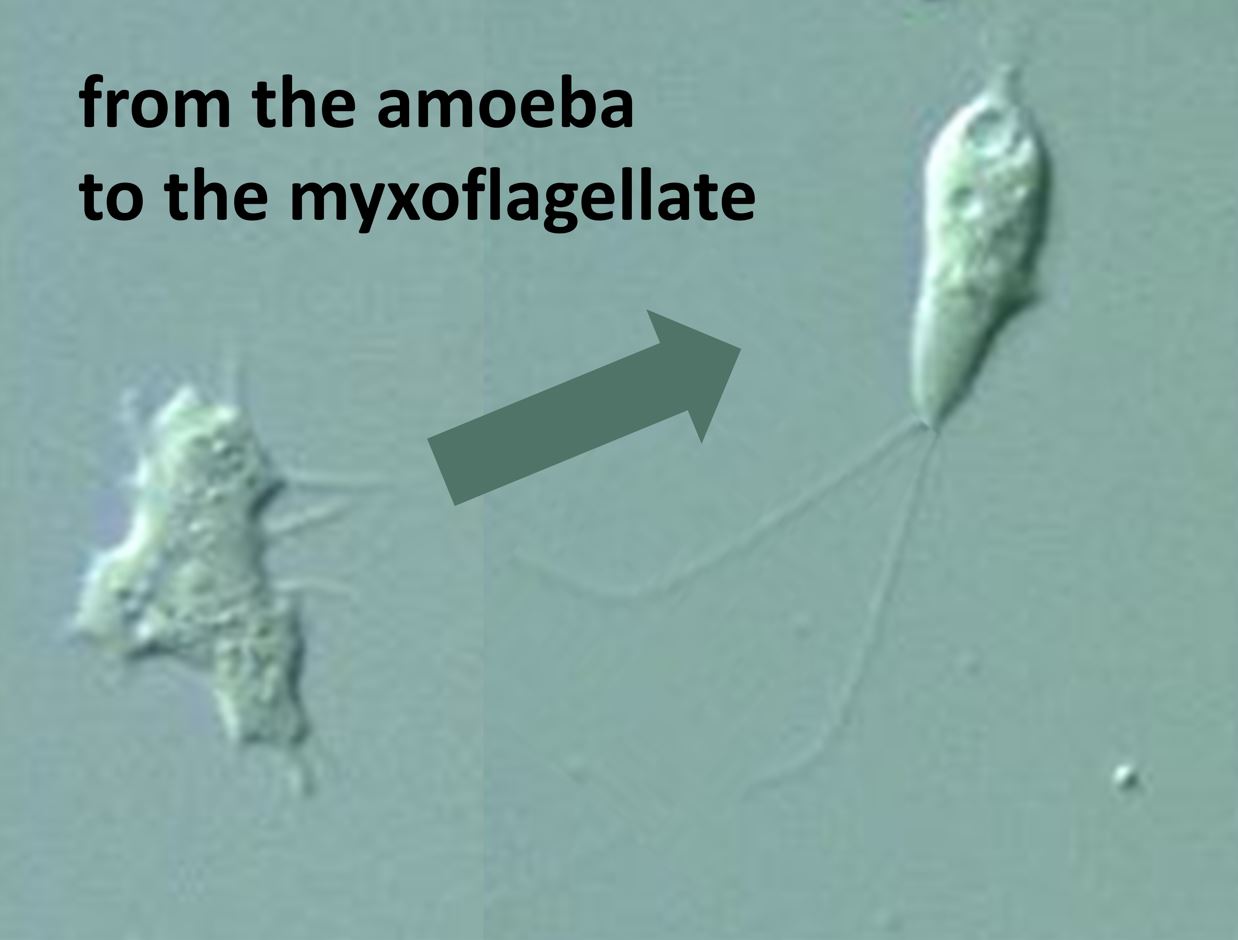
If he is kept at the bottom of a water-filled vessel without being offered food, he will probably move on to «Plan C» (as in «chance optimization»), an action program for emigrants and explorers. For this undertaking, flowing locomotion – which proceeds very leisurely and works only on surfaces – is not particularly well suited, so here too some remodeling is required in order to become a «swarm cell» (myxoflagellate). First it is determined where the front and where the rear will be. Then, at the freshly defined rear end, an outboard motor made of two cord-like flagella is built. At the same time, the most important receptors gather at the head end and install a steering system. Finally, our friend detaches from the bottom and starts the motor. The long flagella drive him crisscross through the basin in search of food with synchronized strokes. Now we should feed him quickly – so much effort and creativity must be rewarded!
This scenario is not for Pepe, but for many other amoeba species. It is mentioned here only for the sake of completeness: A pioneer is on the move as an emigrant and discovers a little paradise – a protected and abundant food source. It does not matter whether he quietly crawls there «on foot“ whether he is blown there as a flying spore, or whether he races up freely swimming with his outboard motor; in any case, he will stay, feed around the clock, and reproduce splendidly. His descendants, too, feel no urge to leave this beautiful place, and so, after only a few days, overpopulation sets in and the food begins to run out. Through chemical messenger substances that they release into the environment, they can «smell» one another and have a fairly accurate «idea» of the current population density in the territory. When they realize that they have become «a strong people“ they respond to the drying up of the food source by triggering «Plan D“ which requires a good deal of organization, but in return combines the advantages of Plan B (a resistant dormant form without needs) and Plan C (the conquest of new habitats). What comes next is sensational! It has been filmed hundreds of times, and one should definitely watch it at least once. First, a «grassroots-democratic» process unfolds. Since the signaling molecules with which they communicate are now known, researchers today can «listen in» (and even «join the conversation»). The whole mob now confers. Where they crowd most closely together, the pressure of suffering is greatest. Accordingly, that is where most supporters of carrying out the great plan are found. As soon as the molecular vote is complete, the signal follows: Here we go!
From all sides, the amoebas now flow star-shaped into the center of the movement and form there (without fusing) a large, wobbling lump, which becomes increasingly dense and then begins to move in a coordinated way. Although this is a collection of similar and «equal-rights» cells, they manage to form a «migrating slug» that crawls around in search of a suitable place, eventually stops, and deforms into various patterns. Attempts have been made to systematize and interpret these various forms, but to this day this has hardly succeeded. In any case, the figures have been given beautiful names: Mexican hat, steel helmet, cone, finger, pointed cap, and babushka. However differently the amoeba ballet of the «dancing crowd» may unfold, the finale is always the same: Suddenly the dance is over, and the heap stretches energetically upward. The colleagues on the ground attach themselves firmly and build a stable foundation; those in the middle flow apart and form a long, thin stalk; while the front-runners release all excess fluid and shrink into a round ball of well-packaged tiny spores. Later, a light breeze is enough to blow the spore spheres from the dried stalk and carry them into a better future. All the workers involved in constructing the foundation and stalk, however, have completely spent themselves in the process. They dry out without first transforming into spores or cysts. Their «selfless» sacrificial death enables the majority of the collective to live on.
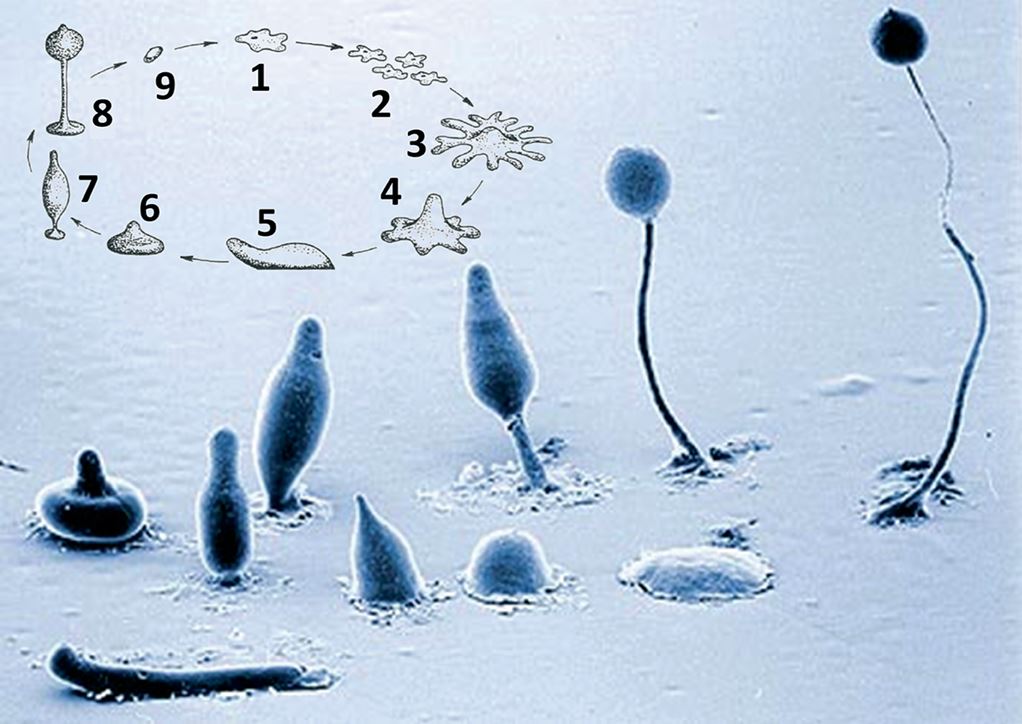
With good care, a lively crowd of amoebas can easily be kept for decades in a jam jar. But if we could now ask our little friend what he still lacked for happiness, he would probably answer that the others bore him terribly. After all, they are practically part of him, have the same experiences, and possess the same «knowledge» and abilities. They are genetically identical and have absolutely nothing «to tell» one another. The situation looks very different, however, if one adds an amoeba of the same species from another region. Every resident of our jar immediately recognizes it as an exotic stranger. The first one able to make contact with the newcomer immediately triggers «Plan E» (as in «spousal union») and fuses with it. So it also works the other way around: out of two, make one. What is special about this variant, however, is that two different genomes are combined. The cell nucleus, which has not yet been mentioned, but which as a large dark spot is the first thing that catches the observer’s eye, contains the DNA, the hereditary information of the cell. In our friend, this had so far existed as a simple (haploid) set of chromosomes, but after fusion the two cell nuclei move together – and suddenly he is diploid. This is something like «growing up» and opens up entirely new perspectives for him.
It almost seems as though he were aware that, as a double pack, he is something better, because now a remarkable change occurs. As soon as he has grown to twice his size, he copies the cell nucleus as usual. But now «Plan F» (as in «fulminant growth») is activated. Instead of constricting and dividing, he no longer splits apart, but remains together and becomes a «plasmodium»: a giant cell comes into being. Before long, it emerges from the microcosm and initially appears as a flat disk of goo that is still very mobile and constantly continues to grow. Should a crisis occur, there is an emergency plan here as well («F-standby»), which in the first step provides for division into smaller units and, in the second step, if the crisis intensifies, for the formation of small, dry spore spheres. Both steps can be reversed at short notice if the situation relaxes. Then the fragments simply flow back together and continue their growth jointly. While as an amoeba he depended on a film of water and had to pump out the excess water inside, now he needs only a moderately moist environment and must make sure not to dry out.
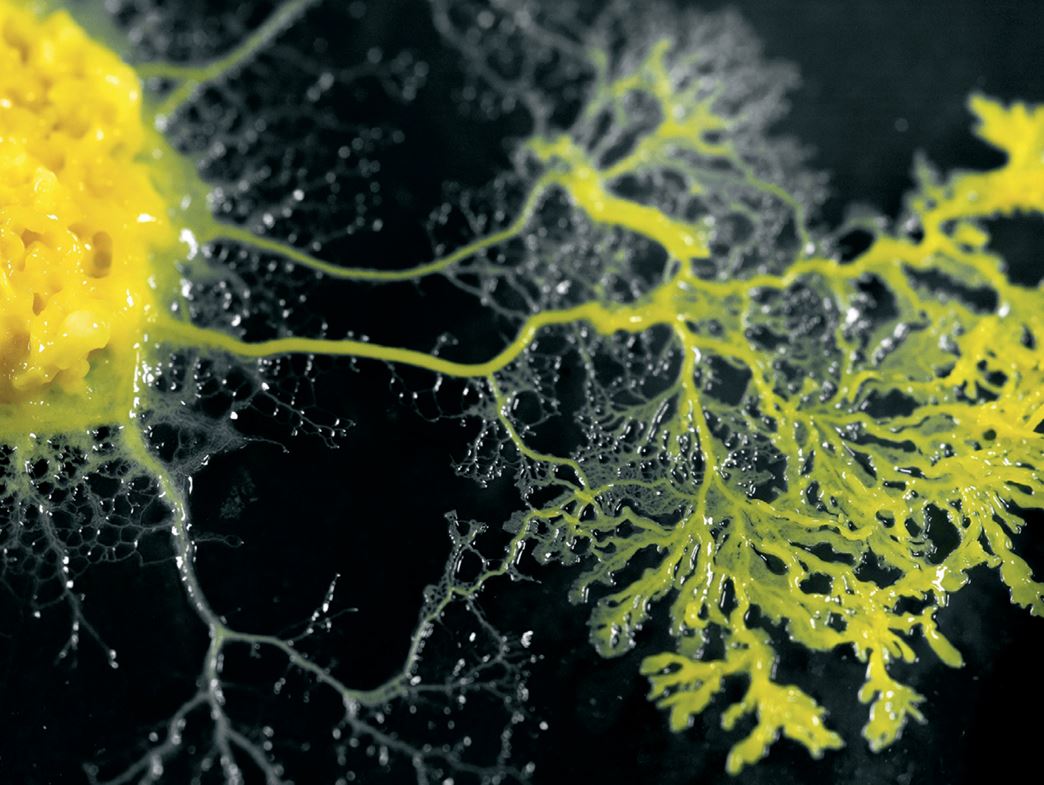
The art of transformation reaches its peak when «Plan G» (as in «Gitterschleimpilz», his German name) comes into play. As we have seen, he is neither fungus nor bacterium, neither plant nor animal, but one of those numerous protozoans that must make do with the historical nomenclature of the good old days, when people did not yet know better. Today he is classified within the supergroup Amoebozoa (amoeboid organisms), in the subgroup Myxogastria (or Myxomyceta, true slime molds).
In his striking «slime form» he has long been known: a bright yellow, gooey mass popularly called «dragon droppings.» A slime mold, or myxomycete, is a being as if from another planet, a pendulum existence between the great kingdoms of life and an outsider in systematics. He falls outside the line of all other creatures: while all other large organisms consist of many individual cells, he is only one cell. Compared with his previous mode of existence, he now assumes gigantic proportions and often covers entire tree stumps. When a working group of leading myxomycete researchers at the University of Bonn bid farewell to their director, the renowned cell biologist Karl Ernst Wohlfahrt-Bottermann, upon his retirement in 1987, they cultivated in his honor a 5.54-square-meter Physarum specimen in the shape of a W, as in «Wohlfahrt.» With this little joke, in the opinion of the editors of the Guinness Book of Records, they created the world’s largest cell by surface area.
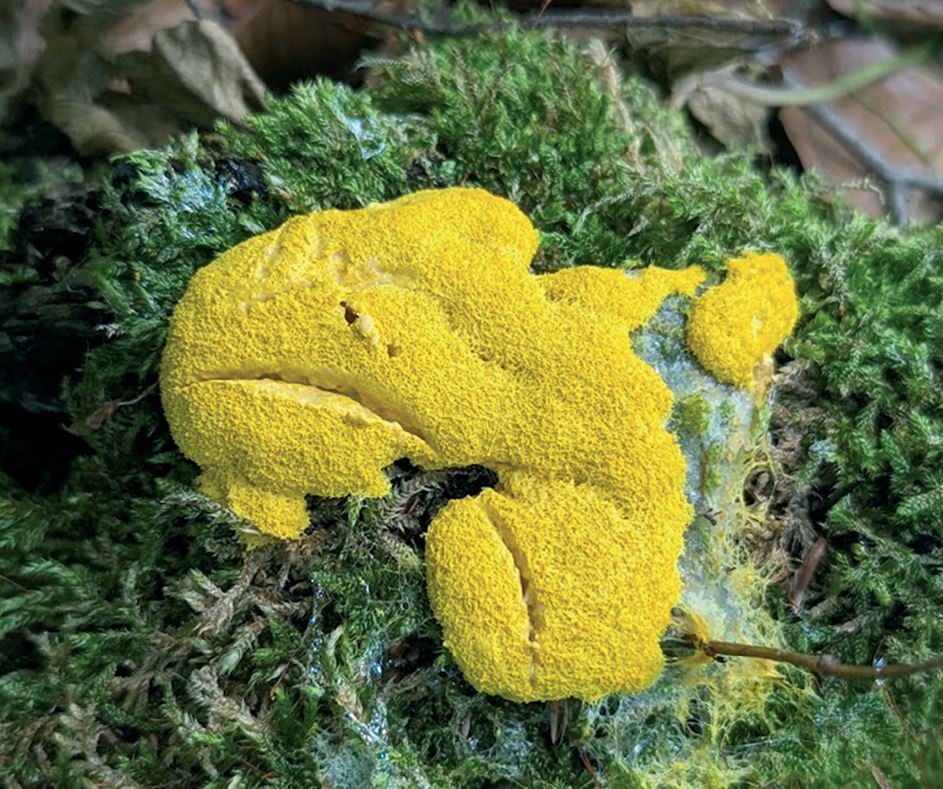
Even more astonishing than his enormous growth is his incredible flexibility. One can completely tear him apart – as long as cell nuclei are still present in the individual shreds, they will continue to grow and, upon contact with their neighbors, fuse again. Even two «foreign» giant cells that encounter one another immediately unite without first getting to know each other more closely. In this way, different genome variations often coexist in the same cell, complementing one another and competing peacefully with one another.
Although our friend acts very cautiously, avoids light and warmth, and in dry conditions retreats into cracks and cavities or even underground, it nevertheless happens from time to time that his location dries out completely. In this case, «Plan H» (as in «hard» Greek: skleros) comes into force. He presses the fluid out of himself and becomes a pale yellow, spongy, bone-dry, and rock-hard dormant form called a sclerotium. Just like the spores and cysts we have already encountered, he can in this state withstand the harshest conditions for a long time, only to awaken to life again at some later point.
He reaches his highest biological goal under good nutritional and growth conditions, when he can put «Plan I» (as in «ideal») into action. Then he forms numerous spherical fruiting bodies on his surface, which rise upward on long stalks. Inside these spheres, the cell nuclei now undergo a «reduction division» (meiosis), in which their chromosome set is halved again. Each of the two halves is packaged and pinched off into small spheres together with the bare minimum of provisions.
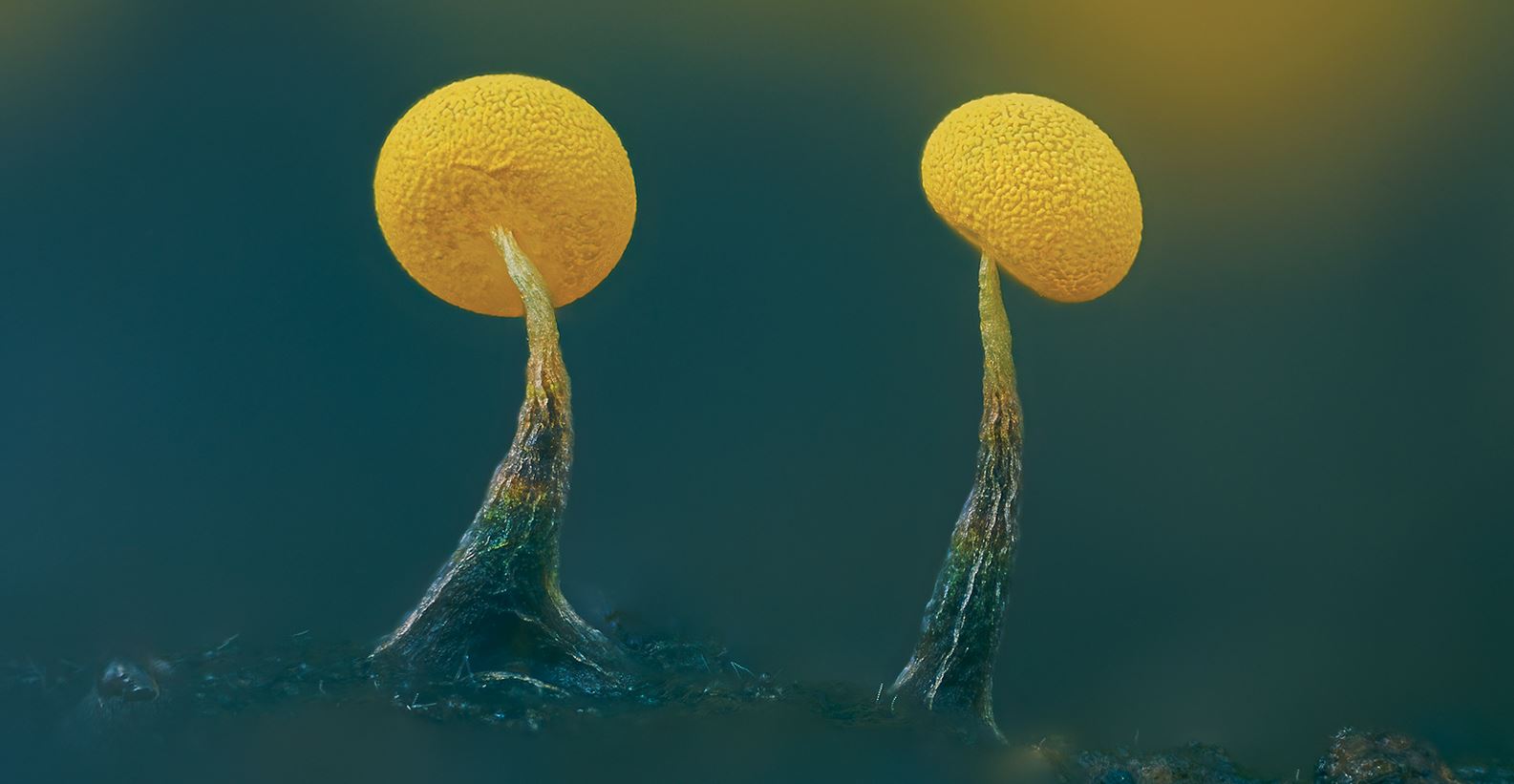
After a short time, a sporangium has formed – a dark-brown spore container that holds thousands of small, dry, haploid spores carried away by the wind. If they later land in a moist environment, they carry out «Plan J» – «just from the beginning» – by releasing a small, naked amoeba, and the cycle closes with the return to «Plan A.»
But back to his tangible and visually striking form: In time-lapse recordings, a mature and fully grown netted slime mold appears like a sophisticated hunter. He may, for example, attack fully developed mushrooms, topple them, envelop them from all sides, and cause them to disappear completely within his pulsating body. When he sets about decomposing wood, he proceeds cautiously, developing an efficient strategy for exploiting this food source. Just as a coal seam is mined underground by driving a network of tunnels through it and then systematically extracting the material «panel by panel» our friend spreads out in a lattice-like network of tubes, then covers and «grazes» the most rewarding intermediate areas first.
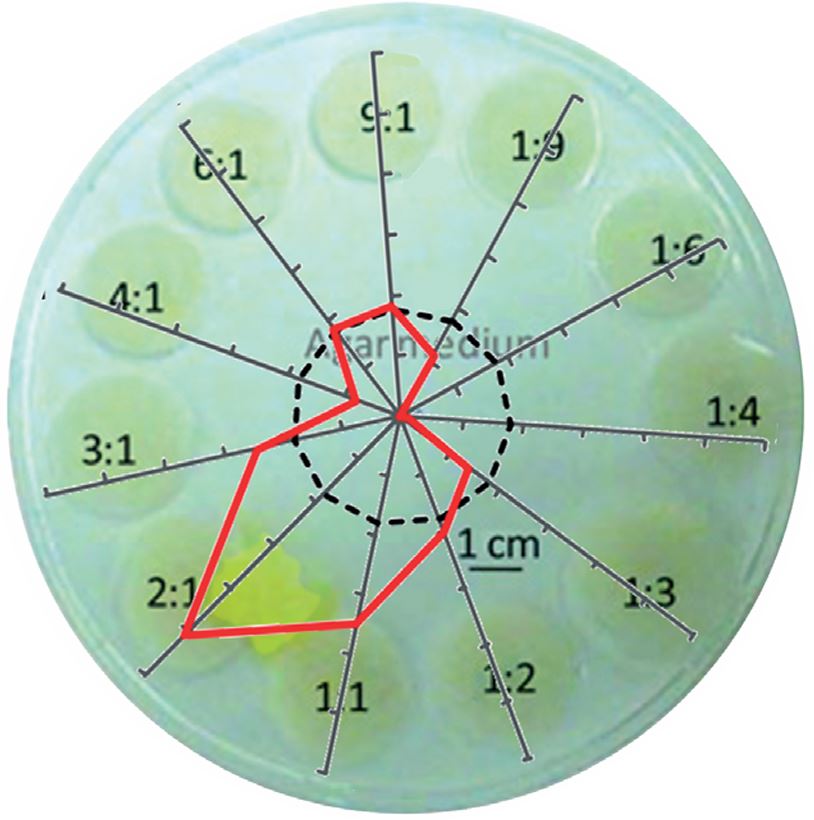
He also behaves in a remarkably health-conscious manner and pays attention to a balanced diet. In his case, the ideal food consists of two-thirds carbohydrates and one-third proteins. The French researcher Audrey Dussutour, who fell in love with P. polycephalum many years ago, repeatedly placed him in the center of a circle of eleven different food samples representing a broad cross-section of French fauna, flora, and cuisine. As soon as he had «tasted» the diffusion trails of the buffet in the agar gel beneath him, he made a beeline for the portion that most closely matched his nutritional ideal. Researchers discovered that rolled oats are the perfect food for Pepe and that, in principle, he needs nothing else.
According to modern understanding, the cognitive potential we call «intelligence» arises through the interaction of highly specialized cells connected in «neural networks.» In the uniform plasmodial mass of Physarum there are neither nerves nor any form of neural circuitry. Nevertheless, he is capable of moving as a coordinated whole and flowing toward a target at a speed of about one centimeter per hour. In doing so, he leaves behind a faint trail of special glycoproteins. When he encounters his own trail, he knows that he has already been there. In this way, he can explore a new environment using an optimal search pattern.
But can one truly say that Physarum is intelligent? The question is not easy to answer, because intelligence has no universally accepted definition. It is usually assessed through various tests, most of which involve problem solving – and that happens to be his specialty, where he scores more points than the «most highly developed animals»!
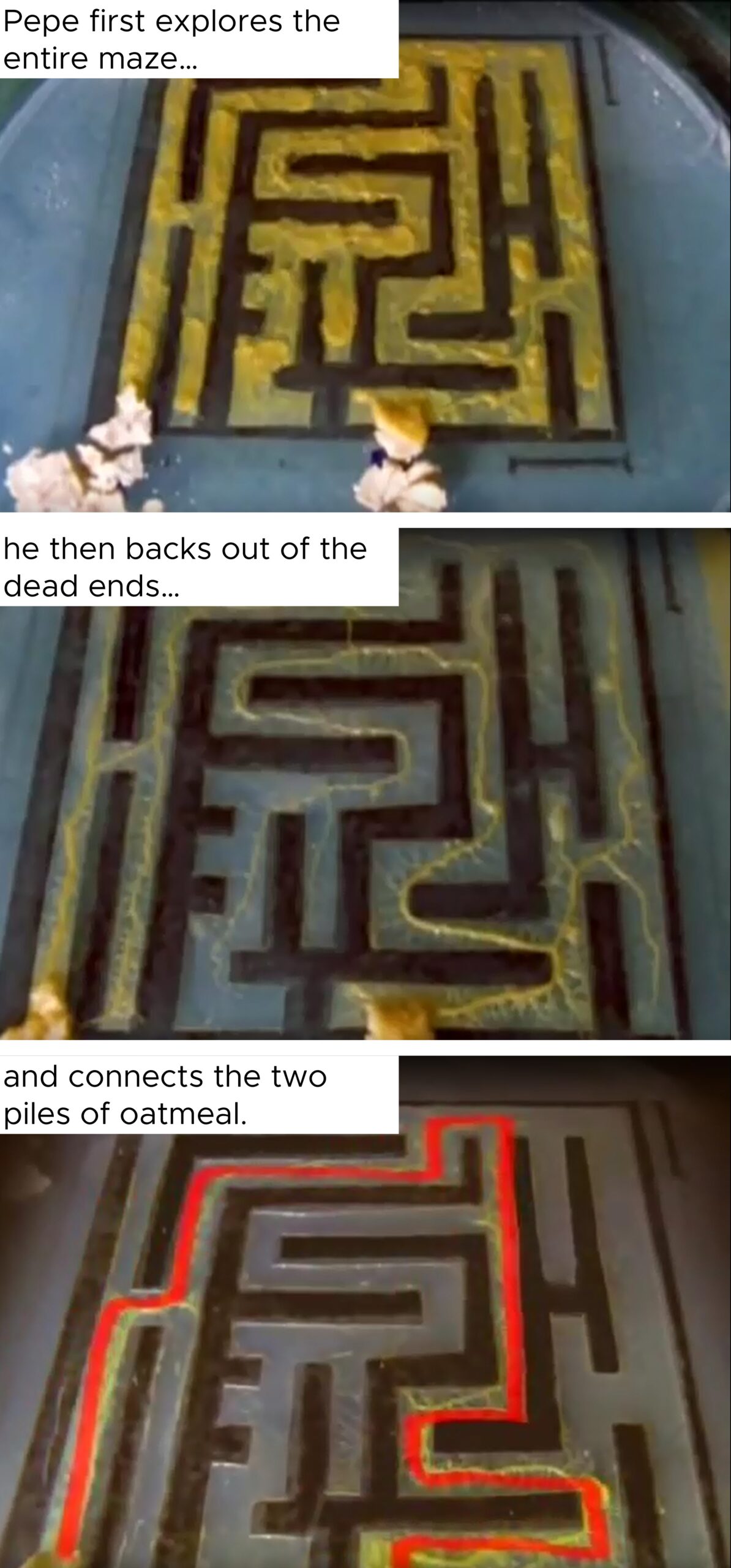
Maze experiments are a classic tool of behavioral research. In 2000, Japanese researchers discovered that our friend unfailingly finds the shortest route when lured with rolled oats, which he absolutely loves to eat. He requires four hours to solve a 14-centimeter route in a maze covering 25 square centimeters. At first glance, that may seem rather slow. However, when his maximum movement speed is considered in proportion to the size of the maze, he solves the task significantly faster than, for example, a rat.
A type of experiment known as a «detour experiment» appears much easier to solve than a complicated maze. A typical setup for Physarum places him inside the curve of a U-shaped barrier while his favorite food lies directly on the opposite side, seemingly «right under his nose.» He can detect it but cannot reach it directly. The solution is obvious: first leave the opening of the «U» then go around the outside and finally reach the food. The trick is that he must initially move away from the attractive stimulus in order to reach it by a detour. It is almost unbelievable that an organism could choose this strategy without «insight» and «spatial reasoning.» Yet while even our four-legged family companions are often quickly overwhelmed by such tasks – typically responding with frustration and futile attempts to jump the fence – our slimy friend has no difficulty whatsoever.
He proves to be a genuine «mathematical genius» when solving a class of problems known in mathematics as the «Traveling Salesman Problem» (TSP). The goal is to connect various points using the shortest possible route, much like a traveling salesperson who must visit several cities and determine the optimal path. Although this is a highly demanding mathematical problem requiring substantial computational effort, there are materials capable of solving its simplest form without our calling them intelligent. One can, for example, pin a map onto a wooden board, drive a nail into each destination city, and immerse the whole arrangement upside down into a basin of soap solution. If done correctly, when the board is lifted out, the nails will be connected by soap-film bands representing the perfect solution. This is a chemically and physically explainable process resulting from the properties of soap films. However, it has little in common with the way our friend solves such problems.
In 2010, the Japanese Physarum specialist Toshiyuki Nakagaki asked him to connect the stations of the railway network in Greater Tokyo, a metropolitan region inhabited by 38 million people. The stations were represented by piles of rolled oats (the higher the passenger volume, the larger the pile). Beneath the plastic plate on which he was allowed to spread, researchers placed a «light map.» Easily traversed areas were darkened, while mountains, ravines, rivers, open water, and other obstacles became increasingly bright in proportion to the difficulty they posed for transportation infrastructure.
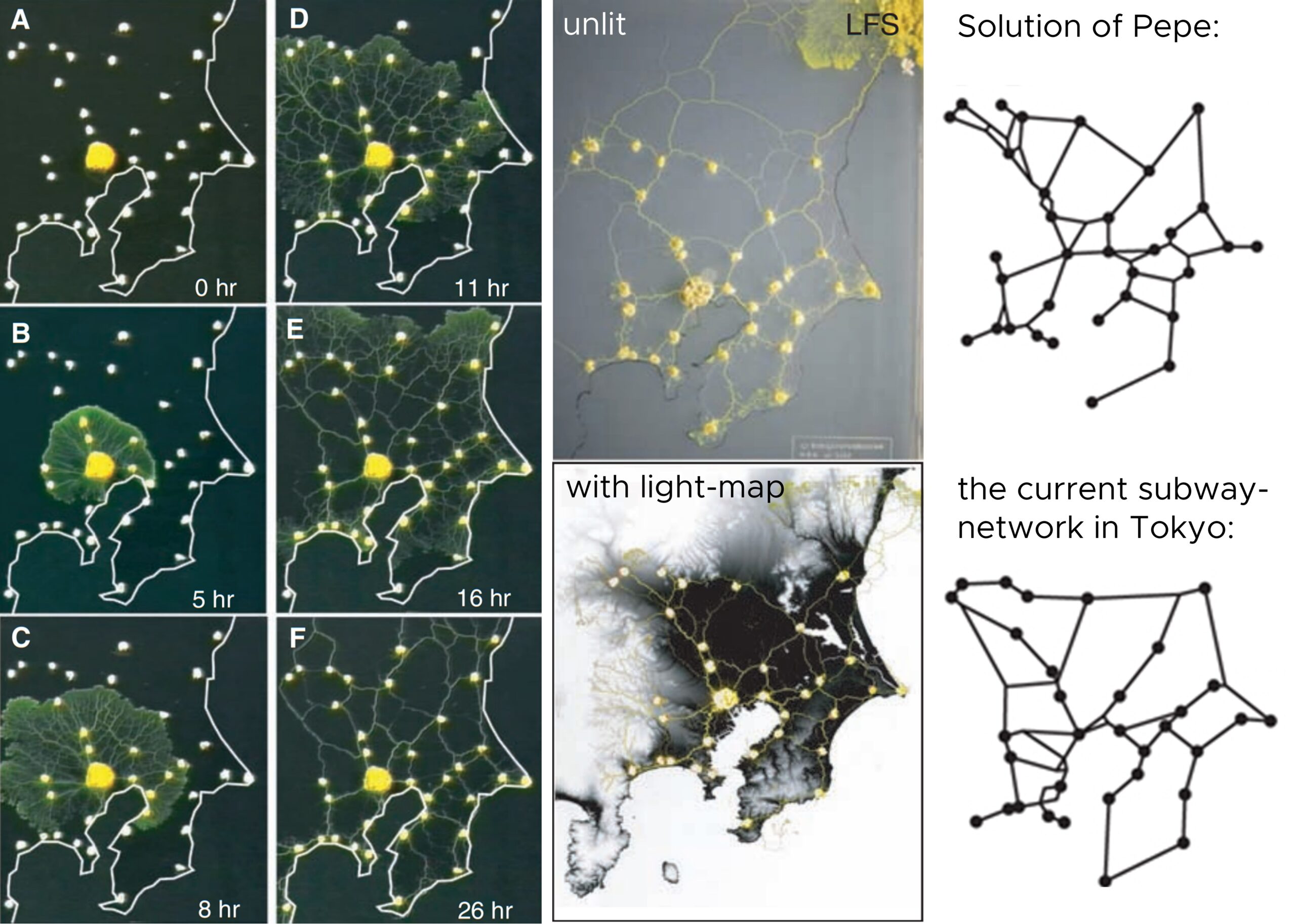
The result exceeded all expectations. Although it did not perfectly match the actual, engineer-designed rail network, it performed equally well or better in every evaluation category. Particularly ingenious were its «bypass solutions» for the most heavily traveled sections. Today it is too late to implement them in reality because the area has long since been densely developed. Yet had our friend been consulted fifty years earlier, a genuinely superior transportation network might have been possible. It should be mentioned that Tokyo’s transit authorities found a different solution, one somewhat less elegant: railway employees known as «Oshiya» («pushers») physically push passengers into overcrowded train cars so that the doors can close and station dwell times remain as short as possible.
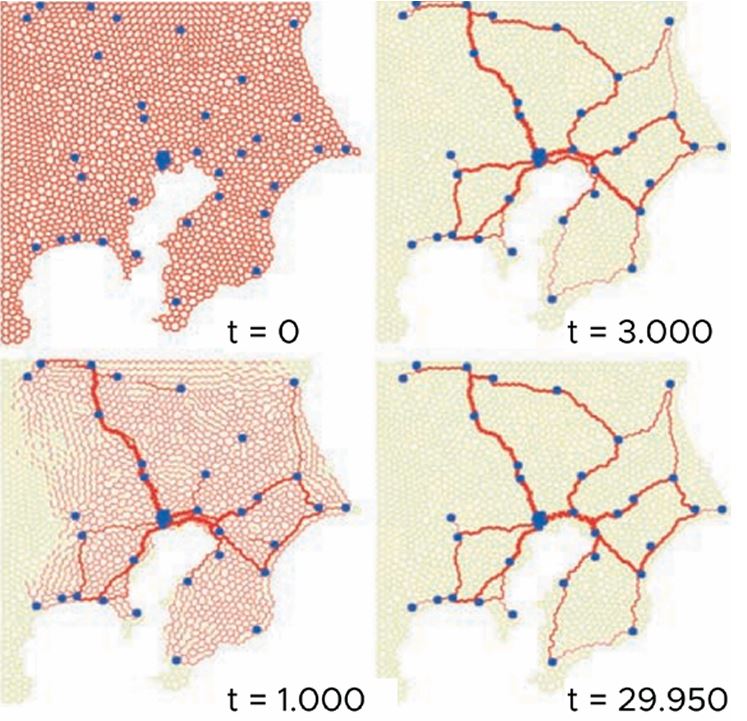
Following this encouraging experiment, thousands of similar optimization problems have been solved by the yellow slime network. Whether dealing with roads, rail systems, cable routing, circuit boards, or pipe networks, engineers are only beginning to discover the potential of «slime optimization.» Physarum’s core competency is «multidimensional optimization.» His input comes from light, cold, heat, dryness, salt, and vibration – which he dislikes – as well as rolled oats, darkness, room temperature, moisture, and calm – which he loves. Beyond these, there are numerous other attractants and repellents that researchers are only beginning to investigate. Once the influence of such factors is established experimentally, they can be used to influence the outcome. The giant cell becomes a «molecular computer.» Instead of interacting electron flows in semiconductors, a finely tuned mixture of billions of signaling molecules diffusing through the cell interior in spatially structured gradients generates a highly detailed computational result. The coordination of this process remains a great mystery, for as his species name polycephalum – «the many-headed one» – suggests, there is no central control center.
Particularly fascinating are situations demonstrating that his responses are not «hard-wired“ but show a degree of flexibility. If the adventurous pioneer is placed in the center of a Petri dish and surrounded by a ring of salt, the following occurs: exploratory branches extend in every direction and encounter salt everywhere. He strongly dislikes crossing salt because it causes him to lose large amounts of water. He «realizes» that he is trapped and withdraws back to the center for a moment, as though reconsidering his situation. If his aversion to salt were an absolute programmed rule, he would now have to starve or activate «Plan H.» Instead, it appears that at some point he «gathers his courage» and flows across the barrier as rapidly as possible while minimizing the exposed area. What is happening here? How and where is this decision made? These questions remain unanswered to this day.
Most astonishing of all is the discovery that our friend apparently possesses a sense of time. In a remarkable experiment, food was supplied continuously for one hour. Then the food supply was interrupted for five minutes. After another hour, it was interrupted again for five minutes. By the end of the third hour, he had already learned that no food would be available during those specific five-minute intervals and no longer bothered reaching toward it. Even when food was once again supplied continuously during the fourth hour, he still refrained from extending himself during those five-minute periods. Only after two additional hours did the «memory» fade and he resumed feeding continuously. Researchers also performed similar experiments using negative stimuli by switching on a fan according to a fixed schedule. Pepe strongly dislikes moving air. He remembers when the airflow occurs and refrains from extending himself toward the rolled oats even before the fan starts.
This naturally raises countless questions. How does he know when sixty minutes have passed? Where is the clock? How does a single cell «remember»? In all experiments in which Physarum learns something, researchers have also shown that newly acquired information is transferred throughout the entire system when two cells fuse. The organism can therefore pinch off small mobile satellites and send them out on exploratory missions. When these scouts return, they fuse back into the main body and distribute their newly acquired knowledge throughout every corner of the giant cell.
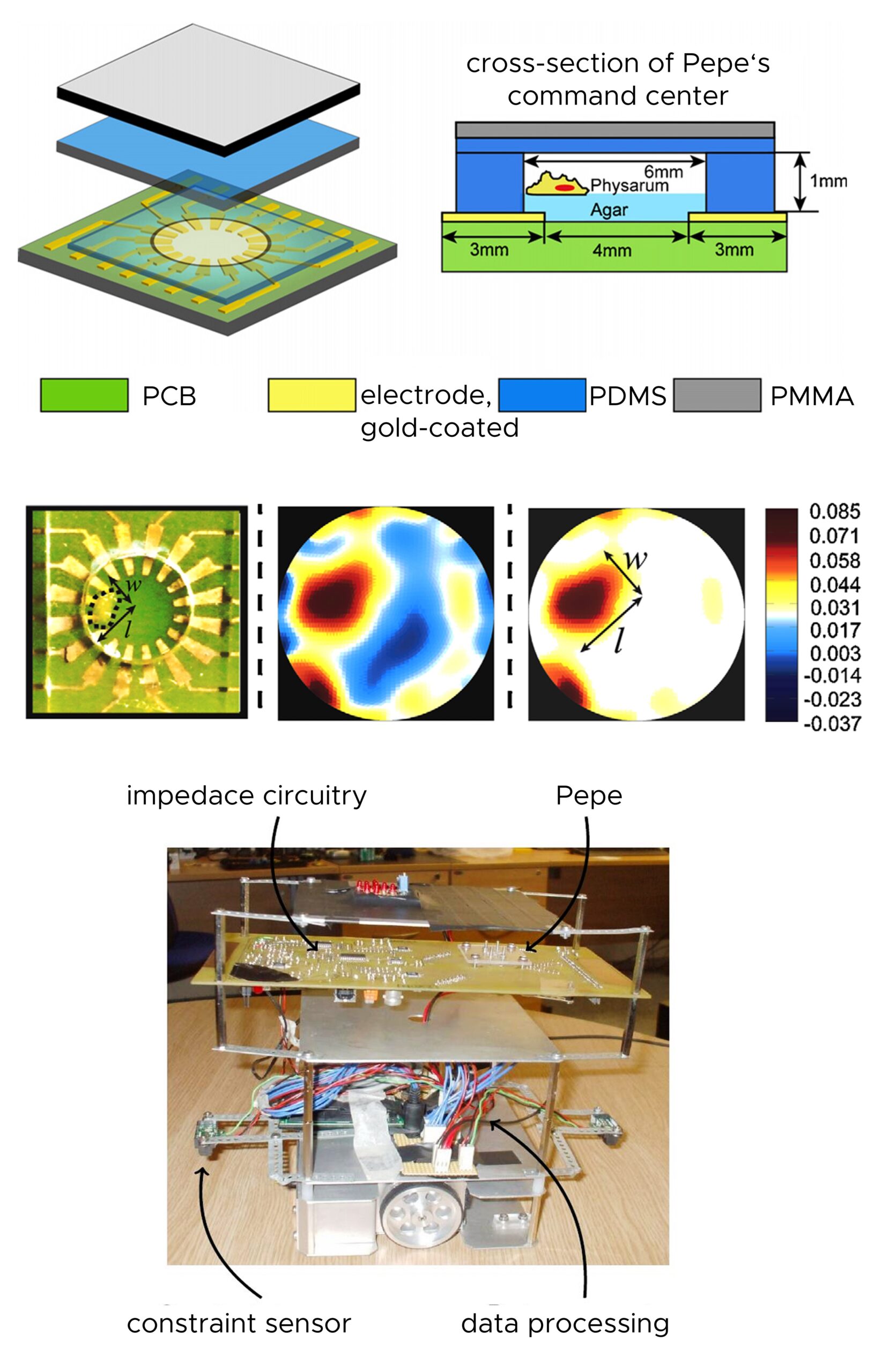
As a final highlight, it should be mentioned that our friend is the first living organism whose «computational abilities» have been directly integrated into technical devices. In the research laboratories of the University of Kobe (Japan) and the University of Southampton (United Kingdom), he controls wheeled and crawling robots. To accomplish this, he is grown on a circuit board that measures changes in electrical resistance caused by his reactions to environmental stimuli and translates them into control commands. Although he appears rather sluggish as a macroscopic organism, he functions as an extraordinarily fast molecular computing machine and produces real-time signals with less delay than a microprocessor could achieve on its own.
Such bioelectronic control systems are already considered promising candidates for future space technologies. In addition to their immense data-processing capabilities, they possess several other advantageous properties. They are not only capable of self-monitoring, but also of self-repair and, when necessary, self-reconfiguration. Furthermore, it appears possible to establish closed material cycles within very small spaces, featuring highly efficient use of solar energy and nearly complete recycling of materials.
Every branch of biology relies on characteristic model organisms: bacteriologists cultivate E. coli, cell biologists work with baker’s yeast, geneticists manipulate fruit flies and mice, developmental biologists study nematodes, embryologists investigate the development of clawed frogs, chickens, and zebrafish, pharmacologists test substances on rats and guinea pigs, and so forth. Physarum is increasingly becoming the favorite toy of cell biologists, bioinformaticians, network engineers, and researchers of behavior and cognition, who often receive pitying shakes of the head when they confess that their object of study is a «slime mold.»
As far as the public is concerned, however, he still lives largely in obscurity. Yet it is probably only a matter of time before Hollywood discovers him and lets him ooze across movie screens as an adorable pet, a many-headed super-agent, or a mutated monster slime. In the biological sciences, researchers today note with amazement that extraordinary capabilities, whose origin is often attributed to a long evolutionary history, are already present at the very beginning of that scenario. Anyone who has gained even a glimpse of the infinite wisdom of Jesus Christ, the «Author of life» (Acts 3:15), however, is not surprised in the least. «Wonderful are Your works, and my soul knows it very well!» (Ps 139:14).
Sources:
Baumann, K.; Nowotny, W.; Neubert, H.: The Myxomycetes (Vol. 2). Gomaringen (Karlheinz Baumann), 1995.
Bierens de Haan, J.A.: Labyrinth and Detour: A Chapter from Animal Psychology. Leiden (E. J. Brill), 1937.
Dussutour, A.; Latty, T.; Beekman, M.: Amoeboid organism solves complex nutritional challenges. Proceedings of the National Academy of Sciences (PNAS) 2010; 107(10):4607–4611. doi:10.1073/pnas.0912198107
Gough, J.; Jones, G.; Lovell, C.: Integration of Cellular Biological Structures into Robotic Systems. Acta Futura 2009; 3:43–49. doi:10.2420/AF03.2008.36
Hejnowicz, Z.; Wohlfarth-Bottermann, K.E.: Propagated waves induced by gradients of physiological factors within plasmodia of Physarum polycephalum. Planta 1980; 150:144–152.
Hülsmann, N.; Radek, R.: Single-Celled Organism of the Year 2021: Physarum polycephalum – The Slime Mold. German Society for Protozoology (DGP). Flyer:
https://www.protozoologie.de/wp-content/uploads/2022/04/PhysarumFlyerfinaldeutsch.pdf
Jabr, F.: How Brainless Slime Molds Redefine Intelligence. Scientific American, 2012.
https://www.scientificamerican.com/article/brainless-slime-molds
Nakagaki, T.; Yamada, T.; Tóth, Á.: Intelligence: Maze-solving by an amoeboid organism. Nature 2000; 407:470.
http://www.nature.com/nature/journal/v407/n6803/abs/407470a0.html
Reid, C.R.; Beekman, M.; Latty, T.: Amoeboid organism uses extracellular secretions to make smart foraging decisions. Behavioral Ecology 2013; 24(4):812–818. doi:10.1093/beheco/art032
Reid, C.R.: Thoughts from the forest floor: a review of cognition in the slime mould Physarum polycephalum. Animal Cognition 2023; 26:1783–1797. doi:10.1007/s10071-023-01782-1
Revilla, F.D.; Zauner, K.P.; Morgan, H.: Physarum polycephalum on a chip. Proceedings of μTAS 2007; 2:1089–1091.
Richter, W.: Alter Schleimer. ZEIT Wissen 01/2007.
http://www.zeit.de/zeit-wissen/2007/01/Schleimpilze
Russell, B.: Our Knowledge of the External World (p. 12). London, UK (George Allen & Unwin Ltd.), 2014. Quote: «A process which led from the amoeba to man appeared to the philosophers to be obviously a progress – though whether the amoeba would agree with this opinion is not known.»
Sun, T.; Tsuda, S.; Zauner, K.P.: On-chip impedance tomography for imaging biological cells. Biosensors and Bioelectronics 2010; 25:1109–1115. doi:10.1016/j.bios.2009.09.036
Tero, A.; Takagi, S.; Nakagaki, T.: Rules for Biologically Inspired Adaptive Network Design. Science 2010; 327(5964):439–442. doi:10.1126/science.1177894
Tsuda, S.; Zauner, K.P.; Gunji, Y.P.: Robot Control with Biological Cells. Proceedings of the Sixth International Workshop on Information Processing in Cells and Tissues 2005; 202–216.
https://eprints.soton.ac.uk/263582/ Vogel, D.; Dussutour, A.: Direct transfer of learned behaviour via cell fusion in non-neural organisms. Proceedings of the Royal Society B 2016; 283:20162382. doi:10.1098/rspb.2016.2382
Image Credits:
Wikipedia: Diagram of amoebal phagocytosis / Miklos
Other licenses: AI-generated image: title graphic for extras with four thematic images // Physarum title image (netted slime mold on tree stump) / shutterstock_ID_2705798935 / Dan Gabriel Atanasie // Amoeba under light microscope / shutterstock_ID_101601943 / Lebendkulturen.de // Physarum juvenile stage / shutterstock_ID_2447570757 / PRIYA S. NAIR NATURE // Netted slime mold on moss cushion / Daniel vom Stein // Sporangium of the netted slime mold / shutterstock_ID_2667719865 / Lukas Jonaitis