The domestic chicken (Gallus gallus domesticus) is now one of the most widespread livestock animals and is certainly the most numerous vertebrate raised in agriculture. While there are only four wild bird species with populations exceeding one billion individuals worldwide, there are about 20 billion chickens.
For every human being, there are three chickens alive at any given time and seven slaughtered each year—referred to in agricultural terms as «units of poultry». This ratio already shows that most animals do not live very long. A few decades ago, things were different, but today highly bred meat varieties need only a few weeks to reach slaughter weight. The result of these breeding efforts is an enormous diversity of chickens. A compilation by the EU agricultural authority lists 215 breeds with a total of 1,147 color varieties distinguished in the European poultry trade.
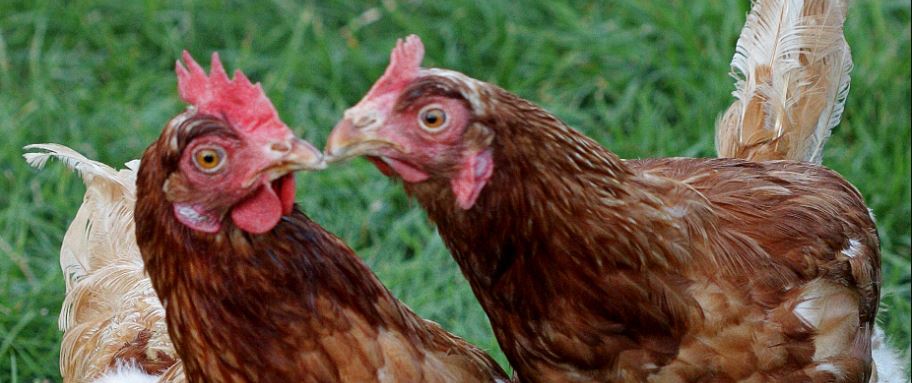
In Egypt, chicken keeping has been widespread at least since the New Kingdom (from 1550 BC) and, through lively exchange, was likely known to neighboring peoples as well. Nevertheless, it is only attested in Israel from the 4th century BC onward. Chickens are not mentioned in the Old Testament, and when the term bezim appears (Deut 22:6; Job 39:14; Isa 10:14), it refers to the eggs of wild birds. Although chickens had been used earlier in Israel, it was the Romans who ensured that the domestic chicken became a standard part of agricultural livestock throughout their empire. In the New Testament, it can be assumed that oon refers to a chicken egg (Lk 11:12), that the crowing alektor is a rooster (Mt 26:34 and eleven other verses), and that the ornis is a brooding hen (Mt 23:37; Lk 13:34).
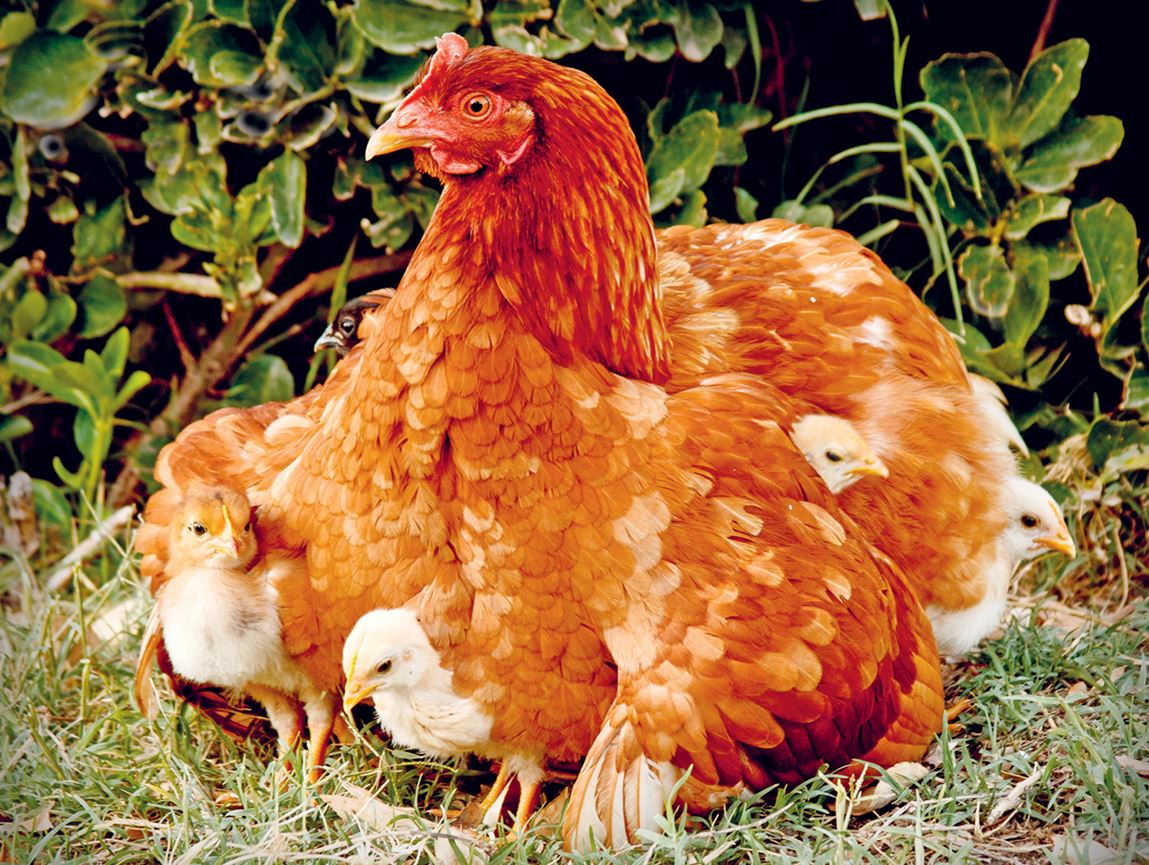
The bred forms of the domestic chicken are practically incapable of flight. Unless their wings have been «clipped» by removing flight feathers on one side, they can at least make fluttering jumps of a few meters, cross fences, and escape into trees. Compared to their wild relatives, they are rather naive and easily fall prey to predators. «If the chickens lie flat as plates, the tractor was faster once again.»—this not-so-old farmer’s saying pokes fun at the birds’ poorly developed escape instincts. Despite their defenselessness, the brooding hen, accompanied by her chicks, shows great dedication and risks her life to protect and defend them. The Lord Jesus refers to this comparison: «Jerusalem, Jerusalem, you who kill the prophets and stone those sent to you! How often I have longed to gather your children together, as a hen gathers her chicks under her wings, and you were not willing!» (Mt 23:37; Lk 13:34). Security, shelter, closeness, acceptance, and warmth—what chicks find under their mother’s wings is what God also wanted to give His chosen people.
Most Bibles translate zarzir matenajim (Prov 30:31) as «a strutting rooster». Even though this term does not occur elsewhere and the translation is therefore not entirely certain, it agrees with the Septuagint and fits perfectly in context. The rooster walks among his hens like a little king. All show him due respect. He chooses the highest point he can reach—even if it is just a manure heap—to let his impressive call ring out. There he stands, upright and proud, his bright red comb crowning his noble head, and the dangling wattles swinging with every trumpet blast—a truly majestic sight!
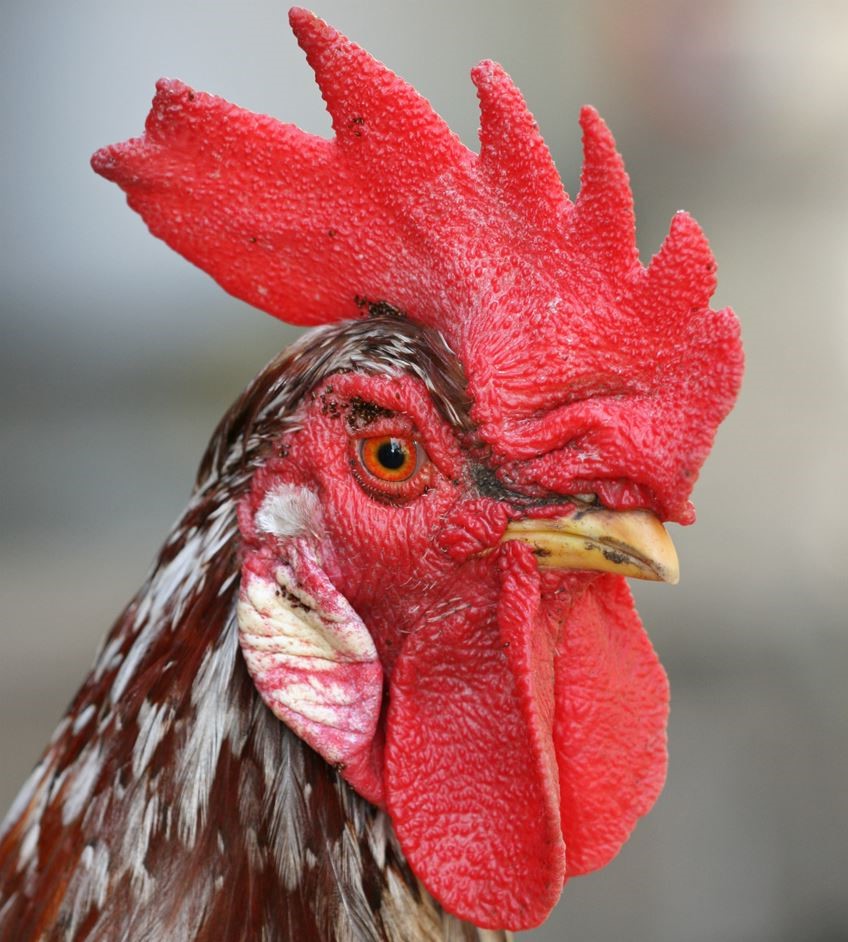
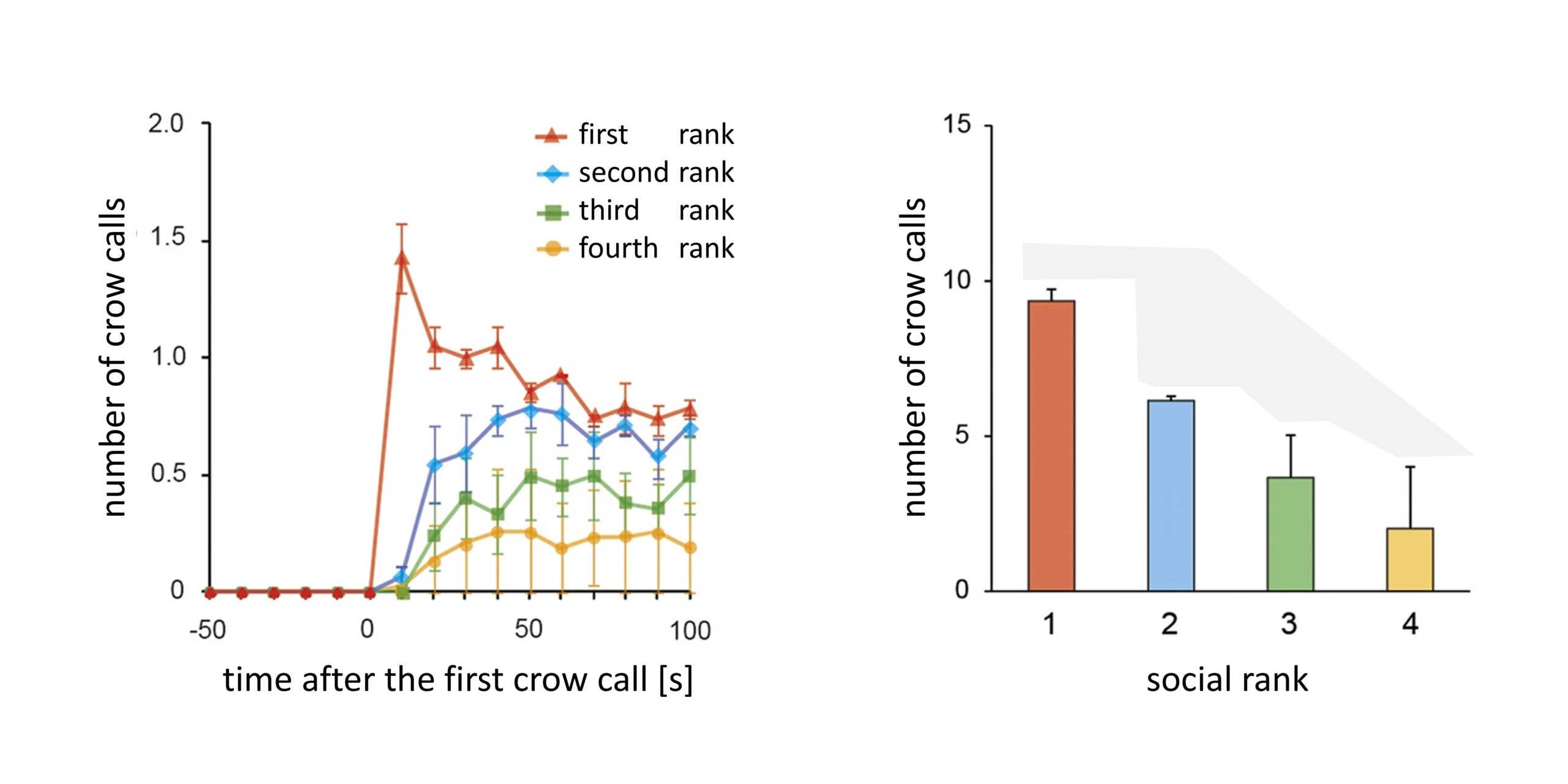
The dominant rooster crows two to three hours before sunrise, so punctually that this signal can be used to tell time. The Preacher laments the burdens of old age, including sleeplessness: «one rises at the first crowing of the rooster» (Eccl 12:4). Greeks and Romans divided the night into four «watches», and the third is also named after the distinctive crowing: «in the evening [1] or at midnight [2] or at the rooster’s crow [3] or in the early morning [4]» (Mk 13:35). In Greek, this time marker is called alektorophonia and in Latin gallicinium, understood as the midpoint between midnight and sunrise.
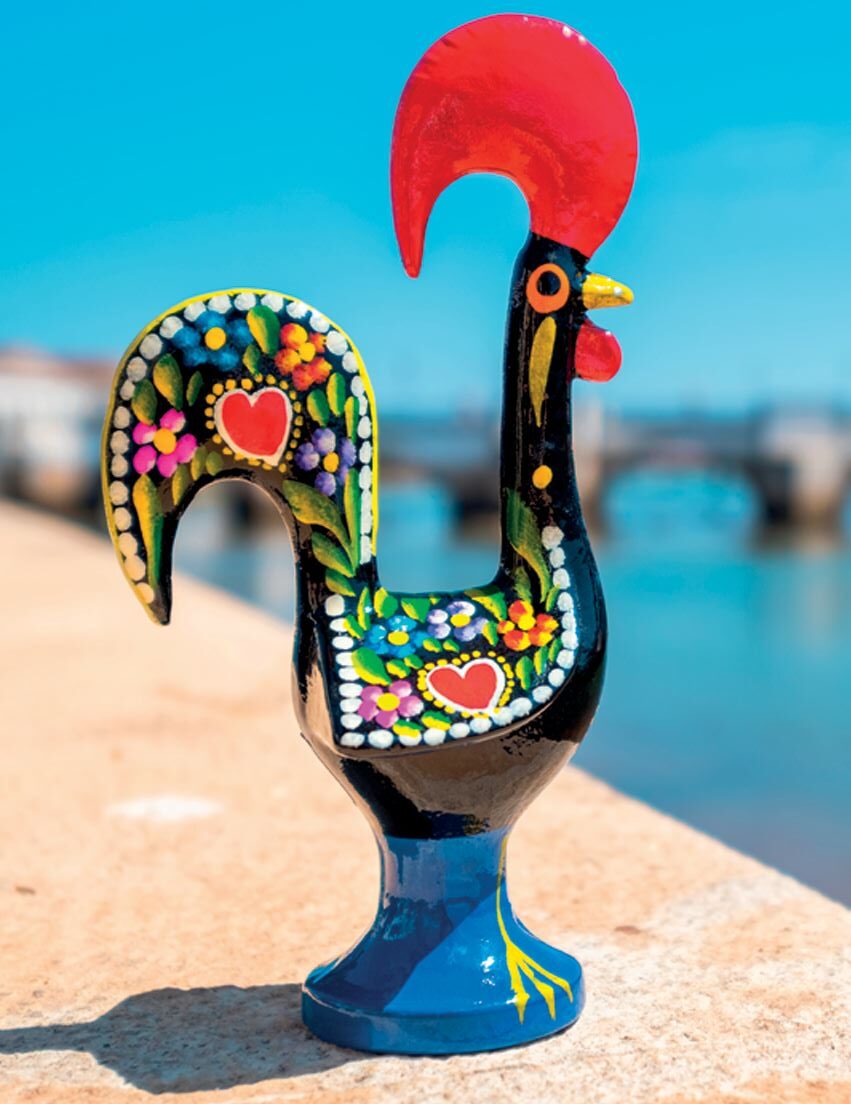
Apparently, the rooster is very gifted linguistically. While in Germany and Austria he cries «kikeriki», in Spain «quiquiriquí», and in Italy, with a slight accent, «chicchirichì», in France it sounds more sonorous as «cocorico» and in Portugal as «cocorococo». British roosters seem more inclined to yodel—their «cock-a-doodle-doo» certainly sounds rather strange. The Icelandic rooster might be freezing when he utters his tongue-twisting «gaggalagaggalagó». In Scandinavia there are only slight dialect differences, from «kukkokeikuu» (Finland) to «kuckeliku» (Sweden) and «kukkeliky» (Norway) to «kykeliky» (Denmark). The Dutch also join in with «kükelekü». However, a sharp linguistic boundary runs through Belgium. While Flemish roosters crow just like their Dutch counterparts, the Walloons stand out with «coutcouloudjoû». From the Baltic through Eastern Europe to the Balkans, people seem to agree on a k-k-r-k pattern, varying mainly the vowels. By contrast, one immediately senses a different cultural sphere when a Turkish rooster shouts «u-urru-urru», even overpowering the muezzin.
One rooster’s crow has gained worldwide fame. The Lord Jesus had told Peter that he would recognize by it «what time it is» (Mt 26:34; Mk 14:30; Lk 22:34; Joh 13:38). While He was being questioned by the high priest in Annas’s house, Peter stood outside in the courtyard within sight and denied three times that he even knew Him. It is worthwhile to reconstruct the full picture of this shameful event by comparing the accounts in the four Gospels (Mt 26:69–75; Mk 14:66–72; Lk 22:55–62; Joh 18:17–27). One discovers that after the first denial, a rooster already crowed (Mk 14:68). A wake-up call for Peter! But he remained sitting by the fire. After the second denial, about another hour passed (Lk 22:59), during which Peter could have come to his senses. While he was still making his third denial, the rooster crowed and the Lord looked at him. Only then did Peter go out, weeping bitterly and completely shattered.
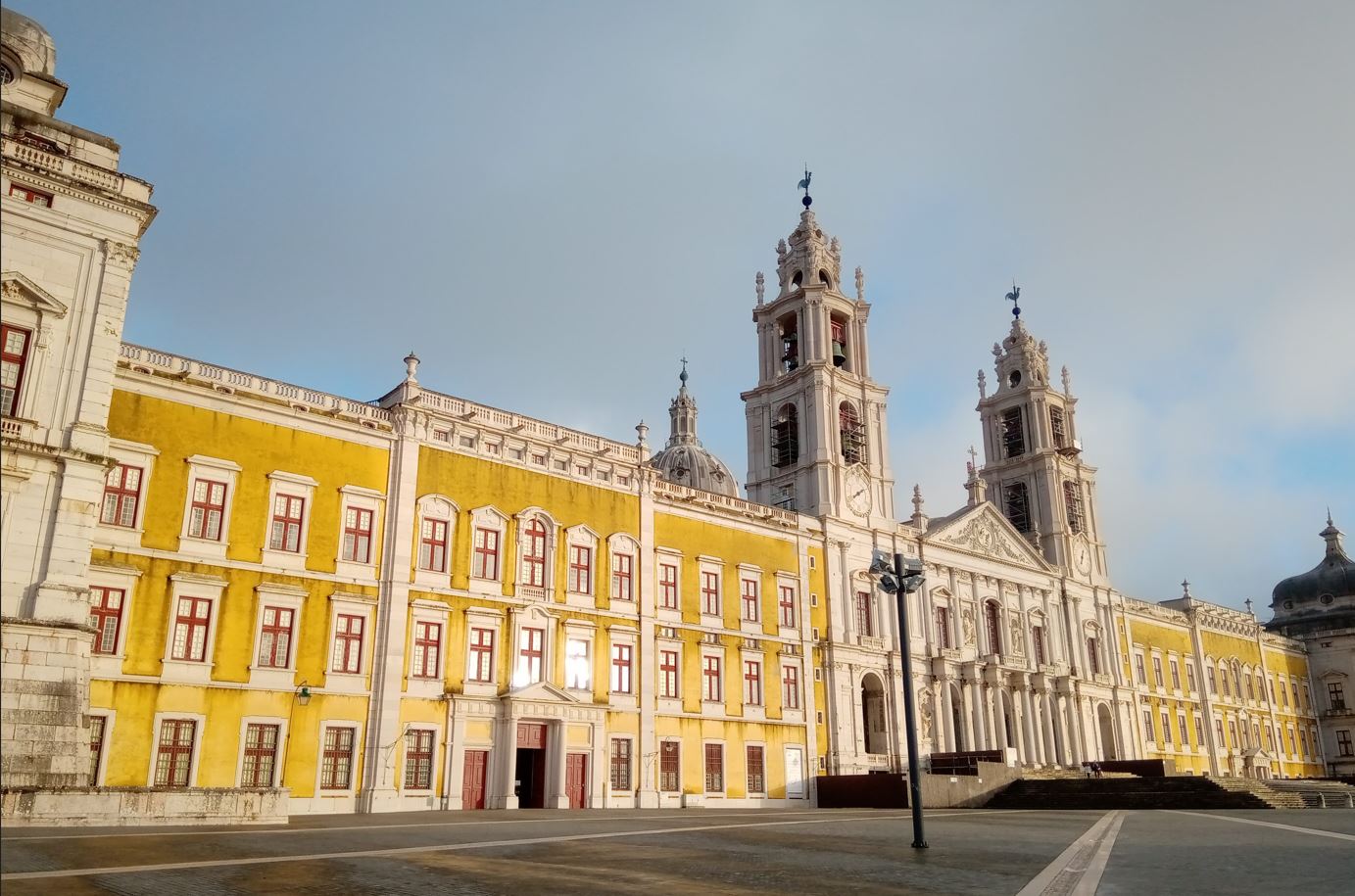
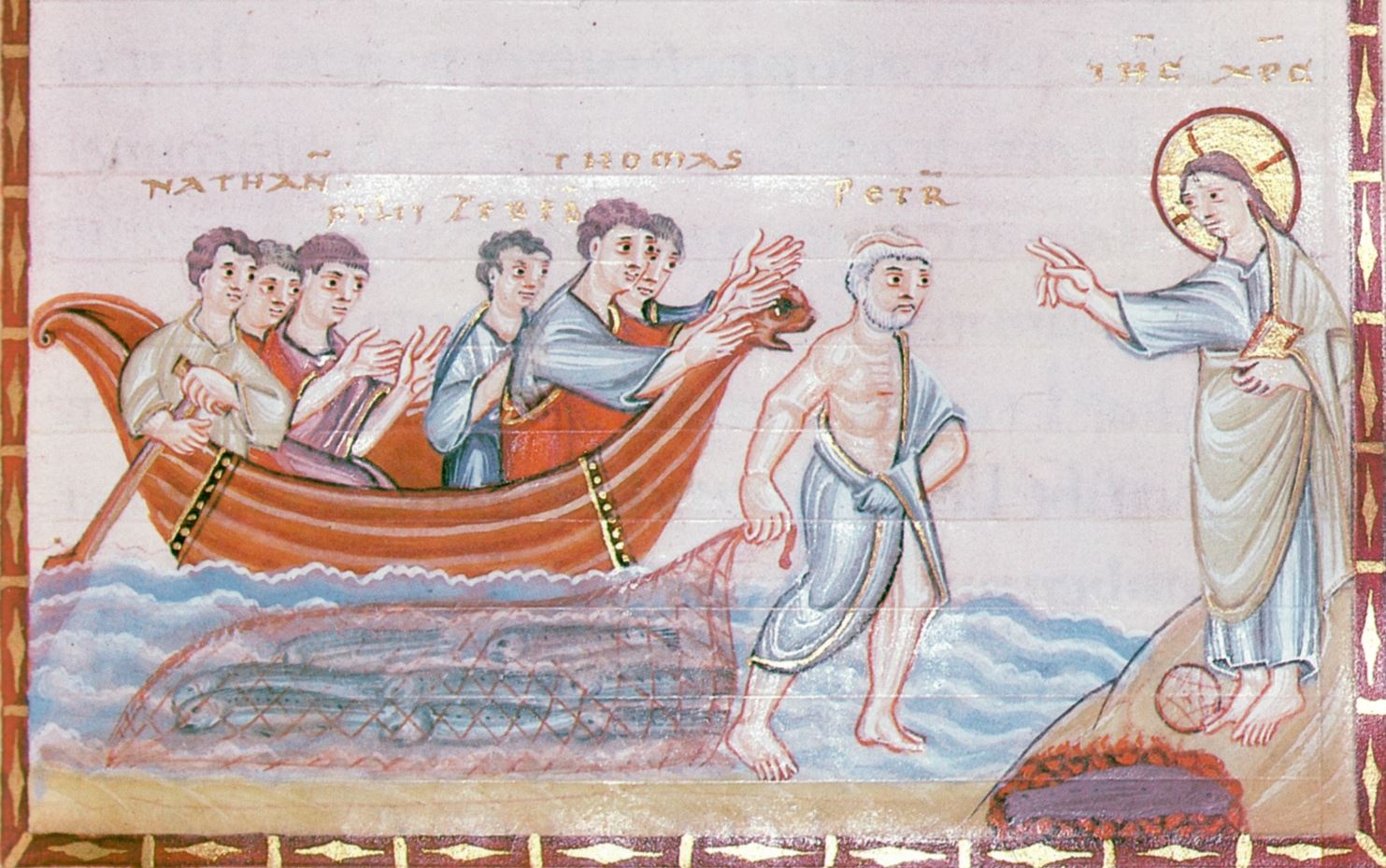
There are over one million church buildings worldwide. Many have a bell tower topped with a weathercock. Since the church steeple is often the highest point in a town, it is well suited for this, for the rooster not only indicates the direction of the wind but also serves as a widely visible reminder. Peter repents of his betrayal. The risen Lord meets him before all the other disciples (Lk 24:34; 1Cor 15:5). He forgives him, publicly restores him, and entrusts him with great responsibility (Joh 21:15–17). Until his martyrdom, Peter then remained a faithful witness of Jesus. The rooster on the tower reminds us not to turn «with the wind» like a weather vane, but to remain faithful to our convictions to the end. However, we do not have the strength for this within ourselves, and like Peter, we tend to greatly overestimate ourselves.
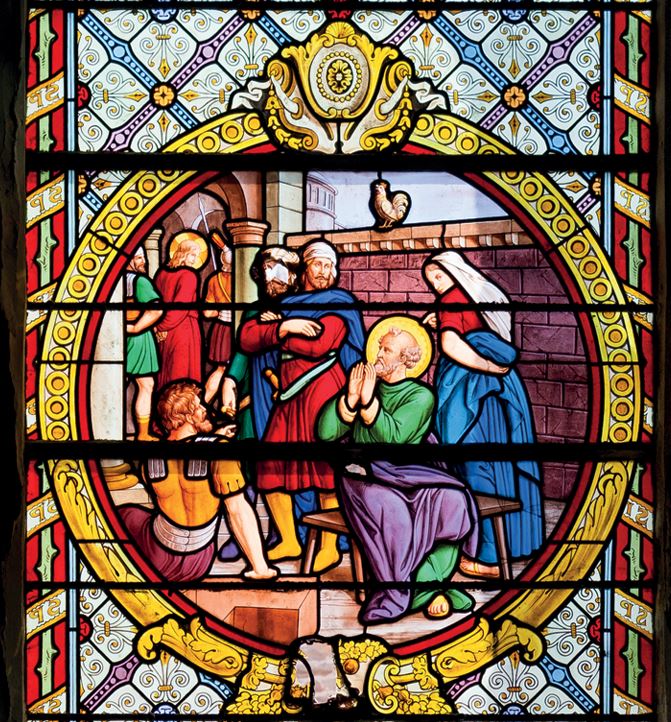
Dieser war auch mit dem Jesus …
Manfred Siebald, 1998
(translatet from German original)
They warmed their hands by the fire in the courtyard;
he stood there trembling among them.
They spoke of the price of poultry and cattle,
and of the interrogation, and then they made wagers.
He wished they would leave him alone.
The flame leapt up and lit his face;
he ducked a moment too late.
Then the girl who stood beside him
had already seen and recognized him:
«This man was also with Jesus of Nazareth.»
I know it all—I’ve stood there myself,
have seen it all in disbelief:
The guilty dragged with shameless faces
their own Judge before their court,
and I stood there and let it happen.
How often I have crouched in the dark,
hoping no rooster would crow for me.
But then someone glanced my way,
and some finger pointed at me:
«This man is also with Jesus of Nazareth.»
I kept silent, denied, and wept,
and yet again I saw:
The One I denied did not give me up;
He lifted me out of shame and sorrow
to stand upright for Him again.
And if I should wish for what one day
will stand upon my grave in memory,
then, despite everything, I can find
no better words for the stone than these:
«This man was also with Jesus of Nazareth.»
Total versiebt – und doch geliebt
Andreas Fett, 2003
– nach dem Versagen Neues wagen –
(translated from German original)
If I sift through the contents of my day,
where I have believed, hoped, loved,
what would remain for You, Lord?
You carry me upon Your heart.
Bear with me!—a yield for You???
What remains of faith, hope, love?
Even through denial and failure,
You want to bear me lovingly.
Lord, keep the fruit, forgive the chaff.
You keep praying—you are faithful!
And when Your gaze touches my heart,
when Your love convicts me,
then my sin becomes bitter to me.
Then I see how You see me,
drawing me to You at Your cross.
My splinter became Your beam.
Even through denial and failure,
You want to bear me lovingly.
Lord, I am sinking! I repent!
Even if I am unfaithful—you remain faithful!
And when my path reaches the shore,
Your long patience kindles fire,
then You offer me the delicacy.
Then it is not about principle for You,
then You only ask: «Do you love Me?»
and my conscience stirs within me.
Even through denial and failure,
You want to bear me lovingly.
You lift me up, take away my fear.
Lord, You know everything—you make all things new.
Sources:
Fett, A: Total versiebt – und doch geliebt. fest & treu 2003, issue 2, p. 18; https://clv.de/fest-treu-2-2003/2550302
Hahnenschrei in verschiedenen Sprachen: https://europeisnotdead.com/european-cock-a-doodle-doo/
List of chicken breeds recognized by the EU (accessed May 8, 2021; status June 1, 2016): http://www.entente-ee.com/wp-content/uploads/EE-Verzeichnis-RF-H%C3%BChner-2016-1.xlsx
Marino, L: Thinking Chickens: a review of Cognition, Emotion, and Behavior in the Domestic Chicken. Animal Cognition 2017; 20:127-147; doi: 10.1007/s10071-016-1064-4
Perry-Gal, L; Erlich, A; Gilboa, A: Earliest economic exploitation of chicken outside East Asia: Evidence from the Hellenistic Southern Levant. PNAS 2015; 112(32):9849-9854; doi: 10.1073/ pnas.1504236112
Shimmura, T; Ohasshi, S; Yoshimura, T: The highest-ranking rooster has priority to announce the break of dawn. Scientific Reports 2015; 5:11683; doi: 10.1038/srep11683
Siebald, M: Manfred Siebald. Seine Lieder 1968 – 2018 (p. 267; Dieser war auch mit dem Jesus). Holzgerlingen (SCM Hänssler) 2018
Image credits:
Wikipedia: Title – portrait of a rooster / Muhammad Mahdi Karim // two chickens / Otwarte Klatki // church window with Peter and the rooster / Andreas F. Borchert // lakeshore scene after the resurrection / German National Library
other licenses: rooster in nature / shutterstock_1678995619.jpg / Martin Pelanek // hen with chicks / shutterstock_143016214.jpg / R. L. Webber // rooster of Barcelos / shutterstock_1852776694.jpg / Andrei Nekrassov // weathercock on Palácio Nacional de Mafra / shutterstock_1743364397.jpg / Video Media Studio Europe