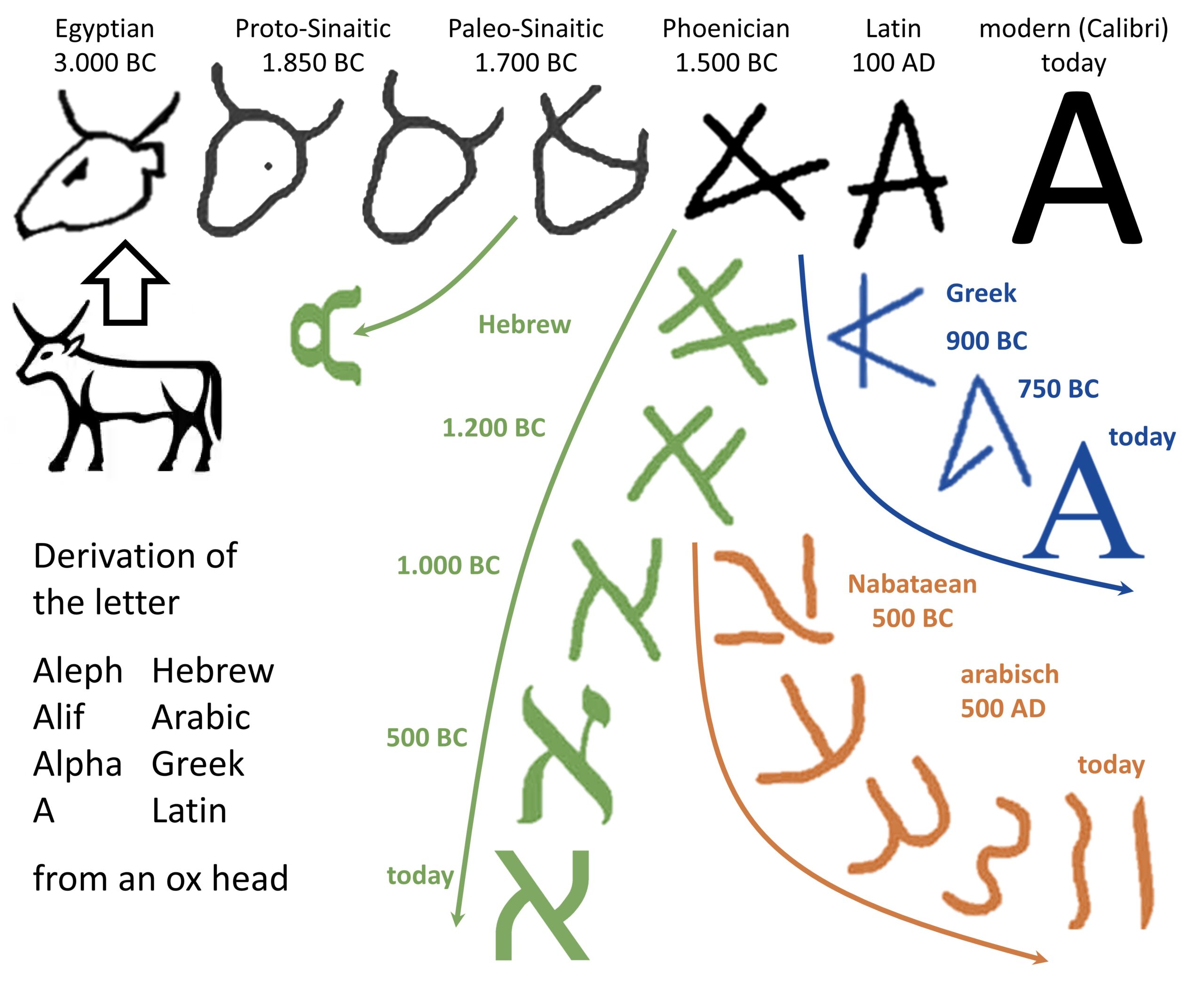
Worldwide, almost a billion head of cattle stand on barn floors and pastures. While today they are kept mainly as producers of milk and meat, in biblical times people made use primarily of their labor power. Back then, as the most valuable domestic and sacrificial animals, they enjoyed high esteem; in recent years, however, media coverage has focused chiefly on their «environmental footprint». Methane emissions, land use, and the energy demand of cattle – along with vegan ethics – are topics that by now are scratching at their image.
As with all livestock that have been kept by humans since earliest times and are of great economic and cultural significance, a diverse vocabulary also developed for grazing animals to designate sexes, age classes, and types of use – although the boundaries in Hebrew are more fluid than in Greek and English.
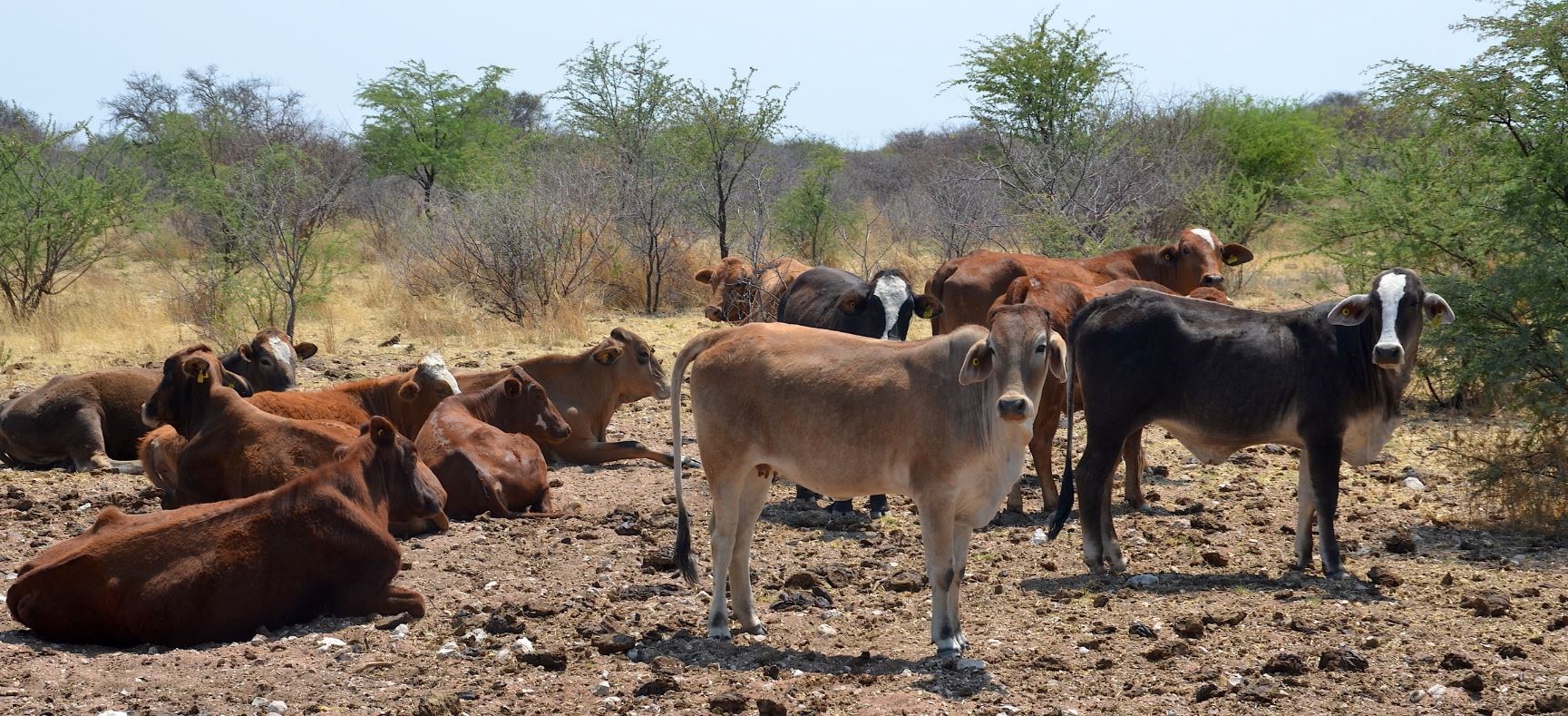
«Cattle», «bovine livestock», and «grazing cattle» are generic or collective terms for domestic cattle (Bos taurus), regardless of age and sex. The biblical counterpart is the Hebrew bāqār (172x) and ʾelef (7x), as well as the Greek bous (7x). The Hebrew šôr (68x) can likewise denote both sexes, but in combinations it is also used specifically for adult male animals (Job 21:10).
Unambiguous expressions for bulls or bullocks – i.e., male adult (that is, sexually mature) animals at least 18 months old – are the Aramaic tôr (7x), the Hebrew poetic ʾabbîr (Ps 50:13; 68:31) with the meaning «mighty ones», and the Greek tauros (Mt 22:4; Acts 14:13; Heb 9:13; 10:4). The most frequently used Hebrew word for the bull, especially with reference to the sacrificial animal, is pār (119x). The designation «ox» for a castrated male bovine has no direct equivalent in the Bible but is only paraphrased (Lev 22:24) – but more on that later.
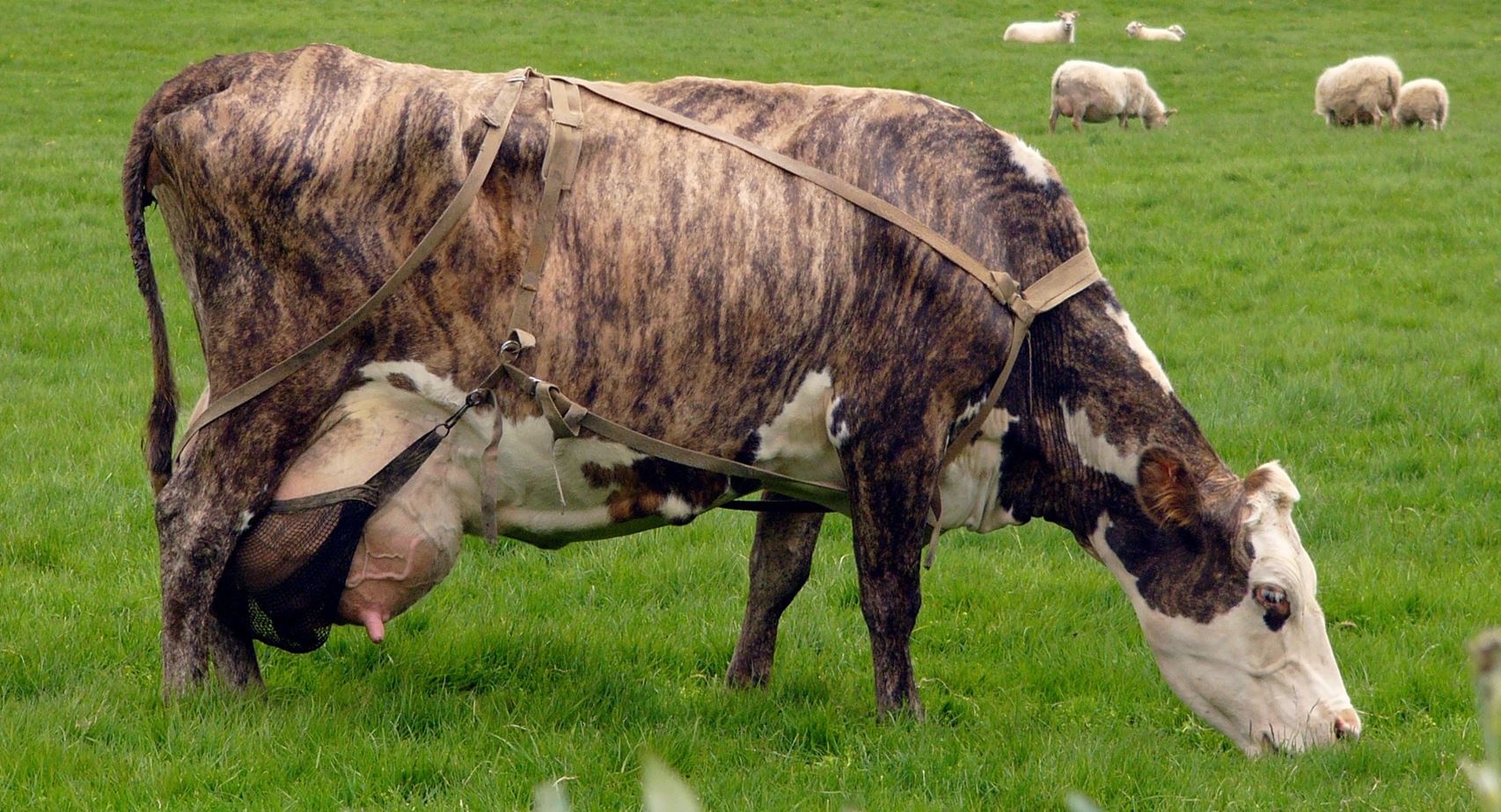
In English, a cow is a female bovine that has already «calved», i.e., given birth to offspring. Then she can be milked and is thus a «dairy cow» – and if she also nurses the calf, a «suckler cow». She is distinguished from the young cow, heifer, or «calf heifer», which has not yet calved, gives no milk, and is generally under three years old.
Since cows in antiquity had little importance for dairying, they were distinguished more by age. Thus pārāh (22x), the feminine form of pār, denotes the mature, female cow. With the addition «nursing cow», pārôt ʿālôt (Gen 33:13; 1Sam 6:7, 10), it occurs only in these three verses. Of particular significance was the sacrifice of a red cow for the production of ritual cleansing water (Num 19). Since the LXX translates here with the Greek word damalis, which means «young cow» and is cited in the NT (Heb 9:13), some translations have projected this back, so that pārāh in this chapter is likewise rendered as «young cow» (e.g. Num 19:2, 5, 6, 9, 10). This, however, is misleading.
The Hebrew designation for a young cow (heifer calf) is ʿeḡlāh (11x); the designation for a male calf (bull calf) is ʿēḡel (35x), which also denotes the calf in general, as does the expression ben-bāqār (37x), which literally means something like «cattle offspring». However, while the German word «Kalb» denotes cattle up to weaning at an age of about seven months, the Hebrew terms also include young cattle – i.e., young bulls and young cows (heifers) up to an age of three years (Gen 15:9). A fine piece of evidence is the place name Eglath-shelishiyah (Isa 15:5; Jer 48:34), which means «three-year-old young cow». The truly young calves, by contrast, were designated with the Greek word moschos (6x).
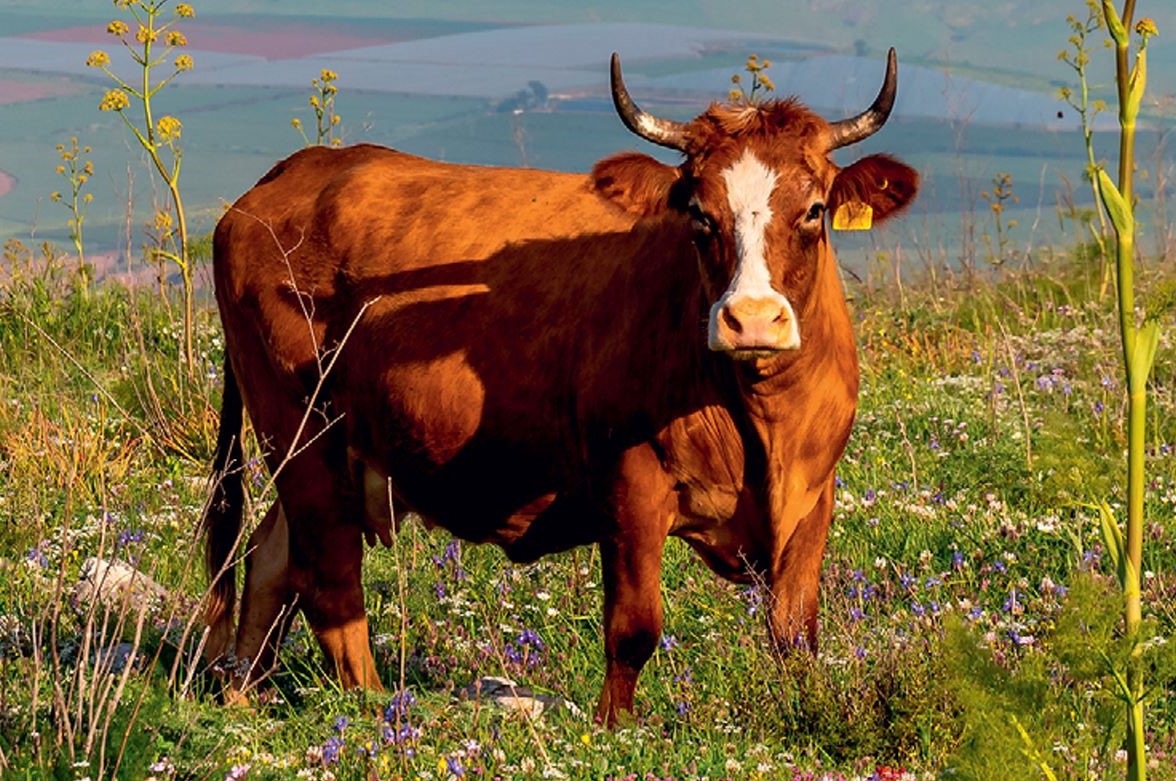
In addition, there are a number of terms for use and activity. The occupation of the cattle keeper or herdsman, as Am practiced before his calling as a prophet, is designated as nōqēd (Am 1:1) or bōqēr (Am 7:14). Grazing cattle that were kept for breeding and milk production were called bāqār-rî (1Kgs 5:3), and when they were kept for meat production they were called merî (7x), a term for «fattened livestock» in general, and with ʿeḡlē marbēq (Mal 3:20) specifically the fattened calves. The Greek equivalent is sitistos (Mt 22:4), which is derived from the verb for fattening, siteutōs (Lk 15:23, 27, 30), and the word for grain, sitos, used as fattening feed.
A very beautiful poetic designation for cattle is the Hebrew ʾallūf (Ps 144:14), which means something like «intimates, tame ones». A similar appreciation is also expressed in names. In any case, we may assume that Princess Egla («young cow»: 2Sam 3:5; 1Chr 3:3) and King Eglon («young bull»: Judg 3:12, 14, 15, 17) did not perceive it as an insult. The name Parnak («sacrificed bull»: Num 34:25) is probably meant positively as well. A place name like En-eglaim («spring of the calves»: Ezek 47:10) is rather neutral, and the designation «Dung Gate» (Neh 2:13; 3:13, 14; 12:31) is to be understood functionally. But if the city names Dimnah (Jos 21:35), Madmannah (Jos 15:31; 1Chr 2:49), and Madmenah (Isa 10:31) mean «dung heap», this expressed disdain – just as the name Peresh («dung»: 1Chr 7:16) was probably no joy for that man.
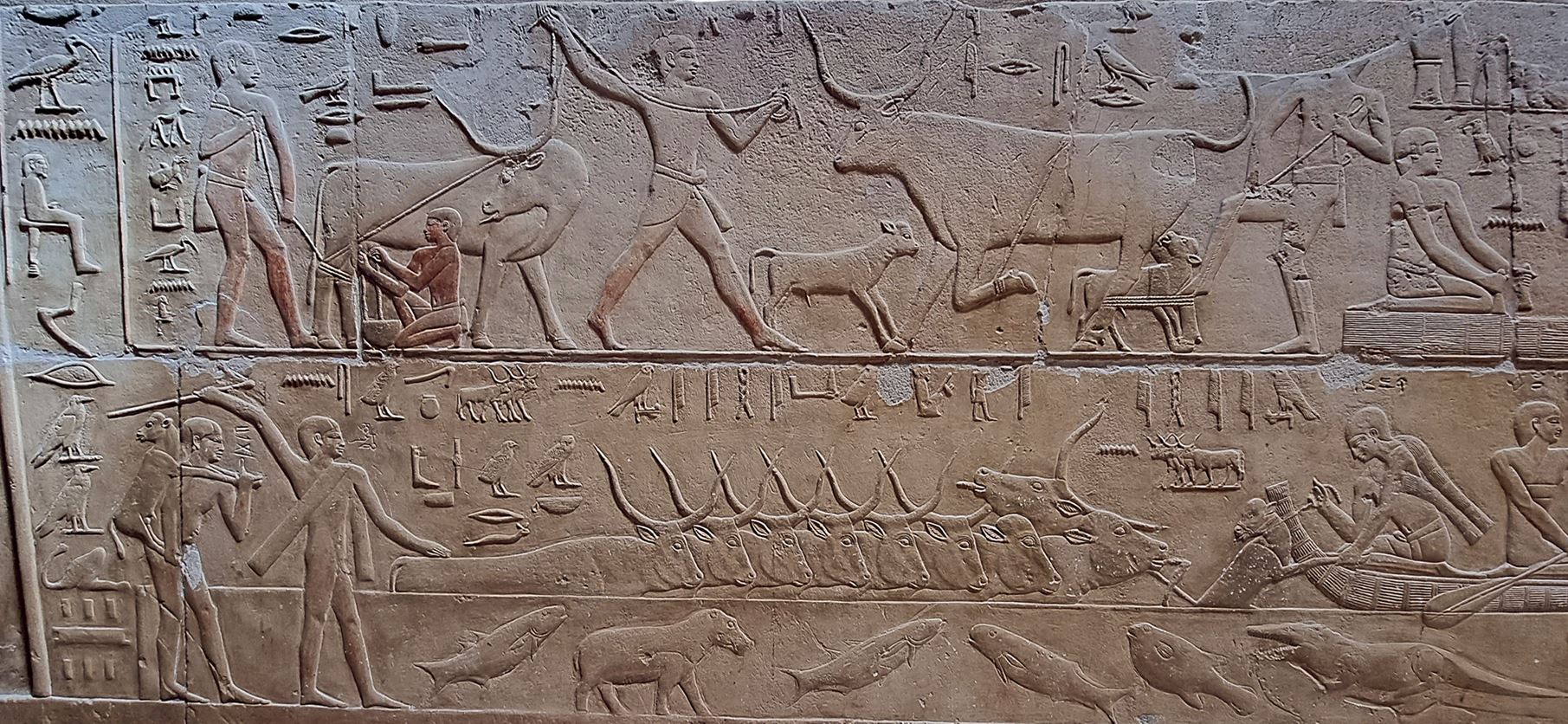
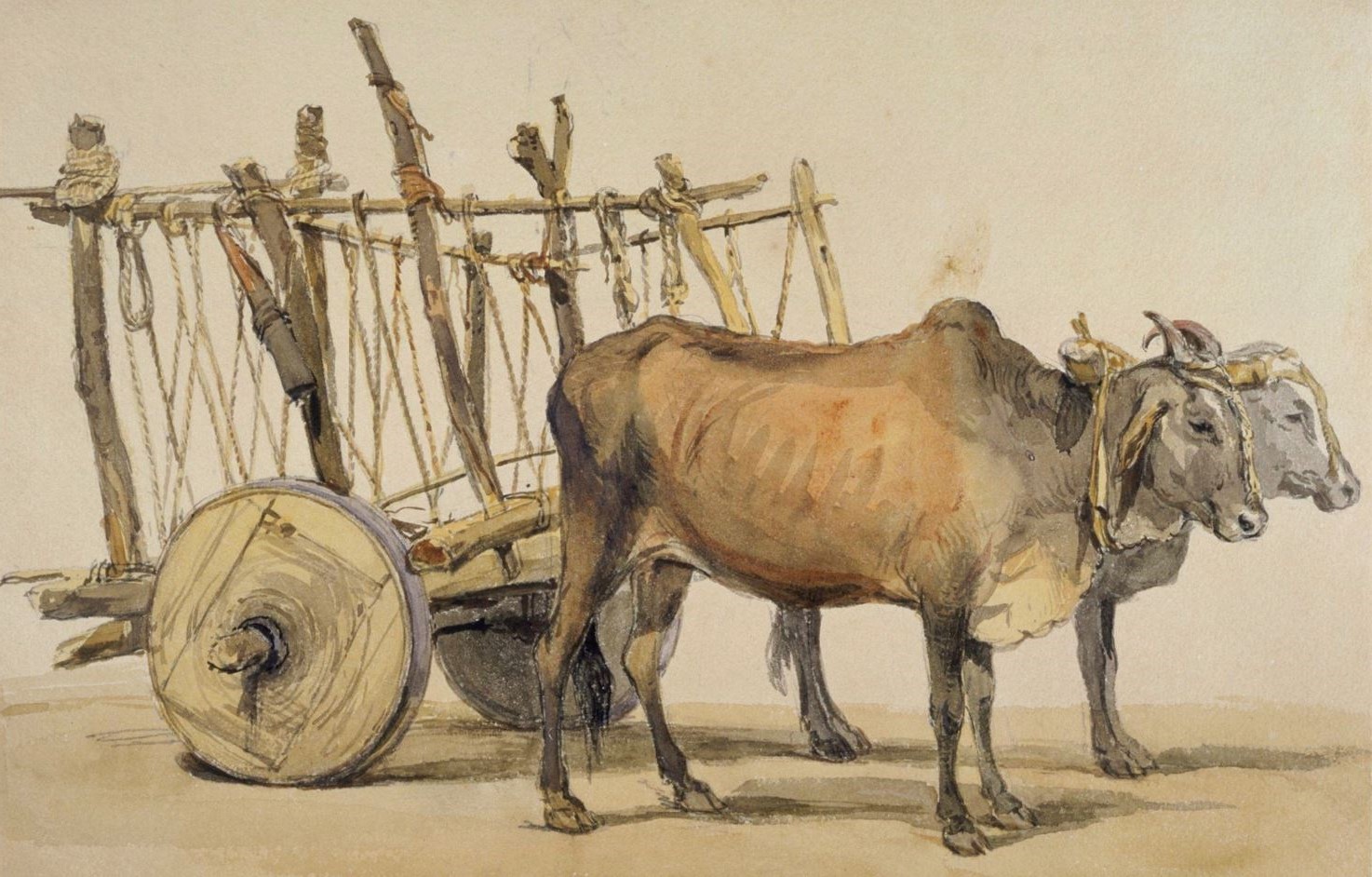
While cattle in our modern agricultural culture are kept primarily for milk production and are also referred to as «dairy cattle», their main benefit in the ancient Near East lay in their labor. Without their energy, it would not have been possible to practice agriculture on a large scale: «Where there are no cattle, one saves their feed; but for rich yields one needs their strength» (Prov 14:4). They were yoked in pairs to the ʿăḡālāh, a heavy cart, usually two-wheeled, to transport goods (1Sam 6:7–14; 2Sam 6:3–6; 1Chr 13:7–9) or bring in the harvest (Am 2:13). Horses and donkeys were preferred as riding animals, donkeys and camels as pack animals, but as draft animals the strong cattle had no competition.
They also pulled the plow (Deut 22:10; 1Kgs 19:19; Job 1:14; Am 6:12) and threshed the grain (Deut 25:4; Hos 10:11; 1Cor 9:9; 1Tim 5:18) by trampling over the spread-out sheaves (Jer 50:11) or by pulling a threshing sledge-wagon (2Sam 24:22; 1Chr 21:23; Isa 28:28) or a threshing sled (Isa 41:15; Am 1:3) over them. Since it was customary to yoke them in pairs, they were also counted that way. It suggests a certain prosperity when Elisha – probably on his parents’ farm – supervises his workers plowing simultaneously with twelve teams, i.e., a total of 24 head of cattle (1Kgs 19:19). Of Job it is reported that he had «1,000 yoke of oxen» (Job 42:12), i.e., twice as many animals. In his case we find a good summary of their work over an agricultural season (Job 39:10–12): plowing, harrowing, bringing in the harvest, threshing – though in a rhetorical question from God; wild oxen would not perform these tasks for humans – domestic cattle, fortunately, would!
The geographical and chronological distribution of the various cattle breeds is difficult to reconstruct. Some depictions from Israel show animals resembling Indian zebus. Their most striking feature is the fat-filled shoulder hump, which serves as an energy store, like the fat tail in sheep and the hump in camels. Other depictions show animals with enormous horns, similar to those of ancient Egyptian longhorn cattle and today’s Watusi cattle. It is by no means the case that the breeds of that time were uniformly smaller and leaner than those of today. However, milk yield at about 3–4 liters per day was significantly lower and lay in a range that could almost be matched by good sheep and goats, which had been selected for this breeding goal since earliest times and were much easier to keep. Thus we do find cow’s milk and products made from it such as curds (Deut 32:14) and cheese (2Sam 17:29) in the Bible, but their role as milk suppliers was far smaller than that of sheep and goats. As suppliers of meat and leather, too, they were of lesser importance. Beef was a luxury good, and its consumption a rare exception, associated with feasts or the provisioning of honored guests. At the dedication of the temple, King Solomon slaughtered 22,000 cattle as peace offerings (1Kgs 8:63; 2Chr 7:5). This meant that these animals (apart from the fat and kidneys, which were burned on the altar) could be eaten by the festival participants. Possibly this was not only «the greatest barbecue of all time», but for many it may also have been the only occasion in their lives on which they got to eat beef.
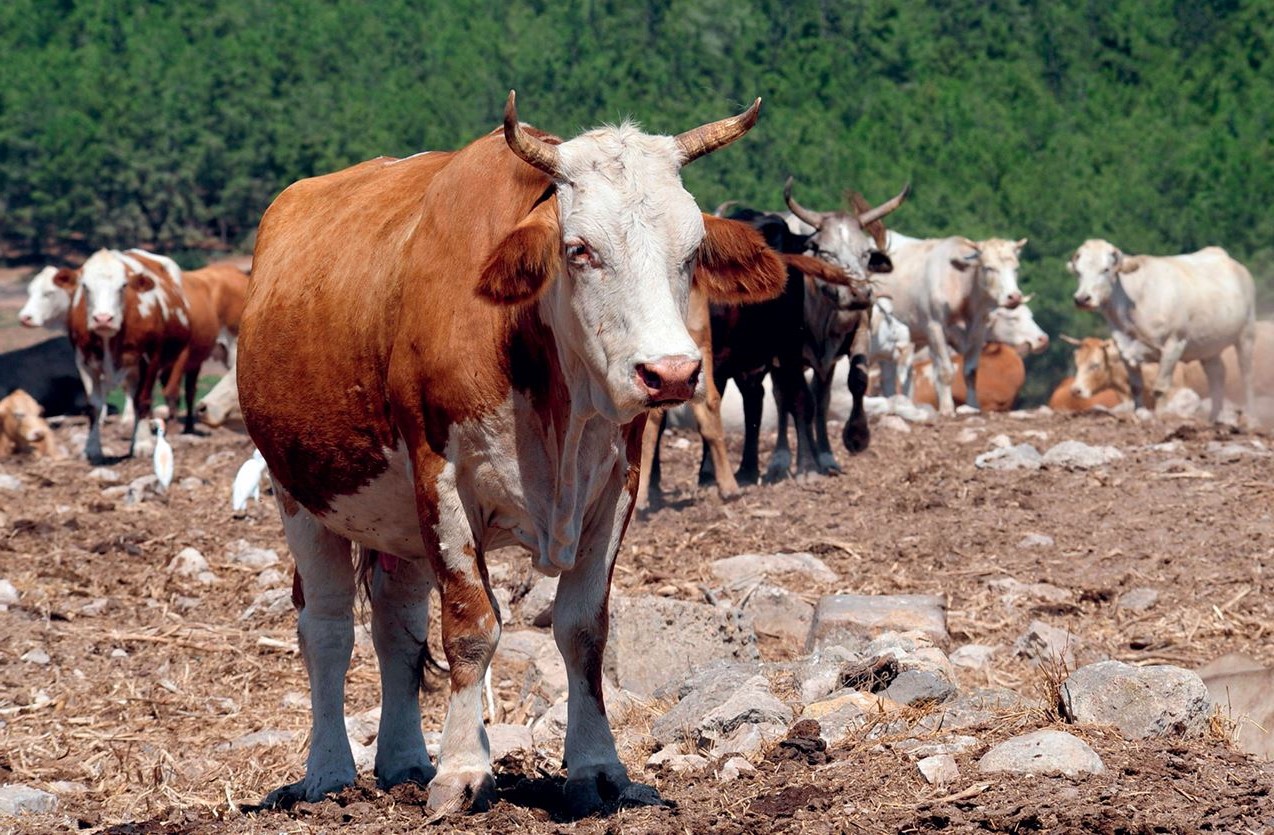
In many cultures, male cattle are castrated before reaching sexual maturity, thus making «oxen» of them. They then do not become as heavy as bulls, but their meat is tastier and commands higher prices. Unlike bulls, oxen are usually calmer and less aggressive, which makes them more willing work partners. Oxen can also be trained better to carry out agricultural work such as plowing and harrowing or to be yoked to a cart, and they are more enduring and less demanding. But that does not mean oxen are strictly necessary. For one thing, female animals were also used for work (Num 19:2; Deut 21:3; 1Sam 6:7); for another, bulls too can be used for any of these tasks under firm handling and with appropriate «coercive measures», such as a nose ring and cattle goad – though the patient and good-natured disposition of oxen makes cooperation much easier.
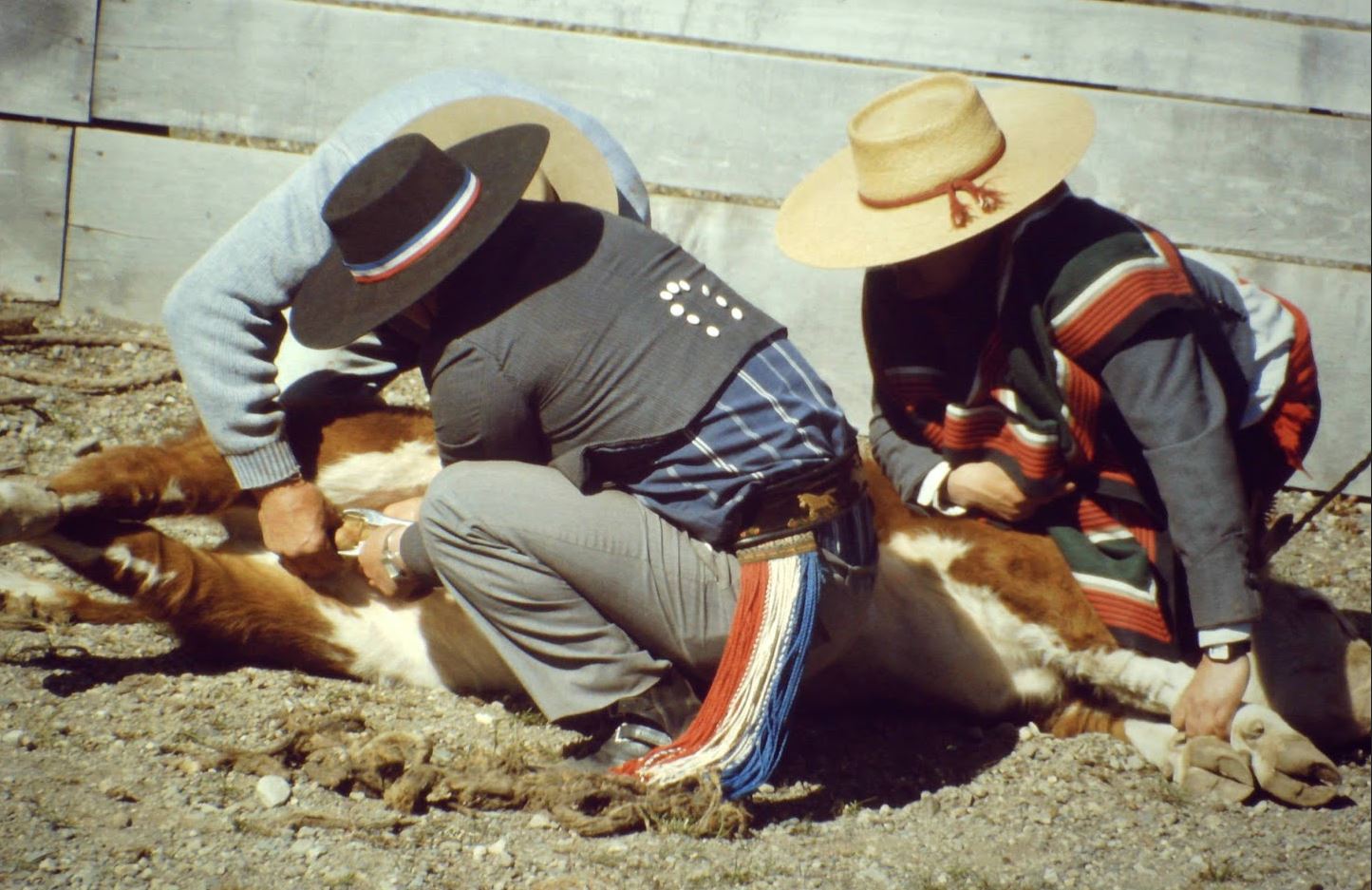
Among the people of Israel, one was aware of the advantages of the ox. Nevertheless, for Jews since earliest times a strict ban on castration has applied, derived from this verse: «An animal whose testicles have been crushed, smashed, torn off, or cut off may not be offered to the LORD. You must not do this to animals in your land» (Lev 22:24). Although some interpreters rightly point out that linguistically it remains open whether the last part of the verse refers to castrating or only to sacrificing, the Jews «played it safe» and refrained from castration altogether. Sometimes livestock owners had their young bulls «stolen» by non-Jews and then received them back castrated. While other «creative» undermining of the commandments was often tolerated, in this case there was no pardon. Anyone caught had to sell his ox immediately to a non-Jew. There is no historical evidence that castration was practiced in Israel in Old or New Testament times. Jewish commentators on the law even assign this prohibition (wrongly) to the «seven Noahide commandments», which have a special rank because they go back to God’s covenant with Noah (Gen 9:1–17) and apply not only to Jews but to all people (Talmud, Sanhedrin 56b:22).
On the one hand, the term «ox», which in older English could also denote the breeding bull, has undergone a shift in meaning; on the other hand, translators sometimes mistakenly projected local agricultural practice onto the Bible. Thus it happens that the ox has so far disappeared entirely only in a few newer revisions – yet even in (German) translations that today give exemplary attention to the topic of «animals and plants», there still appear two (GN; NeÜ, Zü), three (Lu), four (NLÜ), or six (SB) «oxen». In the author’s favorite translation, in the current text edition (ÜElb T07, 2021), unfortunately 35 «oxen» are still trotting around, which in fact are bulls.
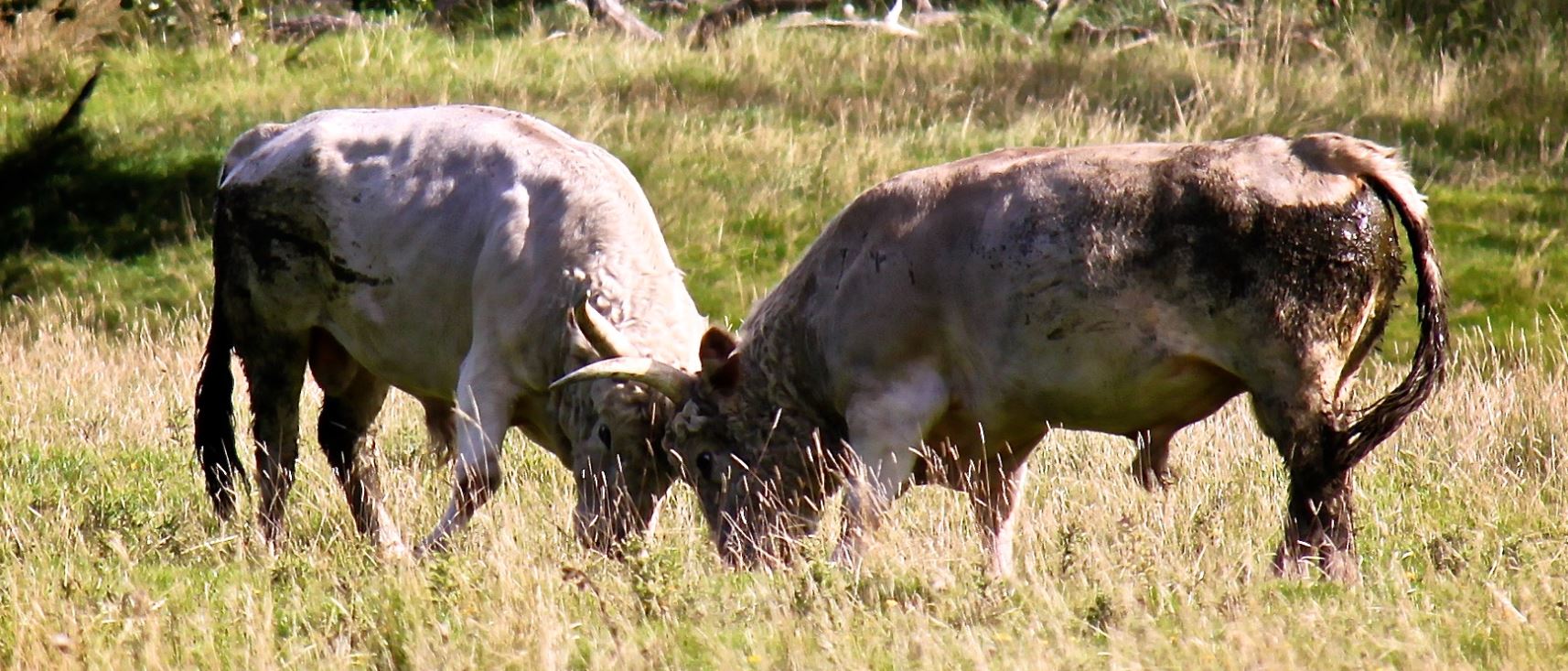
A free-roaming bull always represents a certain risk, because it is easily provoked and can react unpredictably. The law contained precise regulations for how accidents involving cattle were to be dealt with juridically (Ex 21:28–36). The aggressive behavior of the livestock is designated with the Hebrew word nāgaḥ and translated as «goring». The owner could even be sentenced to death if he knew of the danger and yet someone died through his negligence. An interesting detail on the margin of this ordinance is that he could buy himself off if the victim was not a free citizen but «only a servant». The ransom amount was 30 shekels of silver (Ex 21:32), a sum that may remind some Bible readers of a prophetic statement (Zech 11:12–13) that was fulfilled in Judas’s betrayal: «What will you give me, and I will deliver him to you? And they weighed out for him thirty pieces of silver […] And they took counsel and bought with them the potter’s field as a burial place for strangers […] Then was fulfilled what was spoken by the prophet Jeremiah, saying: And they took the thirty pieces of silver, the price of the one valued, whom some of the sons of Israel valued, and they gave them for the potter’s field, as the Lord commanded me» (Mt 26:15; 27:7, 9, 10) – it was the «price for a dead servant»!
Cattle were the strongest domestic animals and the most valuable sacrificial animals. From the period when the people of Israel lived in Egypt, various bull cults within the framework of the idolatry practiced there have been handed down. Even the pharaoh was often depicted as a bull. It is quite possible that the Israelites were influenced by this when they decided that the image of a bull was a fitting representation of the one God YHWH, who had already revealed Himself to them so impressively.
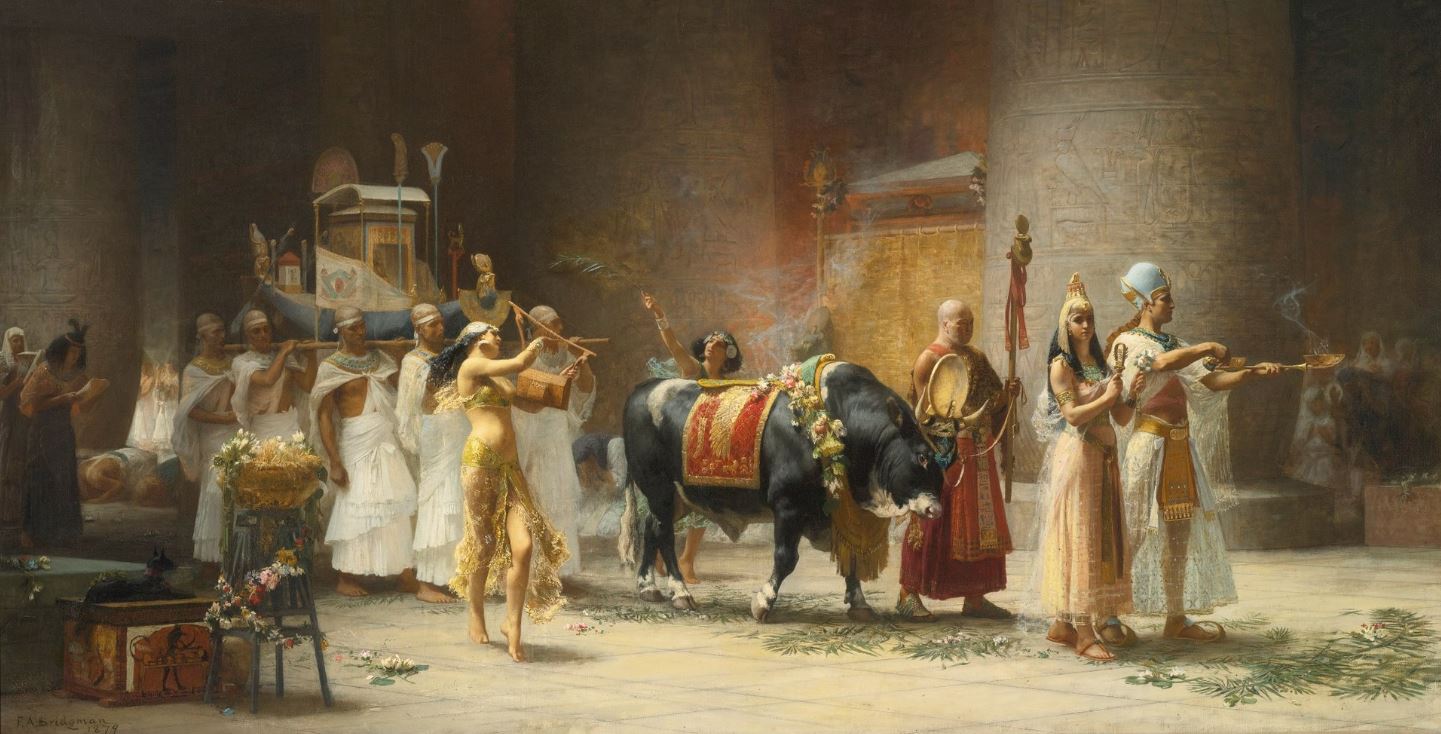
The cult of the Apis bulls is particularly well attested. A living bull – always only one at a time – was carefully selected according to certain physical characteristics and was regarded as the embodiment of the creator god Ptah. It was venerated as holy and cared for excellently, thereby reaching a high age of up to twenty years; after its death it was embalmed and buried as a mummy in a rite similar to that for deceased pharaohs. In Saqqara the «Serapeum» was discovered, a burial complex in which, one after another, 22 Apis bulls were ceremonially laid to rest. According to the concept of this cult, after their death they were united with the god Osiris and themselves became gods of the dead. The goddess Hathor, too, was often depicted as a bovine or as a human with a bovine head. In pictorial representations, both the Apis bulls and images of Hathor often bear a disk-shaped representation of the sun between their horns. Perhaps the Golden Calf was modeled on these idol images. There is little benefit in occupying oneself with the details of the idolatry of the ancient Egyptians, but these examples indicate that Israel received an imprint here that would catch up with them again and again in their later history.

The people wanted to be «like all the nations» (Deut 17:14; 1Sam 8:20) – to have a «real» king and a visible god. So they pressed Aaron: «Come, make us gods who shall go before us!» (Ex32:1). The prophets would later emphasize again and again how foolish this idea is. While the true God carries and rescues His people (Isa 46:3–4), idols must be carried by humans and are utterly useless: «They pour out gold from the purse and weigh out silver on the scales; they hire a goldsmith, and he makes it into a god; then they fall down, yes, they worship. They lift it to their shoulder, carry it, and set it in its place; there it stands, it cannot move from its spot; if one cries to it, it does not answer or save anyone from his trouble» (Isa 46:6–7).
While the people cry: «This is our God who brought us out of Egypt!» (Ex 32:4), Aaron at least tries to build a bridge and identify the image with YHWH: «A feast to the LORD tomorrow!» (Ex 32:5). Although the whole action was unequivocally condemned by God and resulted in punitive judgment, the calf cult was reintroduced about 630 years later by King Jeroboam I and constituted with the same words (1Kgs 12:28). Until the deportation by the Assyrians in 721 BC, God was «worshiped» in the northern kingdom of Israel for over 250 years by false priests (who were neither Aaronites nor Levites), in false places (in Bethel and Dan instead of in Jerusalem), and at false times (they had established their own festival calendar; cf. 1Kgs 12:33) at the feet of a Golden Calf. On a potsherd (ostracon no. 41) excavated in Samaria, the name «Egeljahu» was found – «YHWH is a young bull» – a sad indication that this idolatry was practiced in the name of the LORD. For God, however, the decisive factor is the right disposition of the heart, shown in acknowledging His authority and worshiping Him in a manner that corresponds to His ordinances and His nature. For this reason, the calf cult is equated by Him with the worship of foreign gods: «They made a calf at Horeb and bowed down to a cast image. They exchanged the one who was their glory for the image of an ox that eats grass» (Ps 106:19–20). The prophet Jeremiah explains why this was a particular affront to God: «Has any nation ever exchanged its gods? Yet they are not even gods! But my people exchange their glory for what does not profit» (Jer 2:11) – Israel knows the true God and again and again exchanges Him for idols – the Golden Calf, Molech, Raiphan (Kijun), Baal, Astarte (Asherah), Baal-zebub, Chemosh, Milcom, Tammuz, to name only a few – while the pagan nations, as long as they existed, remained loyal to their non-gods. The prophet Isaiah adds that, piquantly enough, even animals behave more intelligently when they recognize the ownership rights and authority of their keepers: «The ox knows its owner, and the donkey its master’s manger; but Israel does not know, my people do not understand» (Isa 1:3).
The worship of carved and cast idols does not count among the problems of today’s evangelical Christianity. Nevertheless, we can apply this story to our time. Moses had instructed the elders of the people at the foot of Mount Sinai: «Wait here for us until we return to you» (Ex 24:14) – but the people eventually lose patience. Humanly speaking, that is understandable: how was a single man, without major supplies of water and provisions, to spend first seven days (Ex 24:16) and then another forty days (Ex 24:18) on this mountain in the wilderness and afterward still have enough strength for the steep descent – without thirsting, starving, and collapsing? And so, the Israelites did what they thought was right, «and they revelled» (1Cor 10:7).
In a similar way, the Lord Jesus – often in parables, but also very directly and unambiguously – announced that He will return (e.g., Joh 14:3, 18, 28). Two angels encourage the disciples after Jesus’ ascension: «This Jesus, who was taken up from you into heaven, will come in the same way as you saw him go into heaven» (Acts 1:11). Paul writes that when Christians celebrate the Lord’s Supper, they should always also remember that they do so «until he comes» (1Cor 11:26). Yet the expectation of Jesus’ return has largely been forgotten in Christendom. As the unfaithful servant says to himself in a parable, «My master delays his coming» (Lk 12:45), so one hears it again and again in the «last days»: «He promised to come again – where is he then? Meanwhile our fathers have died, and everything is still just as it has been since the beginning of creation» (2Pet 3:4). Humanly speaking, that too is understandable, for His promise «I am coming soon» (Rev 22:7, 12, 20) goes back almost 2,000 years. Peter explains: «If some think God is delaying the fulfilment of his promise, that simply isn’t true. God can fulfill his promise at any time. But he is patient with you and does not want any one of you to perish. Everyone should have the opportunity to turn back to God» (2Pet 3:9). If you have already decided for Jesus, then examine yourself in light of these historical parallels: Do I wait in faith until He returns, or do I, at some point, also dance around a self-chosen Golden Calf?
It is a beautiful picture of harmony, cooperation, and concord when two animals are yoked side by side to perform heavy work such as pulling a plow, a harrow, or a loaded cart. The harness used for this is called in Hebrew ṣemed (Jer 51:23), which means something like «pair» (Judg 19:3, 10) or «side by side» (2Kgs 9:25); it is thus a «double yoke». The Greek word zeugos (Lk 14:19) or zygos (Mt 11:29–30; Acts 15:10; Gal 5:1; 1Tim 6:1) also denotes a double yoke – which can also be seen from the fact that it is likewise used to designate a set of scales (Rev 6:5).
Plowing with a yoked pair was so common that it was even used to define a unit of area. An «acre-yoke», Hebrew ṣemed śādeh (1Sam 14:14) or simply «yoke» (Isa 5:10), was the area that one team could plow in a day. That may seem unusual to us, since one must assume that this area would vary greatly depending on soil conditions, the plowman’s skill, the condition of the animals and the team, etc. But it seems to be a dimension so easy for farmers to visualize that this measure became established almost everywhere – whether we take the Roman iugerum, the English acre, or the Swiss Juchart. In German, each region has its own designation. Jochart, Jauchart, Juchert, Jauch, Juck, or Juckert clearly derive from «Joch» (yoke), while Tagwan, Tagewerk, Tagwerk, and Mannwerk refer to the workday. The unit «Morgen» was similarly defined as: «the area that can be plowed with a single-share cattle plow in one forenoon». Historically, widely fluctuating sizes (from 1,906 to 11,780 m²) are attested; but today the «metric Morgen» corresponds to 2,500 square meters, a quarter hectare (and thus corresponds quite closely to the Roman iugerum).
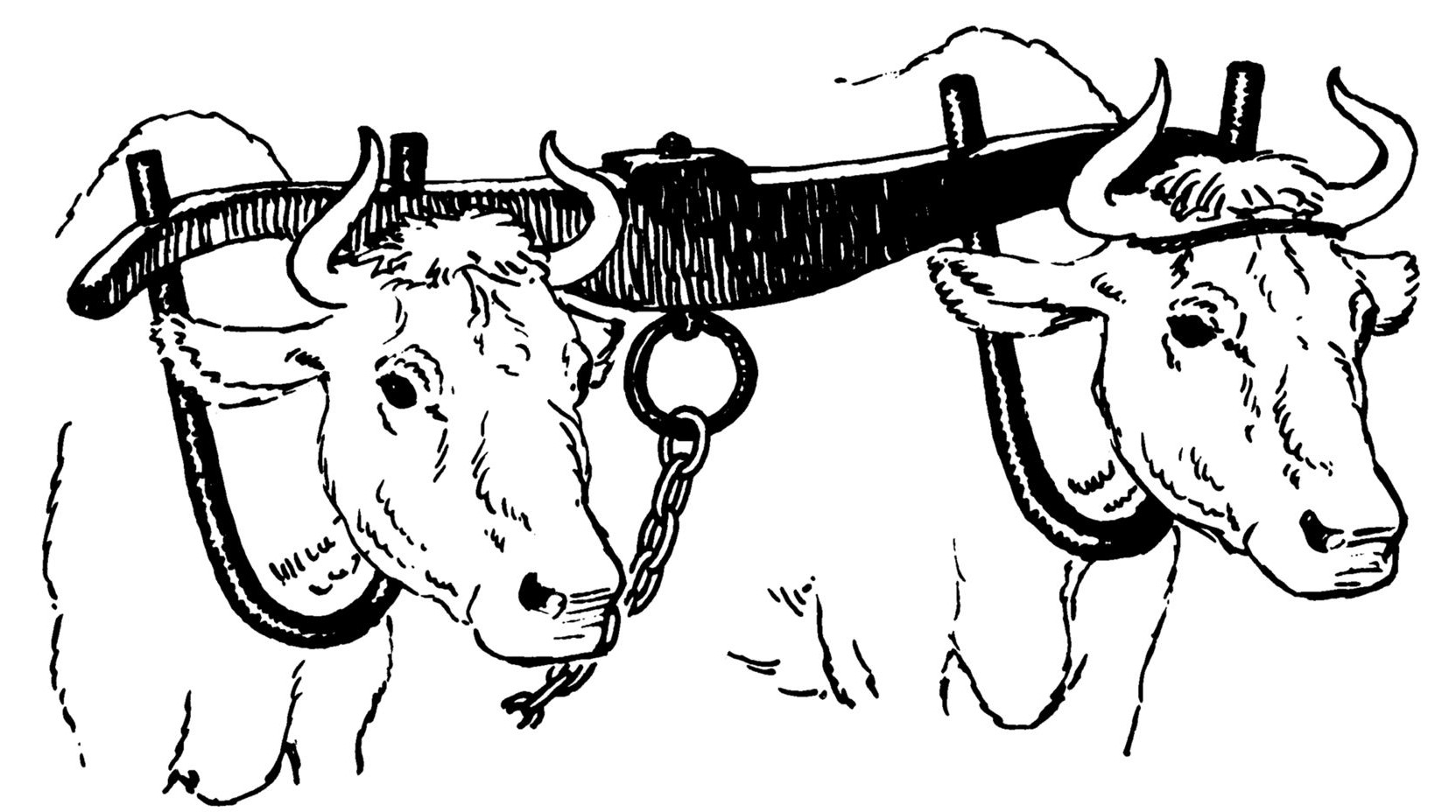
If one looks at a plowing team of cattle, it is obvious that the yoked animals must match one another in size, gait, strength, and temperament if they are to work effectively as a team. Anything else will not work, because the crossbar of the yoke remains straight only if the load is distributed evenly across the forehead or shoulder of both animals. The Bible takes up this vivid picture when it warns Christians: «Do not be unequally yoked with unbelievers» (2Cor 6:14). The corresponding footnote in the revised Elberfelder Bible says: «yoked together in a different kind» and thus captures the sense of the Greek heterozygeō very precisely. It also contains a reference to Deut 22:10: «You shall not plow with an ox and a donkey together», where the inequality is even clearer. An explanatory translation formulates it like this: «Do not join forces with people who do not believe in Christ and therefore pursue goals different from yours. Or what does righteousness have to do with lawlessness? Is there any fellowship between light and darkness, any harmony between Christ and the destroyer, anything that connects a believer with an unbeliever?» (2Cor 6:14–15).
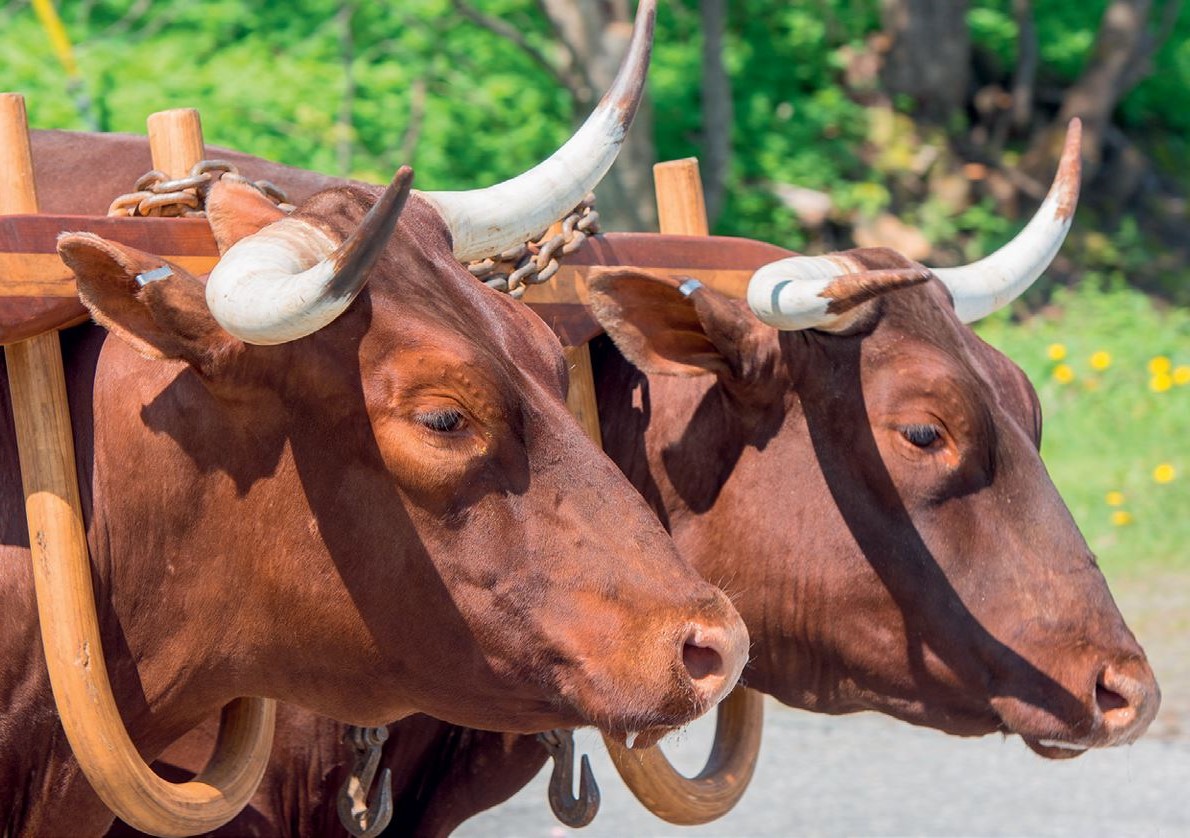
But the image of the double yoke is not used only in a negative sense. It is a very fine experience to work together with a faithful yoke-fellow (Greek: syzygos, Phil 4:3) – the same goals, the same ideals, the same way of working, the same path and the same Lord, who encourages us: «Take my yoke upon you, and learn from me, for I am gentle and humble in heart, and you will find rest for your souls; for my yoke is easy, and my burden is light» (Matt 11:29–30). In His care, God does not burden us more than necessary: «I was to them like one who lifts the yoke from their jaws; I bent down to them and fed them» (Hos 11:4).
Sources:
Bundesamt für Statistik: Weltweiter Rinderbestand; accessed on 10.04.2023; https://de.statista.com/statistik/daten/studie/28931/umfrage/weltweiter-rinderbestand-seit-1990
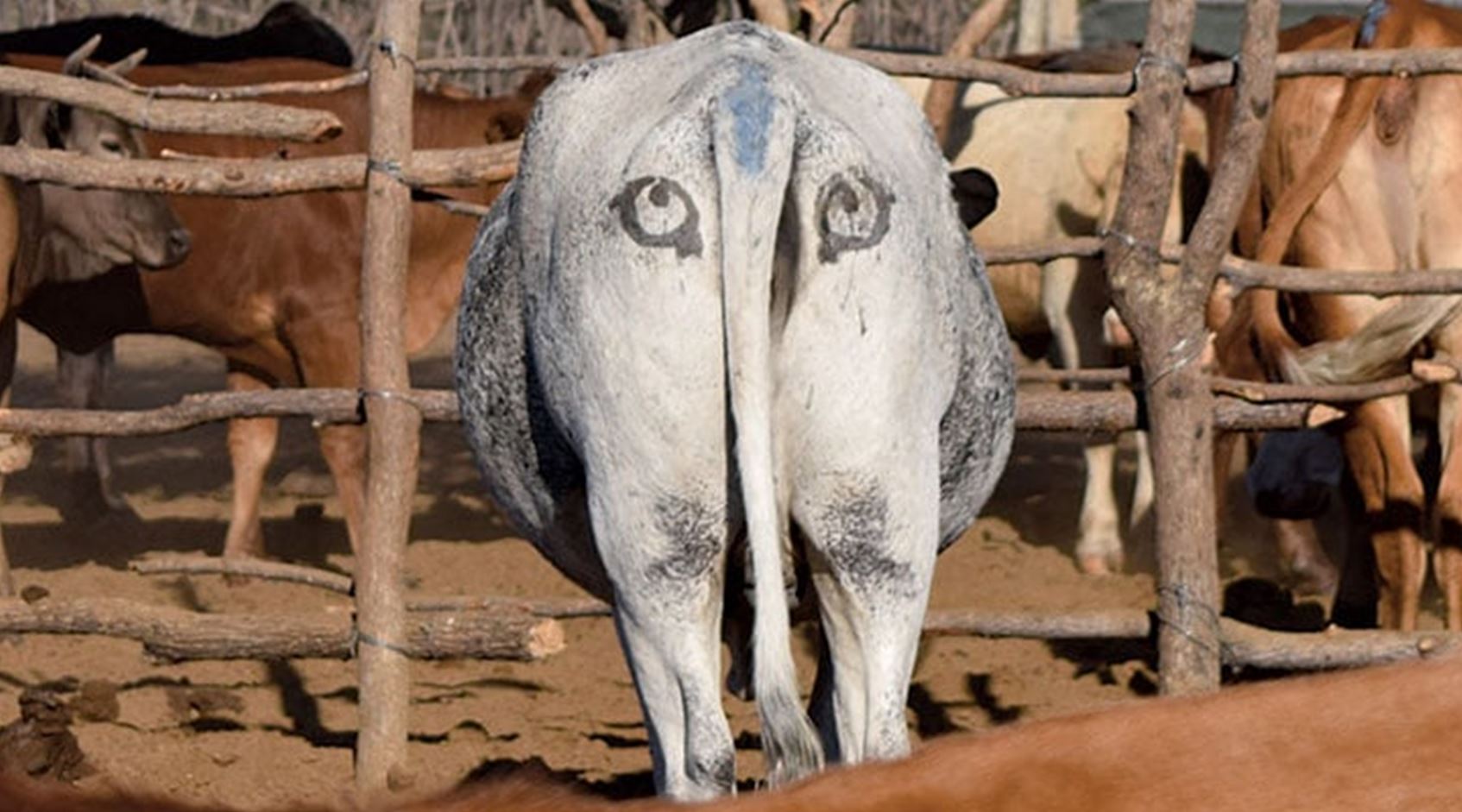
Dönges, J: Aufgemalte Augen sollen Löwen bluffen. Spektrum.de 07.07.2016; https://www.spektrum.de/news/aufgemalte-augen-sollen-loewen-bluffen/1415795
Fink-Keßler, A: Milch. Vom Mythos zur Massenware. München (oekom) 2012
Haudenschild, R: Weltrekord: 35’144 Kilo Milch. Schweizer Bauer 01.02.2017; https://www.schweizerbauer.ch/tiere/milchvieh/weltrekord-35144-kilo-milch-2
Koenen, K: Der Name ‘glyw auf Samaria-Ostrakon Nr. 41. Vetus Testamentum 1994; 44(3):396-400
Lee, MA; Davis, AP; Mizeck, GGC: Forage quality declines with rising temperatures, with implications for livestock production and methane emissions. Biogeosciences 2017; 14:1403-1417; doi: 10.5194/bg-14-1403-2017
Lee, MA: Rinder rülpsen und pupsen uns immer stärker das Klima kaputt. Berliner Morgenpost 27.03.2017; https://www.morgenpost.de/vermischtes/article210066703/Immer-mehr-Rinder-pupsen-uns-immer-staerker-das-Klima-kaputt.html
Radford, C; McNutt, JW; Rogers, T: Artificial eyespots on cattle reduce predation by large carnivores. Communications Biology 2020; 3:430; doi: 10.1038/s42003-020-01156-0
Reusch, K: “That Which Was Missing”: The Archaeology of Castration. St. Hugh’s College, University of Oxford 2013, Thesis submitted for the Degree of Doctor of Philosophy in the University of Oxford
Stafford; KJ; Mellor, DJ: The welfare significance of the castration of cattle: A review. New Zealand Veterinary Journal 2005; 53(5):271-278; doi: 10.1080/00480169.2005.36560
Strack, HL; Billerbeck, P: Kommentar zum Neuen Testament – Aus Talmud und Midrasch (vol. 3, p. 312). München (Beck’sche) 1926
Tandler, J; Grosz, S: Die biologischen Grundlagen der sekundären Geschlechtscharaktere (p.12-61: Die Kastration). Berlin (Springer) 2013; doi: 10.1007/978-3-642-91173-6
Ullman, BL: The origin and development of the alphabet. Archeological Institute of America 1927; 31(3):311-328; doi: 10.2307/497822
Image Credits:
Wikipedia: Relief with cattle from Saqqara / Prof. Mortel // Cow with udder support / Christian Bickel // Yoke drawing / Pearson Scott Foresman // Ox cart / William Carpenter // Fighting bulls / Kristi Herbert // Cattle herd / Olga Ernst // Painting on the Apis cult / Satinandsilk
other licenses: Title – cow portrait / shutterstock ID_2396724633 / Diego Grandi // Cow on Mount Gilboa / shutterstock ID_2146242235 / Barbarajo // Bulls of Bashan / shutterstock ID_101596660 / ChameleonsEye // Yoke-fellows / shutterstock ID_1498181474 / Dan Eastman // Cow with eye painting on rump / cattle_painted_eyes_on_back.jpg / Radford et al.