Where our idiom says «fox and hare say good night», the biblical idiom has «pelican and hedgehog» meeting. The small spine-bearers have little to fear from enemies.
The Hebrew word kippod (Isa 14:23; 34:11; Zeph 2:14) derives from a verb meaning «to roll up» (Isa 38:12) and denotes the hedgehog (also in Modern Hebrew). Anyone who has ever tried to catch a hedgehog will have noticed that it does not try for long to run away but instead curls itself into a ball and raises its coat of spines. In this defensive posture it is untouchable for most predators. It is obvious that this behavior earned it the name «roller-up».
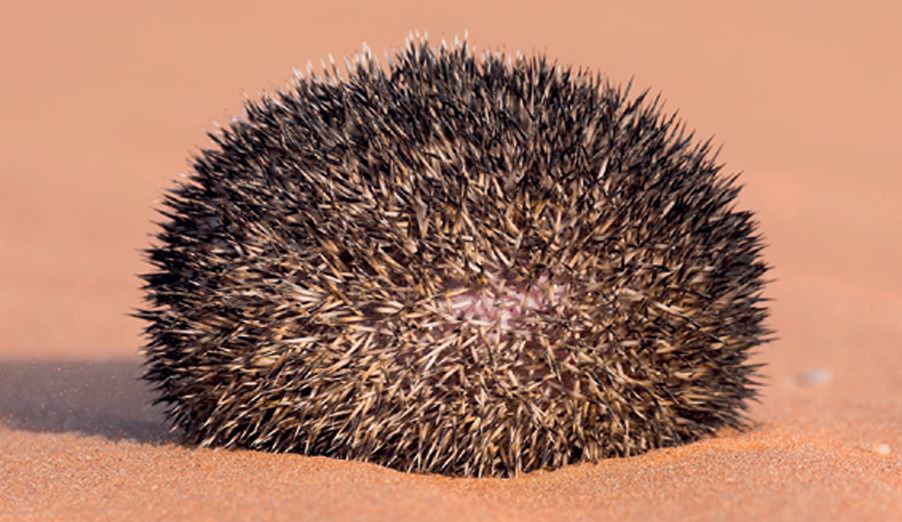
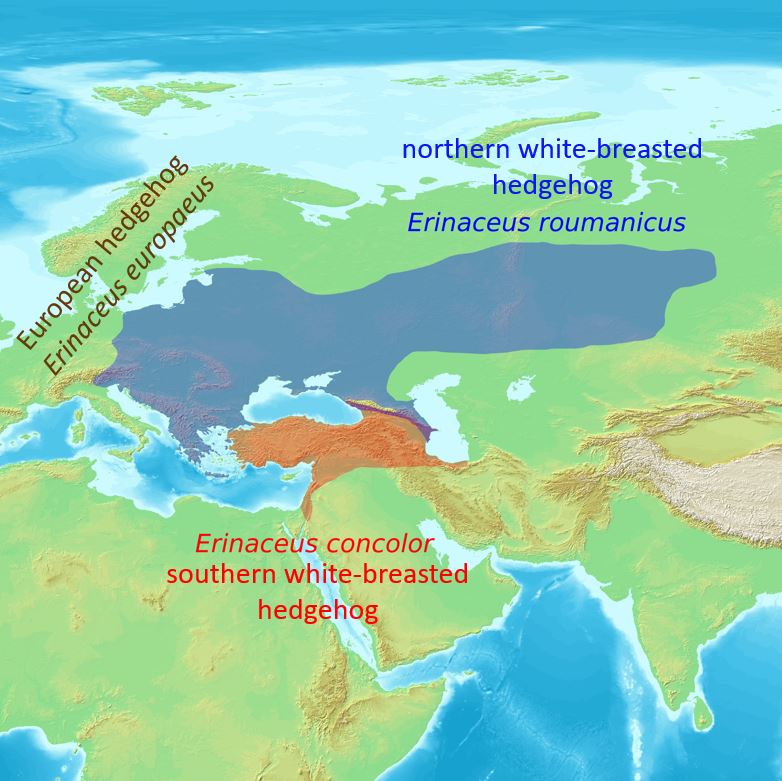
In Israel three different species are native: the Southern white-breasted hedgehog (Erinaceus concolor) resembles our native European white-breasted hedgehog in appearance and behavior and is hardly distinguishable from it. The long-eared hedgehog proper (Hemiechinus auritus) has – no surprise – particularly large ears, and the Arabian or Ethiopian desert hedgehog (Paraechinus aethiopicus) looks similar as well but prefers very arid regions. It does not occur in Israel, but since the biblical passages in which it is mentioned refer to Babylon, Edom, and Nineveh, it is in fact the most likely candidate.
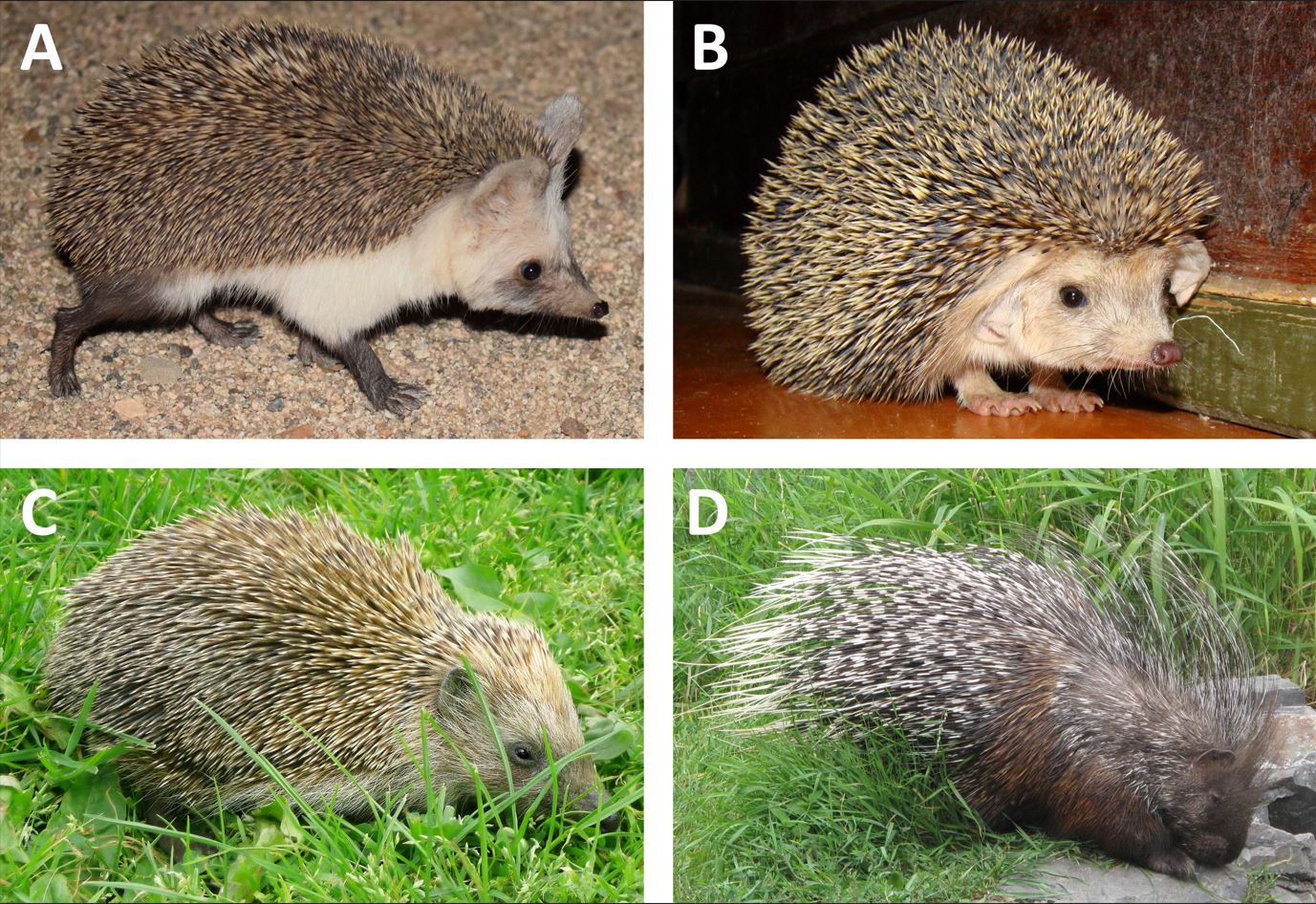
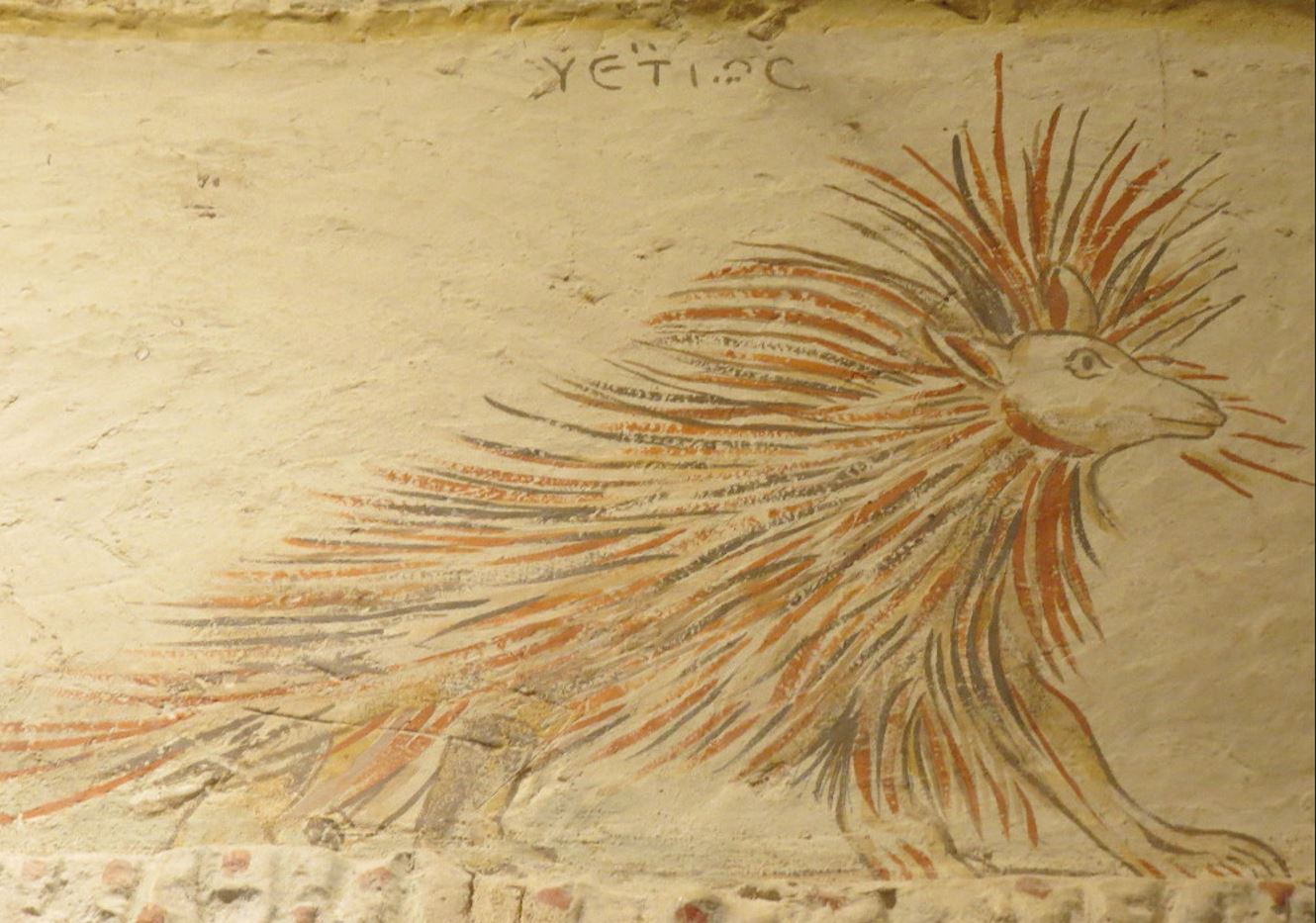
Some English Bibles translate kippod as «porcupine», referring to the porcupine (Hystrix). This is not entirely far-fetched. In fact, the Indian crested porcupine (Hystrix indica) lives both in Israel and in the regions where Nineveh and Babylon are located. However, it would also have been known to the translators of the LXX, and they would have chosen the Greek word hystrix instead of echinos, which always denotes the hedgehog. Moreover, porcupines do not roll themselves up when threatened; rather, if their threatening gestures do not deter an enemy, they attack it by backing into it.
The hedgehog is mentioned in the three cited verses in connection with the devastation of once-flourishing metropolises and landscapes. Since desert hedgehogs are very shy and exclusively nocturnal animals that prefer to live in stony deserts, an abandoned ruin city in the midst of a dry wasteland is the perfect habitat.
It is difficult to understand why some translations render kippod differently in the Zephaniah passage, even though in all three verses the same Hebrew word occurs in the same grammatical form and a similar context, and the ancient translations (LXX, Vulgate) also translate all three passages as «hedgehog». In a consistent translation the verse reads: «Then herds shall lie down in her midst, animals of every kind in abundance; pelicans and hedgehogs shall lodge for the night on her capitals» (Zeph 2:14). Possibly the description unsettled some translators. Although hedgehogs can climb quite well and are, for example, able to overcome a chain-link fence, they naturally find no grip on a smooth column – so how should a hedgehog find a sleeping place right on top of a column capital? But that is precisely the message of this scenario: a field of ruins in the desert; some columns are still standing, the roof they once carried is missing, and there the pelicans sit; other columns have toppled over and shattered into pieces, the capitals lie on the ground, so that the hedgehog can make itself comfortable there.

By sound, kippod, the hedgehog, is hardly distinguishable from kippot, the Jewish head coverings (which, however, derive from a word root meaning «dome»). In the Old Testament there was no regulation for men to cover their heads, neither in general nor when praying. After Paul even issued an explicit prohibition for Christian practice – «For a man ought not to cover his head, since he is the image and glory of God» (1Cor 11:7) – and Christianity had separated from Judaism, Jewish men began to cover their heads. Exactly what these head coverings looked like developed over time, with fashion and regionally; but today the kippot, small circular fabric caps, have become a religious symbol of Judaism. Strangely enough, they actually bear some resemblance to the round-backed hedgehog and, in this context, appear like a symbol of the defensive posture toward the gospel that is described as «hardening» (Rom 11:7.25; 2Cor 3:14).
The hedgehog received spines from its Creator for protection, protruding outward all around. When the Lord entered His creation to redeem it, however, He Himself did not assume a defensive posture, but endured the spines of a crown of thorns, which were also directed inward. Moreover, in the three hours of darkness on the cross He endured, in a figurative sense, the «sting of death» (that is sin; cf. 1Cor 15:56), when He was made to be sin.
Sources:
Associated Press (AP): Israeli makes “magic” yarmulke to protect Jews from attacks. New York Post, 23.01.2015; https://nypost.com/2015/01/23/israeli-makes-magic-yarmulke-to-protect-jews-from-attacks
Brasch, R: Why Jews Cover the Head. Commentary 1954; 17:37
Krauss, S: The Jewish rite of covering the head. Hebrew Union College Annual 1945; 19:121–68; http://www.jstor.org/stable/23503676
Thomas, JJ: Art and natural science in the Hellenistic world [PhD thesis]. University of Oxford 2016
Image Credits:
Wikipedia: Ethiopian hedgehog / Karim Haddad // Southern white-breasted hedgehog / Nevit Dilmen // Long-eared hedgehog proper / Yuriy75 // Indian crested porcupine / Dezidor // Distribution area of the white-breasted hedgehog / Rbrausse // Porcupine depiction – Bet Guvrin / Dr. Avishai Teicher // Paraechinus aethiopicus / Levi Clancy // Newborn hedgehog / Max Korostischeveski
other licenses: Title – Ethiopian hedgehog / shutterstock ID_1988019110 / Ishor Gurung // Spiny ball / shutterstock ID_1969110637 / Ishor Gurung // Kippah made of hair / Shalom_Koresh_Jarmulke_from_hair (0987).jpg / Dan Balilty