Horses stand for military power and personal grandeur. Their elaborate and costly breeding, training, and keeping made them a luxury good. Despite their enormous strength, in biblical times they were scarcely used for agricultural work or transport tasks but were intended almost exclusively for «higher service» in representation and battle.
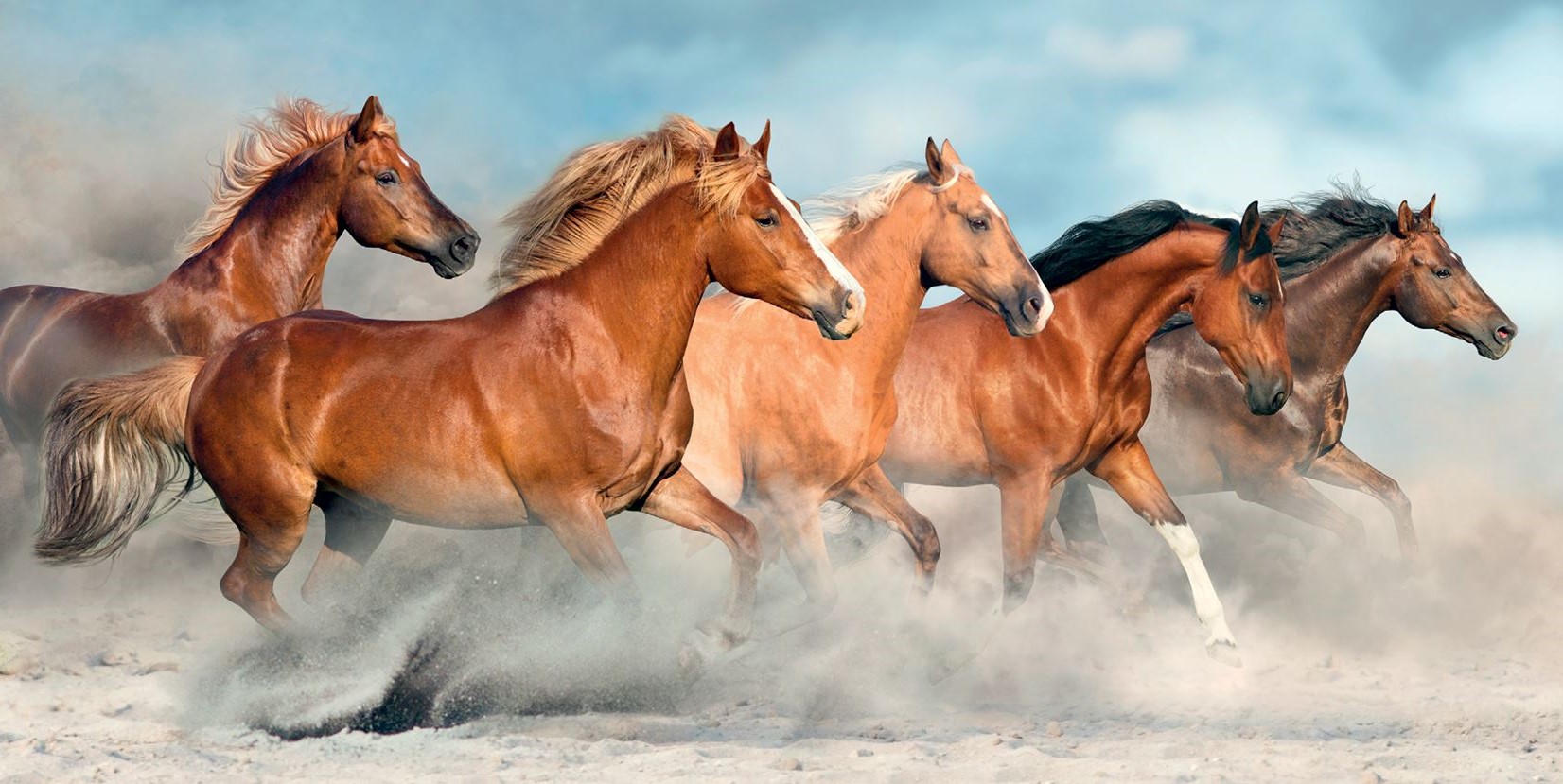
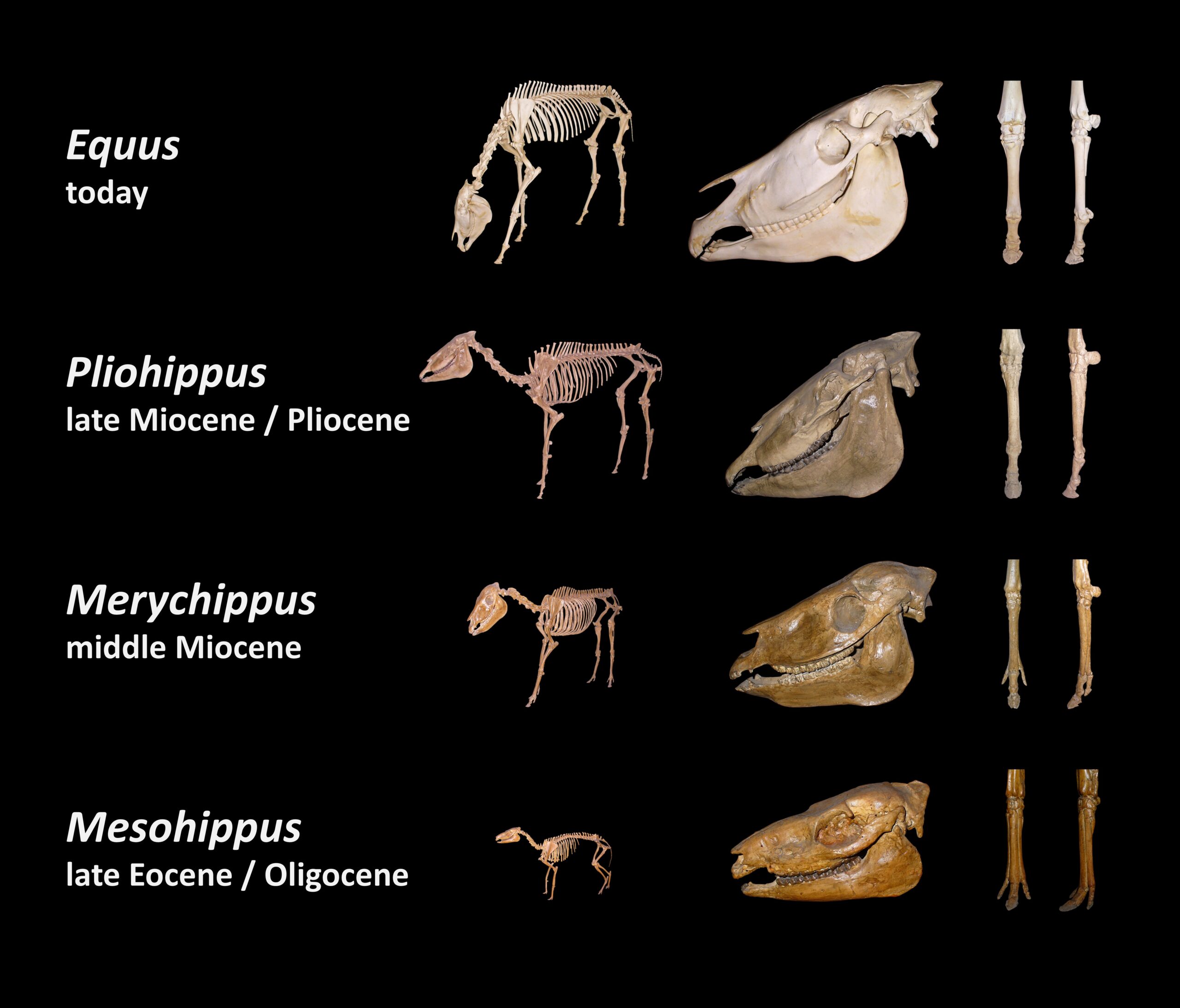
The relationships of descent among the equids (Equidae) are complicated. This also applies to the domestic horse (Equus caballus): in archaeology it already confronts us in the earliest find horizons, and it can no longer be reconstructed with certainty which wild forms may have preceded the domesticated animals.
The Hebrew word sus (129x) denotes the horse in general and the stallion in particular. The feminine form susa (Song 1:9), which denotes the mare, occurs only in this verse. In addition, the word rekesch (4x) is used to designate particularly fast and enduring «runners» such as were employed in the Persian express courier service (Est 8:10, 14). At set intervals, relay stations were established, where the mail was handed over to another rider on a rested horse, who then galloped on. Only with the help of this relay system, regarded as a forerunner of the modern postal service, could the vast Persian empire be administered efficiently. In poetic language, horses are described as kal (swift ones, runners; Isa 30:16) and abbir (strong ones, mighty ones; Judg 5:22; Jer 8:16; 47:3; 50:11). The word parasch (54x) usually denotes the rider, but in some cases also the horse (Isa 28:28; Jer 46:4; Ezek 27:14; Joel 2:4). The occasional use of «steed» instead of «horse» in some translations is merely stylistic («steed» sounds a bit more elevated)).
The name Susi (Num 13:11) or Susim (Gen 14:5) means «my horse», Sismai (1Chr 2:40) «strong horse», and Rekab (13x) or Rechabites (rekabi; Jer 35:2, 3, 5, 18) «rider». The two forms chazar-susa (Jos 19:5) and chazar-susim (1Chr 4:31) designate the same place and mean «courtyard of the mares» (thus the Hebrew form of «Stuttgart»). In addition, there is also the «Horse Gate» (Hebrew: sha’ar ha-susim) in the city wall of Jerusalem.
In Greek, hippos (16x) denotes the horse, hippeus (Acts 23:23, 32) the rider, and hippikon (Rev 9:16) the corresponding adjective (mounted). The Greek Philippos means «friend of horses» and occurs as a personal name (Philip; 35x), place name (Philippi; Acts 16:12; 20:6; Phil 1:1; 1 Thess 2:2), and as a designation for the inhabitants (Philippians; Phil 4:15). The name Agrippas (11x) means «wild horse» or «hunter of horses», and the name Archippus (Archippos; Col 4:17; Phlm 1:2) can mean «master of the horses», «stable master», or «leader of the horses» (in a military sense).
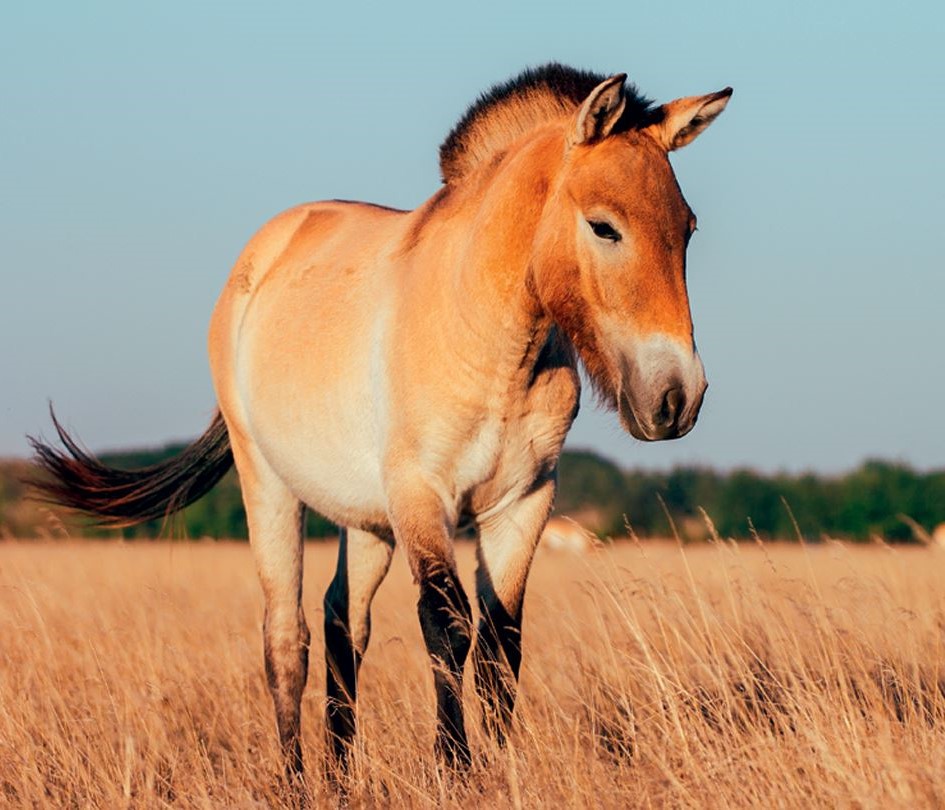
In Israel, horses were dispensable in everyday life. They were normally not used for agricultural work, and as animals without «split hooves» they were unclean according to Lev 11:3 and were not permitted to be eaten. By contrast, the way of life of the nomadic peoples of the eastern steppes, far into Central Asia, depends entirely on their use, so that they are even called «horse peoples». The great empires of the Hittites, Hurrians, and Assyrians likewise founded their military power essentially on the use of chariots and mounted warriors.
In its early period, Egypt experienced an invasion by foreign peoples from Southwest Asia, the so-called «Hyksos», who were far inferior to them in numbers but quickly gained the upper hand thanks to their chariots and subjugated the entire land. The Egyptians were indeed able to free themselves from foreign rule after a century, but this experience shaped their military doctrine, and from then on, the pharaohs likewise relied on an excellently trained chariot corps as the backbone of their army. This in turn left its mark on the people of Israel, who gained a strong impression of the effectiveness of these elite units. In Israel’s history, we encounter the horse for the first time when Joseph rules in Egypt (Gen 47:17), but another historical description is probably to be dated much earlier.
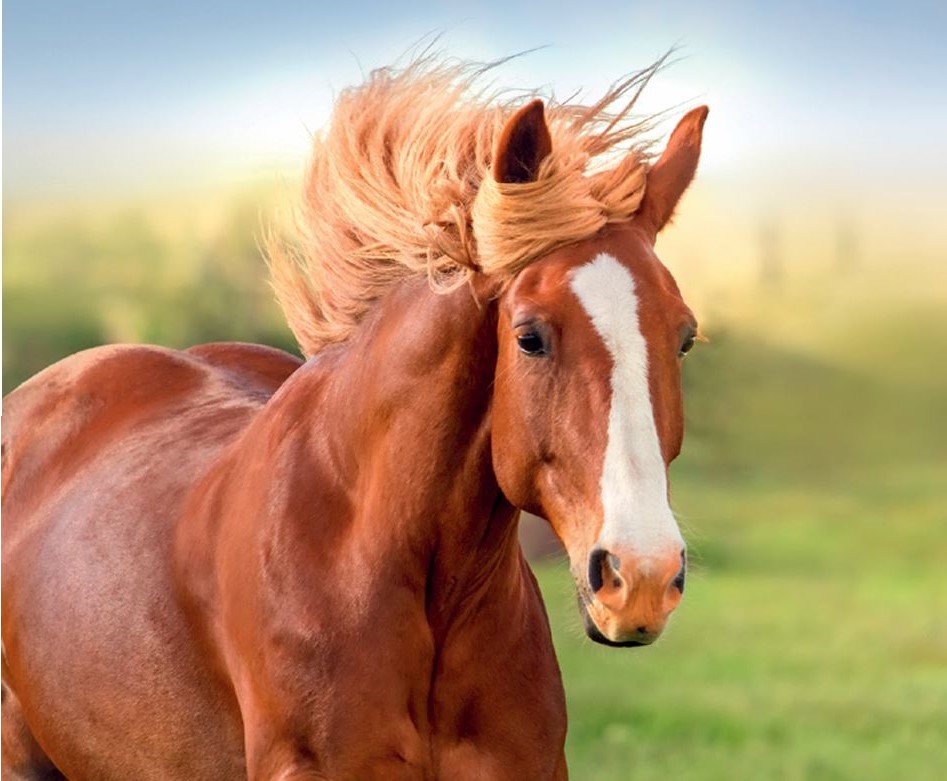
In the book of Job, God gives us a description (Job 39:19-25) that is at the same time the most instructive Bible text about the horse, and therefore it is worked through here verse by verse:
- »Do you give the horse strength? Do you clothe his neck with a flowing mane?» (Job 39:19) – God has endowed the horse with great strength and has also «covered» its neck «with a mane». What does this expression mean? Apart from describing reality – and the flying mane of a galloping horse is an impressive sight – it also has a symbolic meaning: neck and nape are in many places an image of one’s own will (Deut 31:27; 2Kgs 17:14; Job 15:26; Ps 75:6; Jer 7:26). Covering with long hair speaks of acknowledging a higher authority. A good example is the Nazirite, a man who set himself apart for God and as an outward sign of this special consecration was to let his hair grow long (Num 6:5). A head covering, a veil, or the long hair of a woman also express this (Gen 24:65; 1Cor 11:10, 15). God created the horse in such a way that it does not use its strength for itself, but places it in the service of its master.
- »Do you make it leap like the locust? Its proud snorting is terror» (Job 39:20) – A joint mention of horses and locusts is also found in Rev 9:7: «And the shapes of the locusts were like horses prepared for battle.» In German, some species of locusts are also called «hay horses». Both animals share leaping power and speed. The sight of charging, snorting horses strikes terror into an opponent.
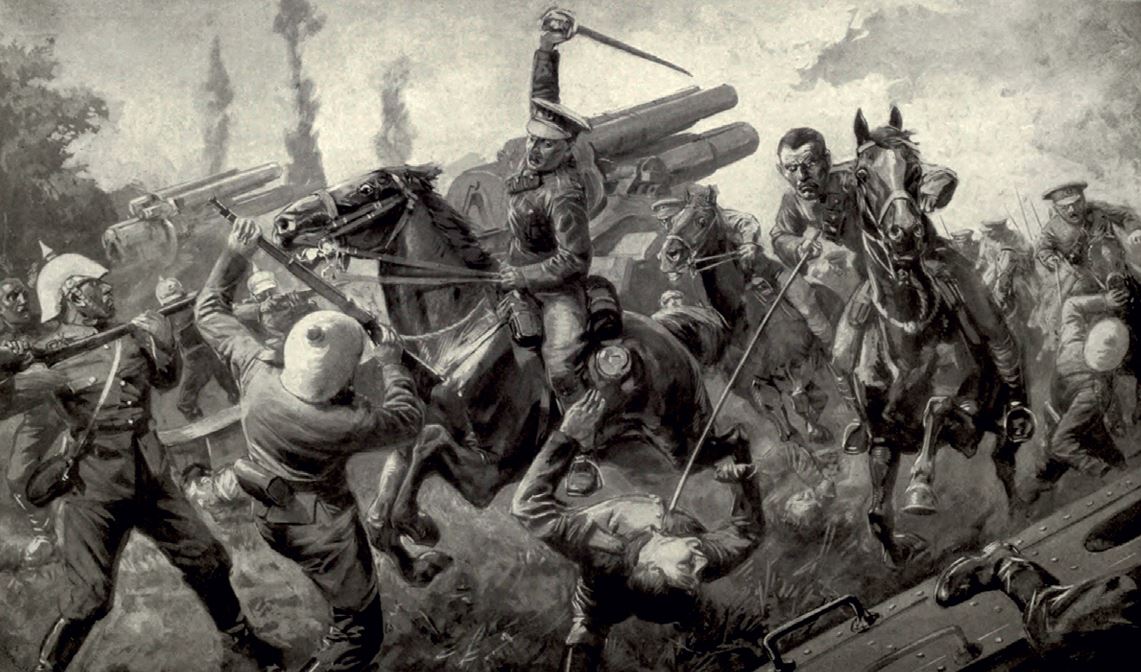
- »It paws in the valley and rejoices in its strength; it goes out to meet the weapons» (Job 39:21) – From the description it is clear that Job is not being shown peacefully grazing horses, but armed warhorses, whose submission to a higher will has astonishing effects. Normally horses are shy flight animals. But the specially trained cavalry horses are educated and drilled so that they can hardly wait to hurl themselves into battle with contempt for death. They paw the ground impatiently with their hooves and anticipate the impending clash of arms with excitement.
- »It laughs at fear and is not dismayed; it does not turn back from the sword» (Job 39:22) – Quite contrary to their fearful and skittish nature, they run courageously toward the threatening battle lines of the enemy.
- »On it rattle the quiver, the flashing spear and the javelin» (Job 39:23) – They seem to know that they are not defenseless, for they carry riders equipped with weapons for combat at every distance. These shoot their arrows from long range, then hurl their javelins at medium range, and then fight hand-to-hand with spear or lance.
- »With fierceness and rage it races along and cannot be restrained when the trumpet sounds» (Job 39:24) – Thus the battle-tested steeds storm into the fray full of zeal and make the cause of their masters entirely their own. They are absolutely ready for battle. This straightforwardness and uncompromising devotion are, of course, only a good example when they serve a good rider. For people who do not allow themselves to be led by God in their lives, it applies: «All of them keep on running on their false way, like warhorses charging into battle» (Jer 8:6).
- »At the blast of the trumpet it cries: Hui! And from afar it scents the battle, the thunder of the commanders and the battle shout» (Job 39:25) – It seems as though the horse fully accepts its calling as a warrior, devotes itself to this task with dedication, and almost looks out for being summoned into action for battle.
From this Job could recognize that God can bring horses to bow to the authority of their master, accept his discipline, and be trained by him in such a way that they overcome their old nature and give everything in service to him. The path there is not easy. Every horse must first be broken in. In doing so, its self-will is overcome. Even so, animals ultimately serve human beings because they must, or because they have been bred for it. Human beings, by contrast, have the opportunity to serve God voluntarily and out of love. Will Job also allow himself to be taken in hand by his God and Lord, learn to overcome his natural reactions, and gladly entrust himself wholly to Him?
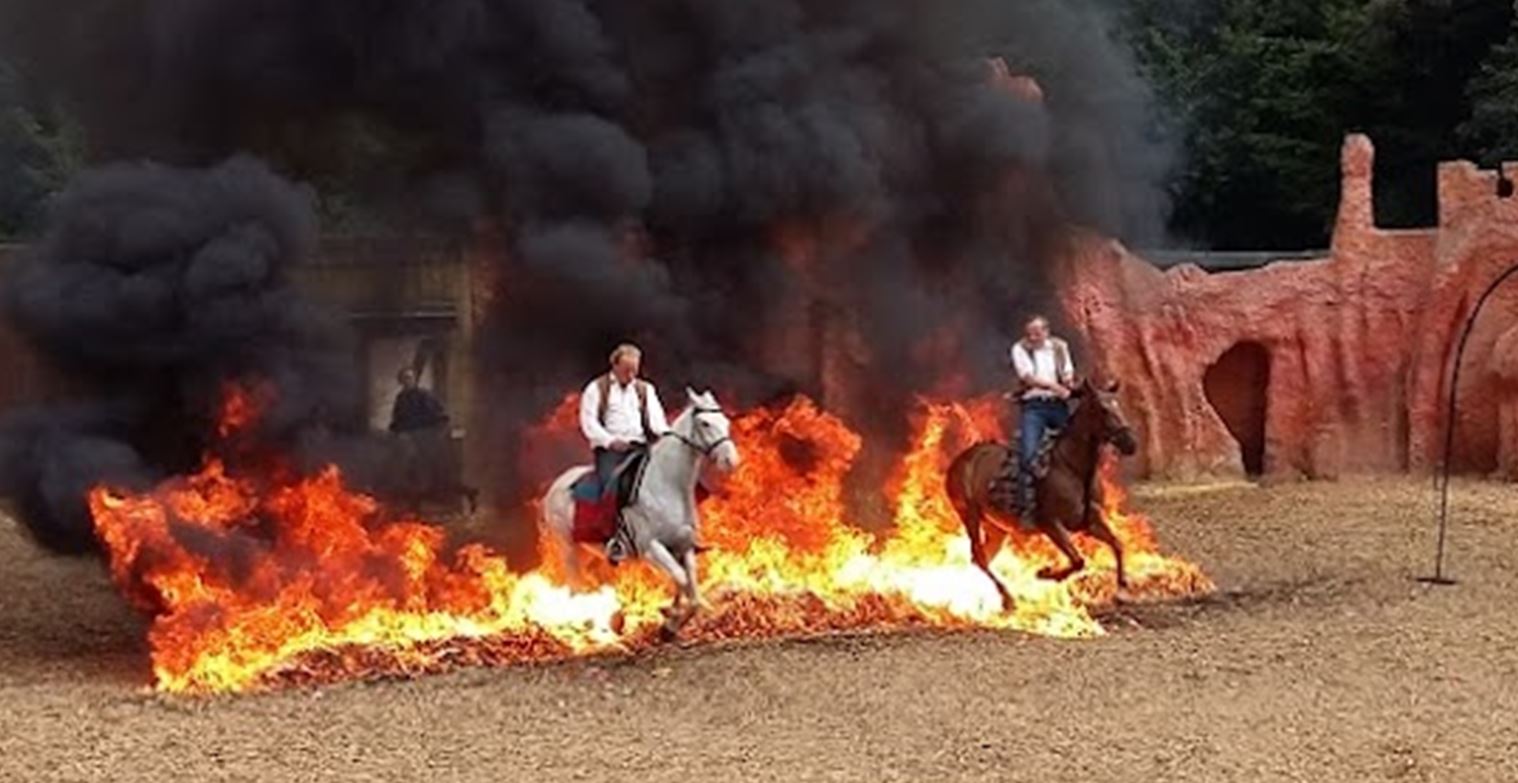
Today, horses play almost no role in the military anymore. In police work, however, they are still gladly used. For operations in difficult terrain, in parks and nature reserves, they are just as suitable as for protecting major events such as football matches, open-air concerts, parades, assemblies, and demonstrations. Here the animals are exposed to stress similar to that in the battles of antiquity. Even the crack of gunshots and fireworks at very close range must not cause them to startle and bolt. The training of police horses makes it easy to see what a hard school is necessary to meet these requirements. Only very few horses are even shortlisted to be trained as remounts – young military horses – in a mounted police unit. This is a fine picture of a «good soldier of Christ Jesus» (2Tim 2:3) who can appear in God’s service without fear.
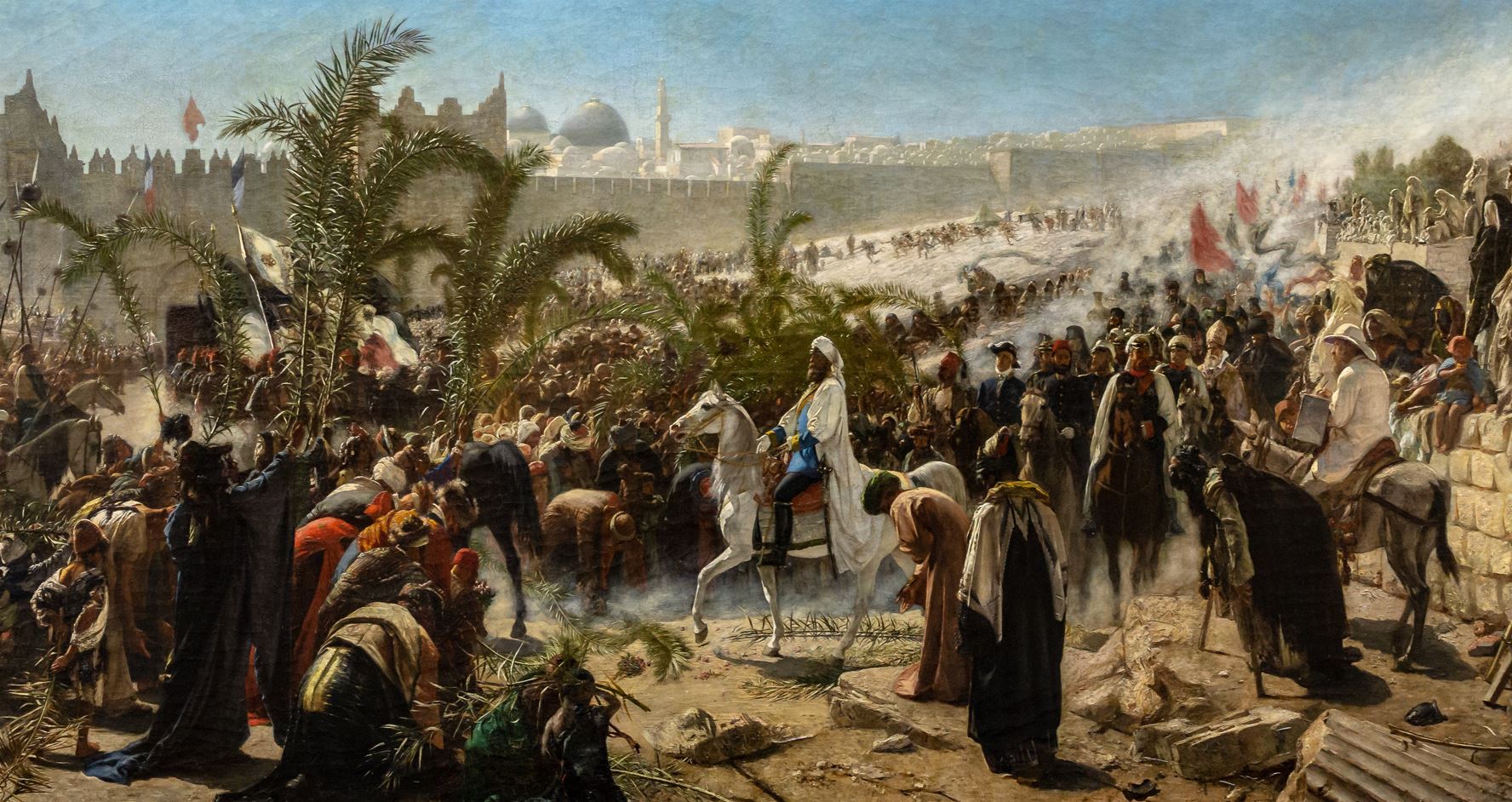
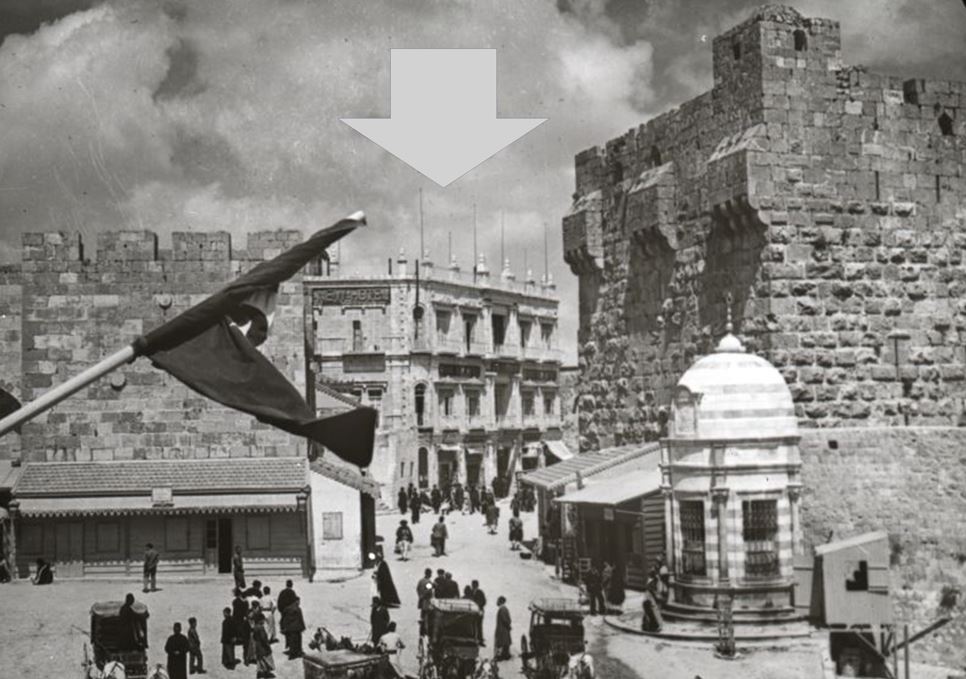
In contrast to the entry of the Lord Jesus on the back of a donkey’s colt on Palm Sunday stand the great rulers and military leaders of history, who deliberately chose dominant and warlike symbolism by presenting themselves high on horseback. During his journey to Palestine in 1898, the German Emperor Wilhelm II would have liked to ride through one of the city gates into Jerusalem – in the unmistakable pose of a conqueror. His host, Sultan Abdülhamid II of the Ottoman Empire, could not possibly grant him this wish. But since a good relationship with the German Empire was important to him, he accommodated the imperial craving for prestige and, as a compromise, had a 12-meter-wide section of the city wall demolished immediately next to the Jaffa Gate so that Wilhelm II could enter with a large entourage. He is said to have protested against this «barbarism», but the pompous march-in that resulted was ultimately quite to his taste.
When the Lord Jesus rode into Jerusalem on Palm Sunday on a donkey’s colt, He chose – according to extra-biblical tradition and geographically the most plausible – the route through the East Gate. By the same way, the «glory of the God of Israel» in the vision of the prophet Ezekiel (Ezek 10:19) had previously left the temple and the city. In the combined view of the various predictions about the Lord Jesus’ return «with power and great glory» (Mt 24:30; Mk 13:26; Lk 21:27), it becomes clear that He will then first stand on the Mount of Olives (Zech 14:1-5; Acts 1:9-12), enter the city through the East Gate (Ezek 43:1-5), and be accompanied by a great multitude (2 Thess 1:7-10; Jude 14, 15). This time, however, He does not come with peaceful intent, but to fight, to conquer, and to judge – hence also the white horse as a fitting attribute (Rev 19:11-16) and worthy honor (cf. Est 6:6-11). It is not to be expected that walls will have to be torn down again for this entry, for the ancient arches will of themselves give way: «Lift up your heads, O gates, and be lifted up, O ancient doors, that the King of glory may come in!» (Ps 24:7, 9).
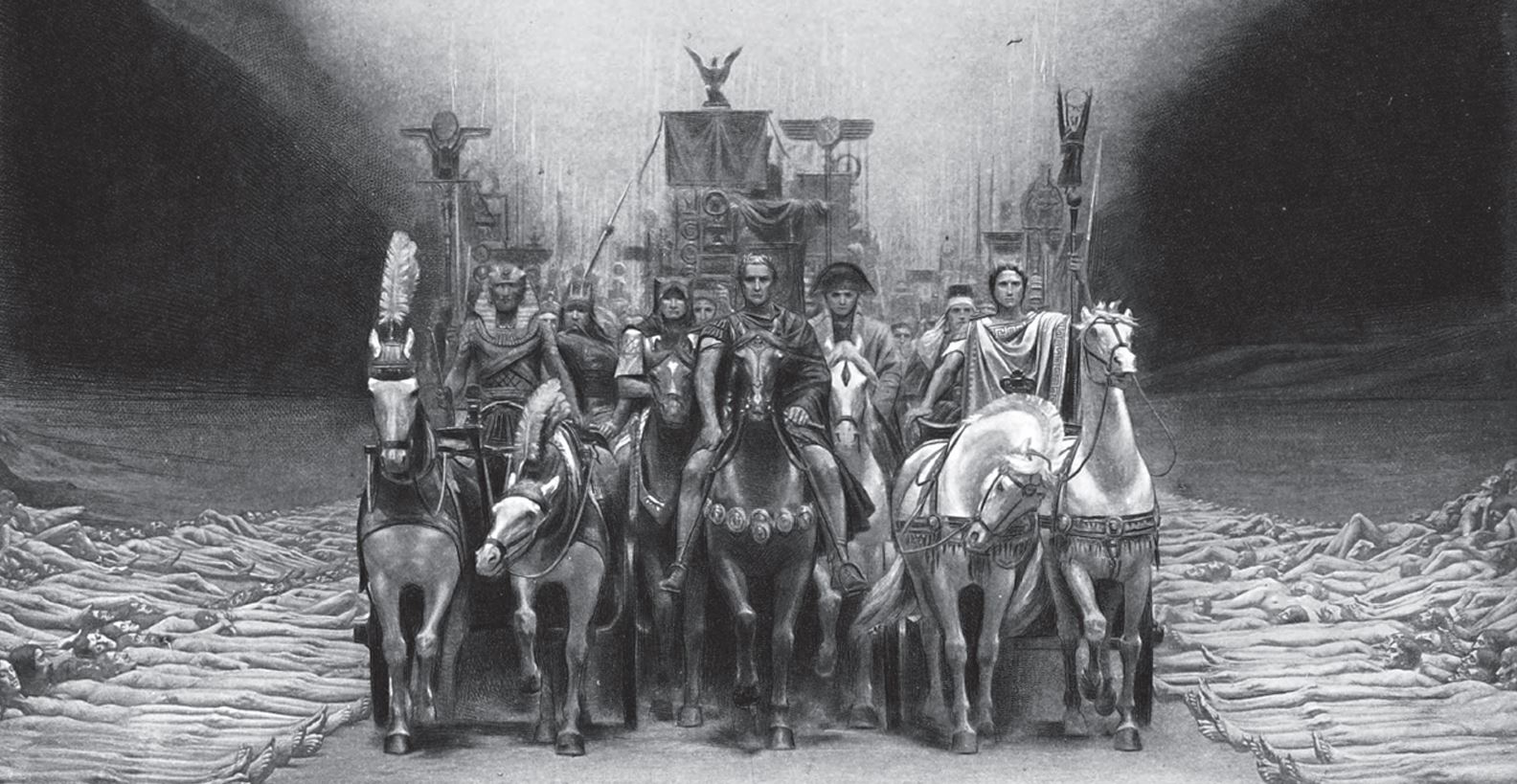
Hättest du so die Welt geliebt
Manfred Siebald, 1984
(translated, original in German)
If you had loved the world like that
If you had loved the world like that
as we and those like us –
you would have acquired possessions,
would have planned, bought, grabbed,
would have owned whatever exists,
as one of the rich.
If you had striven for power like that
as we and those like us –
you would have led armies,
would have stirred and fanned hatred,
would have lived as a strong man
on a way full of corpses.
And we – Jesus, we would still sit here
and tend your grave in wistful sorrow;
and without hope we would ask
why you existed only back then.
And we – Jesus, we would still be searching
for the one way back to God.
In our hearts there would remain a hole
and darkness in our gaze.
If you had asked for fame like that
as we and those like us –
you would have pushed yourself to the front,
hung the flag into the wind
and would have died at a great old age,
with every decoration.
And we – Jesus, we would still sit here …
The long hair of horses’ manes and tails has special properties that qualify it for a wide range of uses. As «horsehair» it remains a commodity to this day that in some areas still cannot be replaced on equal terms by synthetic fibers. Since it is unclear which of the later textile and upholstery techniques already played a role in biblical times, and whether people then already knew that the bows of string instruments work best with a covering of horsehair, this is mentioned only in passing.
Horsehair appears in the Bible in a far more surprising context. Of the warlike horse people of the Thracians it is reported that they knew how to handle their stone slings virtuously. They trained this skill by shooting at horsehairs at whose end a stone or a small lead weight hung. When hit, the hair was severed and the weight fell to the ground. This practice is also described in the book of Judges: «Among all these people there were seven hundred chosen men who were left-handed; every one could sling a stone at a hair and not miss» (Judg 20:16).
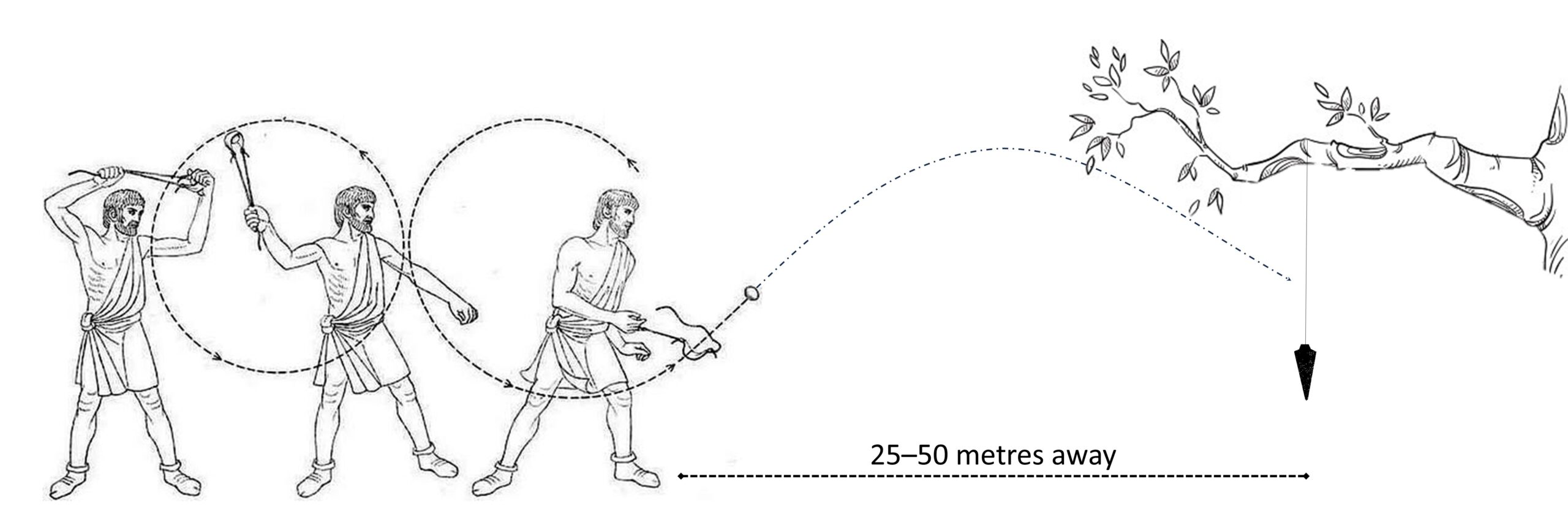
The Hebrew word for «to miss», chata, occurs in 220 verses and otherwise is almost always translated as «to sin». This small episode therefore provides us with a vivid illustration of the biblical definition of «sin»: it is «missing the mark». The criterion is clear: as long as the hair still holds, the target has not been reached. No «but it definitely wobbled!» helps here – rather, it holds: close doesn’t count!
In our culture, the horse enjoys an impeccable reputation. While there are countless insults and abusive terms formed in some way with sow, pig, piglet, sheep, goat, buck, camel, cattle, ox, cow, etc., horses are largely exempt from this contemptuous association. The portrayal in the book of Job presents them to us humans as a good example in terms of courage and devotion, and otherwise too they are by no means described negatively in the Bible. Only an idolatrous cult is mentioned in which they played a role (2Kgs 23:11), about which historically nothing further is known. It is also noted that they «have no understanding» (Ps 32:9), which, however, is a general characteristic of all animals. What is indeed strongly warned against, however, is the human tendency to rely on the fighting power of horses and chariots (instead of on God). The theme runs like a red thread through Israel’s history, and whoever follows this trail learns important lessons about trusting God.
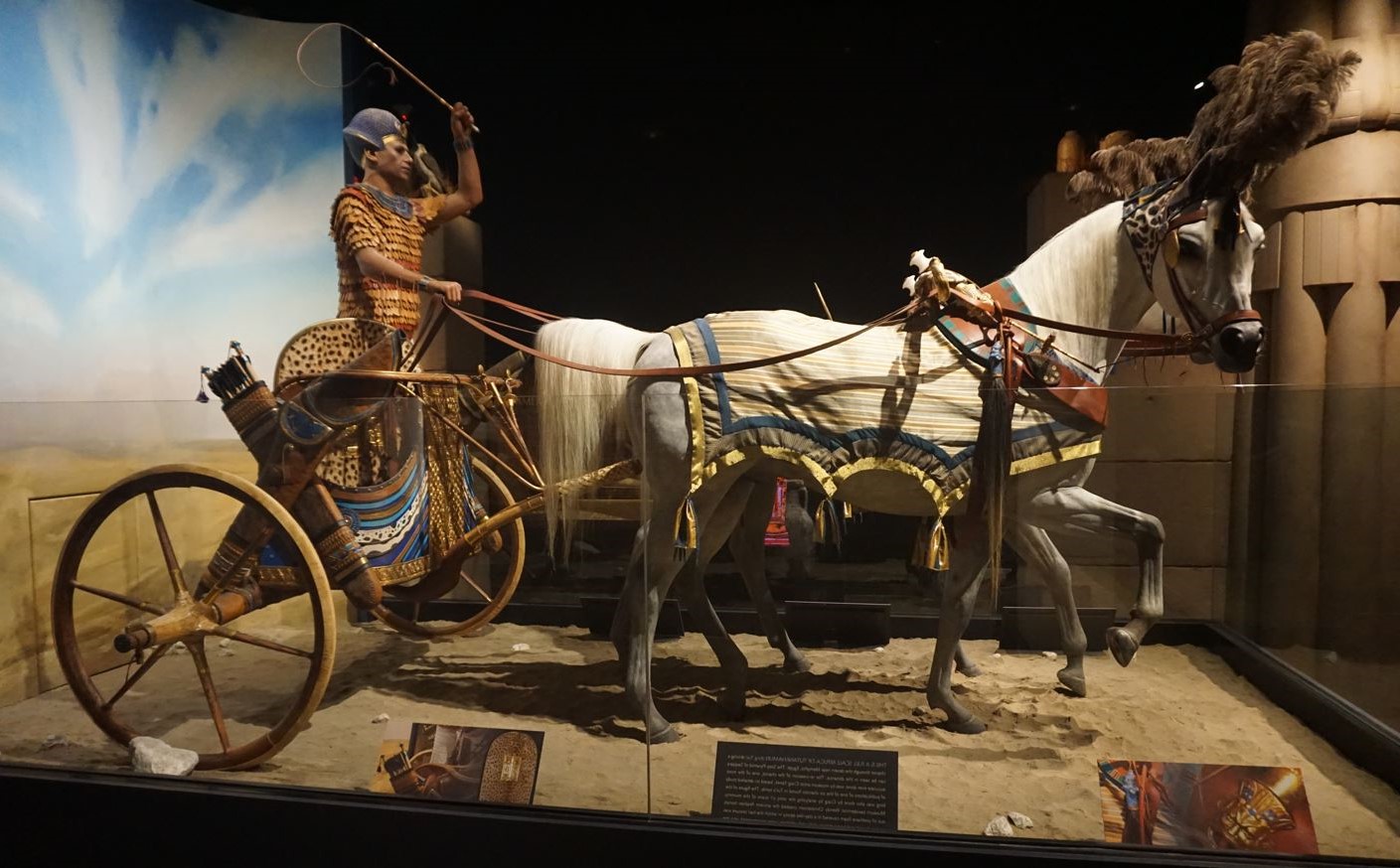
Israel’s first encounter with the Egyptian cavalry came on the shore of the Sea of Reeds, when suddenly the chariots, the cavalry, and the military force of Pharaoh appeared (Ex 14:9). An unimaginably frightening situation: the mass of thousands of people – men inexperienced in battle and probably scarcely armed – with women and children, heavily laden, with a great train of livestock herds (Ex 12:34-38). They were unable to form up for defense and protect themselves – no cover, flat desert to the right and left, the sea before them – and behind them, rapidly drawing near, the most modern and most powerful army of that time, above all the rattling chariots.
What happened next no one could have imagined. Moses announced that what redemption means would become visible: «Do not fear! Stand firm and see the salvation of the LORD» (Ex 14:13). This can be well expounded in New Testament terms – «salvation of the LORD» is nothing other than the meaning of the Hebrew name Yehoshua, in short: Joshua, or in Greek: Jesus! The first lesson concerns all who belong to Him and «stand under the protection of His blood» (cf. Ex 12; 1Cor 5:7). It is: do not look at the horses and chariots, the visible counter-power, but at Jesus, and wait to see what He does!
First, God placed Himself protectively between His people and their pursuers and kept them at a distance. The second lesson applies to everyone: what matters is which side you are on – the one pillar that became visible there had two sides! For the enemies it was cloud, cold, and darkness, so that they could not move from their place all night; for God’s people it was fire, warmth, and a bright light that illuminated the night (Ex14:20). The third lesson then showed the people of Israel that God has every means at His disposal to bring about deliverance. He can use a «strong east wind» (Ex 14:21), but He can also directly throw the enemies into confusion and knock the wheels off their chariots (Ex 14:24, 25).
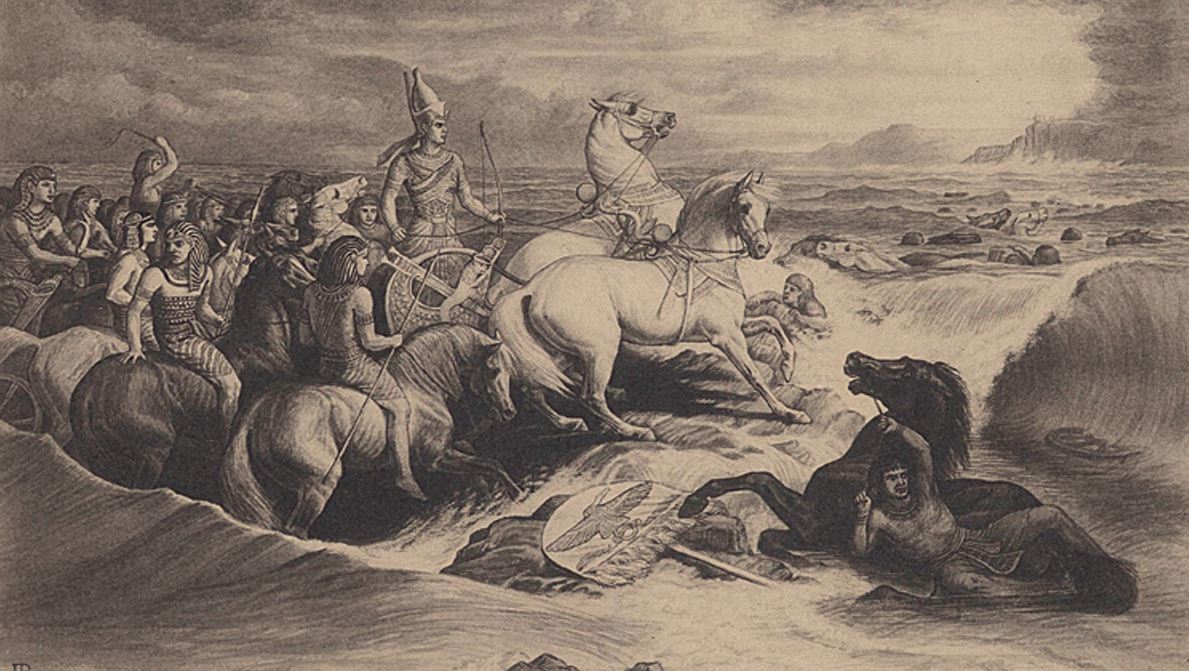
In the end, the entire army sank in the waters of the Sea of Reeds, and the Israelites rejoiced: «I will sing to the LORD, for he has triumphed gloriously; the horse and his rider he has thrown into the sea […] Pharaoh’s chariots and his host he cast into the sea, and his chosen officers were sunk in the Sea of Reeds […] For the horses of Pharaoh went in with his chariots and with his horsemen into the sea, and the LORD brought back the waters of the sea upon them; but the people of Israel walked on dry ground through the midst of the sea» (Ex 15:1, 4, 19). Here, in the men’s song, the «horse experience» is something like a refrain that was repeated and expanded three times. The women responded in antiphonal song with only this one line: «Sing to the LORD, for he has triumphed gloriously; the horse and his rider he has thrown into the sea!» (Ex 15:21). Both the judgment and the deliverance were complete: while not a single pursuer survived, none of the pursued lost their life.
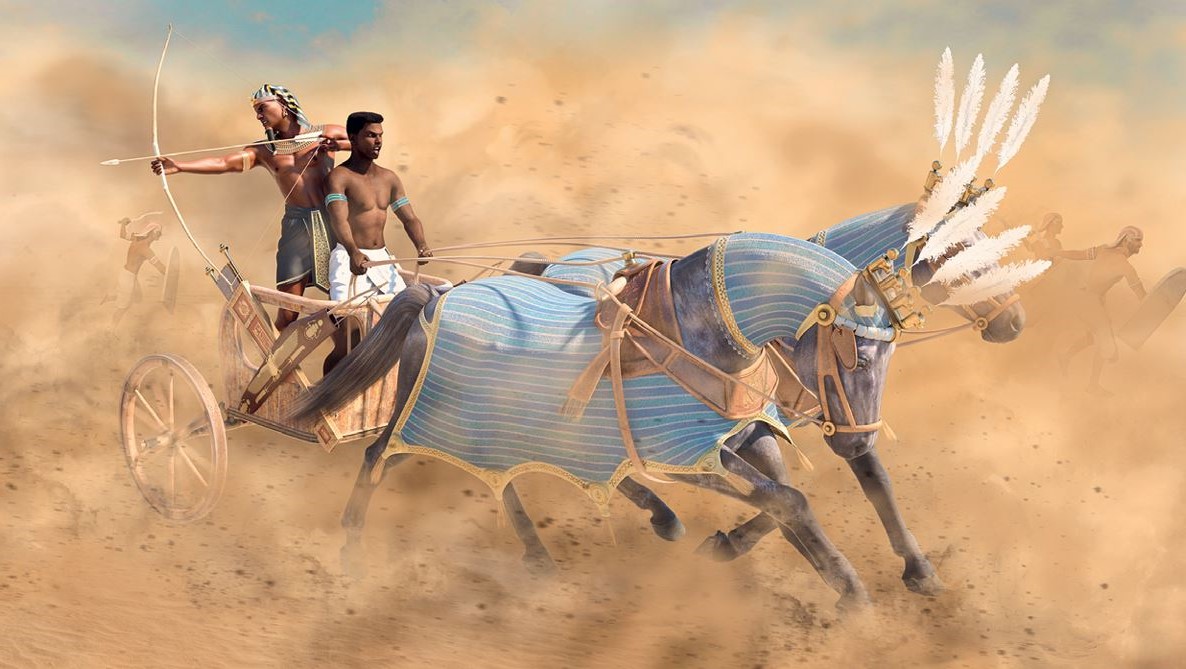
Ideally, this impressive experience would have resulted in the Israelites dispensing with horses and chariots as long as God fought on their side. And indeed, when in one of the first great battles against the Canaanites a large spoil of war fell into their hands, they followed precisely God’s command: «You shall hamstring their horses and burn their chariots with fire» (Jos 11:6-9). The word for «hamstring» is akar and elsewhere also means «to uproot» (Eccl 3:2). This could be a hint that muscles or tendons were cut in such a way that the horses could still walk but could no longer run and jump – so that they remained usable in various ways (for example for threshing, Isa 28:28) but were unfit for military use. This can be regarded as a genuine proof of trust, for the iron-clad chariots of the enemies were a serious challenge (Jos 17:16; Judg 1:19; 4:3), to which the Israelites had little to oppose militarily. Centuries later King David also knew from his own experience what a powerful weapon the chariots of the Philistines and Syrians were. When 1,000 teams fell into his hands in a great victory, he likewise hamstrung them – but not all; he kept 100 (1Chr 18:3). In him the conflict of a great military leader becomes apparent: on the one hand he is «a man after God’s own heart» (1Sam 13:14; Acts 13:22) and often trusts Him completely, but on the other hand he also thinks strategically and plans with his own means (1Chr 21:1-8).
In this he is not a good example to his sons, for where 100 chariots stand in the barracks, the beginning has been made. Both Absalom (2Sam 15:1) and Adonijah (1Kgs 1:5) present themselves to the people with chariots and horsemen. They are, however, far surpassed by Solomon, who even lets his special passion flow into a love song: «I compare you, my love, to a mare among Pharaoh’s chariots» (Song 1:9). The splendid Egyptian horses had captured his heart. Yet God had long before, even before kingship was established in Israel, ordained in the «law of the king»: «Only he shall not acquire many horses for himself, nor shall he cause the people to return to Egypt in order to acquire many horses» (Deut 17:16). This regulation was to be copied out by the future king and read again and again. Nevertheless, Solomon did exactly what was forbidden him here (as the prophet Samuel had foretold (1Sam 8:11)). He expanded Israel’s military apparatus to such a size that, despite a flourishing economy and high tribute and tax payments, it consumed a large portion of the state budget. Solomon’s annual income amounted to 666 talents of gold (1Kgs 10:14), which, with the conversion 1 talent = 3,000 shekels, corresponds to the weight of two million gold shekels. With a gold–silver ratio of one to five, as applied at the time, that is about 10 million silver shekels. That is an enormous sum, but when one reads of 4,000 stalls for the chariot force and 12,000 horsemen (2Chr 9:25), and that a horse cost 150 shekels and a chariot 600 shekels (1Kgs 10:29; an adult male slave cost about 50 shekels), it becomes clear what dimensions Solomon’s armament took. Added to this were exorbitant costs for gigantic building projects, an extravagantly luxurious court, and a harem of a thousand women. All of these were factors that contributed to the division and decline of the kingdom.
High-performance horses such as warhorses require costly upkeep. In addition to grass and straw, they also need grain as concentrated feed (usually barley; 1Kgs 5:8) and thus compete with humans for food. In times of need it is especially disastrous if the ruler’s concern is first for the survival of his beloved horses (1Kgs 18:5), and these are still well fed while at the same time women, in despair, eat their own children (2Kgs 6:24-29; 7:13). After the division of the kingdom, neither the northern kingdom of Israel nor the southern kingdom of Judah could ever again field such large contingents of chariots that they were a match for their mighty neighbors Assyria and Babylon. This tempted some kings to enter into alliances with Egypt in order to be saved by its chariots and horsemen. Even after many battles in which they had repeatedly experienced that God had miraculously granted them victory over far superior enemies, they kept seeking their deliverance in horses and chariots.
This conflict is addressed in many Bible verses. David wrote optimistically: «Some trust in chariots and some in horses, but we trust in the name of the LORD our God» (Ps 20:7). He recognized: «The war horse is a false hope for salvation, and by its great might it cannot rescue» (Ps 33:17). But his successors saw in the powerful cavalry a guarantee of success. Through the prophet Jeremiah God warned His people in a concrete situation: «Woe to those who go down to Egypt for help and rely on horses, who trust in chariots because they are many and in horsemen because they are very strong, but do not look to the Holy One of Israel or consult the LORD! […] The Egyptians are man, and not God, and their horses are flesh, and not spirit. When the LORD stretches out his hand, the helper will stumble, and he who is helped will fall, and they will all perish together» (Isa 31:1, 3).
Our everyday problems seem completely different from the situation of a ruler who is militarily threatened by overpowering enemies. But the challenge remains the same. We too must examine ourselves again and again: do we trust in God’s help or in our own strength and possibilities? Ultimately this is a question of our heart attitude, and God (He alone) knows our heart. Most of the time we do not experience His help as a supernatural miracle, but through the right use of what He makes available to us (reason, experience, abilities, money, relationships) or through other people (spouse, family, brothers and sisters in faith, friends, colleagues, doctors, counselors). As long as we first bring our worries and problems to Him and let ourselves be guided by His Word and His Spirit, natural things can contribute to the solution. That is the meaning of the verse: «The horse is made ready for the day of battle, but the victory belongs to the LORD» (Prov 21:31). God has no objections to prepared horses – as long as we expect deliverance from Him. A good guiding principle is: «Be quick to pray, slow to act», since we often overestimate ourselves and only cry to God when the water is already up to our neck.
In the story of the prophet Elisha (2Kgs 6:8-23) it can be seen that for the believer it is not only a step of trust, but basically a rational decision to expect help from God: «for those who are with us are more than those who are with them» (2Kgs 6:16). When it comes to the true balance of power, the equation always applies: x + God = majority (where x can of course be any single believer).
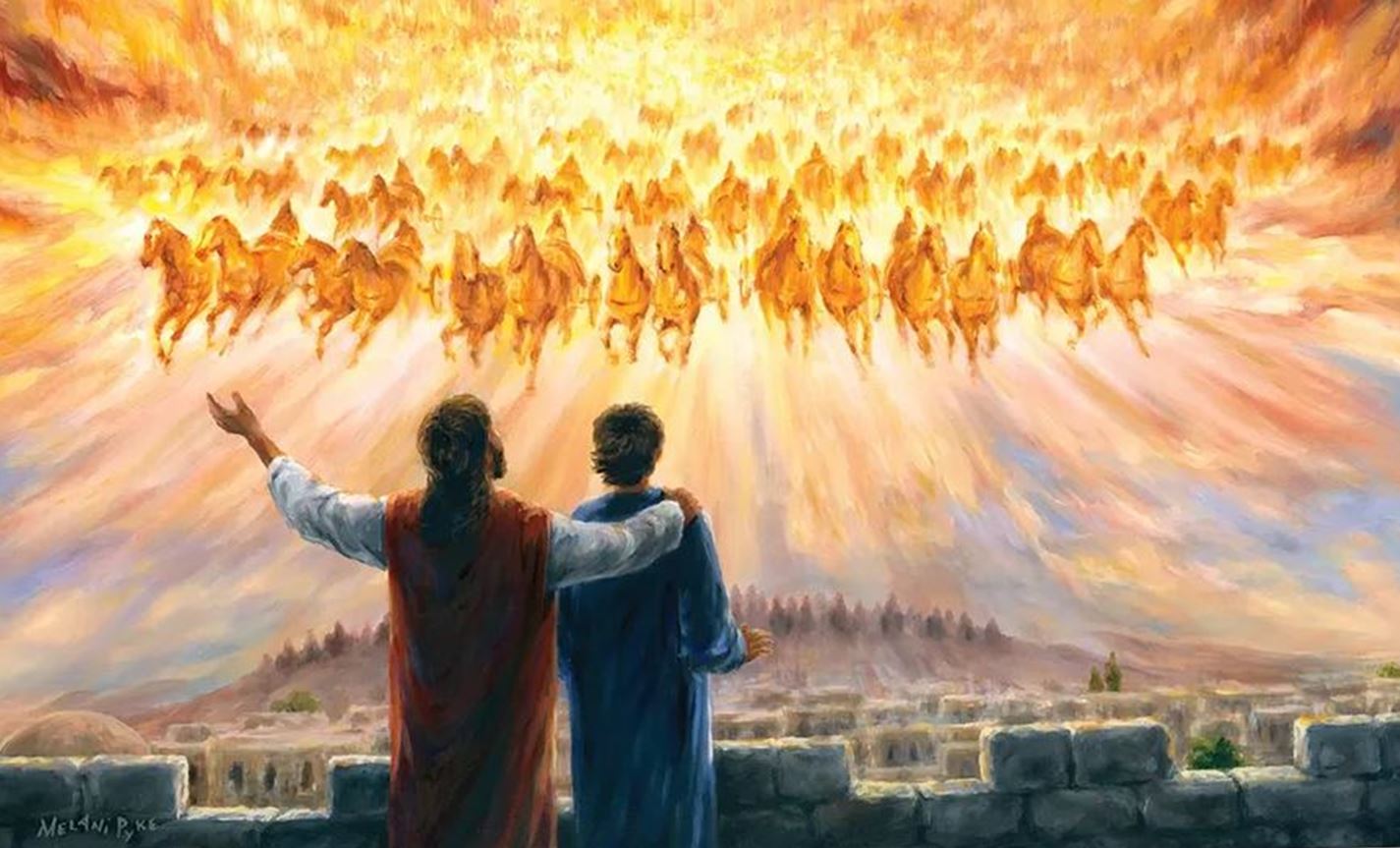
Elisha and his servant were surrounded in the small town of Dothan by a large Syrian army with horses and chariots. When the servant’s knees began to knock at this sight, Elisha asked God to open his eyes to the invisible reality. «So the LORD opened the eyes of the young man, and he saw, and behold, the mountain was full of horses and chariots of fire all around Elisha» (2Kgs 6:17). God condescended to make His power visible in this form because the people of that time regarded horses and chariots as the ultimate means of rescue under overwhelming threat. For the servant it was enough to know that they were standing ready. The heavenly host did not have to fight, because God’s solution in this situation was entirely peaceful in nature. While Elisha and his servant suddenly got to see the invisible, the enemies suddenly could not even perceive the visible anymore. God simply took away their sight for a moment and let them stumble, blind and helpless, into captivity. But this captivity lasted only a short time; then they were generously fed by the Israelites and returned home in good health, which restored peace. One might justifiably object that these fiery horses were only a «virtual army» that had nothing to do with the Equus caballus of biology; just as little as the «chariots of fire and horses of fire» (2Kgs 2:11) by which the prophet Elijah was taken up into heaven, and the horses in the Revelation of John. Even if more than a third of the biblical horses are «virtual» appearances, visions, or symbols, the power of God is nonetheless visibly effective and real – power that blinds an entire army, carries a man alive out of this world into eternity in a storm wind, and judges hostile armies from heaven.
Sources:
Crompton, N: Die Entstehung der Pferdeartigen. Genesisnet 2013; https://www.genesisnet.info/pdfs/Die_Enstehung_der_Pferdartigen.pdf
Gitter, AB: Ross, Reiter und Wagen. Eine theologische Deutung von Pferd und Streitwagen in der Hebräischen Bibel. Thesis paper at the University of Tübingen 2018; https://evangelischer-bund.de/wp-content/uploads/2020/01/200109_RossReiterWagen.pdf
McMiken, DF: Ancient origins of horsemanship. Equine Veterinary Journal 1990; 22(2):73-78; doi: 10.1111/j.2042-3306.1990.tb04214.x
Shortland, AJ: Egyptians, Hyksos and military technology: causes, effects or catalysts? Oxford, GB (Oxbow Books) 2016; http://digital.casalini.it/9781785705663
Säve-Söderbergh, T: The Hyksos rule in Egypt. The Journal of Egyptian Archaeology 1951; 37(1):53-71; doi: 10.1177/030751335103700111
Sensenig, PM: Chariots on fire: Military dominance in the Old Testament. Horizons in Biblical Theology 2012; 34(1):73-80. doi: 10.1163/187122012X627812
Siebald, M: Manfred Siebald. Seine Lieder 1968 – 2018 (p. 121; Hättest du so die Welt geliebt, translatet to English). Holzgerlingen (SCM Hänssler) 2018
Smil, V: Horse power. Nature 2000; 405:125; doi: 10.1038/35012175
Webber, C: The Gods of Battle: The Thracians at War, 1500 BC – 150 AD (ch. 4, Weapons). Barnsley, GB (Pen & Sword) 2011
Image Credits:
Wikipedia: Evolution of the equids / H. Zell // Horses of the royal guard battalion / Tristan Surtel // Jerusalem Jaffa Gate 1907 / Oregon State University Archives // Entry of Wilhelm II into Jerusalem 1869 / Wuselig // Painting – The Conquerors / Pierre Fritel // Stone slinger / Messias s. cavalcante // Egyptian chariot – model / Michael Barera // Sinking Egyptians / Jemima Blackburn
other licenses: Title – Arabian mare with foal galloping / shutterstock ID_156372215 / Olga_i // Przewalski’s horse / shutterstock ID_2140149145 / SolidMaks // Horse with flowing mane / shutterstock ID_427190146 / Callipso88 // Cavalry attack of the 9th Lancers / shutterstock ID_245966590 / Everett Collection // Group of horses – dynamic / shutterstock ID_1721044096 / Callipso88 // Egyptian chariot – in action / shutterstock ID_1872907897 / Oliver Denker // White horse rearing / shutterstock ID_1052541566 / mariait