Everywhere on earth the same rule applies: wherever humans settle, their companions – the «followers of culture» – are never far away. Their most prominent representatives belong to the mouse-like rodents (Muroidea) and to the genera of mice (Mus) and rats (Rattus).
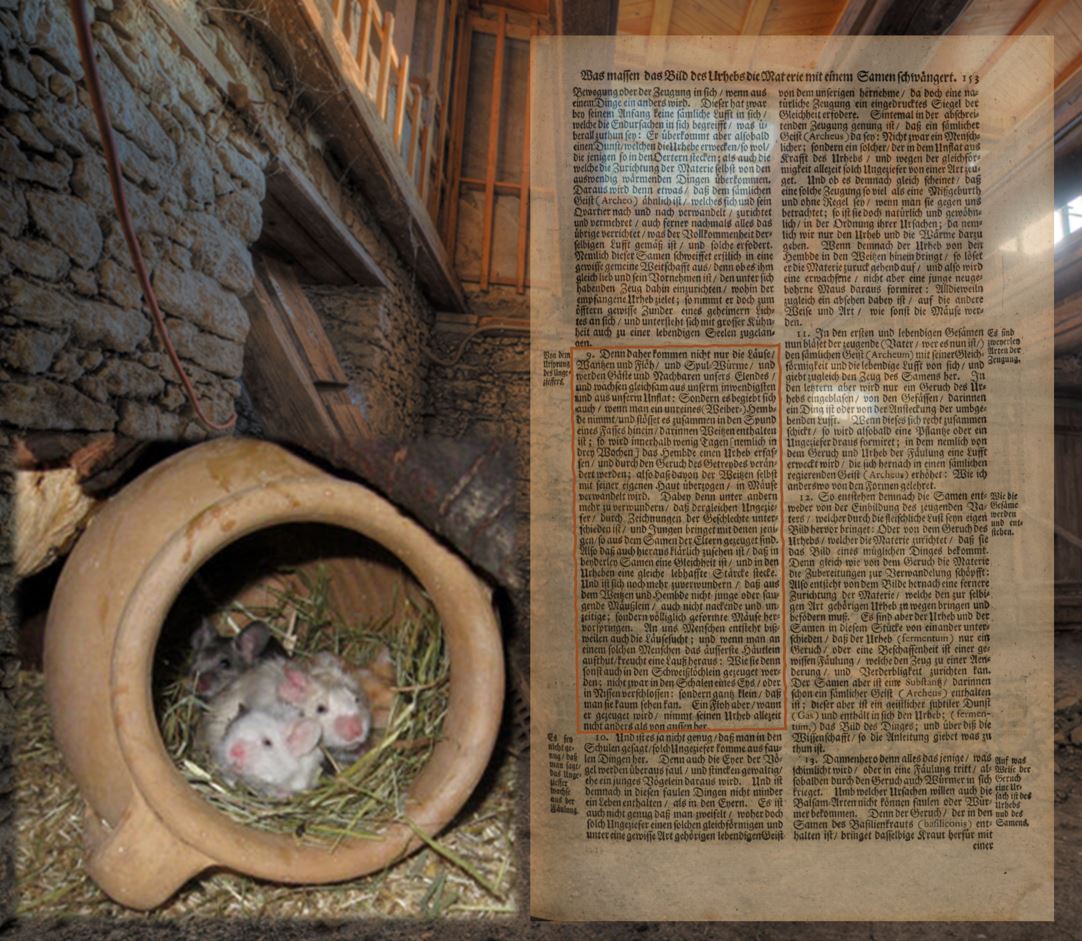
Since the spectrum of species among mouse-like rodents is broad and the Hebrew term akbar (Lev 11:29; 1Sam 6:4.5.11.18; Isa 66:17) may possibly include additional small mammals, not all potentially relevant species are listed here. On the one hand, it is obvious that the enumeration of animals distinguished as clean and unclean in the biblical commandments has an exemplary character; on the other hand, it is scarcely possible to reconstruct how precisely individual species were differentiated at that time. The species index in the appendix provides a more detailed overview of the species occurring in Israel. They were so omnipresent that people assumed – indeed, even into the 17th century – that they could arise spontaneously at any time from wheat and old rags.
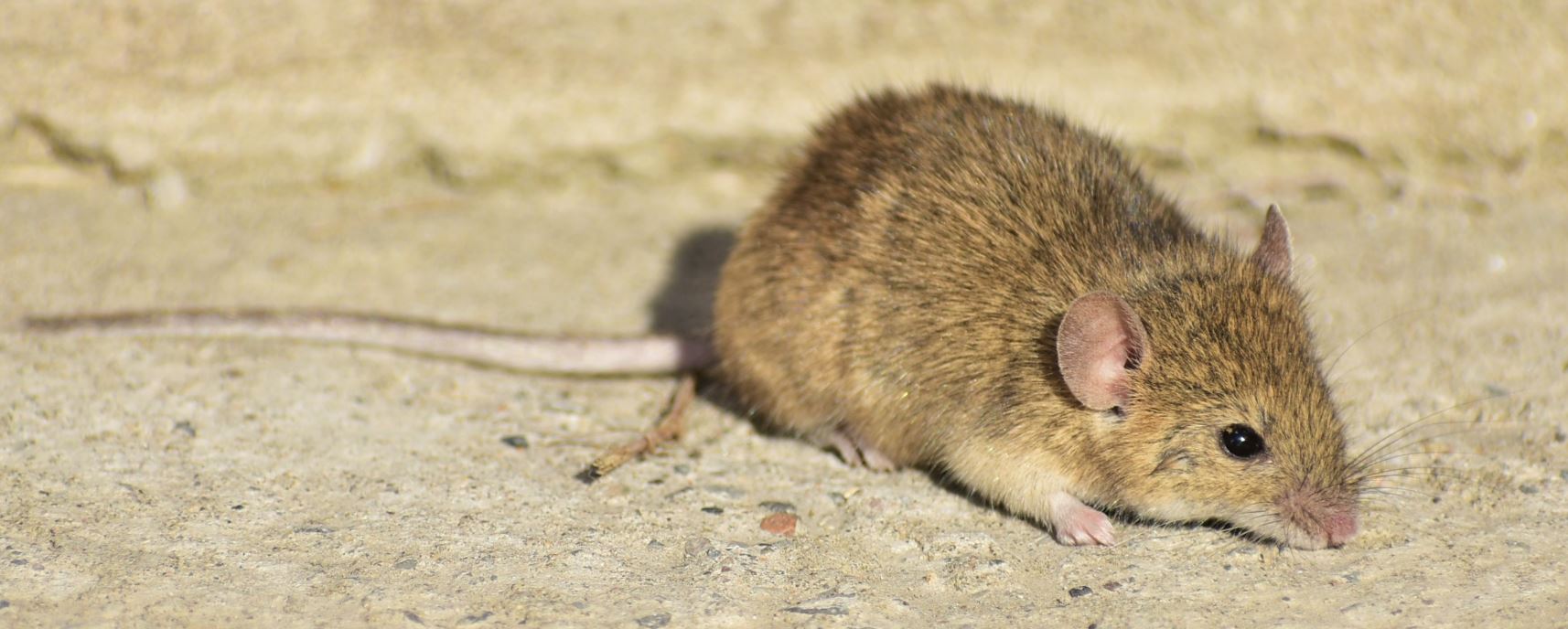
In any case, then as now, the house mouse (Mus musculus), the black rat (Rattus rattus), and the brown rat (Rattus norvegicus) belonged to the population of every settlement. Their numbers can only be roughly estimated, but the house mouse and the brown rat are considered candidates for the title «most common mammal on earth». They are very similar in body shape; a young rat looks like an adult mouse. In direct comparison one can observe that the rat has a longer tail and a larger head and paws. However, they avoid one another and are rarely found together. To the author’s surprise, the two species are not linguistically distinguished in Portugal either but are grouped together as «rato».
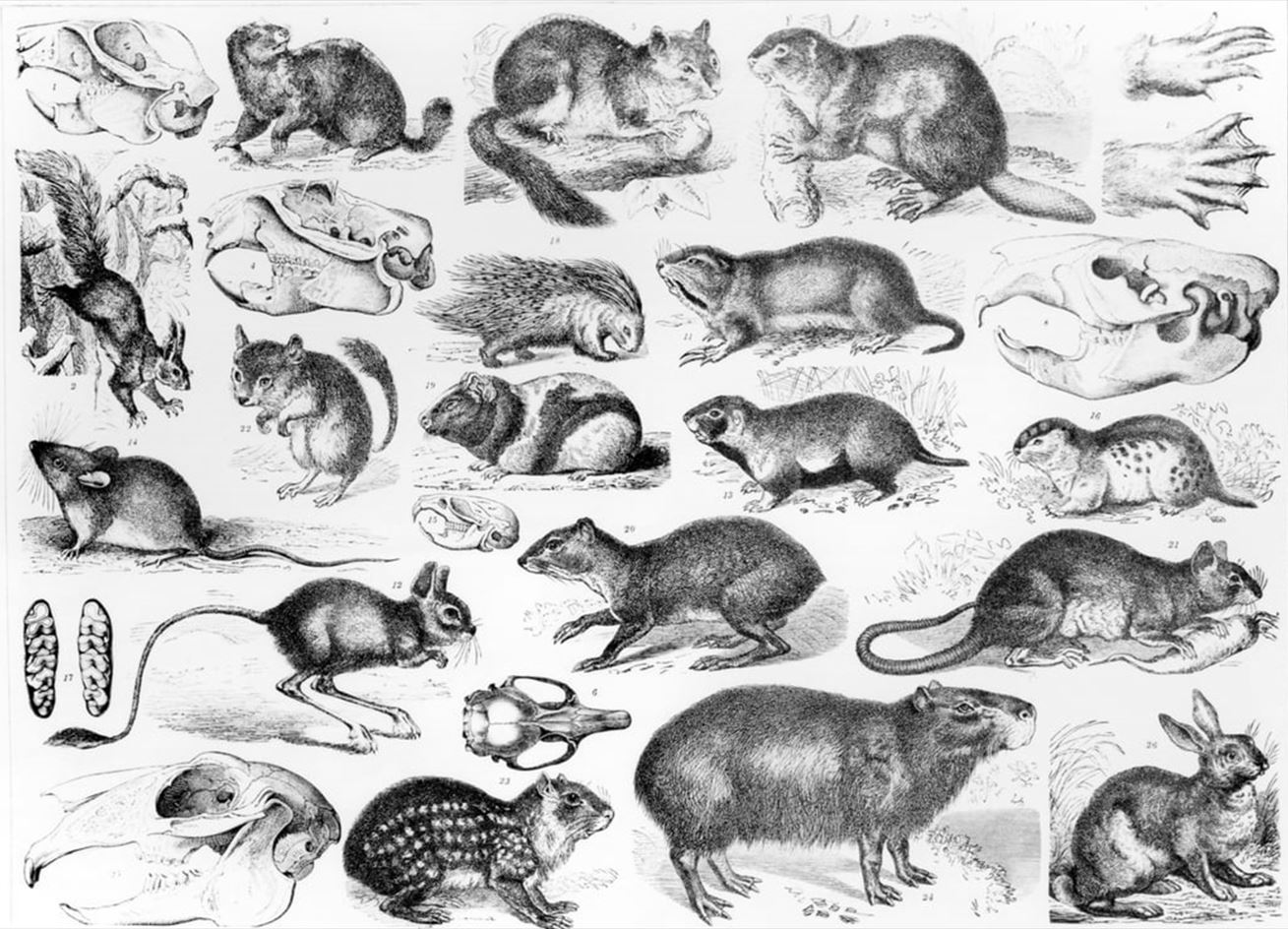
Three different men bear the name Akbor (7x), for which no other linguistic origin has been found than «mouse». Since in all three cases they are high-ranking personalities, the image of rats and mice may have been better than in our cultural context, where they are primarily regarded as pests. The name of the Asia Minor region Mysia (Acts 16:7.8) can, depending on linguistic origin, be translated as «land of mice».
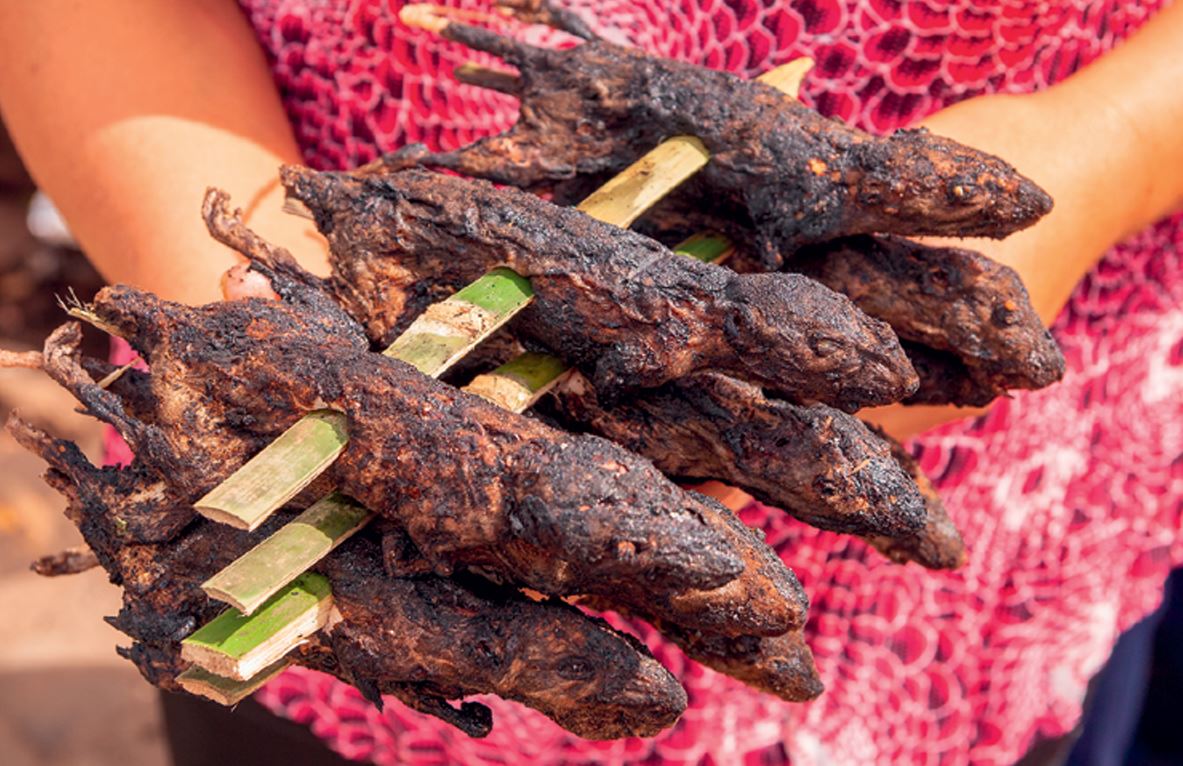
Mouse-like rodents are classified as unclean by the dietary law (Lev 11:29), and their consumption is forbidden. As with most unclean animals, from a nutritional perspective it is harmless to eat them – after heating. In many regions of the world, rats, mice, and other rodents enrich the diet; in Cambodia, Laos, Myanmar, parts of the Philippines and Indonesia, Thailand, Ghana, China, and Vietnam they even count among staple foods.
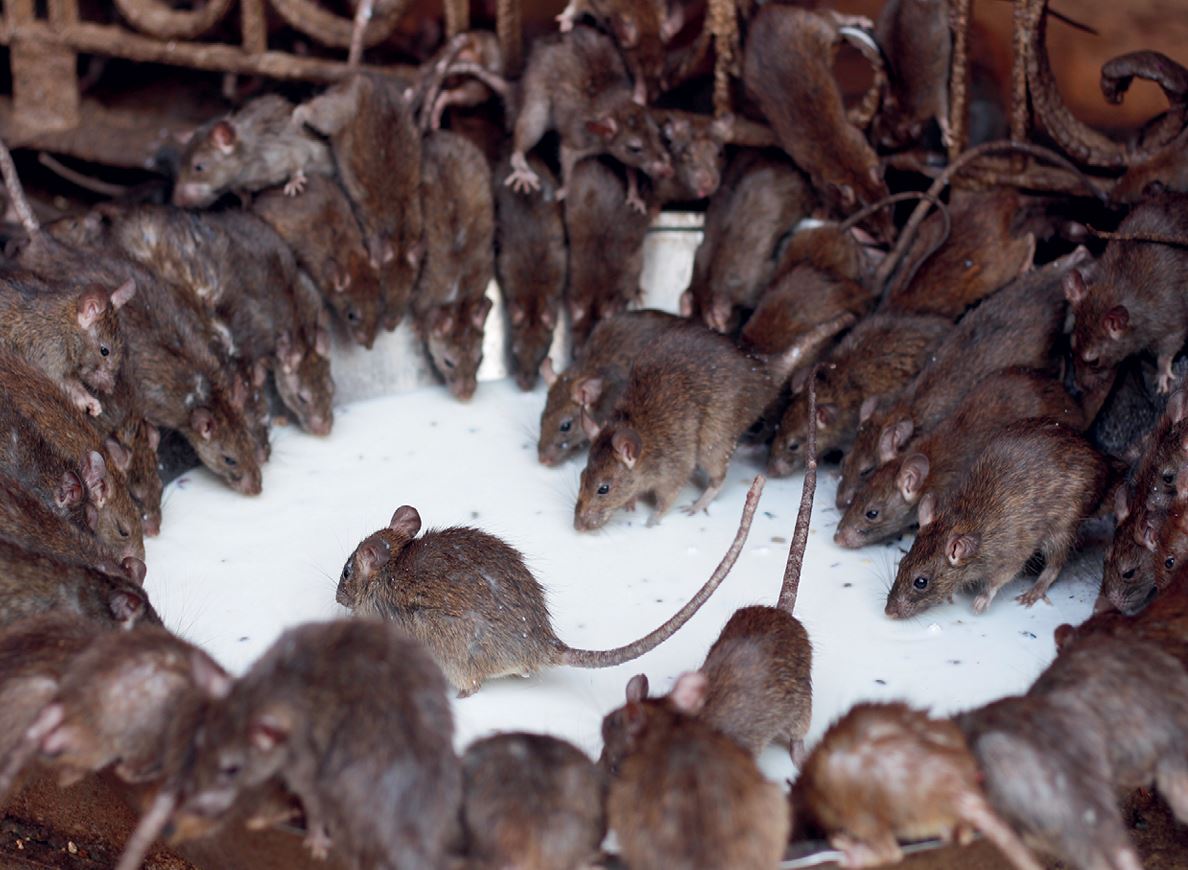
«They perform purification rites in order to gain access to the «holy gardens». There they sit around their master, eat pork, mice, and other unclean foods …» (Isa 66:17) – In this description of an idolatrous festival ritual, the eating of mice is mentioned. To this day, no records have been found that could explain the background of this ceremony and the significance attributed to the mice within it. But in contrast to many other animals, for which theologians generally assume that they were taboo because of an association with the idol cults of neighboring peoples, in this case there is at least a biblical indication in that direction.
From a scientific perspective, the mention of mouse-like rodents in the book of Samuel is particularly interesting. The Israelites had taken the Ark of the Covenant from the Tabernacle and carried it onto the battlefield like a good-luck charm (1Sam 4:3–9). While they thus disregarded the holiness of God (1Sam 2:12–17), they had to learn that God cannot be instrumentalized. The Ark was captured by the Philistines and displayed as a trophy in their principal temple (1Sam 5:1–5). But the Ark of the Covenant brought no good fortune to them either. Not only was the image of their god Dagon shattered before it, they were also struck by a severe plague in which many people died (1Sam 5:6–12). The disease from which they died is described by swellings as an externally visible symptom and is associated with mice. Strictly speaking, these characteristics are sufficient to say that it was most likely an outbreak of bubonic plague.

Until the beginning of the 21st century, however, almost all epidemiologists were certain that the plague was a relatively young disease that first appeared in AD 541. This view has since been completely revised, because the pathogen Yersinia pestis could be traced back into early history on skeletons from many sites in Europe and Asia using genetic methods. The plague has therefore scourged humanity for at least 4,000 years.
A second objection – that «mice» are mentioned here and not «rats» – is likewise invalid. Not only because (as already explained) the linguistic distinction is doubtful, but also because it is now known that the various fleas that come into question as vectors feel at home on many rodents – certainly also on the run-of-the-mill house mouse.
A third objection concerns the expression that the mice «devastate the land» (1Sam 6:5). This could be understood to mean that another plague affecting agriculture (crop losses, burrowing and root damage) came through the mice. But the word erez can denote not only the land or the soil, but also the population (e.g., Gen 41:57; 1Sam 14:25; Isa 37:18); and the preceding verse clearly states that it was a single plague (and not two different ones): «Five golden swellings and five golden mice, according to the number of the lords of the Philistines; for one and the same plague has come upon you all and upon your lords» (1Sam 6:4).
The Philistines had correctly recognized the connection between the mice and the epidemic (in contrast to medieval scholars, who entertained all manner of ideas) – but they were not yet entirely sure whether it was truly the God of Israel who stood behind it and chastised them, or whether it was merely a coincidental concurrence of events (1Sam 6:9). In any case, they were prepared to honor Him and to make a guilt offering. So that the foreign God would understand what this atoning gift was for, they formed their gold into mice and swellings, five of each, corresponding to the number of their administrative districts. Thus, alongside the calves, mice are accorded the honor of being cast in gold – in this case, however, with a good intention that God acknowledges. He allows their «test by chance» to succeed and accepts the offering.
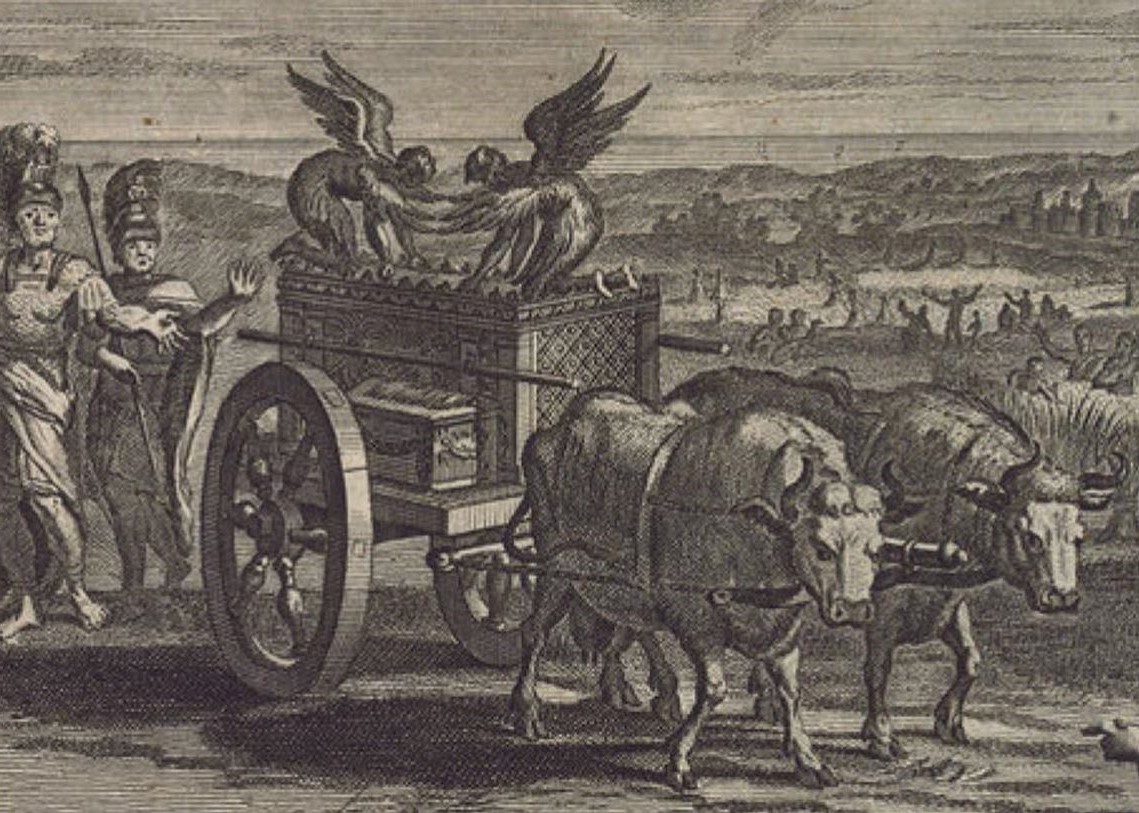
On closer inspection, it is astonishing how leniently God deals with the Philistines. The Ark of the Covenant was the holiest and most carefully guarded object of His temple service, a symbol of the presence of God, of His throne, and ultimately of the Lord Jesus Himself! It was not to be touched by anyone – indeed, not even to be seen! When dismantling the Tabernacle, priests took down the dividing veil at the entrance to the Most Holy Place and laid it, walking backward, over the Ark. Then a covering of porpoise skin was placed over it, and finally everything was wrapped in a blue cloth. Only then were the carrying poles inserted through the rings on the side. The bearers, who were not priests, were probably blindfolded as a precaution before entering and taking up the Ark, for they had to be led individually to their positions (cf. Num 4:4–20).

Now this most holy Ark of the Covenant, which was permitted to be carried only when properly packed by designated persons (Levites) on the prescribed poles, was seized by Philistine hands, placed uncovered on a cart beside a chest with the images of unclean mice and plague swellings. The Philistines did not know the priestly ceremonial laws and were therefore not held accountable by God for this sacrilege. This mitigating circumstance did not apply to the Israelites; among them there were many deaths when they shortly thereafter looked curiously into the Ark (1Sam 6:19), and even a man who, with the best of intentions but in disobedience to God’s commandments, reached out for the Ark to prevent its fall had to die (2Sam 6:6.7; 1Chr 13:9.10).
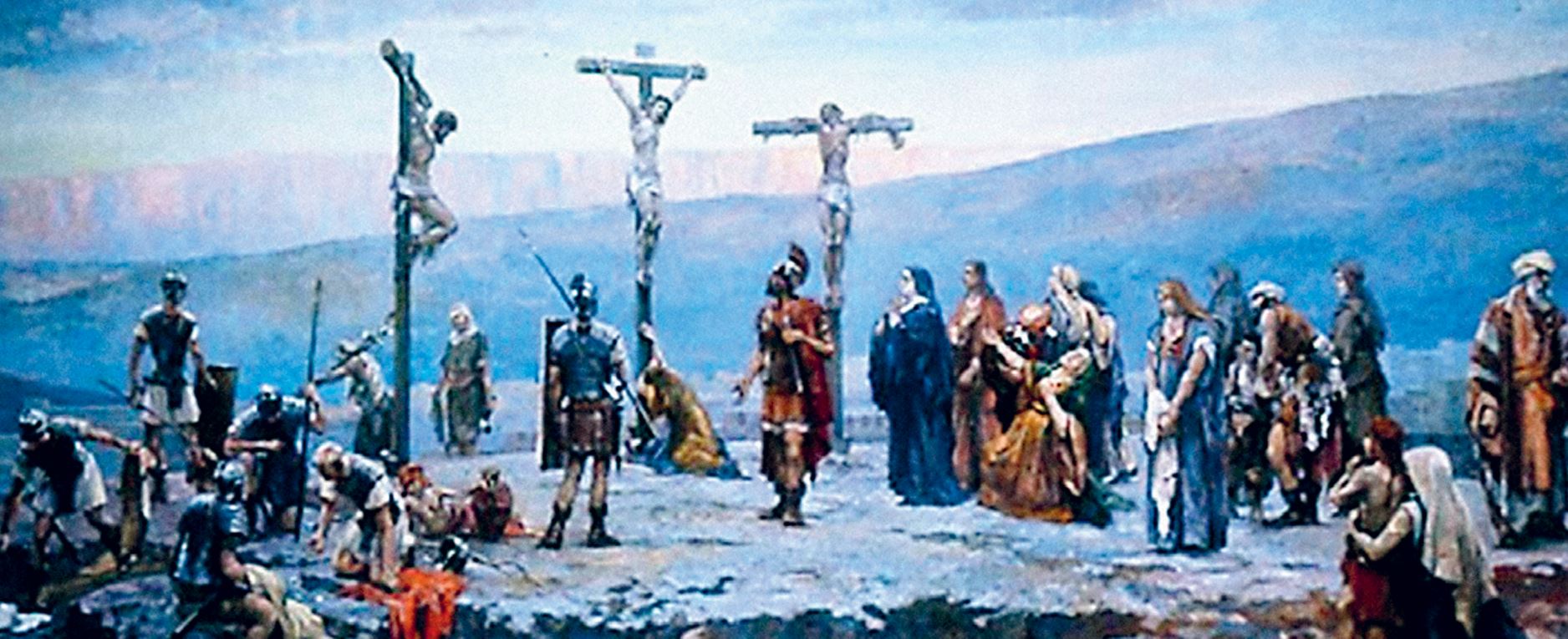
If one considers how carefully God thus ensures that His holiness is accorded its due, it is all the more astonishing what He endured when His Son came to the earth. His forbearance and grace are far greater here. While the Tabernacle and the Ark of the Covenant had «only» cultic and typological significance and function, the Lord Jesus was «the Holy One» (to hagion; Lk 1:35) and God (Joh 1:1; 1John 5:20) in person. He was not only touched, but struck and scourged (Joh 19:1.3), seized and nailed to a wooden cross, not only looked upon but stripped (Joh 19:23) and gazed at with malicious delight (Ps 22:18). As the Pure One, He was not only surrounded by the unclean and, as the Righteous One, encircled by the unrighteous, but He identified Himself with this uncleanness and unrighteousness in order to be judged for it. Just as the Philistines formed a guilt offering in the image of their plagues – mice and plague swellings – so the Lord Jesus on the cross is seen as a guilt and sin offering in the image of «the serpent» (Joh 3:14) as a symbol of the curse of sin and is «made sin» (2Cor 5:21). Although many of His adversaries had gained a personal impression of His holiness and divinity, He asks that they not be held accountable for it: «Father, forgive them, for they do not know what they are doing!» (Lk 23:34).
Sources:
Bergman, J: Why Abiogenesis Is Impossible. Creation Research Society 2000; 36(4); https://herbertarmstrong.org/Miscellaneous/Why%20Abiogenesis%20is%20Impossible.pdf
Fischer, L: Die Pest war vor 4000 Jahren viel ansteckender. Spektrum.de, 01.06.2023; https://www.spektrum.de/news/die-pest-war-vor-4000-jahren-viel-ansteckender/2146926
Gruber, K: Rodent meat – a sustainable way to feed the world? EMBO reports 2016, 17(5):630-633; doi: 10.15252/embr.201642306
Helmont, JBv: Aufgang der Artzney-Kunst (p. 153, Rezept zur Herstellung von Mäusen). Sulzbach 1683; https://www.digitale-sammlungen.de/de/view/bsb10869856?page=193
Moise, E: How did Life Begin? A Review of the Environmental and Biomolecular Hypotheses Surrounding Abiogenesis. Journal of Astrobiology & Outreach 2021; 9(5):129; https://www.ezyaccess.in/image/catalog/issue/2021/J43/2021/Issue%20No%205/1.pdf
Rasmussen, S; Allentoft, ME; Nielsen, K: Early divergent strains of Yersinia pestis in Eurasia 5,000 Years Ago. Cell 2015; 163(3):571-582; doi: 10.1016/j.cell.2015.10.009
Swali, P; Schulting, R; Gilardet, A: Yersinia pestis genomes reveal plague in Britain 4000 years ago. Nature Communications 2023; 14:2930; doi: 10.1038/s41467-023-38393-w
Wilkinson, J: The Philistine Epidemic of I Samuel 5 and 6. The Expository Times 1977; 88(5):137-141; doi: 10.1177/001452467708800503
Image Credits:
Wikipedia: brown rat / Reg Mckenna // Ark of the Covenant – return by the Philistines / Internet Archive Book Images // house mouse / Amirekul
other licenses: title – house mouse / shutterstock ID_2247188729 / Billion Photos // rat skewers / shutterstock ID_1342507817 / Laurens Hoddenbagh // rats in the Karni Mata Temple / shutterstock ID_793283260 / SandeshKumbhar // Ark of the Covenant – model / shutterstock ID_188754209 / 3drenderings