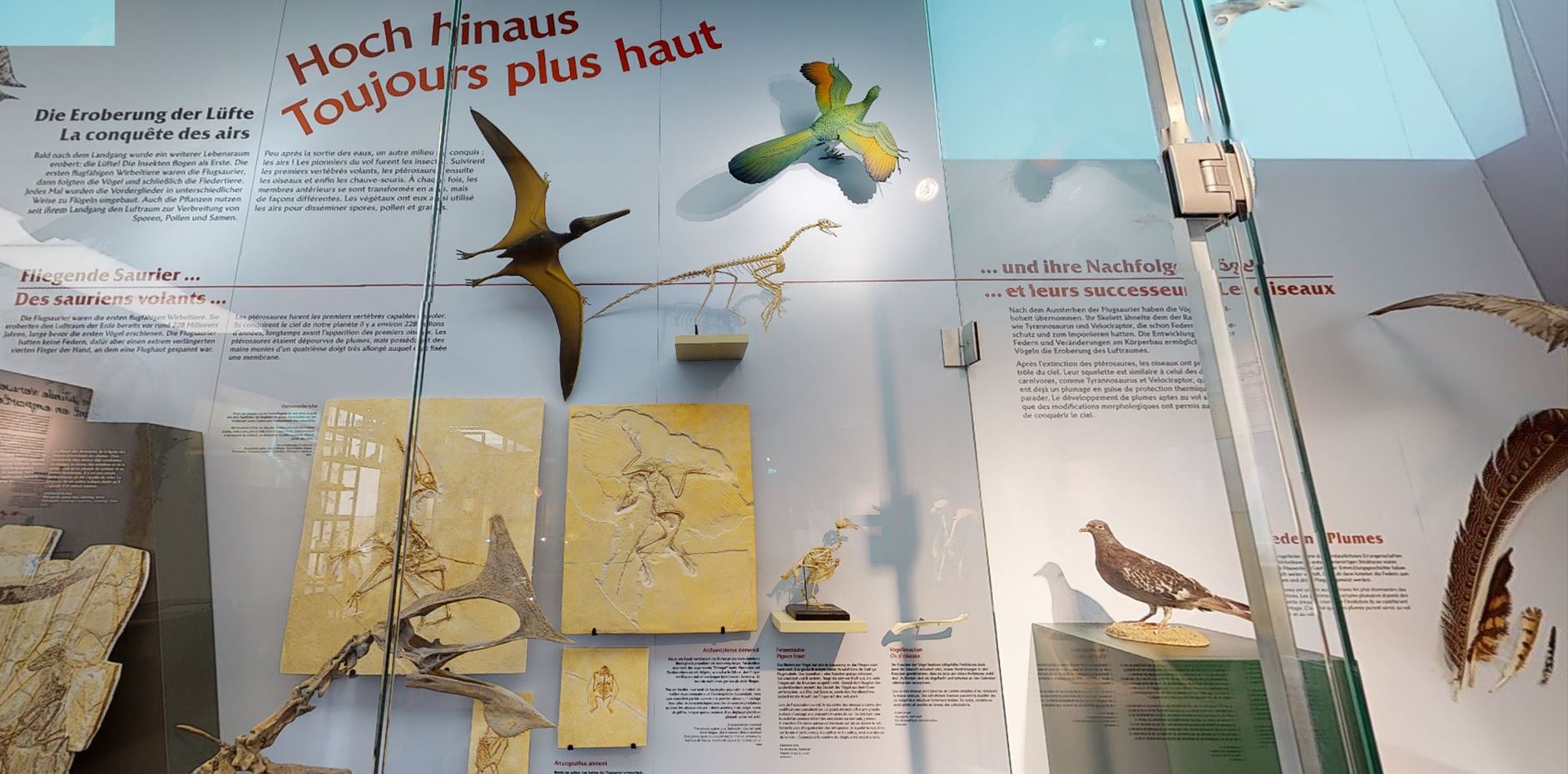
Birds are mentioned in the Bible for the first time at their creation: »And God said: »Let birds fly above the earth across the vault of the sky!« And God created … every winged bird according to its kind. And God saw that it was good. And God blessed them and said: … »Let birds multiply on the earth!« And there was evening, and there was morning: the fifth day« (Gen 1:20–23).
This already says essentially everything important about the origin of birds: They were created by God, in a diversity of »kinds« and with the ability to fly. From a biblical perspective, all speculation about the »ancestors of birds,« the »origin of the feather,« or the »acquisition of flight« has no foundation. It is a tragedy that scientists today have gained deep insight into the diversity, structure, function, and way of life of these feathered wonders, yet the majority regard all this as the result of a natural evolutionary process. Some even think that this theory began with the study of birds …
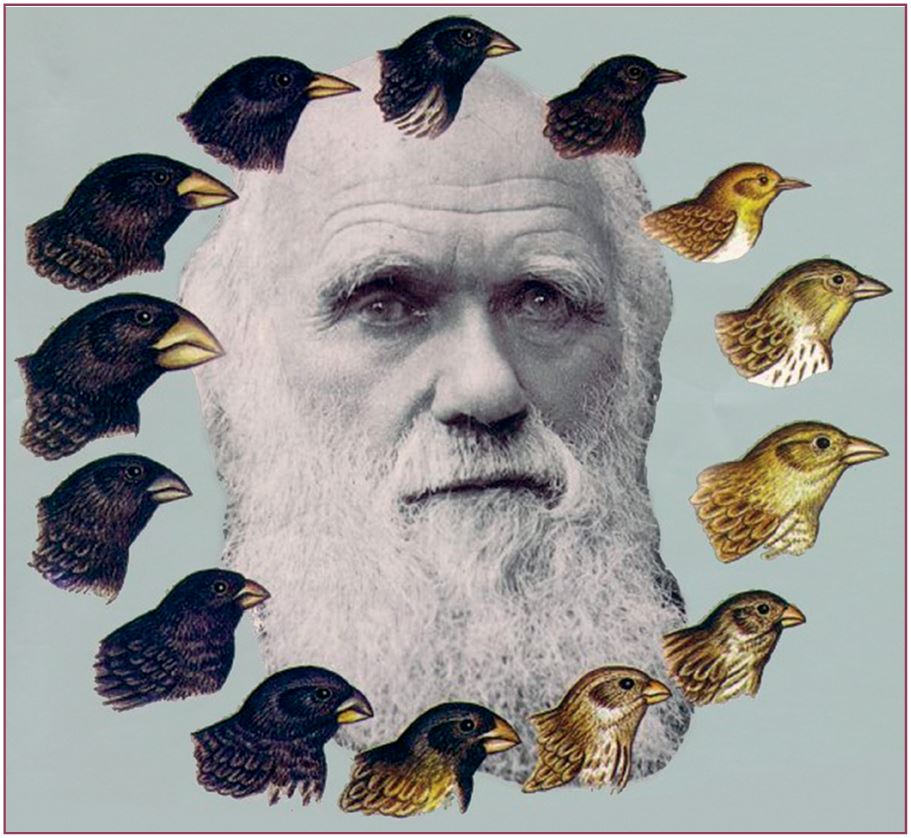
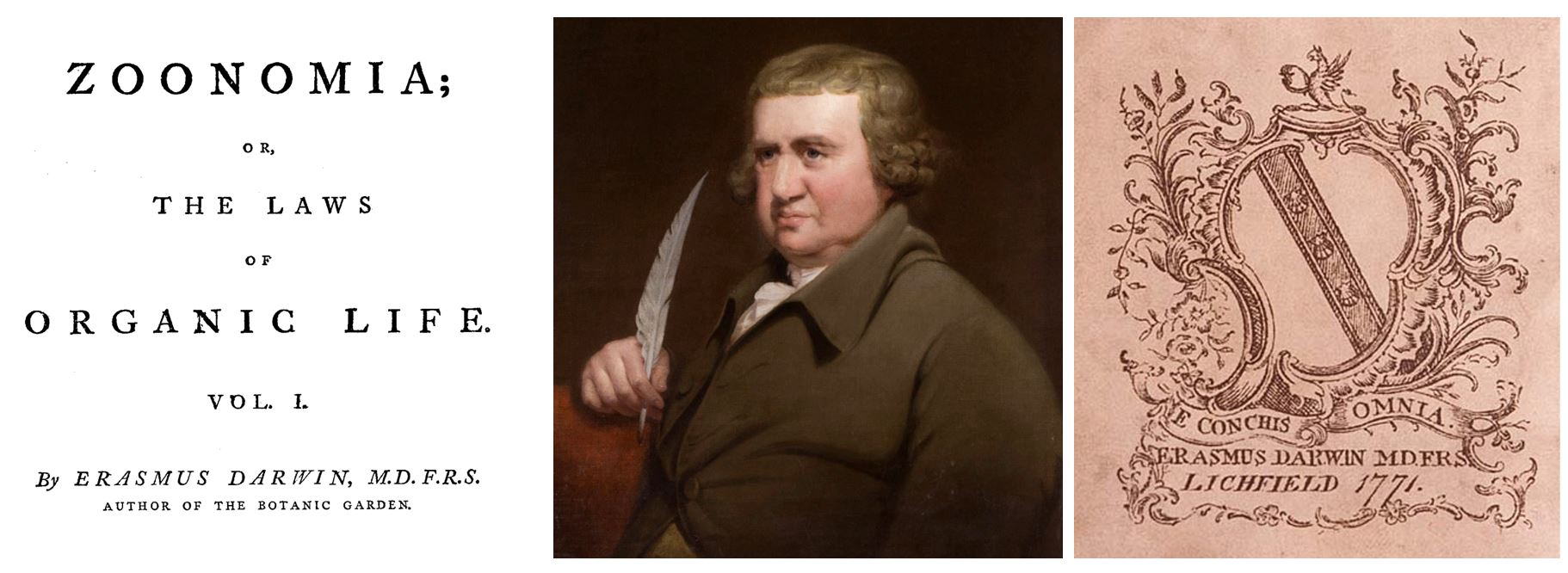
Many nonfiction books present the idea that evolution »flashed through Darwin’s mind« when he observed the different finch species on the various islands of the Galapagos group. But this can be relegated entirely to the realm of legend. First, the finches played no role at first; and second, Darwin experienced no sudden illumination, neither on his voyage around the world aboard the research vessel »Beagle« nor later during his studies at his home, »Down House.« His grandfather Erasmus Darwin (1731–1802), a physician, scientist, poet, and inventor, had already written a book titled Zoonomia – The Laws of Organic Life. In it, he describes competition in the animal kingdom, stating that the strongest and most active animals prevail and that the species is thereby improved. He extended this process all the way back to the origin of all species from simple forms. Darwin was familiar with his grandfather’s idea. On the first page of the notebook in which he first wrote about the transformation (transmutation) of living beings, he placed the heading »Zoonomia.« Bishop Samuel Wilberforce (1805–1873), a determined opponent of evolutionary thinking, later accused him of merely reheating his grandfather’s speculations with his theory of selection.
The idea of development itself can be traced back to antiquity. After the Enlightenment, it gained popularity to the same degree that the Bible was called into question as the binding revelation of God. The theory Darwin presented to the world in his 1859 book has been reformulated many times, divided into propositions and conclusions, broken down into five independent subtheories, and summarized in long, convoluted sentences. Although it was later expanded and adapted into the Synthetic Theory of Evolution, its basic framework remained current. Here it will be illustrated with an example:
- A group of 1,000 finches lives on a small island. The finches mate among themselves. They are too far from the mainland and from other islands to reach them. They form an independent and isolated reproductive community, or population.
- Each female finch lays 2–3 eggs during the breeding season and lives up to three years. Thus, far more animals hatch than die because of age, producing an excess of offspring.
- The number of finches would steadily increase, but the island does not grow along with them: food and space are limited. The size of the group therefore remains the same, meaning that the excess animals must die. From the day it hatches, every finch is therefore in a struggle for survival with members of its own species, that is, intraspecific competition.
- Although the finches descend from the same ancestors and are all related to one another, they differ from one another, showing genetic variability.
- If such a difference helps a finch reach or make better use of its food, escape its enemies more effectively, better resist disease, tolerate the climate more successfully, be better prepared for a change in environmental conditions, and so on, it has an advantage in the struggle for survival and a better chance of passing the selection for survival.
- Every survivor that reaches sexual maturity and mates successfully passes its advantageous hereditary information on to its offspring. Over time, this process leads to improved adaptation and a changed outward appearance of the finches. Darwin called this »Natural Selection,« rendered in German as »natürliche Zuchtwahl«—though the genetic aspects were still unknown to Darwin, and he also had individual organisms rather than the group more strongly in view.
It is undisputed that the process described here takes place continually in all living beings, that all forms of life are subject to constant adaptive pressure, and that they therefore change continually. Darwin’s greatest merit may be said to be that the enormous plasticity and flexibility of organisms now receive due attention. If we accept the theory of natural selection presented here as well founded and generally valid, the next question concerns the scope of these adaptive and optimizing processes.
It was precisely on this question that Darwin went from one extreme to the other. In his studies, he was taught that during the week of creation God created all living beings according to their kinds, and that these kinds were unchangeable. Many of his researching contemporaries had already noticed that this doctrine of the »constancy of species« could not be entirely correct. Especially through the study of fossils, observations from animal and plant breeding, and systematic taxonomy, it became clear that the biblical concept of »kind« could not be defined so narrowly. Darwin rightly rejected this doctrine and assumed the opposite: the unlimited changeability of life forms. This expansion of the theory was an extrapolation, an inference from the known to the unknown. It seemed to him a consistent conclusion that the same mechanism that, over millennia, produces different beak shapes in finch populations, for example, could, over millions of years, adapt a fish to life on land and allow a land creature to acquire the ability to fly.
This assumption met with little resistance in science; however, people still had no deeper insight into the breathtaking complexity of living beings. A man like Darwin was among those most likely to have some sense of it, and it speaks well of him that he discussed this problem openly: »If it could be demonstrated that any complex organ existed which could not possibly have been formed by numerous, successive, slight modifications, my theory would absolutely break down. But I can find out no such case.«
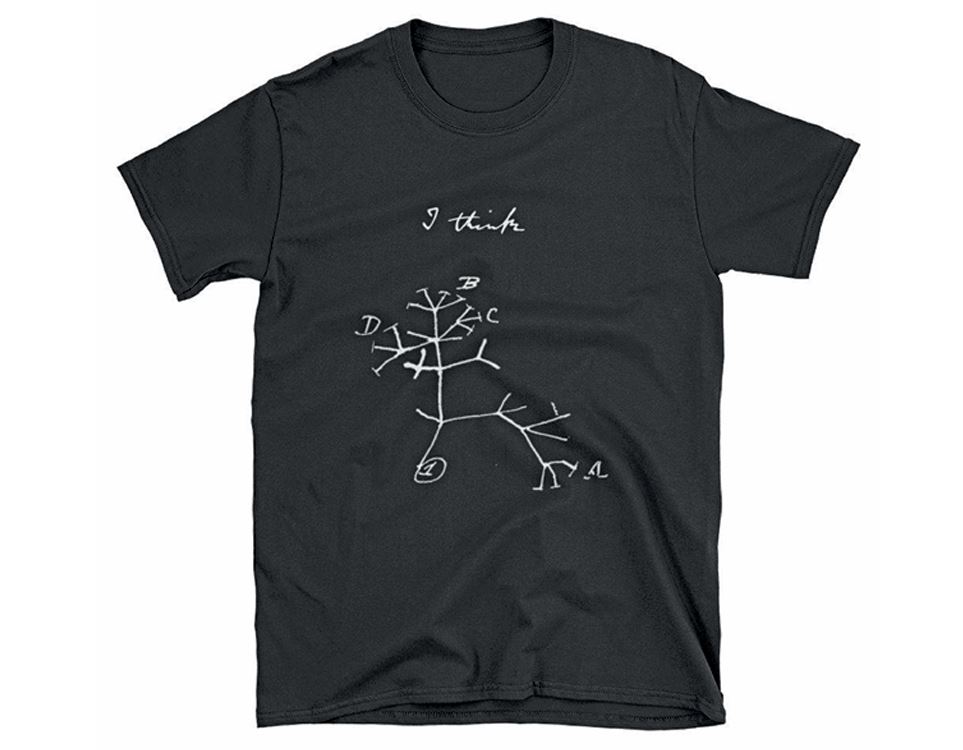
If one compares the state of knowledge 150 years ago with that of today, it becomes clear that, measured against Darwin’s expectations, there is not one complex organ to which this would not apply. Nor does one even need to follow him in looking at the »organs of extreme perfection and complication«; rather, we now know that every single living cell, in its structure and function, is already far from being explainable in the required way. According to present knowledge, a step-by-step origin is not plausible. For this reason, Darwin’s theory has in fact collapsed.
This does not mean, however, that this collapse must necessarily be acknowledged. Even though the gradual development toward the first living cell cannot be described, it likewise cannot be proven that this possibility does not exist. In any case, such proof cannot be produced in the natural sciences, because it would require knowing and excluding every conceivable pathway.
It is not at all easy to get a clear picture of what the selection process under discussion can actually accomplish in nature. Human efforts in the breeding of animals and plants suggest a gigantic range of variation. Impressive examples include cultivated forms of cabbage and breeds of domestic dogs. Darwin was especially fascinated by the varieties of pigeons. It should be noted, however, that the vast majority of cultivated forms that differ clearly from the wild type are not viable in nature, that is, outside human agriculture.
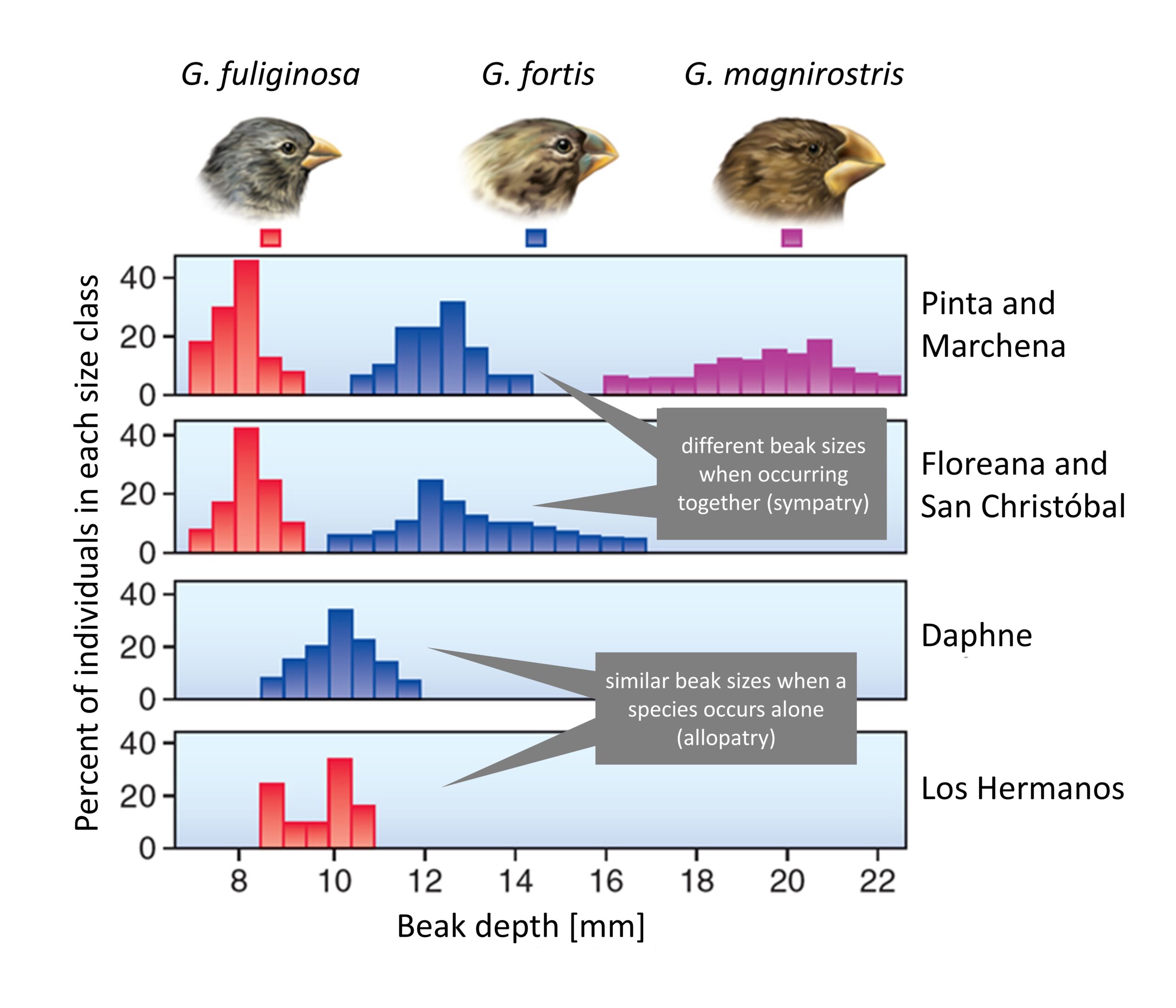
Yet wild genera also unfold an enormous diversity of forms. Among plants, for example, the willows are impressive; among birds, the Hawaiian honeycreepers; and among fish, the cichlids of the East African lakes. By comparison, the example of the ground finches (Geospiza) on the Galapagos Islands shows only a modest degree of variation. But since it is one of the earliest showcase examples, it has been especially well studied—and in the process has turned out to be as unsuitable as possible for demonstrating evolution in Darwin’s sense, though this was not Darwin’s fault. The differences among the collected skins only became apparent to him after the voyage, and he openly admitted that most specimens of his finch collection had been mixed together, though he strongly suspected that some species were restricted to individual islands. As a result, several collecting expeditions followed, and by 1931, 67 scientific names had been assigned to the various »species.« The ornithologist David Lack then studied the finches in their habitat in 1938 and observed that most of the subdivisions existed only on paper. He reduced the nomenclature to 13 species and proposed a scheme by which they were supposed to have diverged. For this he coined the term »Adaptive Radiation.« What still appeared puzzling was the absence of major physical differences between the islands and of any kind of isolation mechanisms. There was no room at all for natural selection!
Only in more recent times did it become clear that the variants—mainly differences in body size and beak shape—often become established within a very short time. In very dry years, finches with thicker beaks are more likely to survive. In wetter years with a more varied food supply, this trend reverses. The biologist Peter Grant, to whom this observation is owed, coined the expression »Oscillating Selection« for this. He leaves open whether this selection process produces anything more than reversible changes in the frequency of certain forms. Although his data actually show that this process has nothing to do with Darwinian selection, his article in Scientific American was celebrated in that sense: »The Galapagos finches—the classic example of how natural selection acts over millions of years—have now been seen evolving in real time. A single period of drought can change a population.«
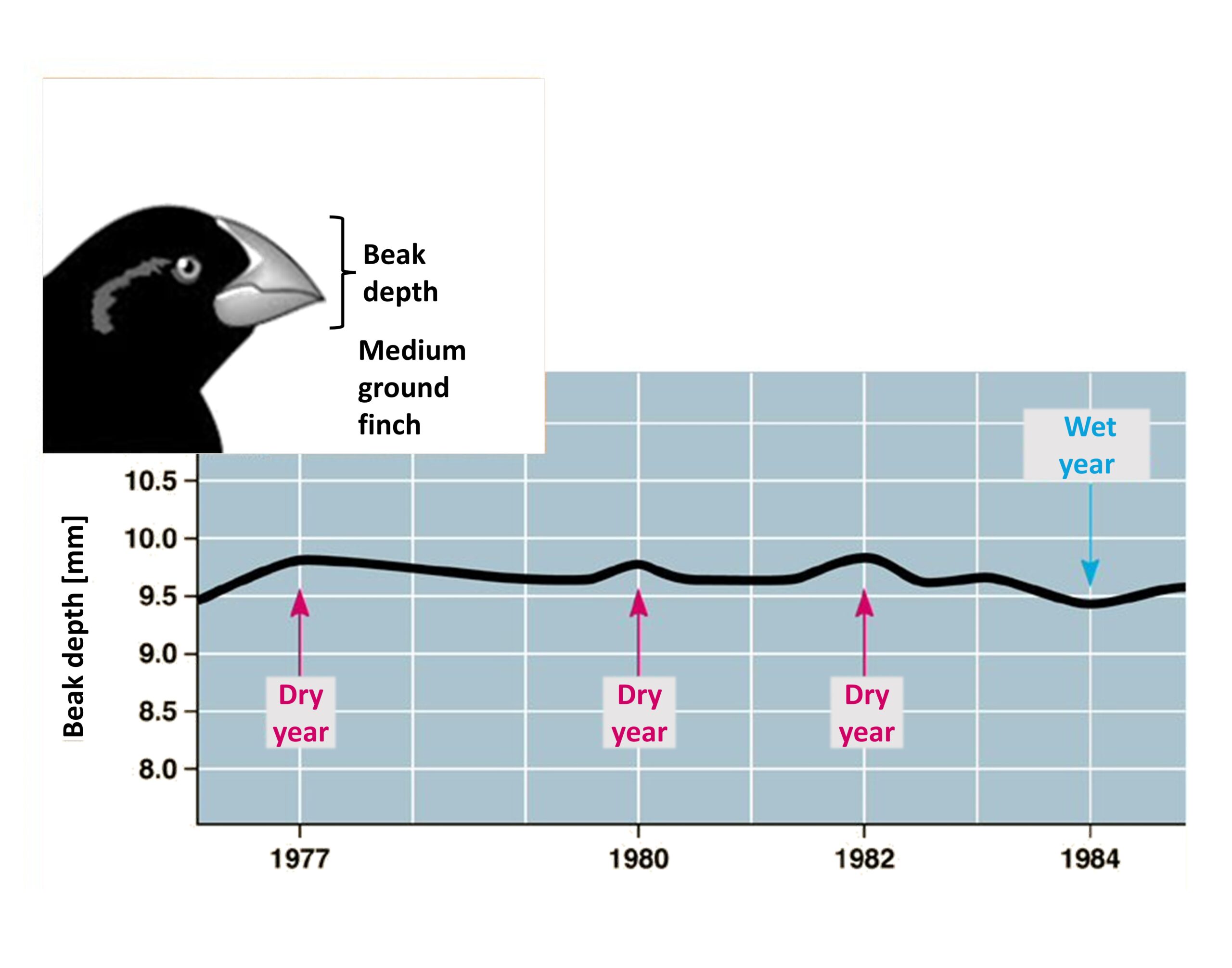
That is what is truly astonishing about this whole story. Although it has long been known that little can be made of the finches in terms of developmental biology, they continue to be sold as evidence for evolution. Today there is an enormous discrepancy between what evolutionary biology can actually demonstrate and what is suggested in the most varied media. In any case, with regard to the finches, the current state of ornithology is as follows: »The reproductive barriers have broken down or never developed to any significant extent among the various Geospiza forms.« In plain language, this means that the ground finches of this genus form a single branching population with a rich gene pool. The simultaneous presence of various genetic options is also called »polyvalence.« If Darwin and his fellow campaigners had not had their view of the greatness of the Creator obscured, they might already have recognized it then—even without knowledge of genetics—as what we see in it today: programmed diversity.
Darwin colossally overestimated the reach of his theory. His book Origin of Species is a deceptive package. »In Darwin’s book on the origin of species there is no definition of species. This is one of the great weaknesses of this work, which deals with species change, but not with the origin of species—Darwin could not answer where the first life forms came from,« a German evolutionary biologist laments in an interview. What he fails to mention is that there is still no answer to this question today, and that not only the origin of the »first life forms« but the origin of every real innovation has remained a mystery. This brings us to the crux of the theory. The exciting question is not that of »survival«—Which traits are preserved?—but that of »arrival«—Where do new traits come from?
The principle »Survival of the Fittest,« the survival of the best adapted, is a tautology, at least no more meaningful than the sentence: »The winner is the one who has won.« Why? Because it has no informational content. Statement: The best adapted survives. Question: Why does it survive? Answer: Because it is the best adapted. Question: How does one know it is the best adapted? Answer: Because it survived. And if it has not died, it is still alive today. Thus the cat bites its own tail.
Since the theory of selection cannot predict an evolutionary developmental pathway, it cannot be tested in any concrete case. It does describe processes of adaptation, as in the example given, but it does not explain the appearance of new constructions. In technical terms, there is a fundamental difference between an optimization problem and a construction problem. If this theory is to contribute to reconstructing the history of living beings, it would also have to describe a mechanism by which new information and new body plans arise.
Darwin could only speculate on this. In this respect, he held a view similar to Lamarck’s. He assumed that acquired characteristics of an individual enter the germ cells through small carriers of information and are thus passed on to the offspring. He called this process »Pangenesis.« This idea is often illustrated with Lamarck’s giraffe example. The giraffe stretches toward the highest branches and lengthens its neck through this gymnastic exercise. During its life, then, it acquires a trait it did not have from birth—namely, a somewhat longer neck. This anatomical change was then somehow written into the information of the sperm or egg cells and inherited by the offspring. The offspring would then be born with a longer neck and continue the game. As plausible as this theory seemed, it is false. The mysterious messenger substances Darwin called »Gemmulae« and Haeckel called »Plastidules« do not exist. The findings of genetics refute such ideas, even though epigenetic mechanisms are known today that can activate or deactivate already existing information. The ground was pulled out from under Darwin’s theory. For what remained as the source of new information were »genetic mutations.« These are random—or at any rate undirected—damages to hereditary information. Since Darwin’s theory in its original form is no longer defended by anyone today, criticism of it is only of historical interest. What is remarkable, however, is that to this day no plausible mechanism is in sight that could explain macroevolution, the origin of new body plans.
Sources:
Darwin, CR: Notebook B: [Transmutation of Species (1837–1838)]. p. 1 (CUL-DAR121); http://darwin-online.org.uk/content/frameset?itemID=CUL-DAR121.-&viewtype=side&pageseq=1
Darwin, CR: Origin of Species. London (John Murray) 1872, 6th Edition, p. 174: “If it could be demonstrated that any complex organ existed, which could not possibly have been formed by numerous, successive, slight modifications, my theory would absolutely break down.”
Darwin, CR: Journal of Researches, vol. 3. London (John Murray) 1890, p. 420: „Unfortunately most of the specimens of the finch tribe were mingled together; but I have strong reasons to suspect that some of the species of the sub-group Geospiza are confined to separate islands.”
Darwin CR: Das Variieren der Thiere und Pflanzen im Zustande der Domestication (übersetzt von Victor Carus). Stuttgart (E. Schweizerbart’sche) 1868, vol. II, p. 491
Desmond, A; Moore, J: Darwin. Reinbek (Rowohlt) 1994
Grant, PR; Grant, BR: What Darwin’s Finches Can Teach Us about the Evolutionary Origin and Regulation of Biodiversity. BioScience 2003; 53(10):965-975; doi: 10.1641/0006-3568(2003)053[0965:WDFCTU]2.0.CO;2
Grant, PR; Grant, BR: Hybridization increases population variation during adaptive radiation. PNAS 2019, 116(46):23216-23224; doi: 10.1073/pnas.1913534116
Grant, PR: Natural Selection and Darwin’s Finches. Scientific American 1991; 2654:82-87
Hendry, AP; De León, LF; Herrel, A: Disruptive selection in a bimodal population of Darwin’s finches. Proceedings of the Royal Society B: Biological Sciences 2008; 276(1657):753-759; doi:10.1098/rspb.2008.1321 https://www.biointeractive.org/classroom-resources/effects-natural-selection-finch-beak-size
Kutschera, U: Interview in the magazine „focus“: https://www.focus.de/wissen/natur/evolution/wir-sind-nur-eine-von-millionen-tierarten-evolutionsexperte_id_2528190.html
Lack, D: Evolution of the Galapagos Finches; Nature 1940; 146:324-327
Scheven, J: LEBEN. Deutsches Schöpfungsmagazin 2000; 12
Image Credits:
Titel – large flock of starlings / shutter stock_614886038.jpg / serkan mutan