Ornithology still has much to investigate… When Asaph writes poetically, «birds as numerous as the grains of sand on the seashore» (Ps 78:27), he expresses what observers feel at the sight of flocks of birds darkening the sky like clouds.
The verse refers to quail, which God caused to descend on the camp of the Israelites in the wilderness of Sinai (Ex 16; Num 11:30–32). In this case, of course, we are dealing with a miraculous event, but enormous gatherings of birds are not rare. In our latitudes, we are familiar with the appearance of hundreds of thousands of starlings, which, with 1.3 billion individuals, are the second most common bird species. The African red-billed quelea (Quelea quelea) is the most common bird in Africa and forms mega-flocks in which even millions of them gather. Researchers are eagerly investigating the triggering factors, control mechanisms, function, and benefits of these immense gatherings.
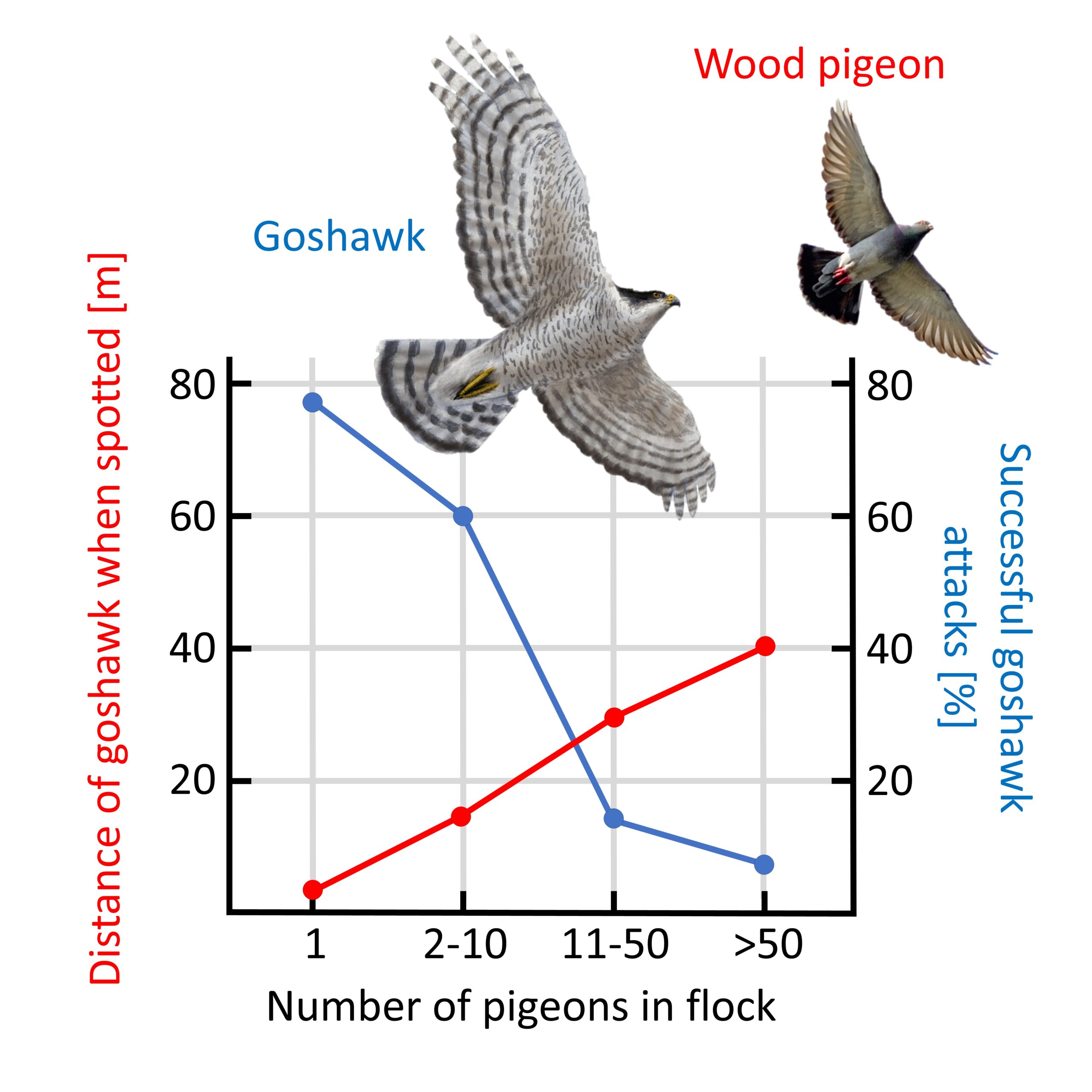
On a small scale, flocking behavior is easy to understand, as the following study shows: The northern goshawk (Accipiter gentilis) is a cunning hunter and is a master at using every bit of cover during its approach, suddenly appearing out of nowhere before its surprised victims. It can approach a single wood pigeon (Columba palumbus) to within just a few yards. Her fate is almost sealed—with a probability of 79 percent, the goshawk succeeds in striking her. It is an entirely different story when the pigeons are traveling as a group and many watchful pairs of eyes are surveying the surroundings. The goshawk can, on average, approach a group of more than 50 pigeons only to within 40 meters, which gives the swift pigeons enough time to escape. The predator’s success rate drops to 6 percent—it can calculate that, on average, it would have to make 16 attacks to succeed, and instead settles for easier prey.
In the «prayer of an afflicted man, when he is faint and pours out his complaint before the LORD,» we read: «I lie awake; I have become like a lonely bird on a housetop» (Ps 102:7). Birds on rooftops are usually social creatures that do not sit there alone during the day and spend the night in the nest. — Physically, the Lord Jesus was healthy and in good condition, but He found no rest, «lay awake» day and night, and had no safe place of retreat (Mt 8:20). He was often surrounded by large crowds, and He spoke with all kinds of people. Yet He had no one who truly understood Him. This prophetic psalm shows us His feelings—lonely, exposed defenselessly to His enemies as if on display. When they then struck, He could have surrounded Himself with a «flock» of tens of thousands of mighty angels (Mt 26:53)—yet He remained alone, gave Himself up to His enemies (Mk 14:50), and allowed Himself to be struck and killed—for you and me (Rom 5:8).
Compared with mammals, the lungs of birds are built very differently. While air is pumped into our lungs and then back out the same way, birds, with the help of a system of branching bronchi and air sacs, can maintain a continuous flow of air through their «parabronchi» in the same direction at all times.
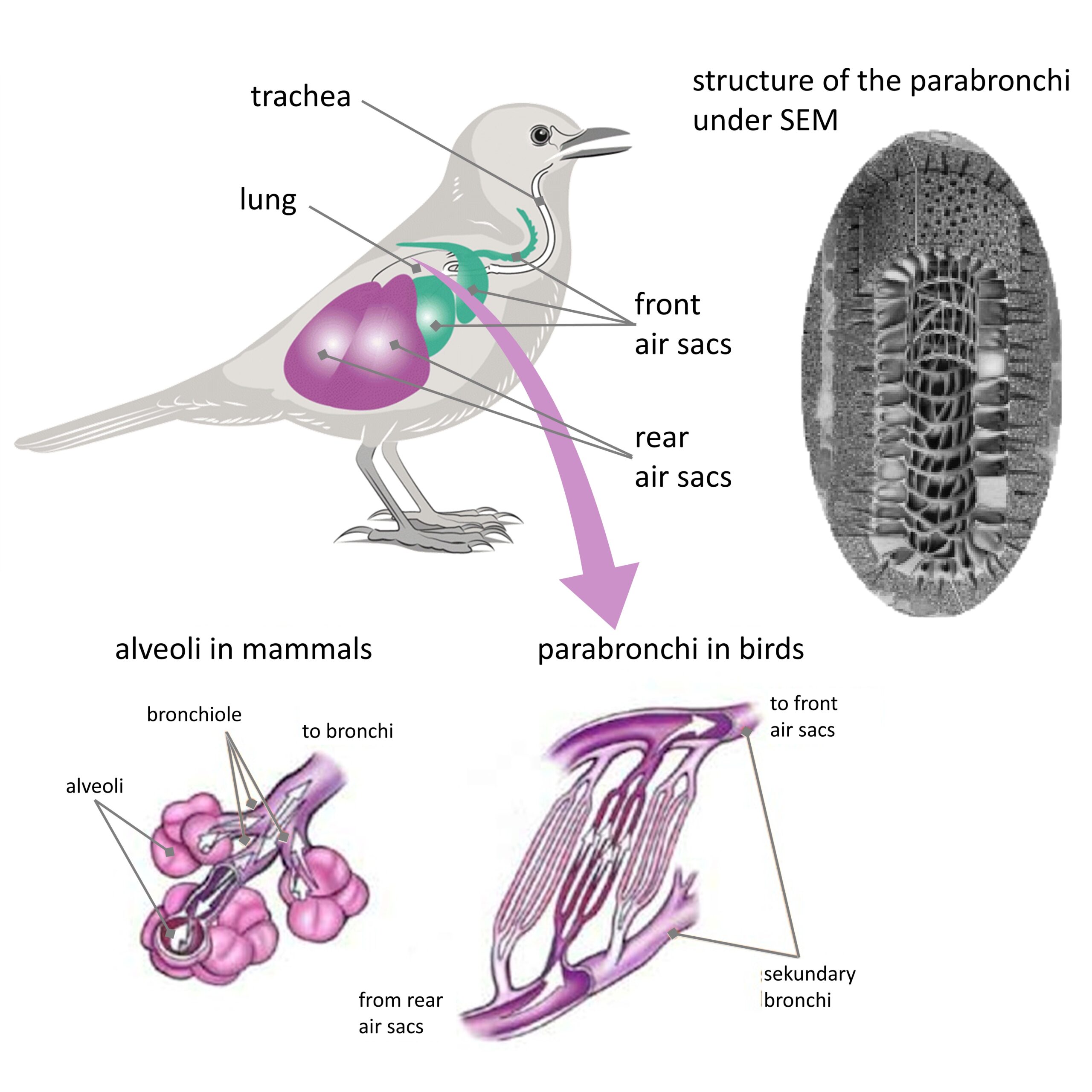
Gas exchange is more effective, and this has been regarded as an evolutionary adaptation to flying. The only problem here is that bats are equally good flyers and in some cases can also cover long distances in sustained flight. Their oxygen consumption lies in a comparable range. And even though the flapping flight of birds involves high energetic demands, many mammals can endure a comparable increase in performance and sustained strain while sprinting, swimming, or flying.
The view that air sacs make a bird lighter is very widespread. Yet it is relatively easy to see that this is not the case. Of course, the «average density» of its body decreases, but it does not benefit from that. It needs the same internal organs as all other vertebrates, so it also carries around a highly developed digestive, circulatory, skeletal, reproductive, locomotor, and sensory system. Because large air sacs are added as well, it does not weigh less, but actually a little more. They do not help it carry its weight; rather, they increase its volume, which is disadvantageous from an aerodynamic perspective.
It is therefore too limited to understand the special equipment of birds merely as a reaction to a specific selection pressure. Rather, what becomes visible here is the love of variety with which our Creator has designed His works. He could have equipped birds with the same respiratory tract that has proven itself so well on land, in water, and in the air among humans and animals. But because they were created with a special design, they also enjoy its advantages. They are able to sing for minutes at a time without having to pause for breath. That is possible only thanks to the air sacs. The system offers its greatest benefit at high altitudes, where the atmosphere is thin and the partial pressure of oxygen in the air breathed is very low. Here, thanks to the «cross-current principle», the avian lung can still achieve sufficient gas transfer. The bar-headed goose (Anser indicus) crosses the Himalayas as it moves between its summer and winter quarters and has repeatedly been encountered there at an altitude of 9,000 meters. On November 29, 1973, a Rüppell’s vulture (Gyps rueppelli) collided with a commercial aircraft in the airspace over Ivory Coast, Africa, at an altitude of 11,278 meters. This documented the record value still recognized today.
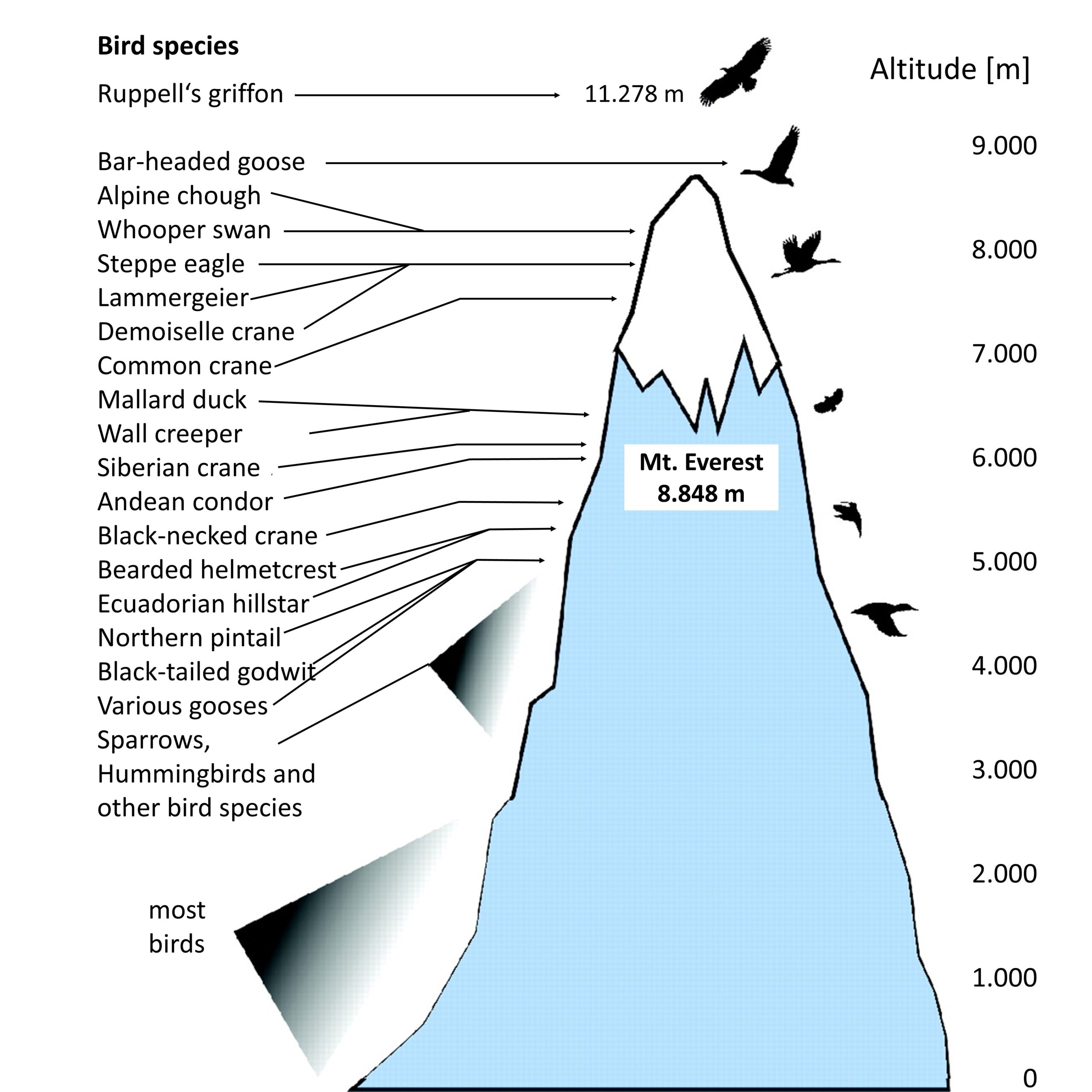
Anyone who frees himself from the desire to understand a biological construction as the result of evolutionary adaptive pressure gains a view of the lavish richness of creation. The especially lightweight, yet very stable, bones of birds and their ingenious feathers are the perfect answer to the demands of flight. But they are not a necessary condition, any more than the avian lung is. In addition, the digestive system is designed so that food remains in it for only a very short time and unnecessary ballast does not have to be carried for long.
Birdsong not only delights human beings; it also demonstrates physical and mental fitness. In many species it is just like human language ability: the capacity itself is innate, but its use must be learned and trained. For this, it is necessary both for the singers to have good models and for them to hear their own song.
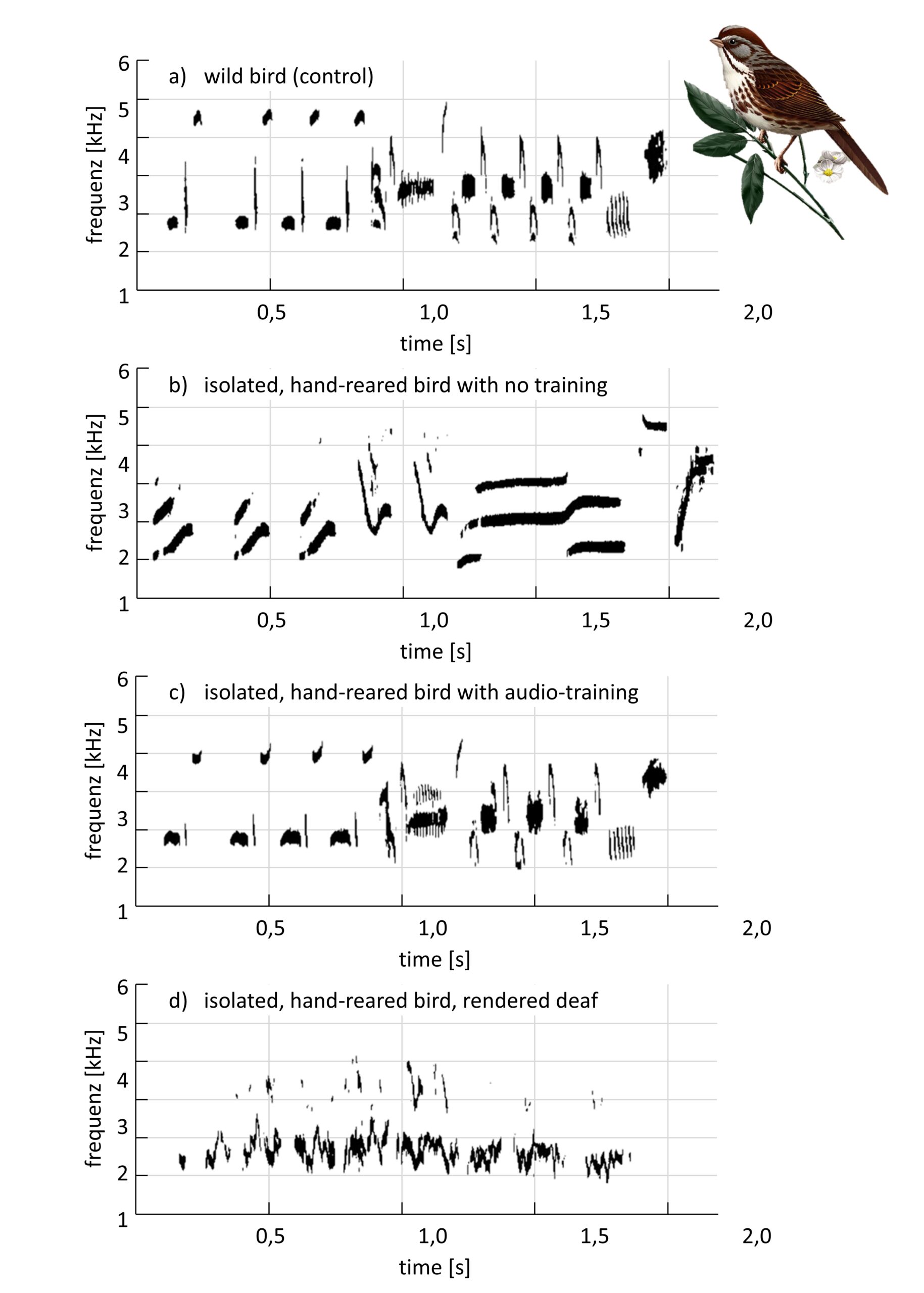
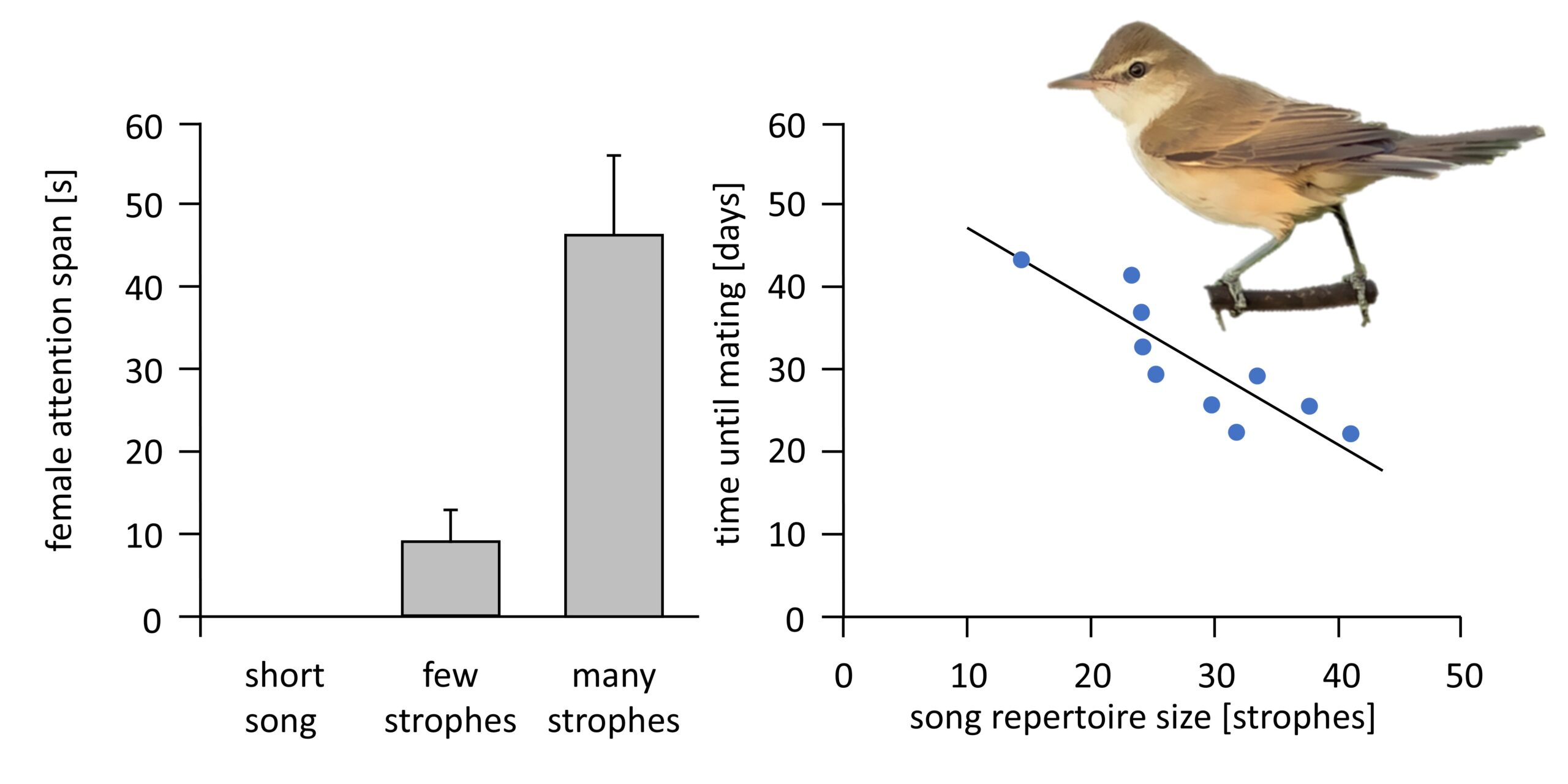
For most songbirds, it is worth developing an extensive repertoire of stanzas. Although visual impression also plays a role in mate choice, most females can be won over by a successful song performance. Field experiments with the sedge warbler (Acrocephalus schoenobaenus) showed that good-looking but mute males cannot score points. The mediocre chirpers get their chance only after the breeding season has already been underway for weeks, which significantly reduces their chances of successfully raising young. That is why all are motivated to give their best. Even though one might prefer to view it somewhat more romantically—birds do not sing out of «joy in life,» but are engaged in fierce competition in which, with their melodies, they must not only convince females of their worth but also defend their own territory against rivals.
A large brain consumes a great deal of energy and makes the skull large and heavy. Most birds have small brains, but this does not necessarily allow the conclusion that they have low cognitive capacity. It is obvious that reactions that proceed automatically require less brain activity. A corresponding key stimulus or «innate releasing mechanism» triggers a defined program. Since its course can then be modified only slightly or not at all, such behavior appears downright foolish to the human observer. While there are many examples of reflex-like behavioral patterns among insects, similar reports concerning «higher» vertebrates should be treated with caution. A number of legends have wandered through schoolbooks that do not withstand scientific scrutiny, including claims about herring gull chicks that beg from all objects as long as they merely have a red spot like the underside of the adult birds’ beak, or aggressive sticklebacks that attack every dummy with a red underside.
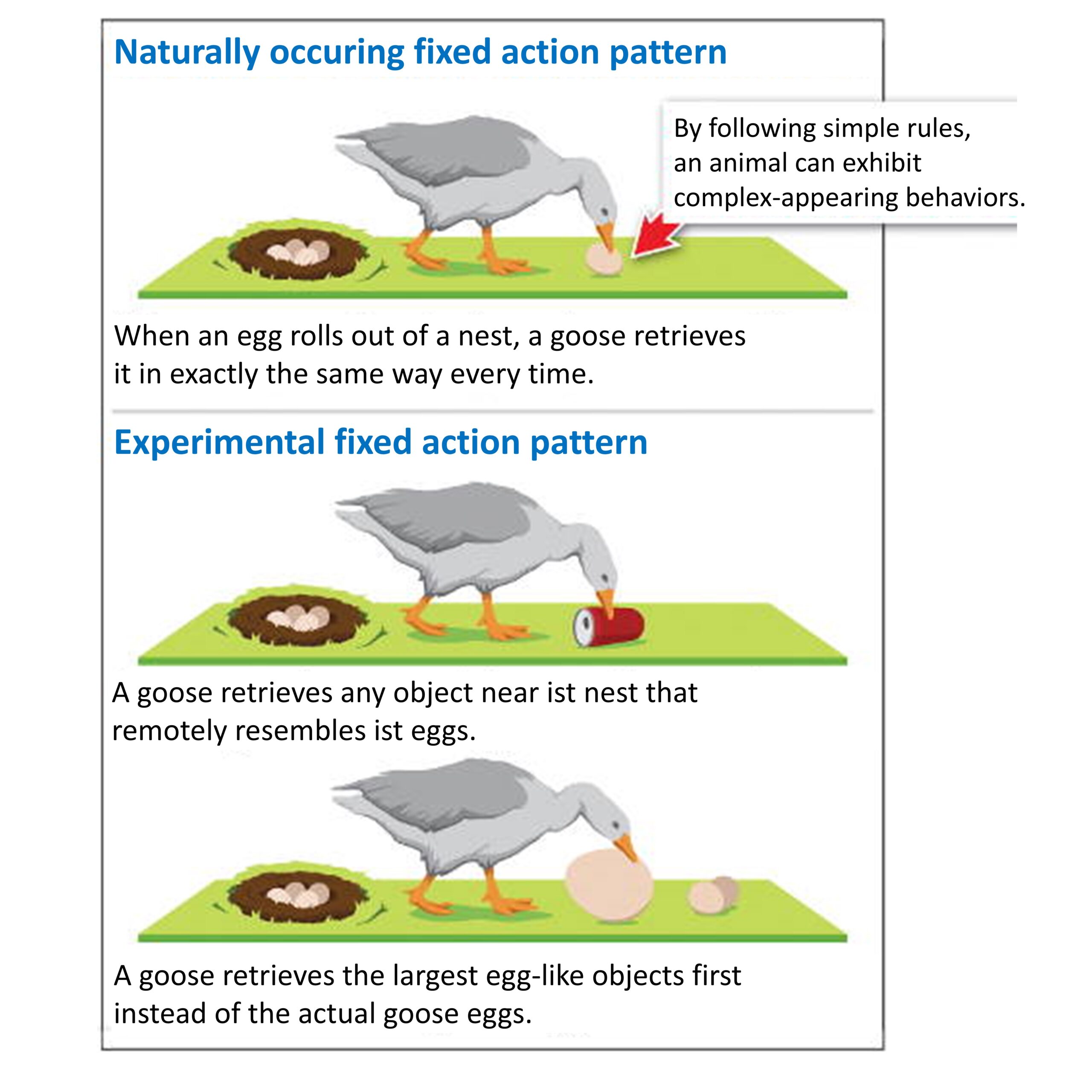
Nevertheless, there are indeed surprising mechanisms. The rolling-in action has been observed in several ground-nesting birds, mainly from the order of waterfowl. If an egg is taken from the nest and placed some distance away, the goose, as soon as she discovers it, sets out, stretches her neck forward, and rolls it back to the nest with the underside of her beak while walking backward. Since an egg does not roll smoothly but wobbles, she keeps it on course by swinging her head back and forth. So far, there is nothing surprising about this. What is somewhat strange is that this action is carried out with all kinds of objects. A golf ball, a billiard ball, or a ball of wool will trigger it too. She even transports rounded stones into the nest in a «rock ’n’ roll performance» and broods them. What is a bit more bizarre: If the goose’s egg is placed next to a much larger egg dummy, the dummy is collected first. The action appears downright absurd when the egg is taken away from the goose while she is rolling it back and then placed back at the starting point. This is easily possible because she pays no attention to her surroundings while occupied with rolling. She runs the program to the end without the egg. Only after she has finished this pantomime and is sitting on her clutch again does she discover the egg outside the nest and start the action anew. This can be repeated several times without the goose showing signs of frustration or annoyance. It is a typical feature of «hardwired programs» that they are not mentally reflected upon. No wonder popular speech maligns her as a «silly goose.»
In chickens, brood care is triggered by acoustic signals. Whoever does not make a peep is ignored. If a chick is placed under a soundproof glass dome, the hen does not come to its aid, even though she can see the chick. A chick with its beak tied shut could be severely mistreated before its mother’s eyes and even torn to pieces; it would not «interest» her in the slightest. Conversely, she immediately reacts to the chick’s distress call, even if she cannot see it. She becomes highly agitated and calms down only when she can hurry to its aid or when the calling stops: it is no longer screaming—everything is fine. In view of this «imbalance» in reception and reaction, the expression «dumb cluck» becomes easier to understand.
There are strange findings from «chicken hypnosis,» which were recorded in writing as early as 1646. Take a chicken, lay it flat, and hold its head directly on the ground. Then draw a thick chalk line forward from its beak. Now the chicken can be released. It will stare at the line as if spellbound and remain completely motionless for up to half an hour. No one really knows what to make of this. In another method, the chicken’s head is gently tucked under its wing, simulating the sleeping posture. Then it is rocked slightly back and forth, and it falls into a «hypnotic sleep» that allegedly sometimes lasts for hours.
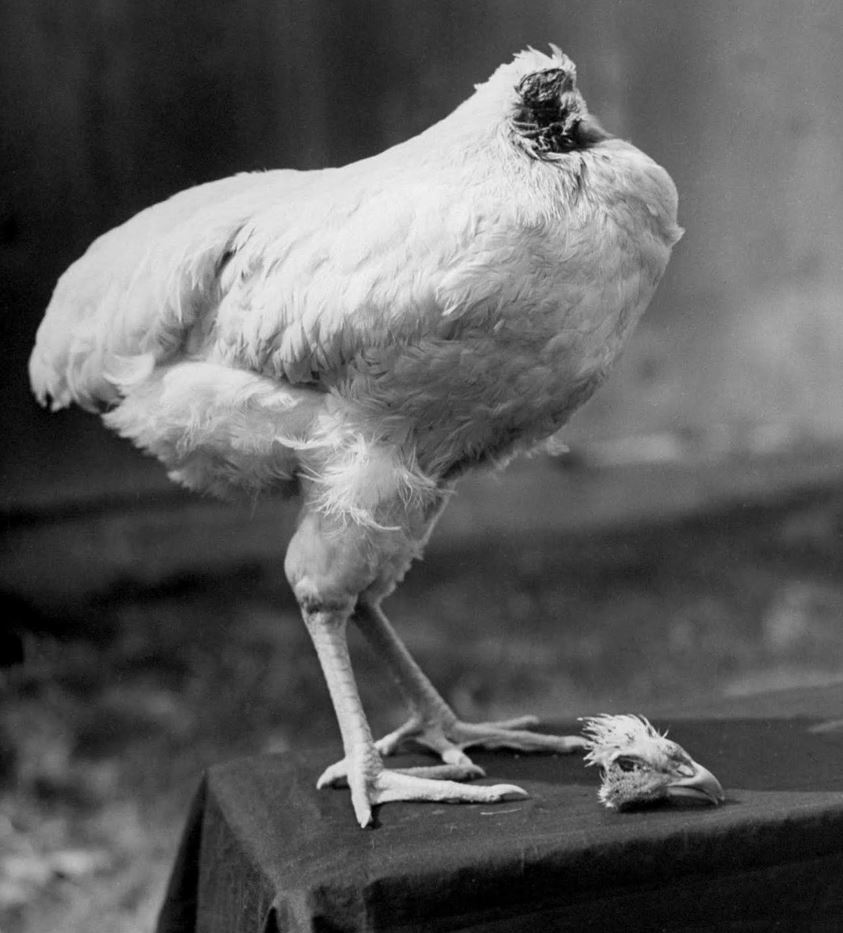
As early as the 1960s, researchers could trigger virtually every typical behavior in roosters with electrodes implanted in their brains by stimulating various brain regions. Whether the crowing call, threatening gestures, courtship behavior, preening, or sleeping posture was «activated», the rooster reacted like a remote-controlled robot. All of this may seem very schematic and inflexible. Yet chickens do not perform badly at all in intelligence tests. In relation to the entire class of birds, they are above average. Perhaps it should be regarded as an efficient use of available resources when certain everyday programs are «hardwired» and the remaining capacity can face the real challenges of life.
Since the 1950s, researchers have tried to find out through displacement experiments whether the routes of migratory birds are genetically predetermined and to what extent the birds inherit from their parents not the concrete route but the information about the geographic position of their destination. To do this, birds are captured, transported a long distance to another place in isolation boxes, and released there again.
The results vary so greatly that no clear picture has emerged to this day. Experience and learned travel behavior obviously always play some role. Some species can compensate completely for displacement and simply calculate a new course; others first fly in the wrong direction and correct themselves later; and still others are fooled and accordingly land at a shifted destination. Sometimes there are differences between newcomers and «old hands», and sometimes not. The same is true of the mechanisms that guide them. Many different factors are obviously involved, and exactly how it works differs from species to species.
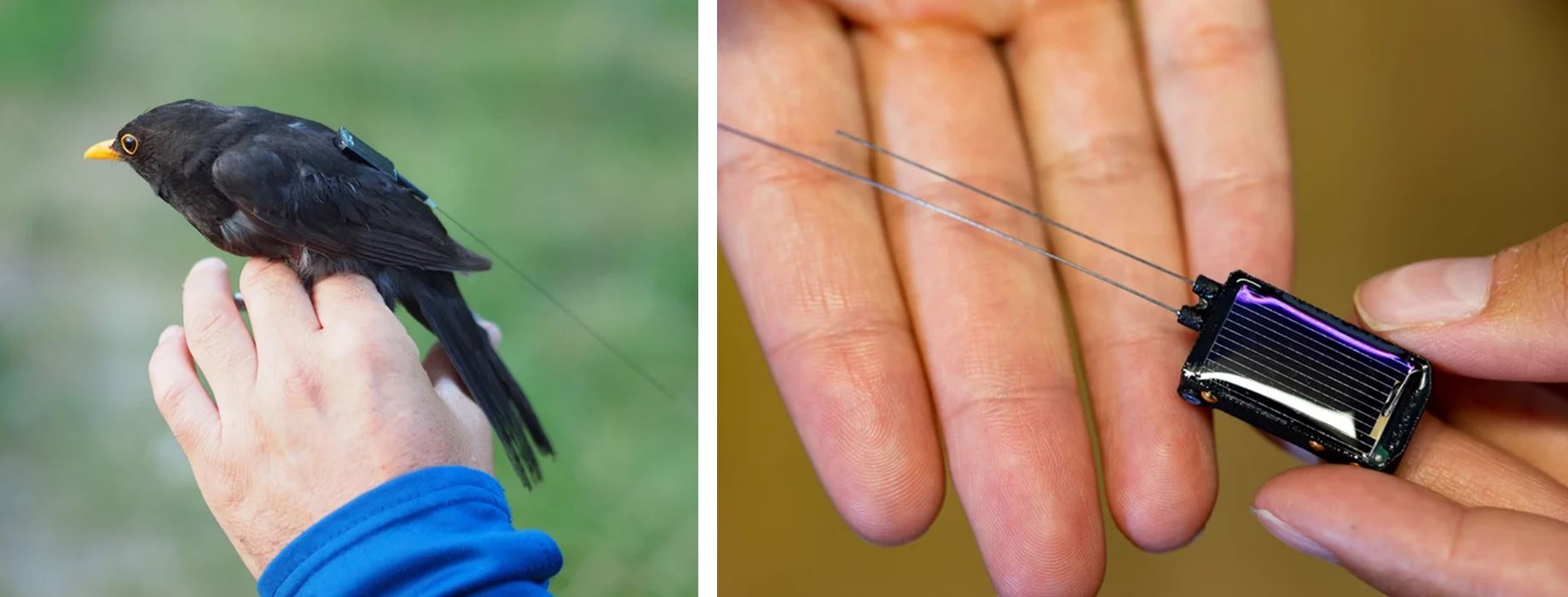
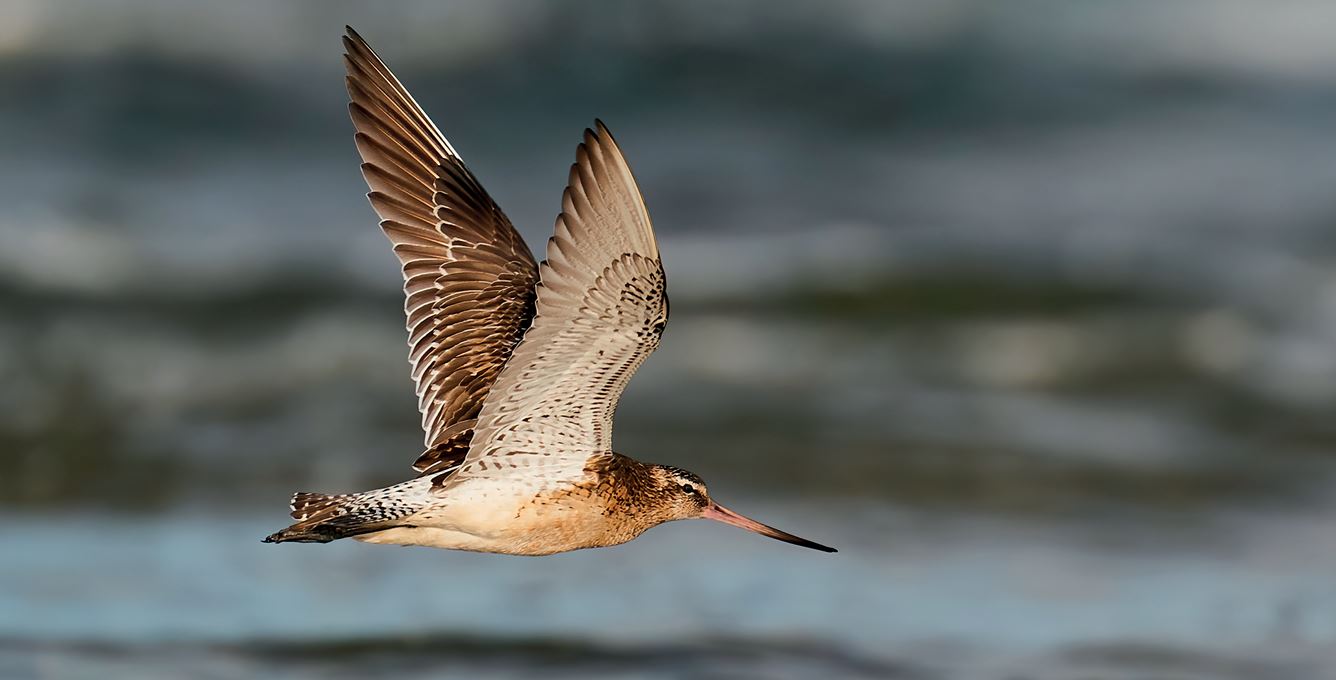
The present-day possibilities of biologging and biotracking represent a major advance. Thousands of animals are tracked around the clock—not only migratory birds, but also whales and fish in the seas, grazing animals in the savanna, reindeer in the far north, and penguins in Antarctica. The growing body of comparative data now provides insight into changes in migration behavior. Even within the relatively short period of about 20 years, it has been possible to determine that this is a highly dynamic process in which destinations, routes, and the decision whether to set out at all are in constant flux. The steady stream of data also keeps producing new records. In 2007, the bar-tailed godwit (Limosa lapponica) «E7» was still celebrated as the long-distance record holder, having covered 11,680 kilometers. But in September 2020, a member of the same species with the tracking code «4BBRW» took the title from her on the same route. The new record: 12,080 nonstop kilometers over the open Pacific in 224 hours!
Israel is a hub for traveling migratory birds, the world’s largest hub of its kind. As a land bridge between seas and deserts, it connects the northern regions of Europe and Asia with the warm winter quarters of Africa.
From time to time, travelers get stuck here. There can be various reasons: Perhaps they encountered bad weather and are exhausted or running late, or perhaps they like the paradise-like Hula Reserve in the north or warm Eilat in the south so much that they simply have no desire to move on. That can easily become a family tradition. Their route is now shorter, they can breed earlier and longer, and Israel’s nature reserves are safer than the savannas of Africa. These advantages pay off, the population grows—and a new species has settled. Because of the many visitors from everywhere, the birdlife in Israel is subject to constant change like nowhere else.
It is no coincidence that God assigns His people a first-rate transit land as their home. Israel was intended to be «a light to the nations» (Isa 49:6; Acts 13:47). Its natural position as a land bridge between three continents and the great cultures and empires of antiquity offered Israel ideal conditions for fulfilling its function as a witness. It was to be a radiant and living example through which the works and attributes of God could be recognized, and the time will come when it will fully live up to this destiny.

Birds are found as fossils only rarely and only in the youngest strata. According to the family-tree scheme of evolutionary theory, this is to be expected because they are said to have entered the stage only late in the developmental history of living things. The Bible, however, points to a remarkable fact that also offers an explanation: «I looked at the mountains, and behold, they were quaking; and all the hills moved to and fro. I looked […] and all the birds of the heavens had fled» (Jer 4:24–25). Birds have the astonishing ability to «foresee» catastrophes. Since they can also fly to safety, they become victims of floods, earthquakes, storms, volcanic eruptions, forest fires, and other threatening natural events far less often than most other animals.
Reports of this «early-warning instinct» have existed since antiquity, but only in recent times has it become possible to record and study this behavior scientifically with precision. In 2014, when a flock of golden-winged warblers (Vermivora chrysoptera), including some birds fitted with tracking transmitters, set out again shortly after arriving in their breeding area in the North American Appalachians and continued their journey, researchers became suspicious. The birds covered another 1,500 kilometers and bred elsewhere. This extra stage represented a major challenge for their tight schedule and their carefully calculated fat reserves. As it turned out, however, it saved their lives in that situation, because shortly afterward a terrible tornado devastated the area. The astonishing thing about this story is that the birds fled one to two days before the storm arrived. So far, little is known about which sensory abilities allow catastrophes to be perceived in advance. In this particular case, it is suspected that the animals react to infrasound, such as that produced by violent air friction.
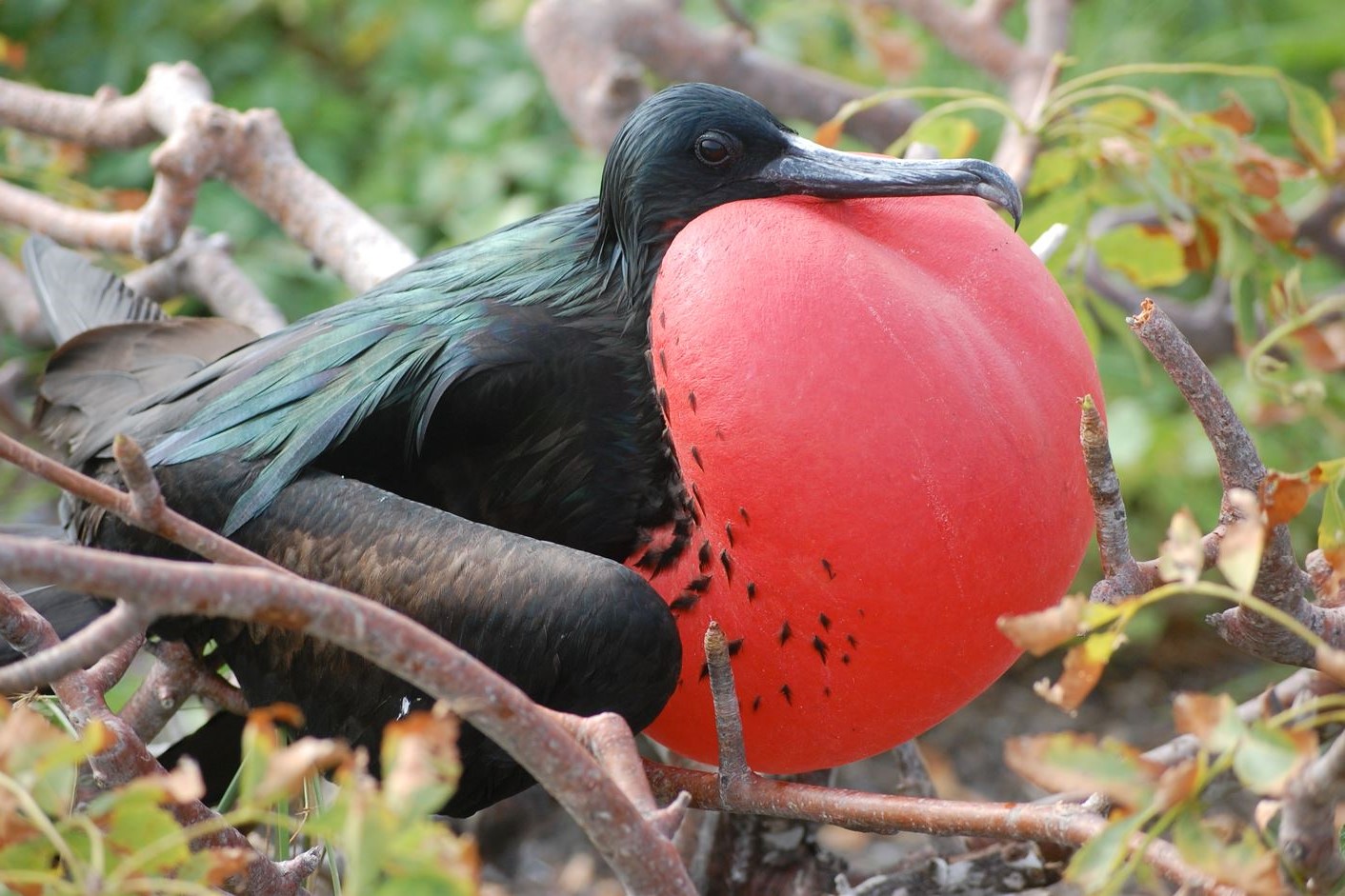
Recently, attempts have even been made to use the «prophetic gift» of birds for human benefit. Frigatebirds equipped with transmitters in the Caribbean have proved to be highly reliable meteorologists. They know where a storm is coming from, leave their quarters, and fly away in the opposite direction—often long before weather ships, satellites, balloons, and stations notice what is brewing. The exhortation «Look at the birds» is here obeyed in a very practical way.
Sources:
Baeumer, E: (1962): Lebensart des Haushuhns, dritter Teil – über seine Laute und allgemeine Ergänzungen. Ethology 1962; 19(4):394-416; doi.org/10.1111/j.1439-0310.1962.tb00781
Boffey, D: ‘Jet fighter’ godwit breaks world record for non-stop bird flight. The Guardian, 13.10.2020; https://www.theguardian.com/environment/2020/oct/13/jet-fighter-godwit-breaks-world-record-for-non-stop-bird-flight
Brusatte S: Das Puzzle der Vogelevolution. In: Jahn, A: Leben bleibt rätselhaft pp. 87-95. Berlin (Springer) 2018; doi: 10.1007/978-3-662-56670-1_10
Buchanan, KL; Catchpole, CK: Female Choice in the Sedge Warbler, Acrocephalus schoenobaenus: Multiple Cues from Song and Territory Quality. Proceedings: Biological Sciences 1997; 264(1381):521-526
Charisius, H: Naturkatastrophen: Vögel als Frühwarnsystem. Süddeutsche Zeitung, 20.12.2014; https://www.sueddeutsche.de/wissen/naturkatastrophen-voegel-als-fruehwarnsystem-1.2274826
Engelmann, C: Leben und Verhalten unseres Hausgeflügels. Melsungen (Neumann) 1984
Eriksson, D; Wallin, L: Male bird song attracts females – a field experiment. Behavioral Ecology and Sociobiology 1986; 19:297-299
Foth, C: Als die Federn fliegen lernten. Spektrum der Wissenschaft 2015; 4:28-33
Gallup, GG: Tonic immobility as a measure of fear in the domestic fowl. Animal Behaviour 1979; 27(1):316–317; doi: 10.1016/0003-3472(79)90159-3
Guinness book of records: Longest Surviving Headless Chicken. http://www.guinnessworldrecords.com/content_pages/record.asp?recordid=54463
Hasselquist, D; Bensch, S; von Schantz, T: Correlation between male song repertoire, extra-pair paternity and offspring survival in the great reed warbler. Nature 1996; 381:229-232
Holst, E von; Saint Paul, U von: Electrically Controlled Behavior. Scientific American 1962; 206(3):50-59
Huber, A; Fölsch; DW: Allgemeines über die Stimmen der Haushühner. In: Akustische Ethogramme von Hühnern 1978. Tierhaltung Animal Management, Bd. 5; Basel (Birkhäuser); doi: 10.1007/978-3-0348-5852-6_5
Jones, RB; Faure, JM: Tonic immobility (“righting time”) in laying hens housed in cages and pens. Applied Animal Ethology 1981; 7(4):369-372; doi: 10.1016/0304-3762(81)90063-8
Kenward, RE: Hawks and Doves: Factors Affecting Success and Selection in Goshawk Attacks on Woodpigeons. Journal of Animal Ecology 1978; 47(2):449-460
Kringiel, D: Wunderhahn Mike: Kopf ab, weitermachen! Spiegel-Online, 20.05.2011; https://www.spiegel.de/geschichte/wunderhahn-mike-a-947198.html
Lang, DB; Bousfield, MA; Cooke, F: Why do snow geese adopt eggs? Behavioral Ecology 1991, 2(2):181-187; doi: 10.1093/beheco/2.2.181
Maina, JN: Some recent advances on the study and understanding of the functional design of the avian lung: morphological and morphometric perspectives. Biological Reviews 2002; 77(1):97-152; doi: 10.1017/S1464793101005838
Markl, J; Sadava, D; Hillis DM: Verhalten von Tieren. Purves Biologie 2019. (Springer Spektrum), Berlin, Heidelberg. doi: 10.1007/978-3-662-58172-8_52
Marler, P; Doupe, AJ: Singing in the brain. PNAS 2000; 97(7):2965‒2967; doi.org/10.1073/pnas.97.7.2965
Powell, FL; Hopkins, SR: Comparative Physiology of Lung Complexity: Implications for Gas Exchange. NIPS (News in Physiolgy Sciences) 2004; 19:55-60; doi: 10.1152/nips.01469.2003
Mooney, R; Prather, J; Roberts, T: Neurophysiology of Birdsong Learning. In: “Learning and Memory: A Comprehensive Reference” S. 441-474; Amsterdam (Elsevier) 2007; doi: 10.1016/B978-012370509-9.00116-9
Naguib, M; Riebel, K: Birdsong: a Key Model in Animal Communication. In: Encyclopedia of Language & Linguistics; 40-53; Amsterdam (Elsevier) 2006; doi: 10.1016/B0-08-044854-2/00830-0
Nübling, D: Tiernamen als Spiegel der Mensch-Tier-Beziehung. Ein erster Einblick in die Zoonomastik. Sprachreport 2015; 31(2):1-7
Perdeck, AC: Two Types of Orientation in Migrating Starlings, Sturnus yulgaris L., and Chaffinches, Fringilla coelebs L., as Revealed by Displacement Experiments. ARDEA Tijdschrift der Nederlandse Ornithologische Unie 1958; 46(1-2); doi: 10.5253/arde.v1i2.p1
Prevett, JP; Prevett, LS: Egg Retrieval by Blue Geese. The Auk 1973; 90(1):202-204
Rojas, R: Luftige Dinosaurier. 2013 at https://www.heise.de/tp/features/Luftige-Dinosaurier-3363187.html
Scott, JR: Elevated performance: the unique physiology of birds that fly at high altitudes. The Journal of Experimental Biology 2011. 214:2455-2462; doi:10.1242/jeb.052548
Streby, HM; Kramer, GR; Peterson, SM: Tornadic Storm Avoidance Behaviorin Breeding Songbirds. Current Biology 2015; 25:1(98-102); doi: 10.1016/j.cub.2014.10.079
Switek, B: Thomas Henry Huxley and the reptile to bird transition. Geological Society 2010; 343:251-263; doi: 10.1144/SP343.15
Thorup, K; Rabøl, J: Compensatory behaviour after displacement in migratory birds. Behavioral Ecology and Sociobiology 2007; 61:825-841; doi: 10.1007/s00265-006-0306-x
Weiner, J: Evolution made visible. Science 1995; 267(5194):30-33; doi: 10.1126/science.7809606
Wiltschko, R: Navigation. Journal of Comperative Physiology A 2017; 203:455-463; doi: 10.1007/s00359-017-1160-1
Image Credits:
Wikipedia: Miracle Mike, headless rooster / Bob Landry // Frigatebird with inflated throat pouch / macraegi
other licenses: Title—starling flock / shutter stock_1930383503.jpg / Albert Beukhof // Bar-tailed godwit in flight / shutterstock_1783848041.jpg / Dennis Jacobsen // Bird with GPS transmitter / Biologging_Vogel_mit_Sender.jpg / MaxCine // GPS transmitter / Biologging_Sender.jpg / MaxCine