In His magnificent speech about creation, God also presents the renen, the African ostrich (Struthio camelus): «The wings of the ostrich flap joyfully: Are they the pinions and plumage of the stork? For she leaves her eggs to the earth and warms them in the dust; and she forgets that a foot may crush them and that the beasts of the field may trample them. She treats her young harshly, as if they were not hers; her labor is in vain, yet she is unconcerned. For God has deprived her of wisdom and given her no share of understanding. When she rouses herself to flee, she laughs at the horse and its rider» (Job 39:13–18).
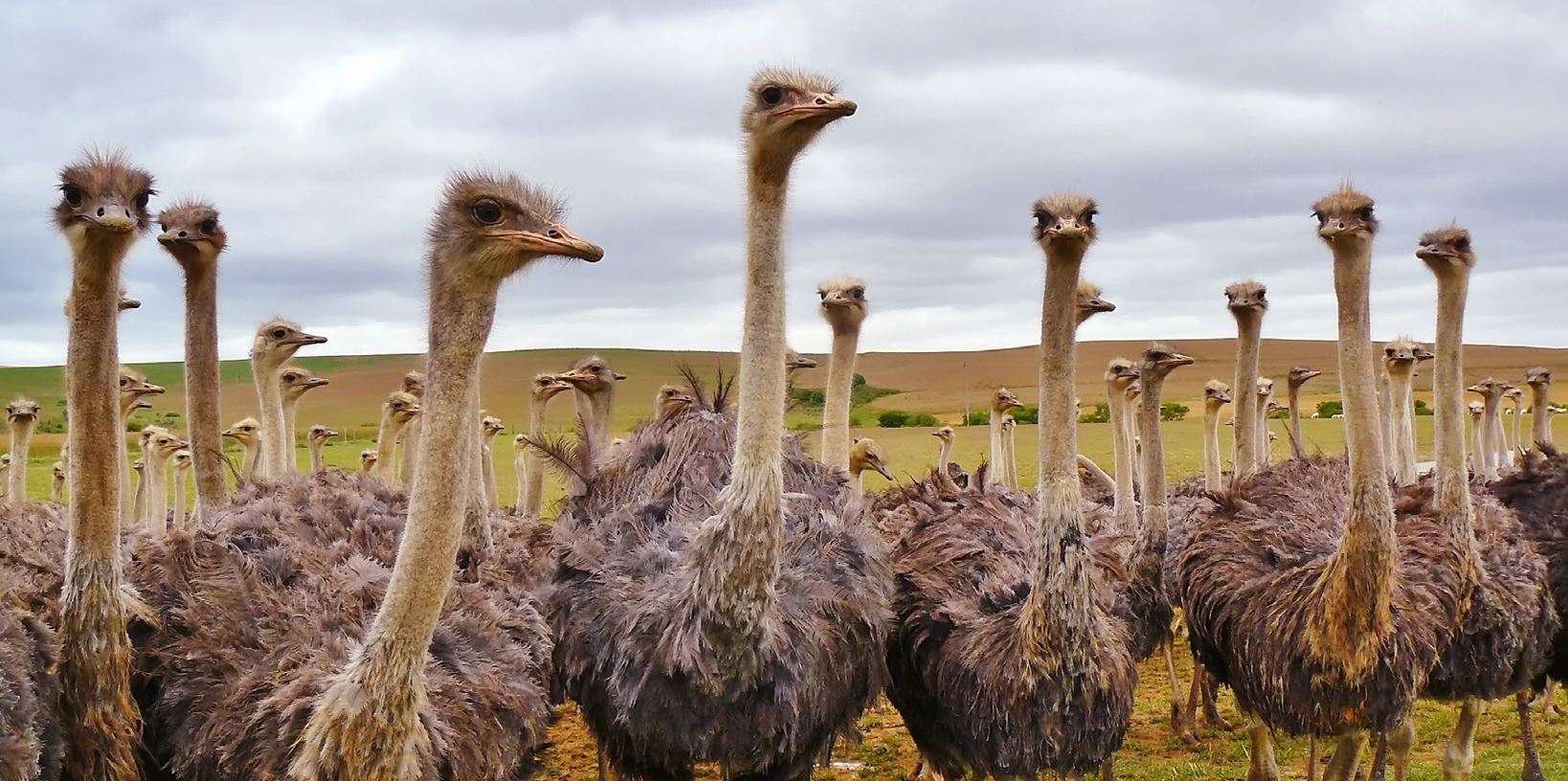
The largest birds living today are no longer found in the wild in Israel (though they do exist on ostrich farms). They are also referred to as ja‘en (a general term) and bat-ja‘ana (female ostrich) and are described as creatures dependent on God’s special care. Weighing up to 135 kilograms makes it impossible for them to fly, and with an impressive height of up to 2.5 meters, they are hard to overlook. While «the pinions and plumage of the stork» make it a perfect flier and long-distance migratory bird, ostriches have only shaggy, stubby wings. Yet they do not take this tragically. God has well adapted them to their way of life, and they need not be ashamed of their plumage. Since antiquity, it has been used not only for decorative purposes but especially for making feather dusters. Due to their extraordinary electrostatic attraction, ostrich feather brushes bind all dust and dirt particles and can be used on highly sensitive surfaces without leaving the slightest trace.
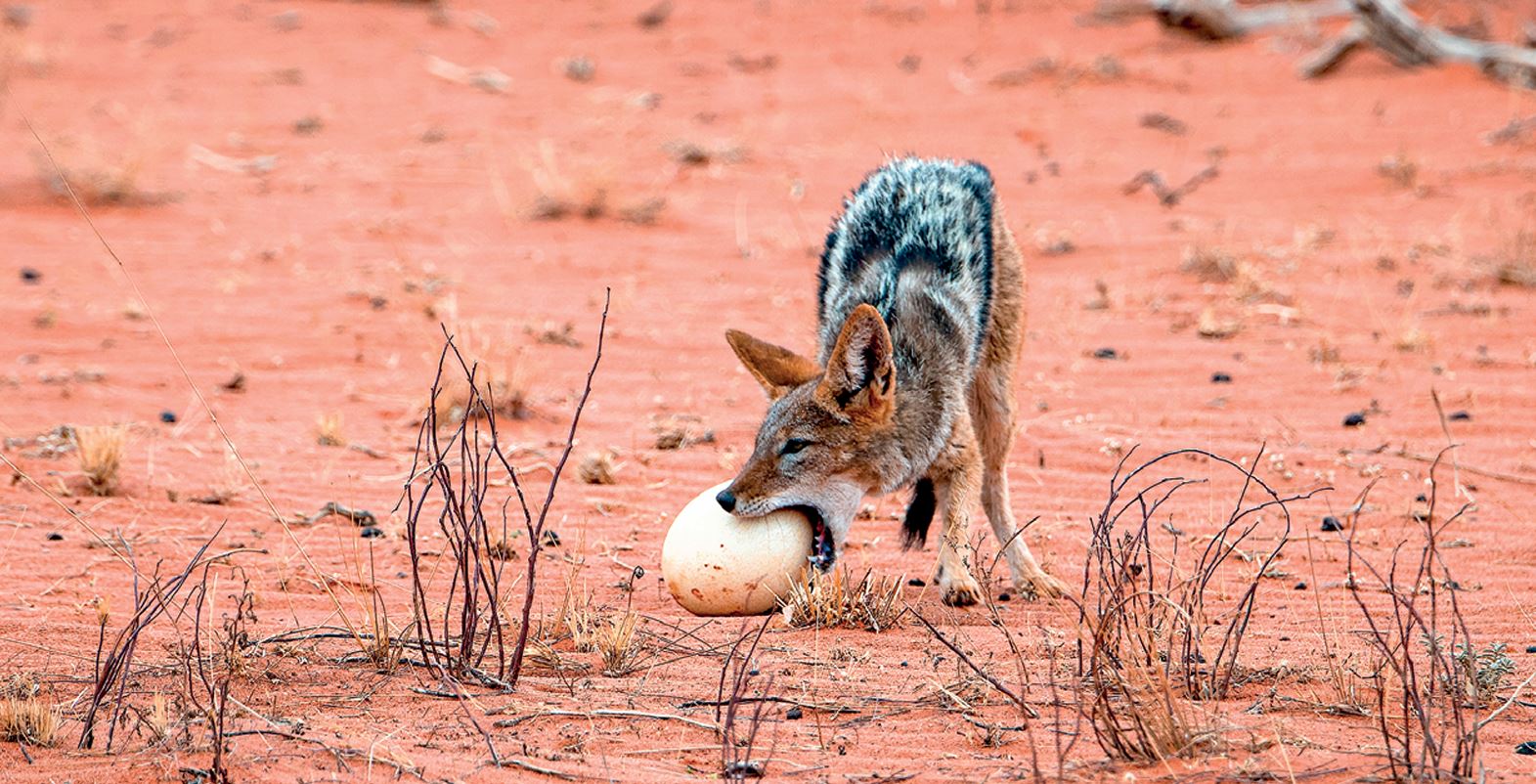
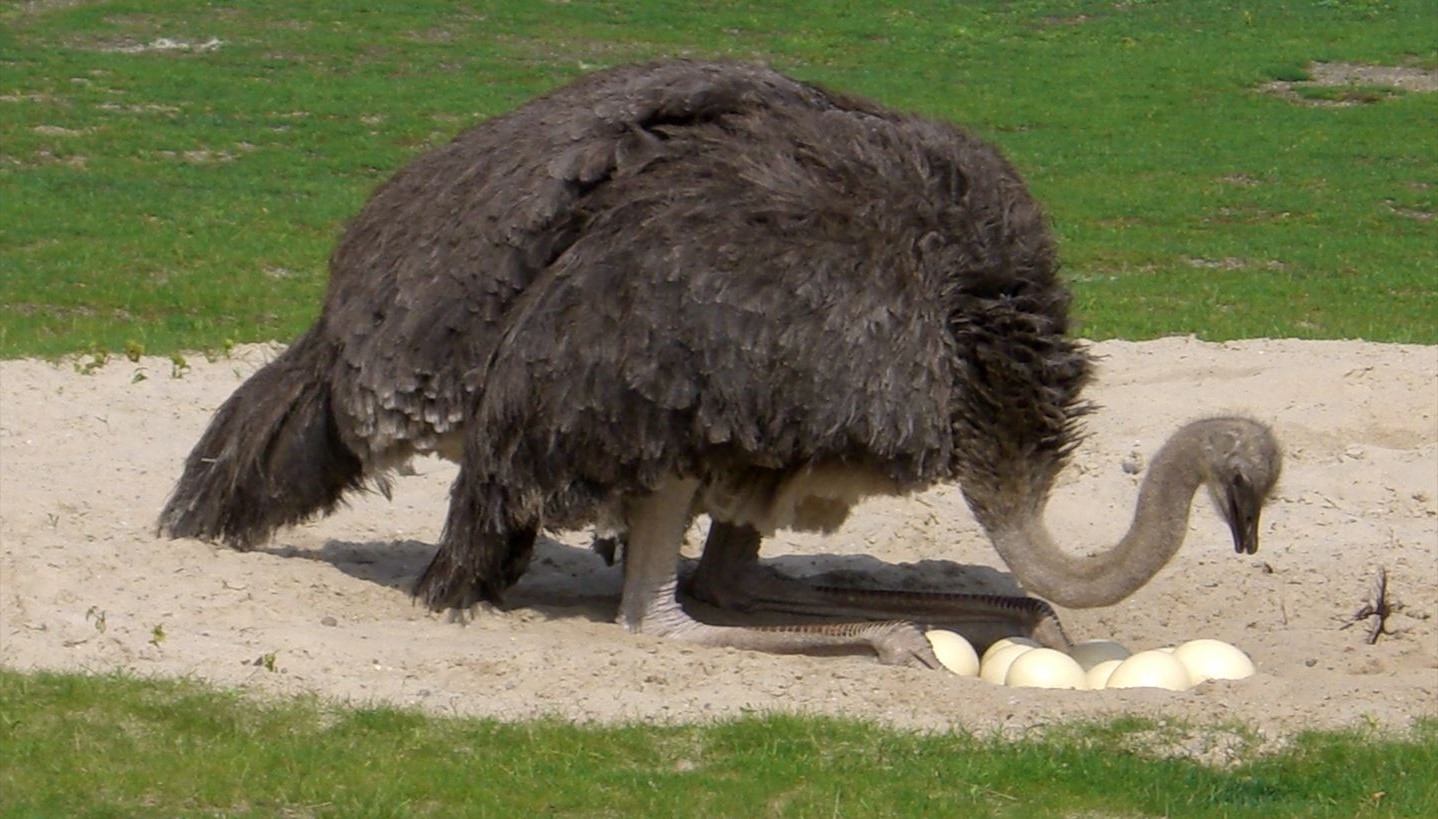
The ostrich cannot build its nest in trees, on rocks, or in other inaccessible places. The hen simply scratches a shallow hollow about three meters in diameter into the ground, lays her eggs in it, and incubates them there together with the male. He mainly takes the night shifts, when his black plumage makes him almost invisible, while she incubates during the day, when her dusty gray feathers provide better camouflage. During foraging, the nest lies relatively unprotected. Although the pair never strays far from it, there are clever predators that know how to outwit ostriches. Desert foxes, jackals, hyenas, and vultures have been observed distracting the birds and luring them away while another animal devours the unguarded eggs.
The male ostrich first mates with his primary hen and then with several secondary hens. All lay their eggs in one nest (up to eighty eggs). The male and the primary hen take turns incubating them. However, they can only cover about twenty eggs; the others remain on the outside and develop only if it stays warm enough for a prolonged period—which is usually not the case—«she treats her young harshly».
The eggshell is three millimeters thick, as hard as porcelain, and so strong that one can stand on it without breaking it. The chicks have no egg tooth and can free themselves only by pressing their entire bodies in a violent spasm against the shell until it bursts. The parents offer no help—those too weak suffocate, fully developed and just short of hatching, inside their gleaming white prison. To increase the chances that her own offspring survive, the primary hen lays her four to five eggs in the center of the nest. Predators therefore first take the outer eggs of the secondary hens.
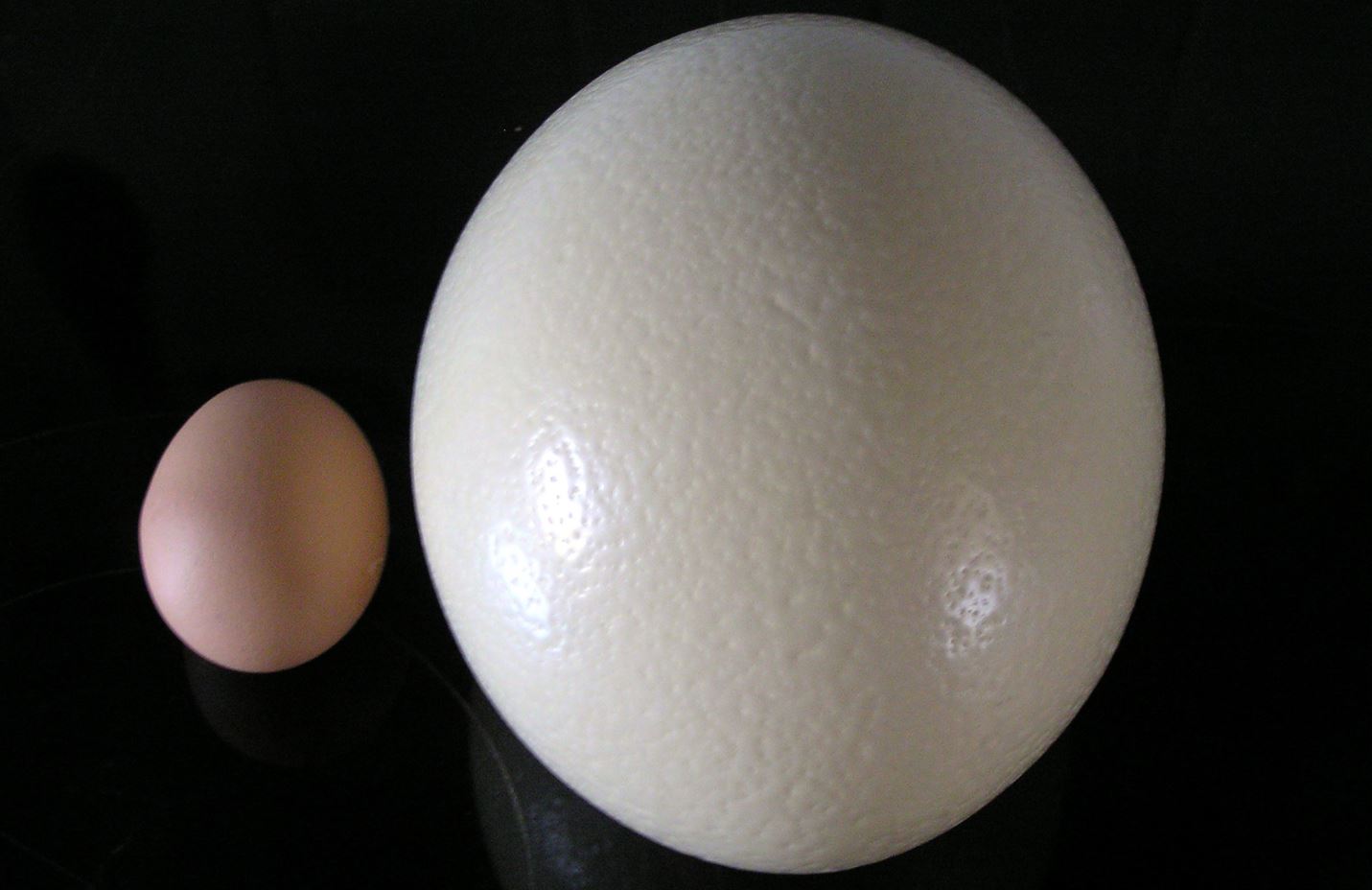
In relation to the hen’s body weight and size, ostrich eggs are the smallest and lightest bird eggs, yet in absolute terms they are still the largest in the world. The extinct elephant bird of Madagascar laid eggs weighing ten kilograms, which are still found today—not as fossils, but preserved in their original form! Their shells are as thick as a pizza plate. A modern ostrich egg weighs nearly two kilograms; its contents equal about twenty-four chicken eggs, and it would take over an hour to boil it hard. This delicacy is so tempting to many hungry mouths that nests are often completely plundered. Only about ten percent of clutches are successfully incubated, and even after hatching the young remain highly vulnerable. Only about fifteen percent survive their first year—«her labor is in vain».
The behavior of ostriches does not suggest great intelligence. However, the claim that an ostrich sticks its head in the sand when threatened belongs to the realm of legend. Since scientific observations have been conducted and documented, this behavior has never been confirmed. Various explanations exist for how this legend arose. It is possible that observers, watching ostriches from a distance through shimmering air above hot steppe ground, fell victim to an optical illusion. In this effect, the head of grazing ostriches seems to «disappear» to the distant viewer.
More likely, however, their crouching behavior was misinterpreted. Incubating ostriches sometimes lie flat on the ground when danger approaches, stretching their necks and heads straight forward. From afar, the neck lying flat against the ground becomes invisible. Yet this behavior is rather untypical. Normally, the ostrich hen behaves exactly as described in Job 39:18: «When she rouses herself to flee, she laughs at the horse and its rider».
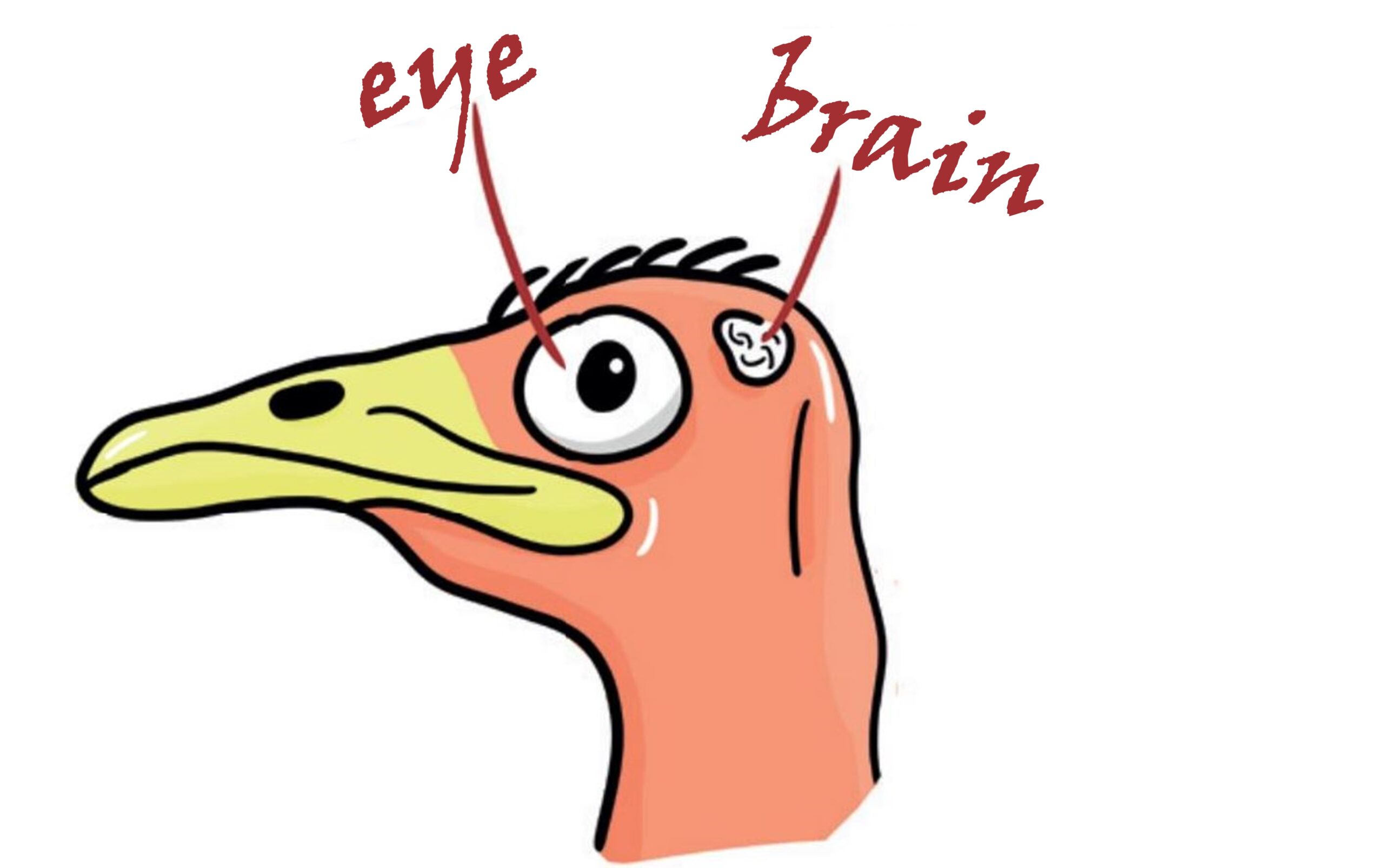
It is easy to understand why no great intellectual feats are to be expected: the small skull is almost entirely filled by two enormous eyeballs, each five centimeters in diameter—the largest of any land animal—giving the ostrich excellent vision. There is no room left for a large brain. In return, the ostrich detects any threat from afar. It avoids areas where grass grows higher than one meter and instead prefers open steppe or savanna. There it joins herds of zebras and antelopes, combining its keen eyesight with the strong sense of smell and hearing of grazing animals. A predator now finds it very difficult to approach unnoticed.
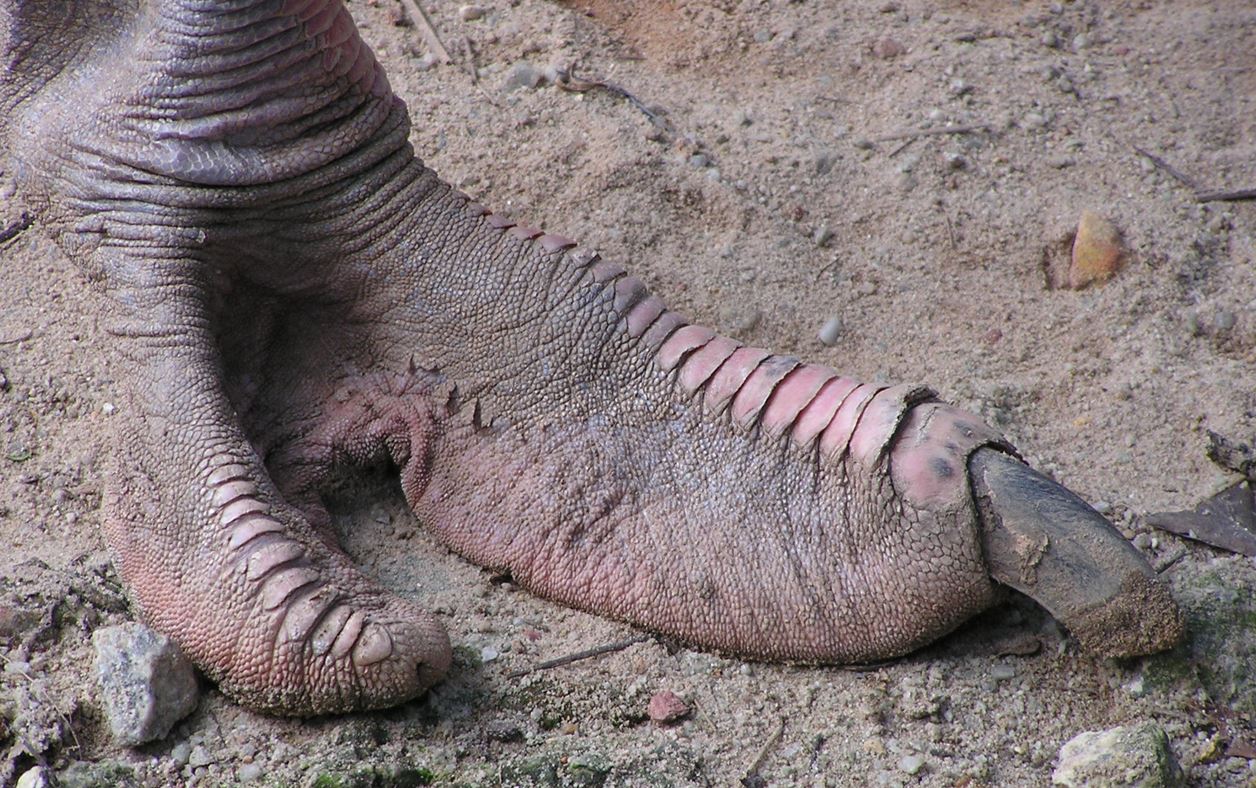
If a mounted hunter attempts to catch an ostrich, the bird can only laugh. With its muscular legs—at 1.4 meters from hip to claw the longest in the entire animal kingdom—it can run with endurance and reach top speeds of 70 (some estimate even up to 95) kilometers per hour, matching the speed of the fastest racehorses.
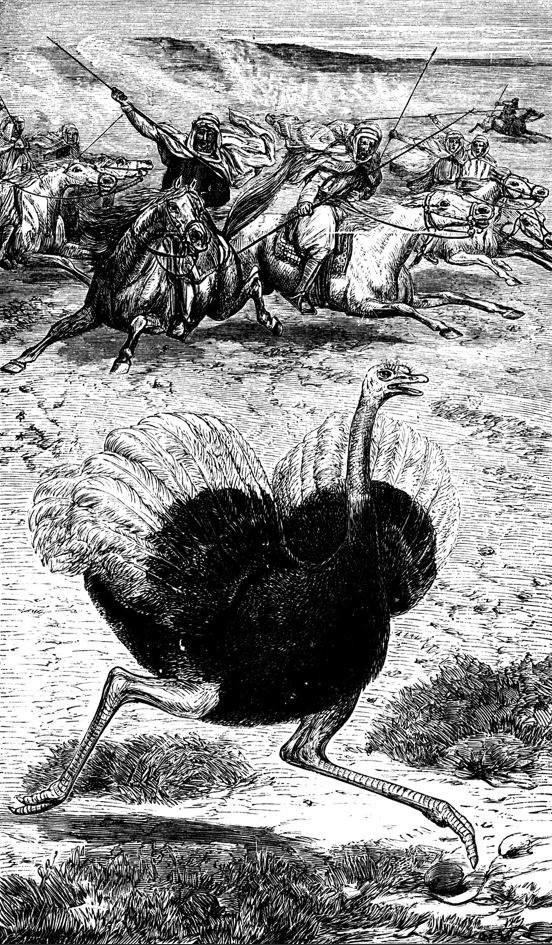
What does God intend to illustrate with this peculiar animal? Ostriches are birds but cannot fly. Their clutches contain many large eggs, yet they almost always lose them to predators. And still they are joyful and laugh! As if they knew that everything is in God’s hands. To compensate for high breeding losses, God grants ostriches a very long life. They can live over fifty years and begin a new attempt to raise their young each year.
Job, who is addressed here, was neither foolish nor harsh with his children, but is presented as wise, caring, and responsible. He prayed and sacrificed for his children (Job 1:5). Yet he lost them. Did he trust that this too could be part of God’s plan?
As a wild animal, the ostrich hen symbolizes the human being without God (cf. 2Pet 2:12; Jude 10). Her selfishness highlights one of her traits as particularly foolish. This trait is becoming increasingly evident in modern society (2Tim 3:2). Many parents soon leave their offspring «to the earth». Education and care are largely delegated to daycare centers, kindergartens, and childminders in order to return quickly to professional work. In contrast to the ostrich, humans were created in the image and likeness of God and endowed with understanding and wisdom. They should recognize the high calling and responsibility God entrusts to them when He gives them children. The Bible presents ideal parents—especially the ideal mother—very differently from the ostrich (1Thes 2:7; Tit 2:4–5).
Sources:
Badley, AR: Fertility, Hatchability and Incubation of Ostrich (Struthio camelus) Eggs. Avian and Poultry Biology Reviews 1988; 8:53-76; doi: 10.1016/0300-9629(88)90217-4
Jarvis, MJF; Jarvis, C; Keffen, RH: Breeding seasons and laying patterns of the southern African Ostrich Struthio camelus. IBIS International Journal of Avian Science 1985; 127:442–449; doi: 10.1111/j.1474-919X.1985.tb04840.x
Rahn, H; Paganelli CV; Ar, A: Relation of Avian Egg Weight to Body Weight. The Auk 1975; 92:750-765; doi: 10.2307/4084786
Rahn, H; Paganelli CV; Ar, A: The Avian Egg: Mass and Strength. The Condor 1979; 81:331-337; doi: 10.2307/1366955
Sauer, EGF; Sauer EM: Social Behaviour of the South African Ostrich Struthio camelus australis. Ostrich – Journal of African Ornithology 1966; 37:183-191; doi: 10.1080/00306525.1966.9639797
US-Patent für Straußenfederwerkzeug. https://www.google.com/patents/US4227278
Image credits:
Wikipedia: Ostrich hen with clutch / Fischchen // Ostrich egg and chicken egg comparison / BMK // Ostrich foot / Masteraah // Ostrich hunt / Keyl, Wood & E. A. Smith
other licenses: Ostrich head / pixabay Rhea-Bird-Animal-Big-Bird-Head-Bird-Bouquet-1438633.jpg / pixel2013 // Ostrich in the savanna / shutterstock_2052217457.jpg / Martin Pelanek // Eye-brain graphic / Cornelius vom Stein // Jackal eating ostrich egg / shutterstock_1876624888.jpg / Geno EJ Sajko Photography // pixabay bird-animal-nature-strauss-bouquet-242715 / cocoparisienne