The «beasts of the field» are mammals – but not all mammals are «beasts of the field». Since cultivated manatees and whales would surely not like to find themselves in the volume on «Fish, Reptiles, and Swarming Creatures», and bats would not truly feel at home in the volume «The Birds of the Heavens» either, these exotics are given a separate chapter here.
Manatees
In the description of the tabernacle and its furnishings, the Hebrew term tachasch is used thirteen times to designate a leather from which the uppermost of the four coverings over the two compartments, as well as the coverings of the furnishings during transport, were made. The meaning of this term was long a riddle. In the LXX it was understood as a color and translated with hyakinthinos (cf. Rev 9:17) – hyacinth-colored. This term refers to the mineral hyacinth or jacinth(us), which is also mentioned in the Bible (Rev 21:20). Today, yellow and yellow-red to reddish-brown varieties of zircon crystals are called by this name, but in Greek usage it denoted a dark violet. This can be seen from the fact that various species names such as garden hyacinth, hyacinth macaw, or hyacinth hummingbird were given because of their intense blue coloration. Unfortunately, it is no longer possible to trace what moved the Jewish translators at the time to render it this way.
Since tachasch occurs in 13 of 14 verses in connection with the word or for «hide/skin», and in this combination typically denotes an animal species, and since Tachasch already occurs in Abraham’s time as a male name (Gen 22:24), which likewise points more to an animal name, the idea of looking for a color (or another quality such as «durable, high-grade, finely tanned …») played little role going forward. The question, then, was: Which animal lies behind the word tachasch?
Luther translated «badger skins», and most German Bibles followed him in the past. So one tried to apply properties of the badger to the person of the Lord Jesus: the badger supposedly lived as a solitary creature (which is not true) and thus pointed to the Lord’s loneliness on this earth; it was said to be very watchful, like the Lord «watched over the right hand of God»; and its fur had «nothing attractive» (that is certainly a matter of taste; in any case it has a fine, silvery sheen), just as the Lord was outwardly unimpressive. Yet it has long been known that the European badger (Meles meles), which Luther had in mind and to which these interpretations refer, was never native to Israel. The honey badger (Mellivora capensis), by contrast, is at home there, and since it is otherwise not mentioned in the Bible and has an exceptionally tough and thick hide, it seemed to be a suitable candidate. It would, however, be a striking exception if all the holy implements as well as the sanctuary and the Most Holy Place of the tabernacle had been covered with the hide of an unclean animal.
Various other solutions were discussed. Some scholars proposed «ram skins» – although rams, i.e., castrated male sheep, did not exist in Israel at all, and the hides of castrated animals would hardly have differed from «rams’ skins», which already formed the covering beneath. Others thought of the unicorn (which turned out to be a mythical creature), the desert lynx or caracal (Caracal caracal), an unclean predatory cat native to Israel, or the giraffe (Giraffa camelopardalis), which is a clean animal and was formerly still found in Egypt.
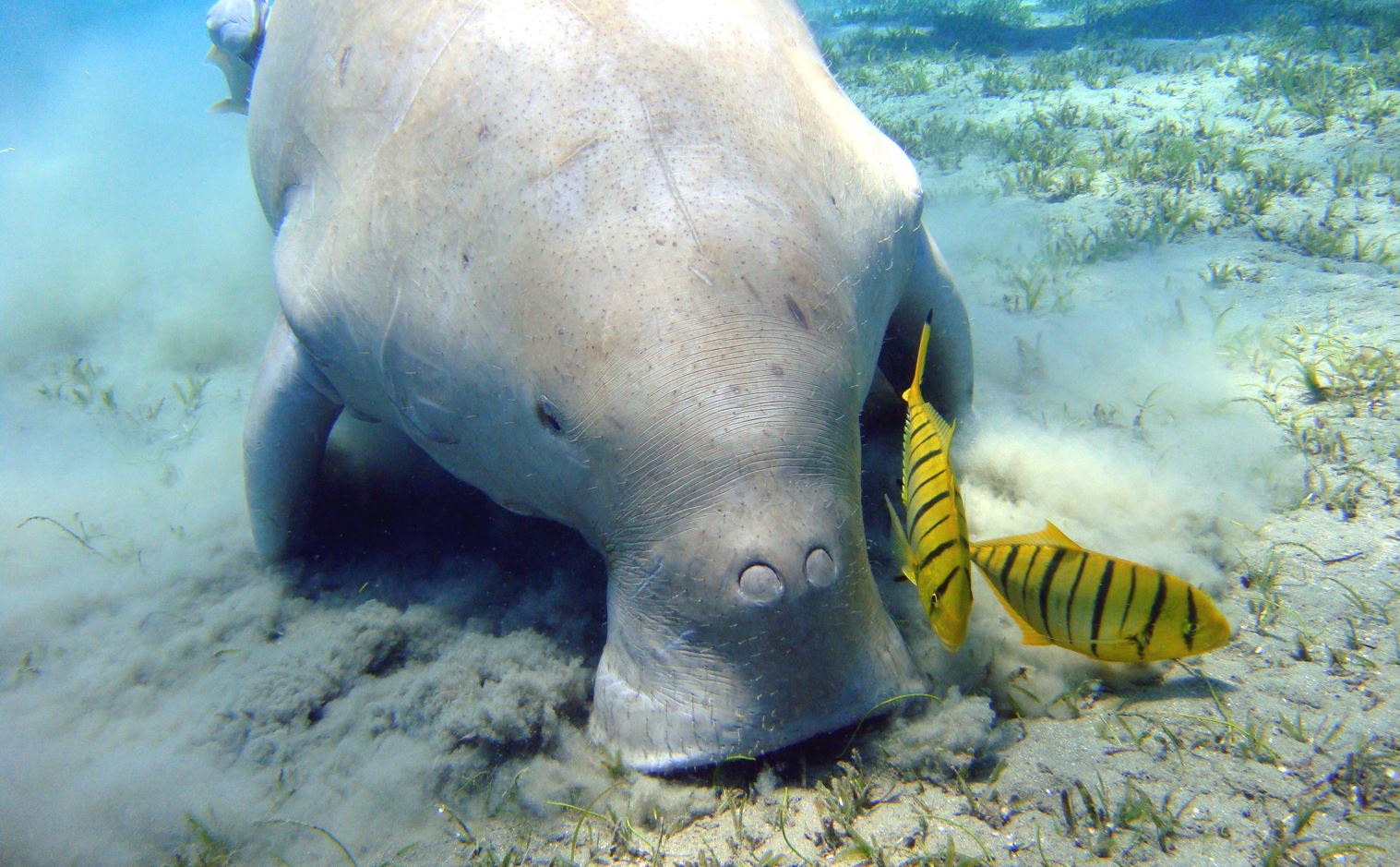
Later, linguists noticed that the old Arabic word tuchasch denotes leather made from marine mammals (dolphins, sirenians), a term already in use in Ancient Egypt. There is little historical evidence for hunting the fast and shy dolphins, but sea cows are sluggish and can be harpooned from swift boats when they surface every few minutes to breathe. The dugong (Dugong dugon), formerly also called the fork-tailed sea cow or sea pig, could be a suitable supplier. To this day it occurs along the coasts of the Red Sea, and its hide can be made into a high-quality, thick, durable leather. How difficult linguistic reconstruction is becomes apparent when one considers that even in modern Arabic different names are used for this species: bugarah-al-bahr («sea cow» in Bahrain, Qatar, UAE), arus-al-bahr («sea bride» in Saudi Arabia), nagat-al-bahr («sea camel» in the northern regions of the Red Sea, Egypt, Jordan), and taweelah / al-jild (southern Arabia, Yemen).

There is yet another indication supporting this identification: while in the six verses that speak of the covering over the tabernacle (Ex 25:5; 26:14; 35:7, 23; 36:19; 39:34) the plural orot tachaschim is used, for the coverings of the implements each time only a single hide – or tachasch (Num 4:6, 8, 10–12, 14, 25) – is mentioned. Since we know some dimensions of the furnishings, we can calculate that a large hide is needed to cover them completely. The flayed skin of the dugong meets this requirement.
As for the classification as «clean» or «unclean», the rabbis disagree. Since, in the majority view, creatures that must surface because they need air to breathe do not count among the creatures that «are in the water» (Lev 11:9; Deut 14:9) and require «fins and scales» in order to be clean, the dugong does not fall under the ban: «Everything in the water that does not have fins and scales shall be an abomination to you» (Lev 11:12; cf. Deut 14:10). As a plant-eater, it is therefore to be regarded as clean. All in all, the argument for the dugong is today considered so compelling that newer revisions follow it and translate tachasch as «sea cow», or at least explain it that way in a note.
Since most details of the tabernacle, its implements, and its regulations can be understood as symbolic pointers to God’s then still future work of redemption and to the person of the Lord Jesus, it is very natural to look for them everywhere. In view of the difficulties described in assigning all details precisely, one should not become too fixated on one interpretation.
Let us assume, then, that it really was the hide of the dugong, which at that time was tanned into fine leather and used as the outer, weather-protecting covering. This mammal lives in the sea, which in the Bible is used repeatedly as a symbol of turbulent humanity and its peoples in rebellion against God (e.g., Ps 65:8; Isa 17:12; 57:20; Rev 17:15) – the world dominated and churned up by Satan. Into the midst of this turmoil came the Lord Jesus: He was born in an occupied land under foreign rule and, as a child, had to flee to another country. He stood amid the tensions of the expectations of various political and religious groups yet took no side; rather, He repeatedly emphasized that He and His kingdom were not «of this world» (Joh 17:14, 16; 18:36). That the dugong surfaces every few minutes to breathe reminds us that the Lord Jesus stood in constant communion with His Father in heaven (Joh 14:10).
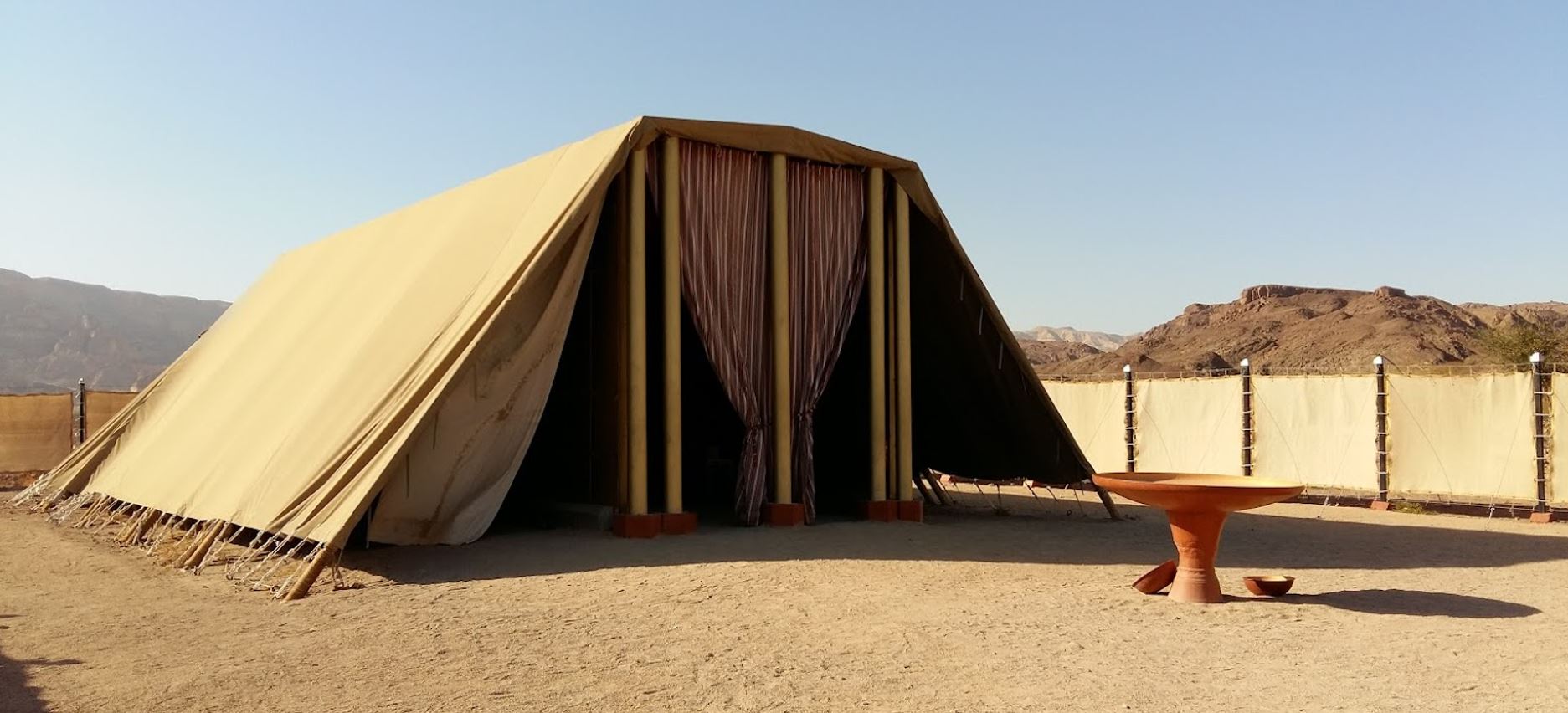
From the outside, the roof of brown-gray hides must in any case have stood in striking contrast to the gleaming elements of gold, silver, and bronze and to the artistically woven, colorful curtains surrounding it. That would indeed be a pointer to the outward inconspicuousness of the Lord Jesus, as Isaiah prophetically describes it: «He had no form and no majesty; and when we saw him, he had no appearance that we should desire him. He was despised and rejected by men, a man of sorrows and acquainted with grief, and like one from whom men hide their faces; he was despised, and we esteemed him not» (Isa 53:2–3).
Whales
The order of whales (Cetacea) includes about 90 species, which are divided into the suborders of baleen whales (Mysticeti) and toothed whales (Odontoceti). The toothed whales also include the family of dolphins, which in English usage are not referred to as whales.
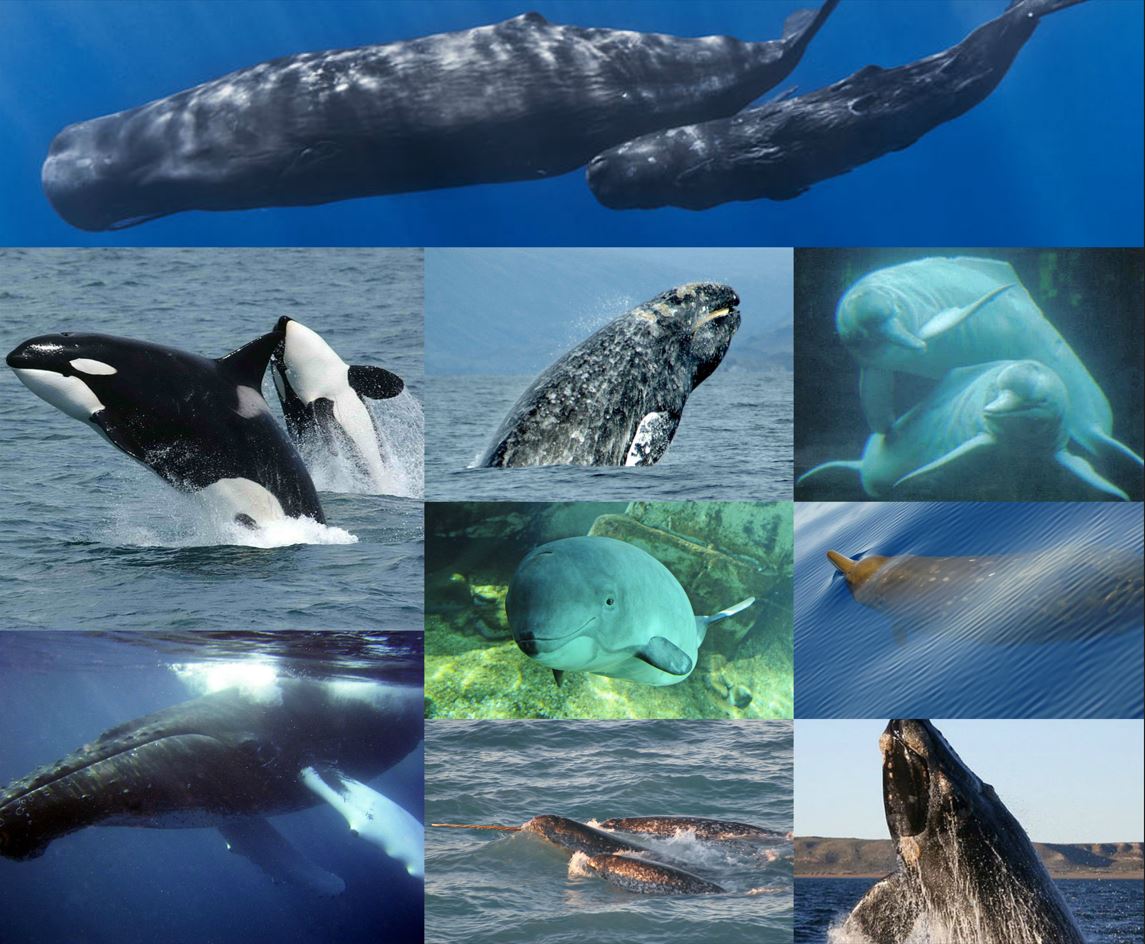
Whether whales are mentioned in the Bible cannot be said with certainty. In the creation account, among the water creatures created on the fifth day, ha-tannim ha-gedolim – «the long ones, the great ones» – are mentioned (Gen 1:21), which is translated as «sea monsters, great sea or marine animals», whereas «the long ones» is a nonspecific expression also used for snakes (Ex 7:9, 10, 12; Ps 91:13), jackals (12x), and monsters such as Leviathan (Isa 27:1) and «Rahab» (Isa 51:9). The latter evoke dinosaurs or marine reptiles more readily. Only in the Menge translation does the whale appear: «There go the ships, and Leviathan [Heb. livyatan], which you formed to play in it» (Ps 104:26).
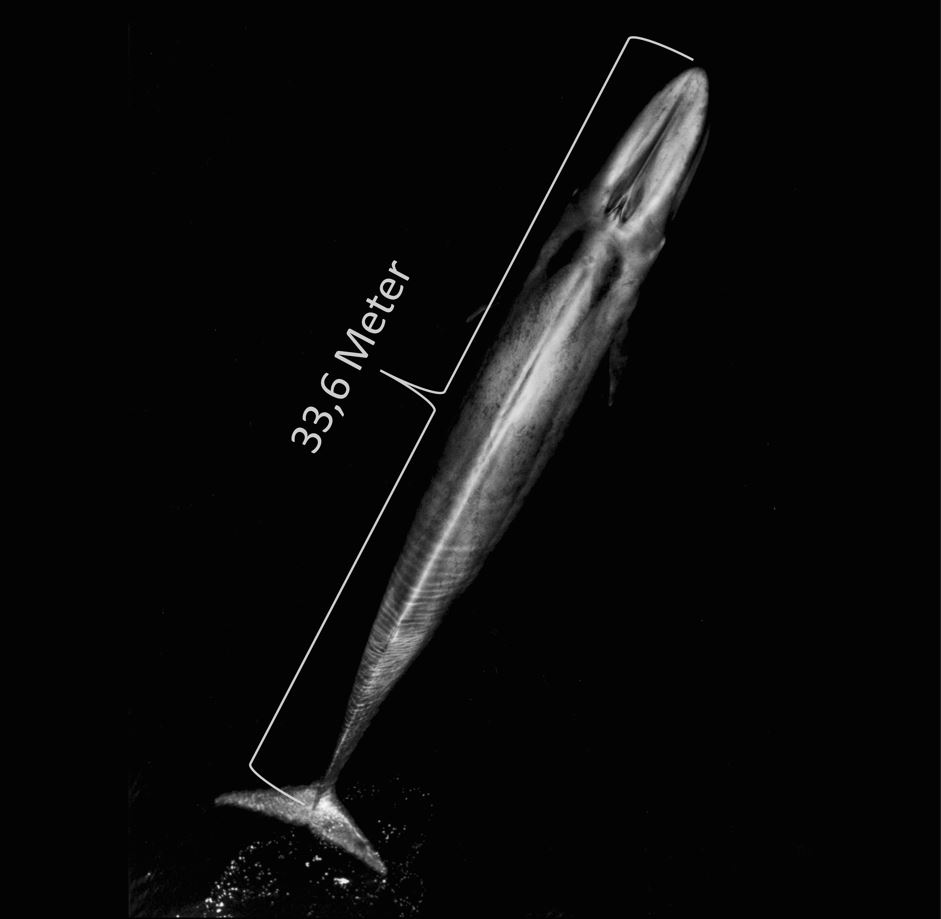
If then, large sea creatures in general are meant here, whales are certainly their most prominent representatives. No living or extinct animal exceeds the dimensions of the blue whale (Balaenoptera musculus), which at 33 meters in length from head to fluke is truly «long», and whose maximum weight of up to 200 tons is not even approximately reached – nor has ever been reached – by any other animal (possibly with the exception of the extinct whale Perucetus colossus, discovered only in 2023). Since this blue-whale giant, in its basic body plan, essentially corresponds to the «animals of the field», it is worth looking closely and gaining insights into the divine craft of creation.
When they hear the word «whale», many think first of the story of the prophet Jonah, who was swallowed by a «great fish» (Hebrew: dag gadol; Jon 2:1). In the New Testament, this animal is designated by the Greek word ketos (Mt 12:40), which likewise denotes large aquatic creatures in a general way. In the taxonomic name of whales, Cetacea, one can hear both the Greek ketos and the Latin cetus. But that does not necessarily mean that the Jonah story involved a representative of the whales, whose scientific order name was coined only in 1762.
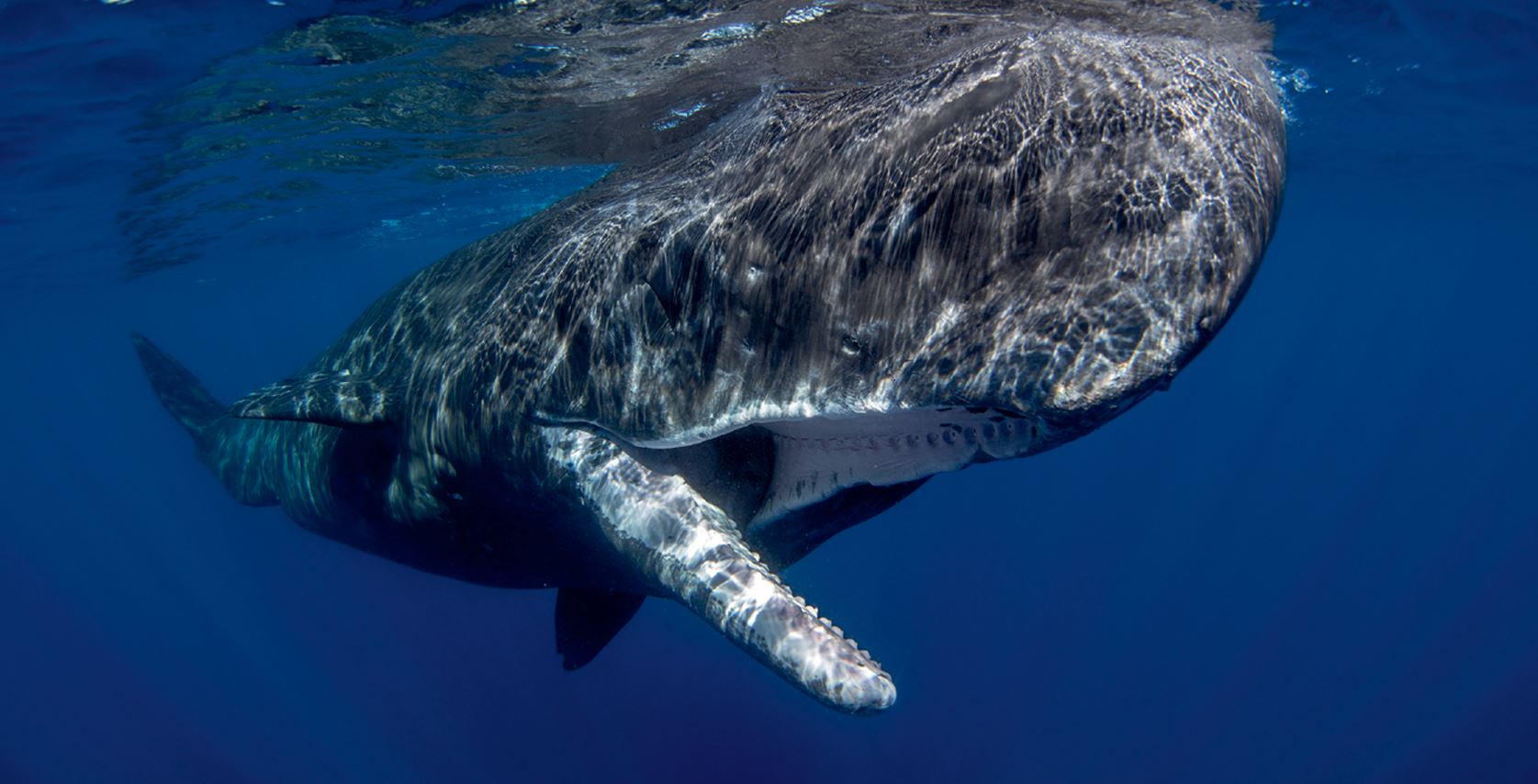
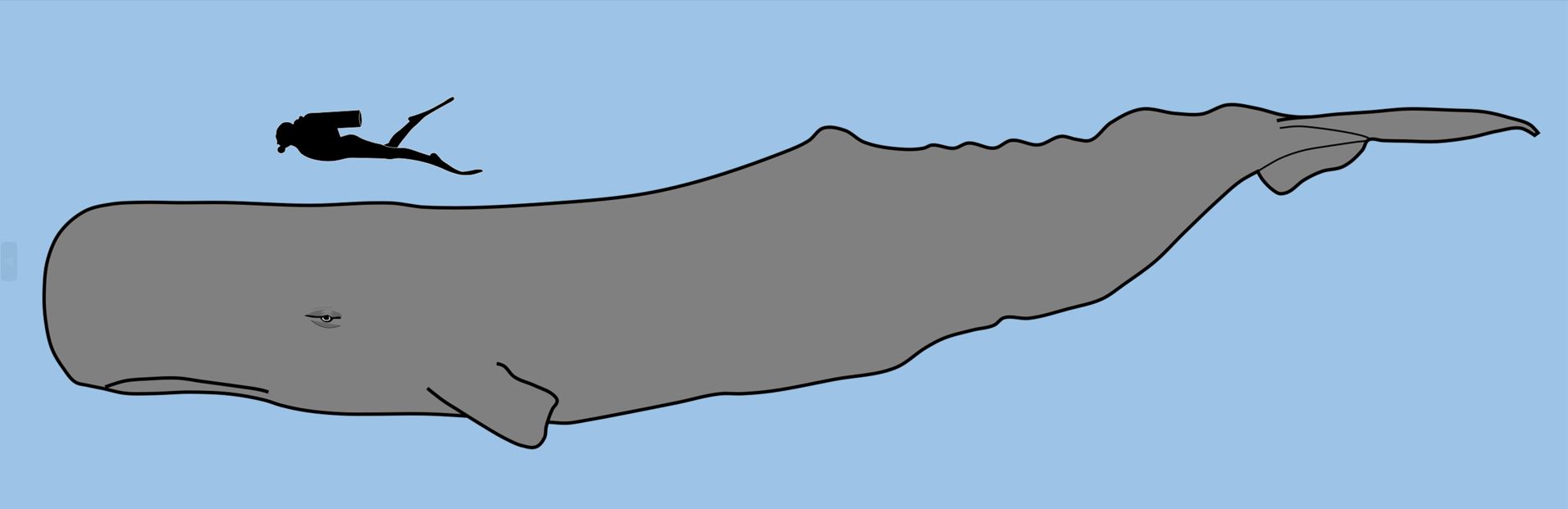
It is conceivable both that God created a suitable sea creature specifically for this special purpose, and that He preserved Jonah in a miraculous way inside a living creature known to us – whether recent or already extinct. In that case, the sperm whale (Physeter macrocephalus) would be a suitable candidate. It is certainly capable of swallowing a human being and taking him into its large throat pouch or stomach. Although sperm whales have become rare in the Mediterranean (and unfortunately worldwide), they have always occurred there and can still be observed from time to time. Only in May 2022, a bull weighing almost 50 tons was sighted directly off the Israeli coast at Haifa. With such a weight and about 20 meters in length, sperm whales (like the extinct giant shark Megalodon) belong to the largest predators of all time.
Another sea creature that could be considered is the whale shark (Rhincodon typus), which, however, belongs to the sharks and thus to the fish (and not to the mammals) and is mentioned here only for completeness. It is indeed a plankton-eater like the gigantic baleen whales, but as «bycatch» it also ingests larger pieces. Unlike the baleen whales, it has a wide throat through which a human being might well slide down unharmed, if God were to «appoint» the animal for this purpose. However, it has never been sighted in the Mediterranean and prefers tropical waters. Whether it was a whale, a whale shark, or another animal, in any case it had no «freedom of choice», but did exactly what the Creator wanted – just as before it did the storm wind and the lot, and afterward the plant, the worm, and the «scorching east wind» (Jon 1:4, 7, 11; 4:6–8). The only work of creation in this story that refuses the Creator’s commission is a human being who knows his God and Creator (Jon 1:3, 9).
Although there are several reports of people who survived a stay inside a sea creature, these are not decisive for understanding Jonah’s story. The Bible calls the event a «sign» (Mt 12:40; 16:4; Lk 11:29, 30), thereby expressing that it was a miracle, that is, a supernatural event with deeper spiritual meaning (Acts 2:22). It is not helpful to look for natural explanations where the Bible clearly identifies events as supernatural or extraordinary (Lk 5:26: paradoxos). What happened to Jonah is a pointer to the miracle of Jesus’ resurrection from the dead: «For just as Jonah was three days and three nights in the belly of the great fish, so will the Son of Man be three days and three nights in the heart of the earth» (Mt 12:40).
Bats
Again and again it becomes an object of mockery that the bat, with the Hebrew designation atallef (Lev 11:19; Deut 14:18; Isa 2:20), is allegedly listed in the Bible as a «bird». Note that in the enumeration of the of, which means nothing other than «flyers», it is listed at the very end: «and the bat» (Lev 11:19). In the context of the dietary laws, this arrangement makes sense.
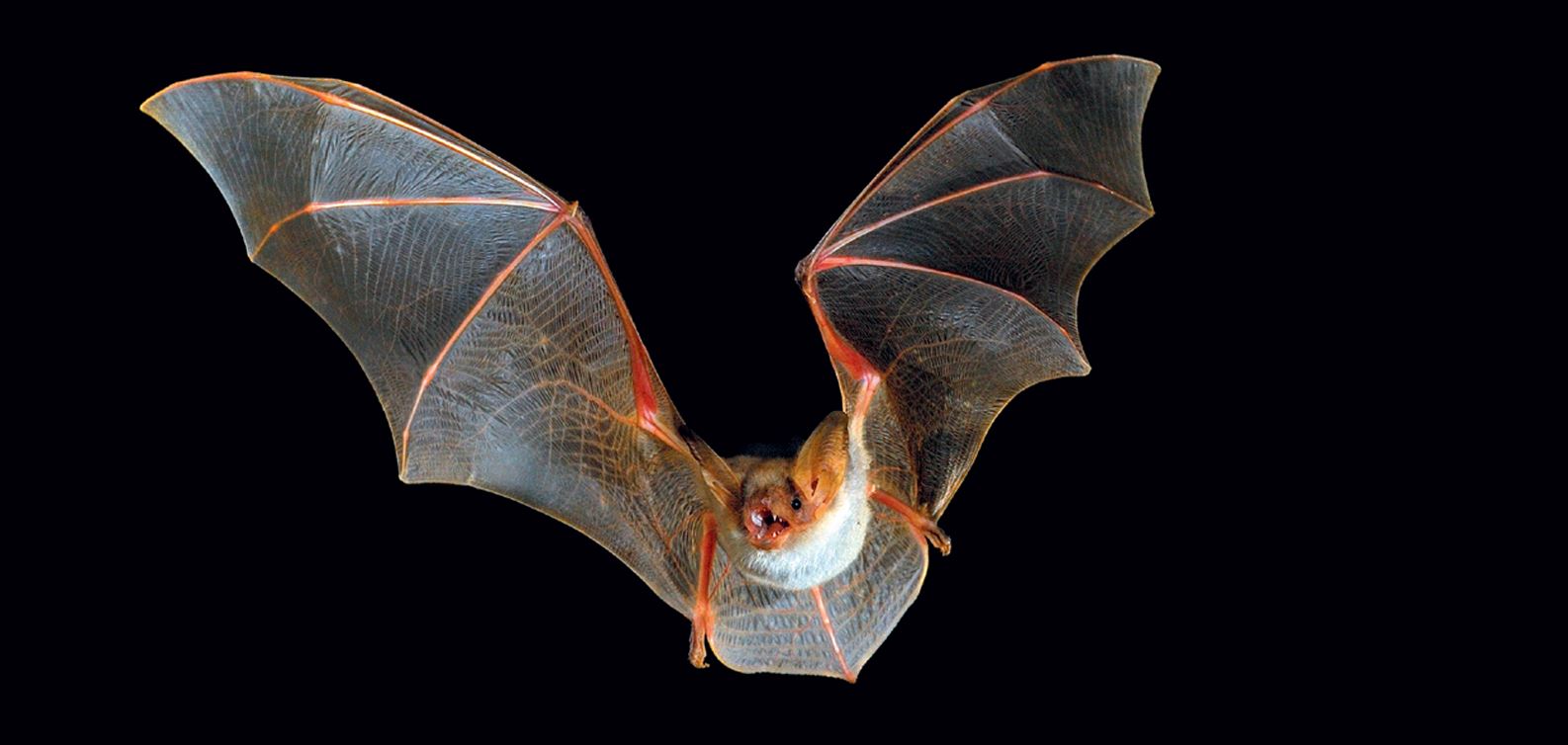
Shortsighted, on the other hand, is anyone who expects today’s taxonomy (which, incidentally, is not set in stone either) in the Bible and therefore concludes that people in antiquity would not have noticed the differences. It was certainly known that bats have neither feathers nor a beak, build no nests, and lay no eggs. But since they share with the flyers the air as their sphere of action as the central trait, they are no more alien to them in a natural classification than ostriches, which share all other traits but live on the ground.
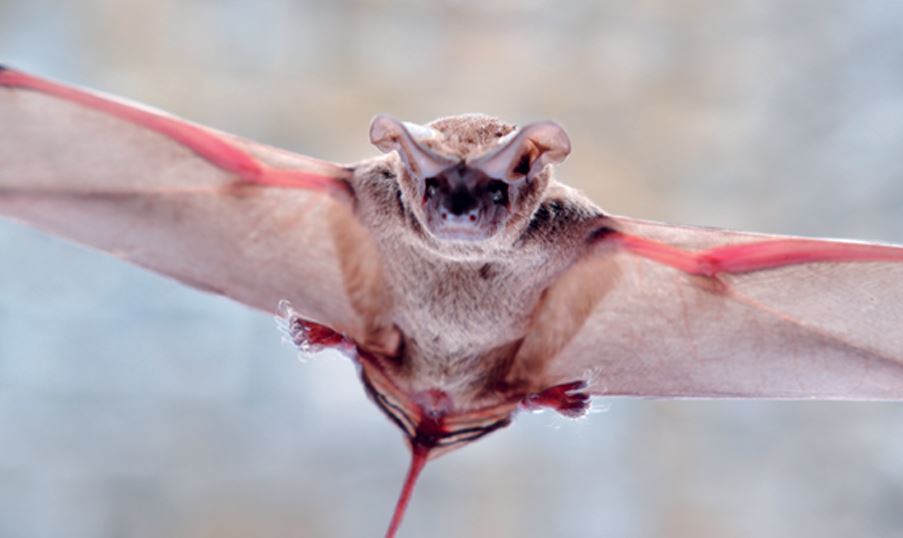
Even in our biologically enlightened age, people do not always think only in taxonomic categories. The best proof of this is that the New Zealand long-tailed bat (Chalinolobus tuberculatus) was chosen by Kiwis as «Bird of the Year 2021», and this was neither an error nor a misunderstanding. It is assumed that the biblical name of the bat derives from the verb ataf – «to wrap, to cloak» (cf. Ps 73:6) – and comes from the fact that the animals hang from the ceiling wrapped in their flight membranes. Today, 31 bat species occur in Israel, 30 of which are strict insect-eaters. They make an important contribution to pest control and are protected by conservation law.
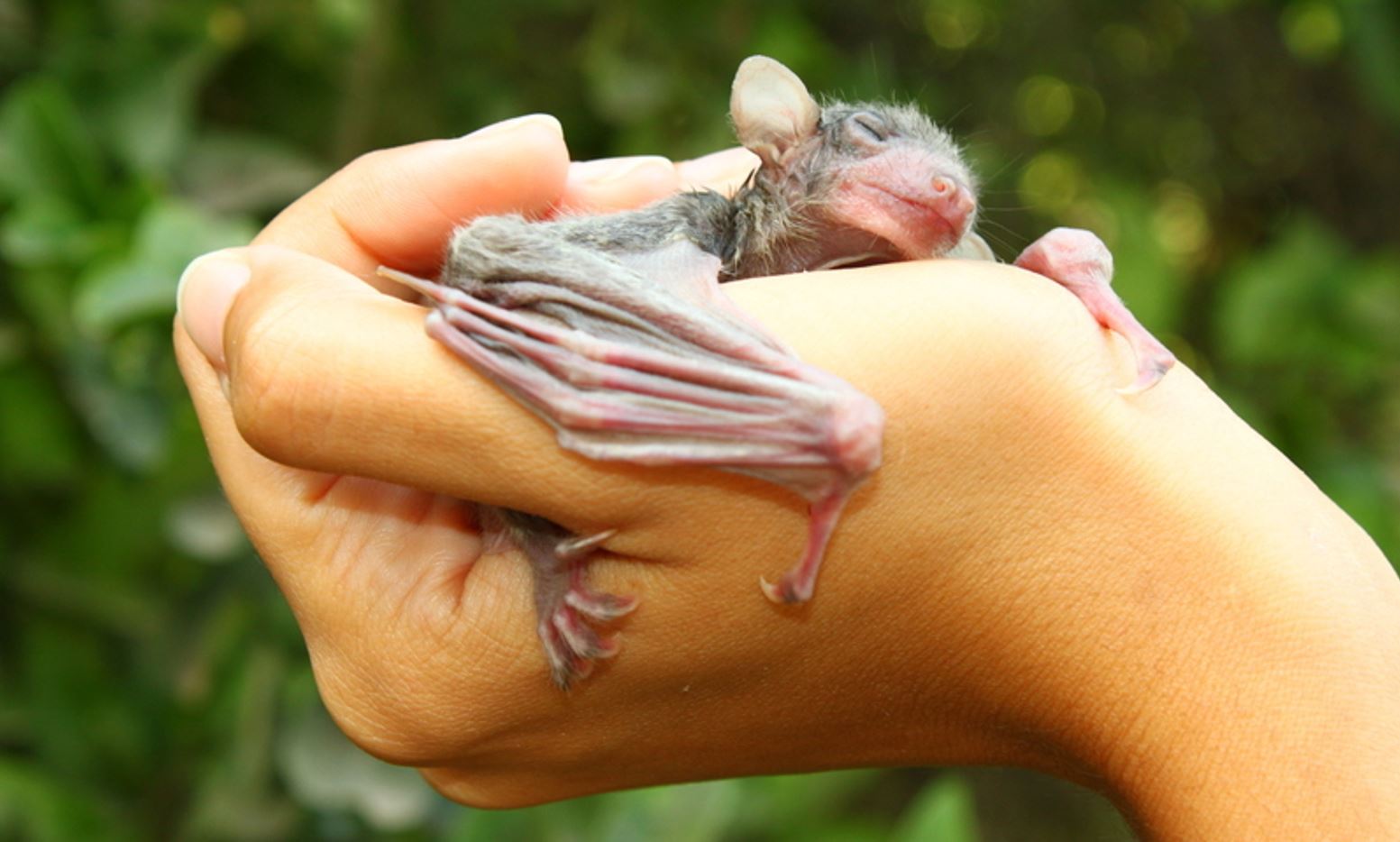
The Egyptian fruit bat (Rousettus aegyptiacus), which is indeed a bat-like mammal but not a «bat» in the narrower sense – rather, a fruit bat – has the largest population and feeds on fruits such as bananas, oranges, grapes, mangoes, apricots, peaches, and apples. For that reason, it is not especially welcome among farmers.
Sources (Manatees):
Hofman, I: Welches Tier lieferte die biblischen Tachasch-Felle? Anthropos 1978; 73(1/2):49-68; https://www.jstor.org/stable/40459224
Kiene, PF: Das Heiligtum Gottes in der Wüste Sinai (6th ed., p. 64: The covering of badger skins). Asslar (Schulte & Gerth) 1992
Neufeld, E: Fabrication of objects from fish and sea animals in ancient Israel. Journal of the Ancient Near Eastern Society 1973; 5(1)309-324; https://janes.scholasticahq.com/article/2162.pdf
Noonan, BJ: Hide or Hue? Defining Hebrew שׁחַתַּ. Biblica 2012; 93(4):580-589; https://www.jstor.org/stable/42617309
Pollock, AJ: The Tabernacle‘s Typical Teaching (p. 42). Crewe, GB (Scripture Truth Publications) 2009
Preen, A; Das, H; Al-Rumaidh, M: Dugongs in Arabia (aus: Sirenian conservation: Issues and strategies in developing countries, S. 91-98). University Press of Florida 2012; doi: 10.2307/j.ctvx079z0.16
Solomon, R: What was the Tachash Covering in the Tabernacle? accessed 27/06/04.2023; https://www.thetorah.com/article/what-was-the-tachash-covering-the-tabernacle
Sources (Whales):
Bianucci, G; Lambert, O; Urbina, M: A heavyweight early whale pushes the boundaries of vertebrate morphology. Nature 2023; 620:824–829; doi: 10.1038/s41586-023-06381-1
Fokus Jerusalem: Israels erster riesiger Pottwal „Kim“ vor Haifa gesichtet; report dated 15.05.2022; accessed 28/06/04.2023; https://www.fokus-jerusalem.tv/2022/05/15/israels-erster-riesiger-pottwal-kim-vor-haifa-gesichtet
Grigg, R: Jona und der große Fisch. accessed 27/06/04.2023; https://www.schöpfung.info/index.php/artikel-fische/89
Hobson, M: Können Wale Menschen verschlucken? National Geographic, 10.08.2021; https://www.nationalgeographic.de/tiere/2021/08/koennen-wale-menschen-verschlucken
Podbregar, N: Urzeit-Wal könnte schwerstes Tier aller Zeiten gewesen sein. Bild der Wissenschaft, 02.08.2023; https://www.wissenschaft.de/erde-umwelt/urzeit-wal-koennte-schwerstes-tier-aller-zeiten-gewesen-sein
Sources (Bats):
Avivi, E: The Bats of Israel Yesterday and Today: 1989-90. BATS Magazine 2012
Barkhausen, B: Spott im Internet: Neuseeland wählt Fledermaus zum „Vogel des Jahres“. Redaktions Netzwerk Deutschland (RND) 02.11.2021; https://www.rnd.de/panorama/spott-im-internet-neuseeland-waehlt-fledermaus-zum-vogel-des-jahres-GW2J55A3DVBAFNQW6PF5O7EASI.html
Fähnders, T: Neuseeland wählt Fledermaus zum „Vogel des Jahres“. Frankfurter Allgemeine Zeitung 01.11.2021; https:// www.faz.net/aktuell/gesellschaft/tiere/vogel-des-jahres-neuseeland-waehlt-fledermaus-17612874.html
Korine, C; Izhaki, I; Arad, Z: Is the Egyptian fruit-bat Rousettus aegyptiacus a pest in Israel? An analysis of the bat’s diet and implications for its conservation. Biological Conservation 1999; 88(3):301-306; doi: 10.1016/S0006-3207(98)00126-8
Max-Planck-Gesellschaft: Fledermaus ist schneller als jeder Vogel – Brasilianische Freischwanz-Fledermaus erreicht 160 Stundenkilometer. Scinexx 11.11.2016; https://www.scinexx.de/news/biowissen/fledermaus-ist-schneller-als-jeder-vogel
McCracken, GF; Safi, K; Kunz, TH: Airplane tracking documents the fastest flight speeds recorded for bats. Royal Society open science 2016; 3(11):160398-160398; doi: 10.1098/rsos.160398
Image Credits:
Wikipedia: Dugong plowing the seafloor / Julien Willem // Whale & dolphin collage / LittleJerry // Blue whale with length indication / NOAA Fisheries // Size comparison sperm whale–diver / Kurzon // Egyptian fruit bat baby / Mickey Samuni-Blank
other licenses: Title – Dugong swimming freely / Shutterstock ID_2076189904 / vkilikov // Sperm whale with open mouth / Shutterstock ID_2192775063 / Martin Prochazkacz // Greater mouse-eared bat / Shutterstock ID_1239228343 / FJAH // Brazilian free-tailed bat / Shutterstock ID_2379579587 / Poetra.RH