Why camels are portrayed in our culture as dim-witted fools is hard to fathom. Among peoples who have lived with them for many centuries, they enjoy an excellent reputation and are considered intelligent, capable of learning, patient, good-natured, and reliable. In the biblical narrative they play a role from the earliest times onward, even though archaeology long struggled to corroborate the biblical data.
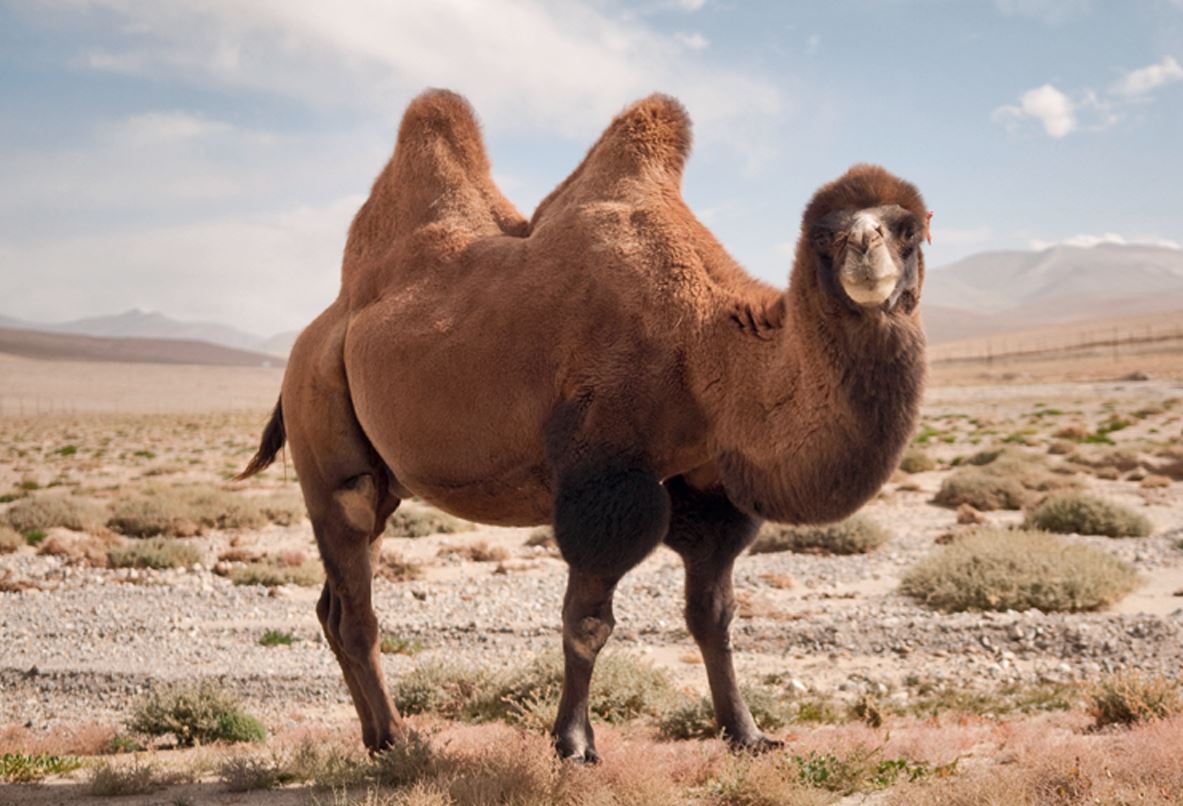
When people in the Near East or in Africa speak of «camels» today, they usually mean the dromedary (Camelus dromedarius), also known as the one-humped or Arabian camel. In the time of the patriarchs it may also have been the two-humped Bactrian camel, or Trampeltier (Camelus ferus / bactrianus), whose use in the third millennium BC is archaeologically attested. The two species can be crossbred. Taxonomically, camels do not belong to the suborder of ruminants (Ruminantia), yet they have a four-chambered stomach and they chew the cud, just as the Bible already describes (Lev 11:4).

The sound of «camel» is easy to recognize in the Hebrew word gamal (51x). It occurs as a personal name in the form Gamul (1Chr 24:17) and Gemalli (camel owner, Num 13:12), and as a place name in the compound Beth-Gamul (house of camels, Jer 48:23). The Arabic term for camel is likewise gamal – and as Gamal, Jamal, Dschamal, Djamel, or Cemal it is a popular male given name. Because of the negative connotation, however, in Western media it is nowadays mostly derived from a word of the same root meaning «beauty». Young camels are described with the word beker (Isa 60:6), which denotes young stallions in particular and adolescent animals in general, and likewise occurs as a male name (Gen 46:21; Num 26:35; 1Chr 7:6.8). The feminine form used for young mares is bikra (Jer 2:23). The designation karkara (Isa 66:20) for the adult she-camel is derived from the verb «to dance», which aptly describes its slightly swaying and enduring manner of locomotion. In addition, the camel’s hump is mentioned (Isa 30:6) and appears as the place name «Dabbeschet» (Jos 19:11).
In the New Testament the Greek word kamelos (Mt 19:24; 23:24; Mk 10:25; Lk 18:25) is used, which was probably borrowed from the Semitic language family. In the combination thrixas kamelou it denotes camel wool or camel hair (Mt 3:4; Mk 1:6), which today is regarded as a luxury good. As the clothing of John the Baptist, however, it describes a coarse and simple fabric that stands in stark contrast to splendid and soft clothing (Mt 11:8; Lk 7:25). Presumably his «predecessor», the prophet Elijah, was dressed similarly as with «a garment of hair and had a leather belt around his waist» (2Kgs 1:8).
In the book of Job, whose events may take place as early as two to three hundred years after the Flood, large herds totaling 3,000 camels – later even 6,000 – are already mentioned (Job 1:3; 42:12). Abraham is given camels as gifts during his visit to Egypt (Gen 12:16), and later his servant sets out with ten animals on the journey to Haran to find a bride for Isaac (Gen 24:10). Later still, Isaac’s son Jacob returns from there as a wealthy man – probably on the back of a camel. In any case, the stolen household gods of his father-in-law are hidden under a camel saddle (Gen 31:34), and among the great herds he brings along are also counted 30 nursing camels with their young, which he gives to his cheated brother Esau as a gift (Gen 32:16). Later again, his son Joseph is taken to Egypt with an Ishmaelite camel caravan (Gen 37:25).
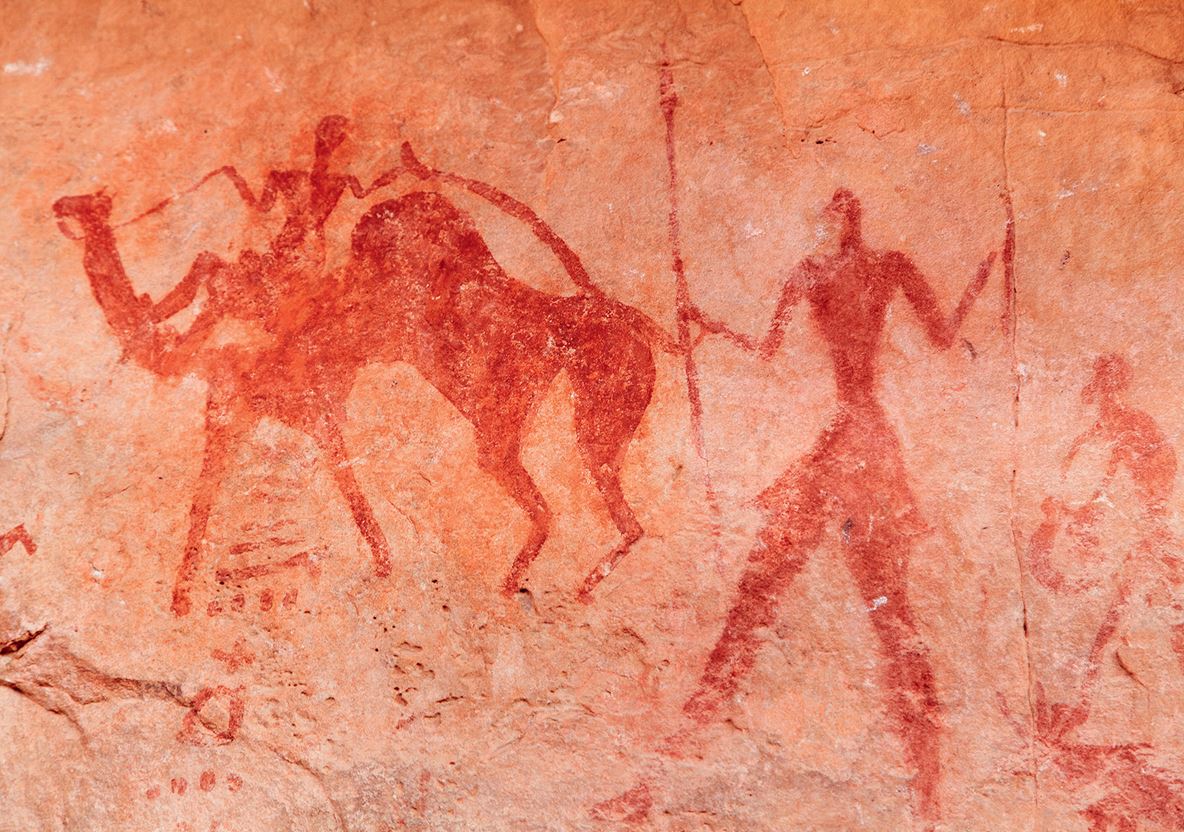
These early mentions of the camel were often used to accuse the Bible of erroneous reporting, since camel domestication was long assumed to have taken place only around 1000 BC. By now, however, there is a whole series of finds that confirm the biblical picture, even if one might wish it were a bit clearer. For while there is an abundance of depictions and textual evidence for all other livestock, indications of the breeding and use of camels are rare exceptions. There can, however, be many different reasons for this. They were probably kept almost exclusively by nomads, who generally left hardly any archaeologically detectable traces. Abraham and his family – who lived semi-nomadically, yet were related to nomadic peoples such as Ishmaelites, Nabataeans, and Midianites, possessed great wealth, and maintained ties to East and West – seem simply to have been somewhat ahead of their time in this respect, traveling already in those days, with progressive and practical thinking, in the hump-saddle.
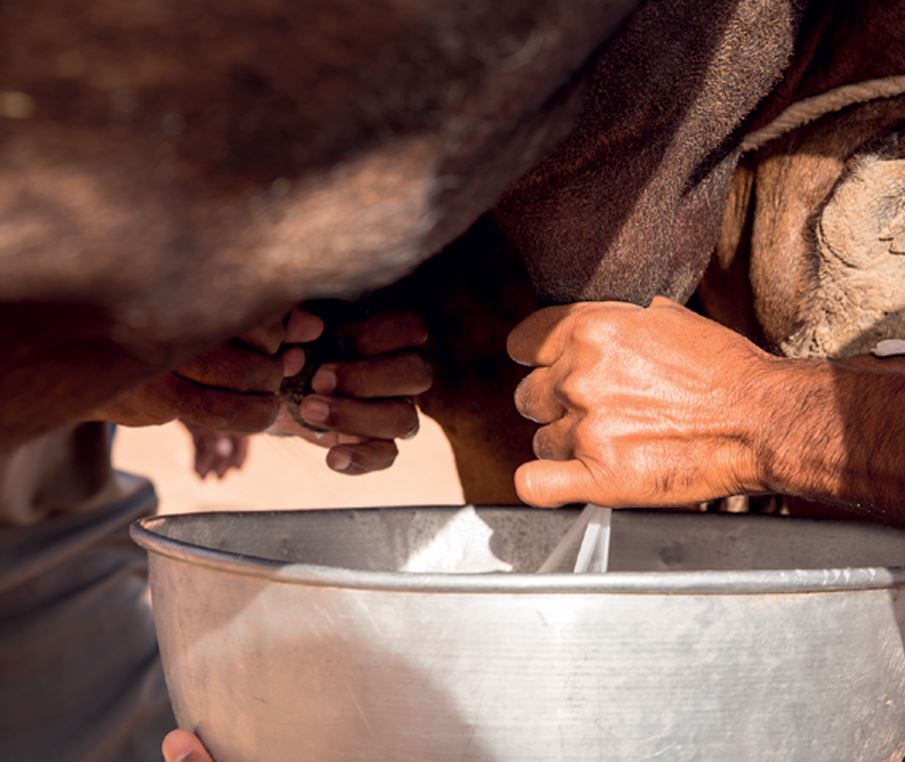
Camels live in herds and manage well even without human care. For giving birth, the mares withdraw to the most secluded place possible and return only after a few days, once the calf is safely on its feet. The young begin to take solid food after just three months and are weaned by the herders already at 7–10 months of age, because the milk is a sought-after product. For this they cover the udder with a net. To be able to milk the mare, however, the calf must first suckle briefly. Then it is pushed aside and the milking can begin. The calf must stand next to her the whole time, because the mare lets down milk only in the presence of the calf. In order to keep milking a mare whose calf has died, Bedouins use stuffed calves or hang the hide on a child. The mare can be deceived by this. Modern milking machines now simulate natural suckling so perfectly that it works even without a calf.
mc:amel
The novel Water Music made a recipe for «Stuffed Camel» popular – the ingredients:
- 4\t bustards (large, ground-dwelling birds),
- cleaned and plucked
- 500\t dates
- 200\t plover eggs
- 20\t carp (two-pounders)
- 2\t sheep
- 1\t large camel
- various spices
Preparation: Dig a fire pit. Let the blaze burn down onto a layer of glowing coals about one meter deep. Hard-boil the eggs separately. Then stuff the scaled carp with the peeled eggs and the dates. Stuff the finely seasoned bustards with the stuffed carp. Now stuff the sheep with the stuffed bustards. Then stuff the camel with the stuffed sheep. Sear the camel briefly, then wrap it in doum palm leaves and bury it in the embers. Bake for two days. Serve rice as a side dish.
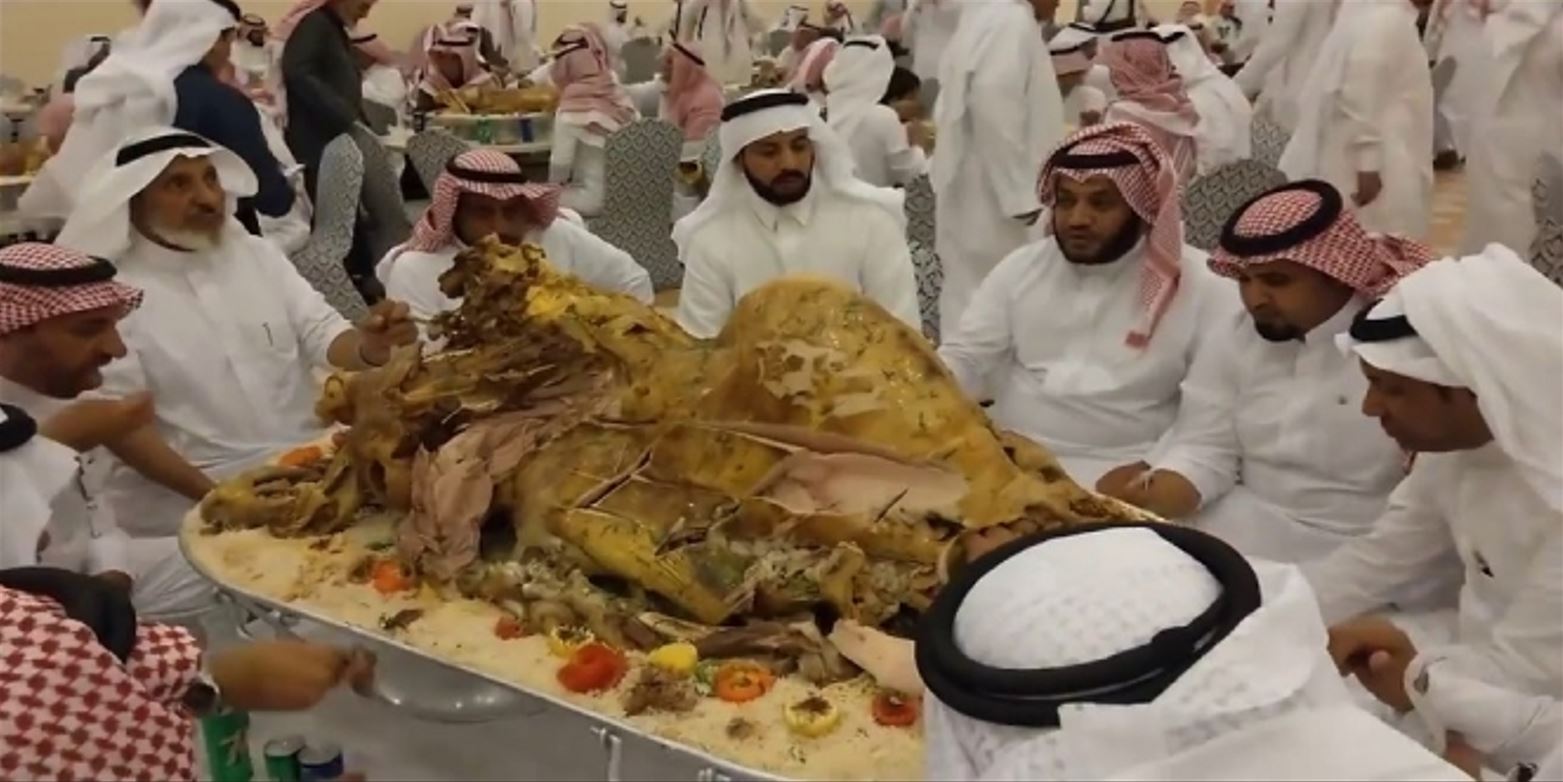
Now, a novel is not a cookbook … But among Bedouins there is indeed to this day the custom of stuffing camels in a similar way with meat and poultry preparations, then cooking them whole and serving them as a wedding feast. And when, after the banquet, nothing but bones and fishbones are left, the rabbis are still debating how many layers of palm leaves are required between sheep and camel so that at least the delicious stuffing may be kosher for the Jewish guests.
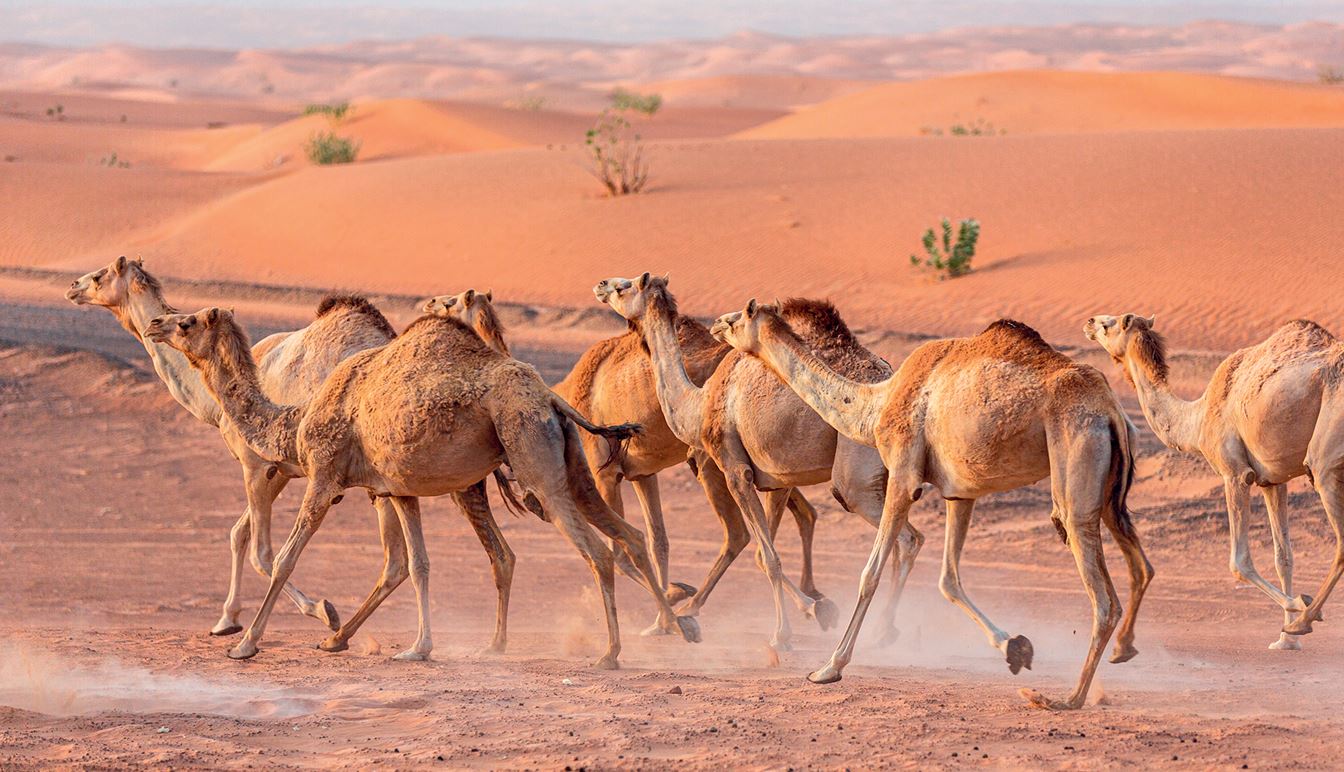
Young camels are very playful and grow up quickly. They do not become sexually mature until about four years of age and until then enjoy a carefree time in which they are not yet put to any work. While the mares (with their calves) and the stallions keep separately, the adolescents frolic together and test their strength in playful wrestling matches and races. In strictly moral societies, the relaxed interaction of the sexes symbolizes a secret wishful ideal. The prophet Jeremiah alludes to this image of licentiousness when he describes Israel as a « You are like a restless female camel desperately searching for a mate» (Jer 2:23). God expected fidelity and commitment from his chosen people in an exclusive relationship – like that lived in a God-honoring marriage. The continual turning to the gods of neighboring peoples is therefore equated in many prophetic speeches with adultery and prostitution. Israel behaved like a light-footed she-camel that flits noncommittally from one playmate to the next (or a wild donkey that attracts the stallions – see the article on the wild donkey).
God’s expectation regarding the fidelity of his people has not changed. Paul expresses it for the church like this: «I promised you to one husband, to Christ, so that I might present you as a pure virgin to him» (2Cor 11:2). Even if the literal worship of foreign gods is no longer an issue in Christendom today, there is still much competition for first place in life – the place that belongs to the Lord Jesus.
Since camels forage for themselves, can successfully defend themselves within the herd against any predator, and require neither care nor infrastructure, they are uncomplicated and inexpensive to keep. The fact that, in addition, they can be driven over almost any distance without great effort and can live up to fifty years makes them a popular means of payment. Indeed, the «camel exchange rate» still plays an important role in some countries today. Even if it seems a bit odd to state a bride price in «camels», and calculator programs such as https://kamelrechner.eu are only a gag, it is, for example, official jurisprudence in Iran that the relatives of a person killed in a traffic accident must be compensated with 100 camels (in the case of a woman: 50). In practice this amounts to a cash payment, with the value of a camel being officially fixed (in Iran currently about €500 per animal).
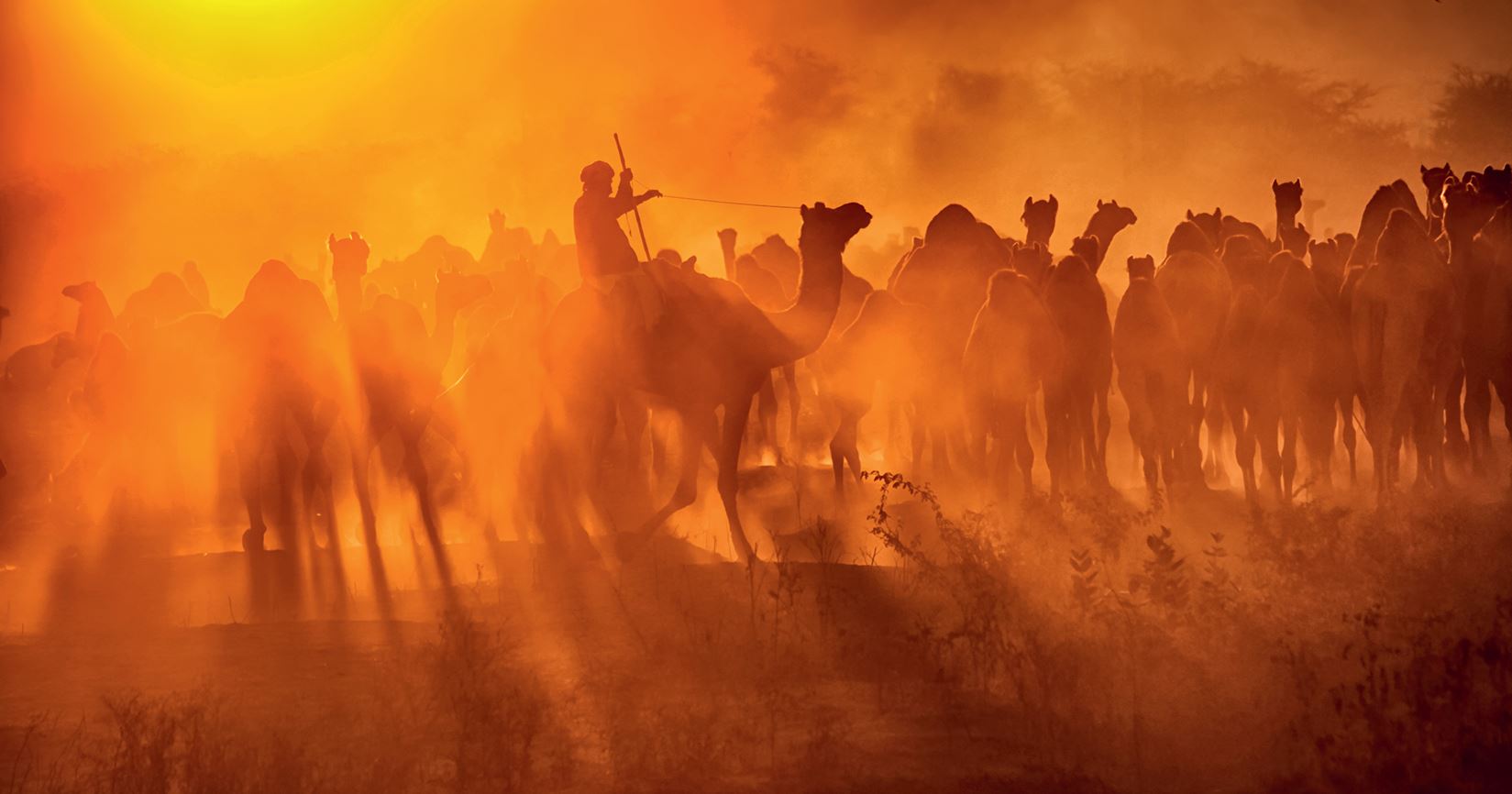
The herd may make the sheikh rich, but for nomadic peoples the camel was not only a means of payment but also a domestic animal that provided them with milk, meat, leather, wool, and dung (as fuel), and served as a riding and pack animal. In Israel its keeping was less suitable, for as a cud-chewer without cloven hooves it was regarded as an unclean animal (Lev 11:4; 5Mo 14:7), whose meat was not to be eaten and whose milk was not to be drunk. Nevertheless, they repeatedly fell into Israel’s hands as war booty, as in the war of the two-and-a-half Transjordanian tribes against neighboring nomads, in which the victors led away 50,000 camels (1Chr 5:21). This great number is no exaggeration. The Bedouin tribe of the Beni Sakr, which lived in the same region during the time of the British Mandate, even owned 100,000 camels. King David kept his camels under the supervision of an Ishmaelite (1Chr 27:30), who surely knew what he was doing. We do not know for what purpose. Probably it was likewise war booty (cf. 1Sam 27:9; 30:17) that he exchanged with peoples who could make better use of it.
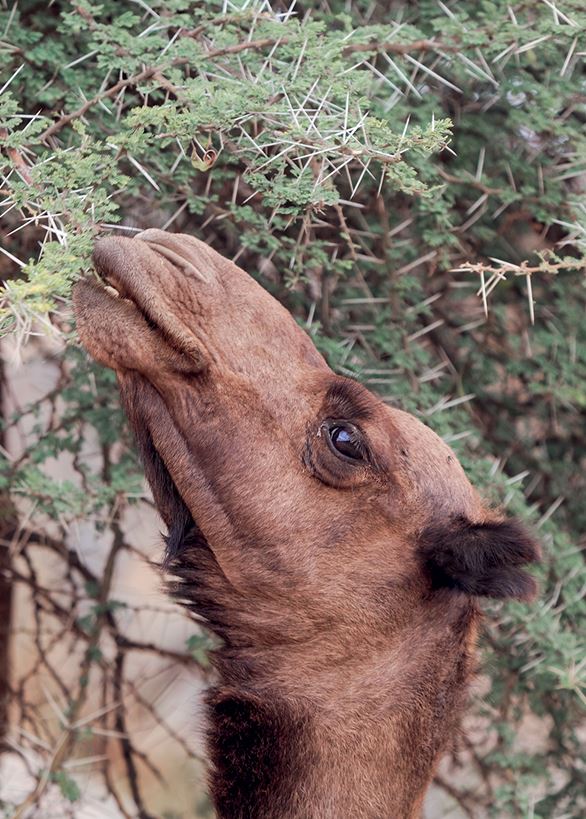
The outstanding characteristic of camels is their unusual resilience. They remain fully operational both in bitter cold (down to −25°C) and in extreme heat (up to 50°C). They survive up to three weeks without drinking and much longer without food. Temperature swings of up to 60°C – such as occur in some deserts between daytime highs and nighttime lows – are no problem for them. On such frosty nights they let their body temperature drop to 34°C, face the next day’s heat «cool as can be», and activate their sweat glands only shortly before their bodies heat up beyond 42°C.
Some anatomical and physiological peculiarities that enable camels to achieve these feats have already been thoroughly researched; others still pose puzzles. The prominent humps are not «water reservoirs», but they contain the energy reserve in the form of fat. When this store is tapped, the biochemical process of fat breakdown does release water, which is available to the metabolism and at least makes a small contribution to the overall balance. Since fat is also a poor conductor of heat, the humps protect the body as «external insulation» from heat and cold and provide additional shade.
To manage with little water, camels must be extremely frugal with it. Moisture is extracted from the exhaled air before it is allowed to leave. This works so well that even in icy cold no breath clouds are visible. Their urine – of which they void at most one liter per day – is highly concentrated, and their chestnut-like dung pellets plop to the ground so dry that they can be burned the very same day. Since they also begin to sweat only very late, their consumption is minimal in every respect. On the other hand, they are highly efficient at taking in fluid. As long as they can feed on juicy green plants – which in steppes and semi-deserts is only the case during the rainy season – they do not need to drink at all. Thanks to their exceptionally powerful kidneys they can temporarily make do even with salt water and help themselves from the sea. When, after a long period of thirst, all reserves are exhausted and water finally becomes available again, they can suck down up to 200 liters in just 15 minutes. Within a few hours it then distributes itself through the dehydrated body, which may have lost up to 35% of its weight, restoring its former fullness.
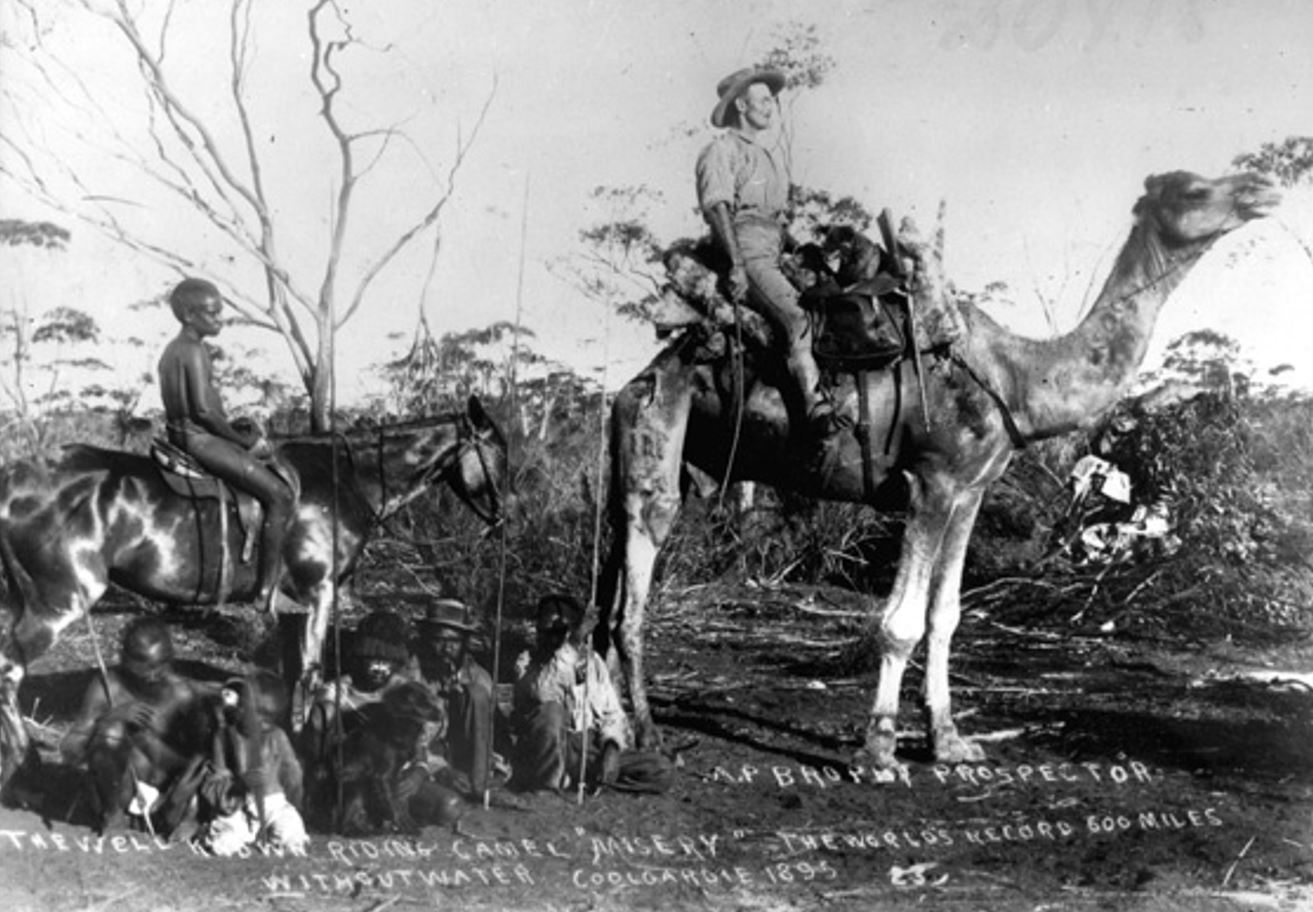
To compensate for these enormous fluctuations in water balance, the cardiovascular system is also specialized. Red blood cells are not round like those of all other mammals, but oval. They can absorb a great deal of fluid and more than double their volume in the process. Because of their shape they withstand pressure without bursting. In addition, their diameter hardly changes, so they still pass through the finest capillaries. At 19 million red blood cells per microliter, their density in the blood is four times higher than in humans and the highest among all mammals. This ensures oxygen supply even when the blood is viscous and flows slowly. Incidentally, this peculiarity also makes camels suitable for high altitudes. In the mountains of Central Asia they cross passes up to 5,500 meters high while fully loaded, whereas llamas, guanacos, vicuñas, and alpacas – their cousins in South America – do the same in the Andes.
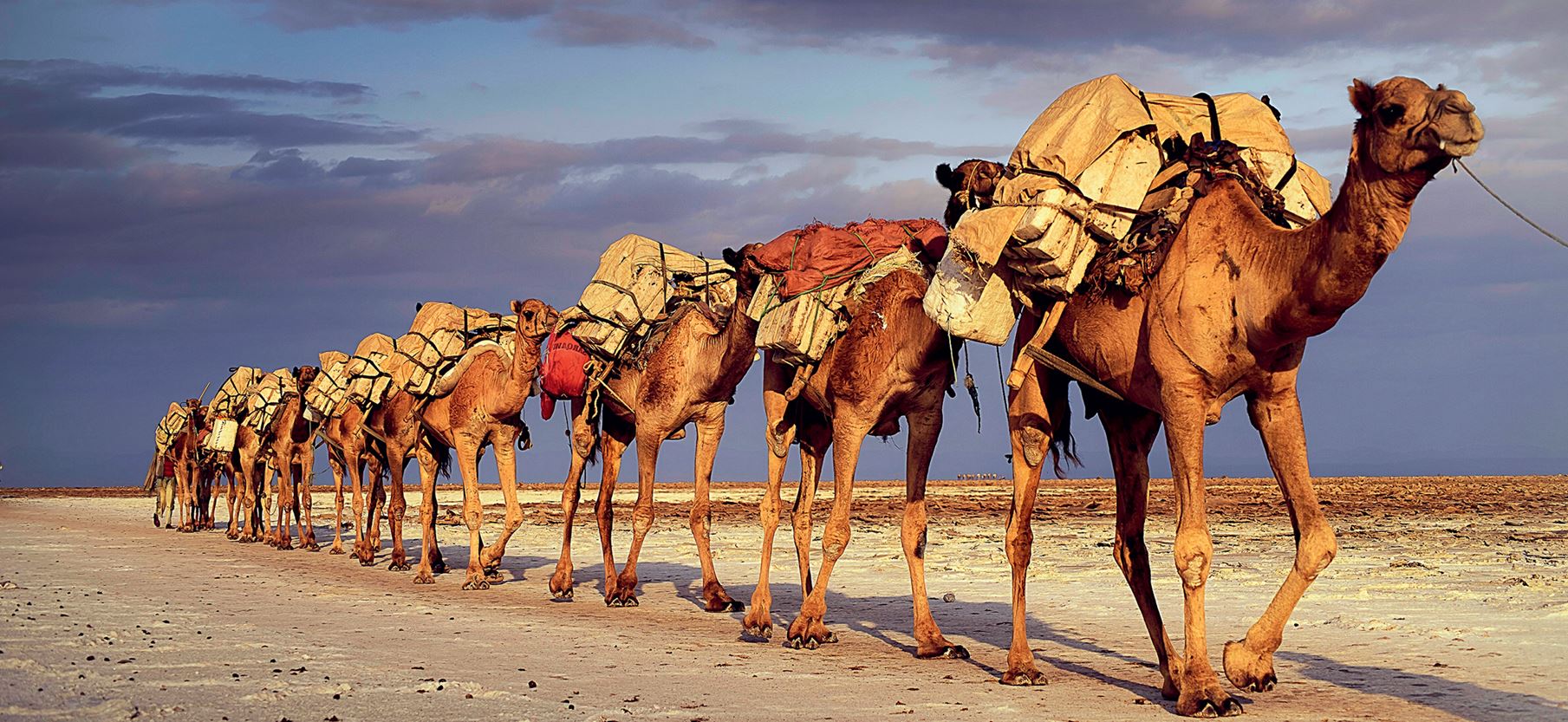
For the long-distance trade of antiquity, camels were indispensable in any case. Some oases and rest stations (caravanserais) were connected by desert routes so long that they could be traversed with no other pack animal. A caravan that travelled by day and rested by night covered about 150 km in the effective twelve hours of marching, with a single animal carrying an average payload of 250 kilograms in addition to its rider.
Many more adaptations could be added:
- feet with broad pads of fat and tough connective tissue that protect against heat, cold, sharp stones, and sinking into sand, snow, and soft ground (and are so distinctive that the entire suborder is classified as «pad-footed» because of them)
- a strangely swaying, slow, yet very energy-efficient gait in the «pace»
- a nose that can be actively closed and prevents suffocation in a sandstorm
- long, dense eyelashes to protect the sharp-sighted eyes from sand and dust
- insensitive yet highly mobile lips that can cope with the nastiest thorny plants and pluck what everyone else has left behind; they can grasp even the tiniest leaves
Camels are masterpieces of the Creator, with perfect design that is extremely useful to humans for some of the planet’s most inhospitable habitats.
The aching longing of a parched caravan for fresh water can readily be empathized with. Job uses this powerful image to describe his hope for comfort and his bitter disappointment with his friends: « My brothers, you have proved as unreliable as a seasonal brook that overflows its banks in the spring when it is swollen with ice and melting snow. But when the hot weather arrives, the water disappears. The brook vanishes in the heat. The caravans turn aside to be refreshed, but there is nothing to drink, so they die. The caravans from Tema search for this water; the travelers from Sheba hope to find it. They count on it but are disappointed. When they arrive, their hopes are dashed. You, too, have given no help …» (Job 6:15-21).
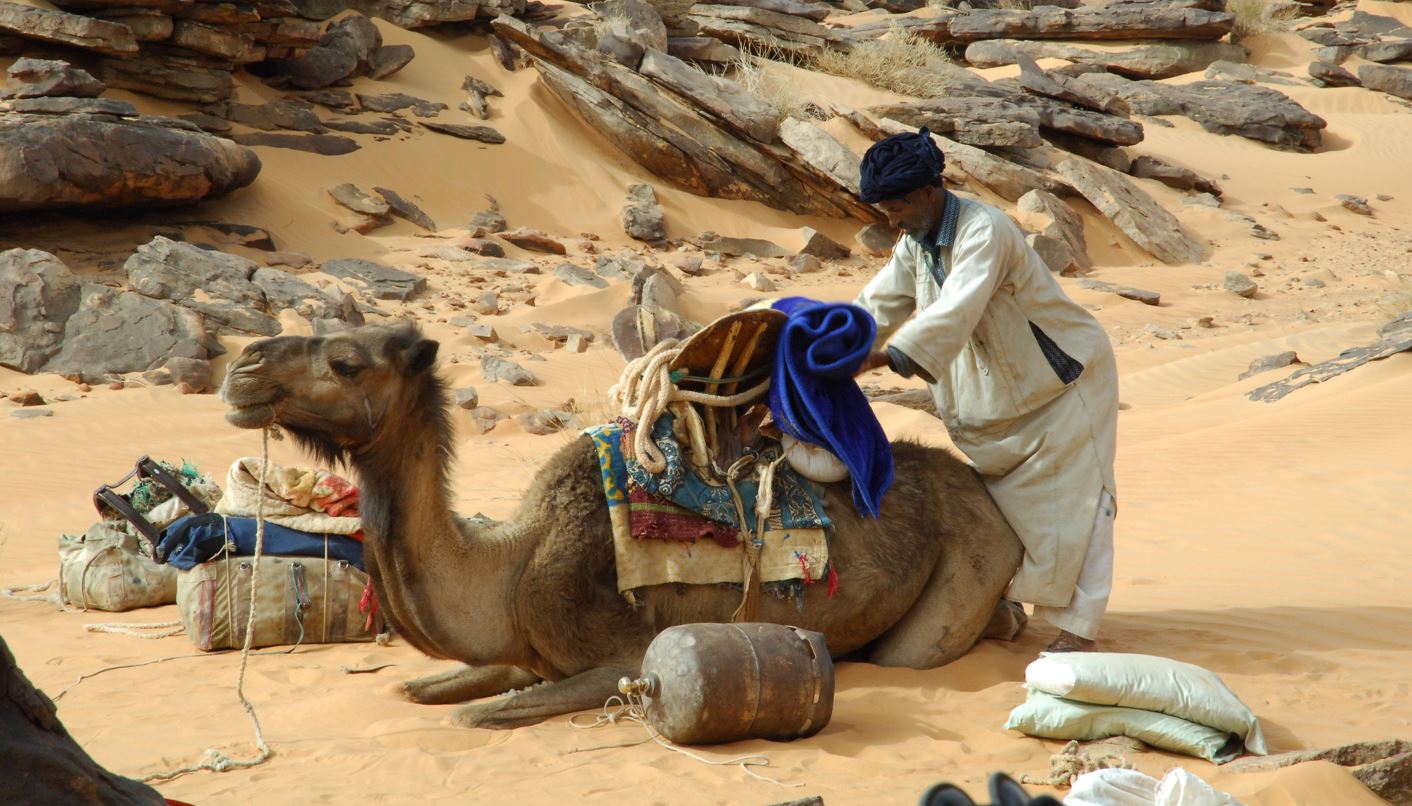
In Genesis 24 a caravan is described that, after a long journey (about four weeks and 750 kilometers), arrives at a well near the city of Haran, at the edge of the desert. One can assume the animals were very thirsty. If one now considers that a single camel can drink up to 200 liters at a time, it becomes clear that watering ten animals involves a great deal of effort. It seems unlikely that a young woman would voluntarily take this hard work off the hands of a strange man. Precisely for this reason Abraham’s servant asks God for this unmistakable sign – and is answered.
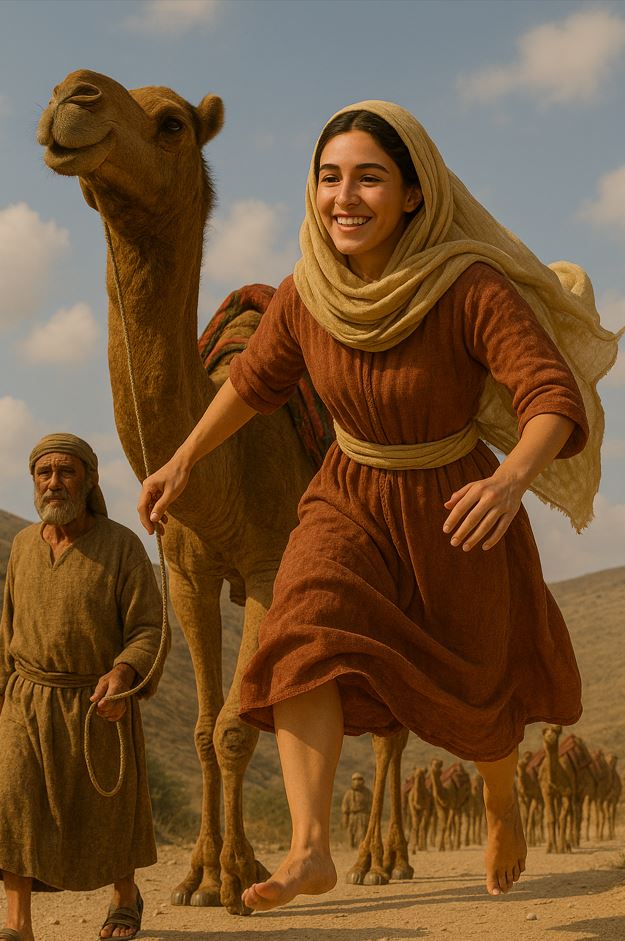
The response could hardly be clearer. Rebekah «hurries» and empties her kad, a large transport and storage jar, into the trough. Then she «runs» back to the well, fills it, empties it into the trough, and so on. Each time she must go down to the spring and back up again and run back and forth between well and trough, but she does not stop until all the animals have drunk their fill. Eliezer watches her in amazement and is sure he has found the right partner for his master’s son in this «power woman».
The rest of the story confirms that Rebekah is the bride appointed by God. At the end of the journey she can hardly wait to meet her bridegroom – «she slipped quickly from the camel» (Gen 24:64 NRSV). Instead of having the animal kneel and descending with dignity from her litter, she simply jumps down from almost three meters. For the Bible reader who discovers a deeper, figurative meaning in this scene, that is a very striking detail. If we see in Isaac – the «son of promise», who lay bound on the altar and came down again and is now heir of all things (Gen 25:5; Jh 3:35) – a picture of the Lord Jesus, and in the bride who is brought to him from a foreign land a picture of the church (assembly), we should ask ourselves: How great is our longing to meet Him? Do we eagerly anticipate the moment when we will stand before Him?

Camels were the largest animals found in the ancient Near East. The Lord Jesus therefore uses them to represent «something very large»: «You blind guides! You strain out a gnat but swallow a camel.» (Mt 23:24). As the context shows, with this comparison the Lord illustrates the stark contrast between the meticulous legalism of the Pharisees – by which even the tiniest details of life were regulated – and their complete misunderstanding of God’s true intention with his good commandments.
Today, in the idiom «to make a mountain out of a molehill» we reach for a similar comparison of size. Elephants and giraffes are even larger than camels. They did not occur as wild animals there, but the Romans also held circus games and animal hunts with them in Israel. Possibly some of the Lord’s listeners had seen these animals at some point (although the games themselves were connected with idol sacrifices and were not attended by law-observant Jews). But just as a good preacher today avoids grounding his examples in Hollywood films or literary figures that many present do not know, the Lord, too, refers only to what was familiar to everyone.
In this comparison, too, the issue is exclusively the size of the camel: «It is easier for a camel to go through the eye of a needle than for someone who is rich to enter the kingdom of God» (Mk 10:25 Lu; cf. Mt 19:24; Lk 18:25). Although the context clearly shows that with his comparison the Lord Jesus is describing not merely a difficulty but an impossibility, the interpretation circulates that the «eye of a needle» could have been a small gate in the city wall through which a camel could squeeze only with great effort. Since, on the one hand, there is no historical evidence that this term was ever used for such a gate or anything similar, and on the other hand the three parallel accounts use three different terms for «eye of a needle» (and Luke the physician even speaks of his surgical needle), this is far-fetched.
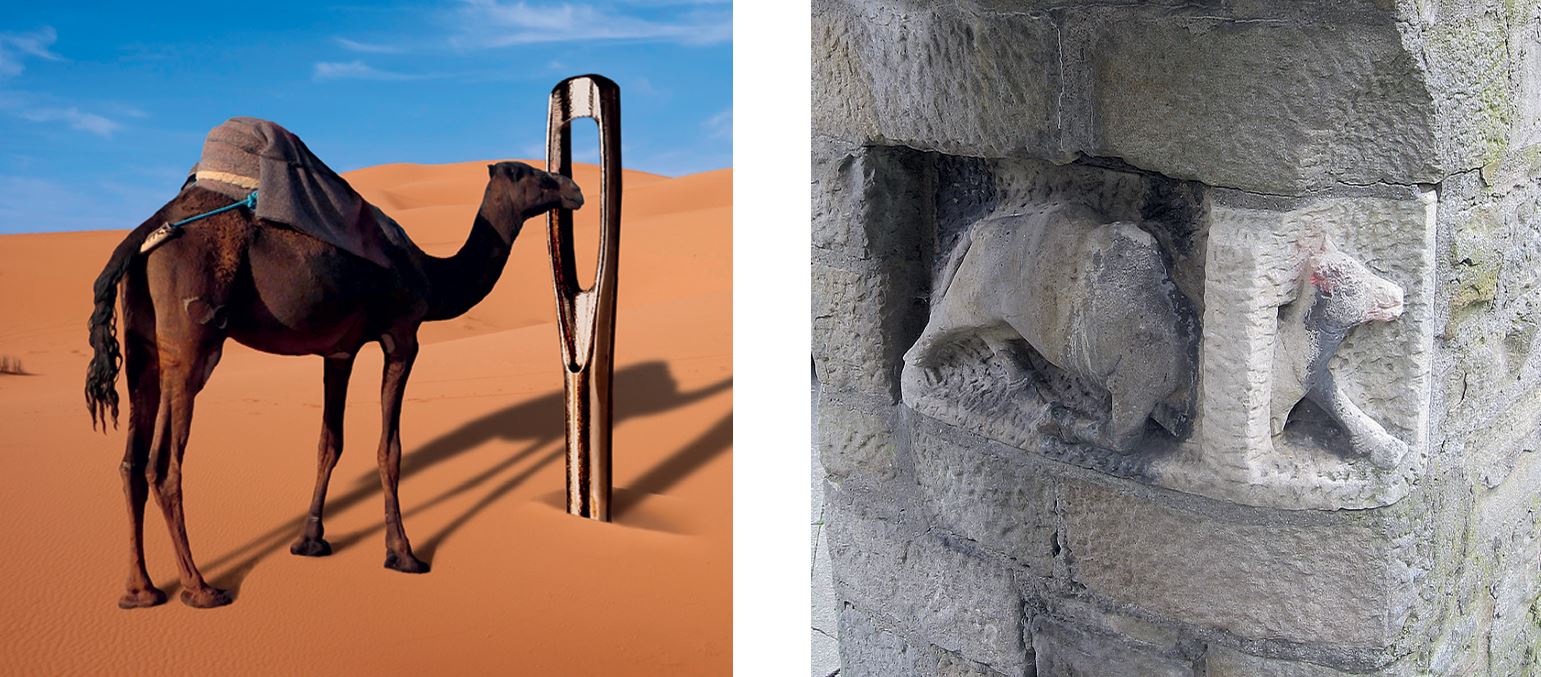
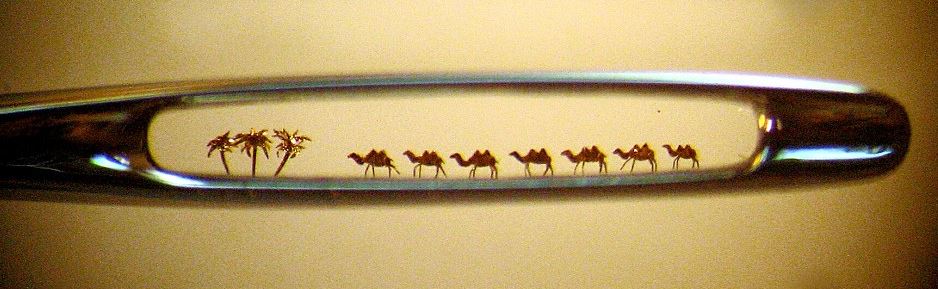
The disciples’ startled question, « Who then can be saved?» (Mk 10:26), shows clearly that to them this statement seems completely over the top, but the Lord confirms it once more: «With man this is impossible …» – and that applies in principle to every human being, for no one can be saved by what he has and does. Thank God (in the truest sense of the word) the verse continues: «… but not with God; all things are possible with God» (Mk 10:27). God can therefore, in principle, save any person – even the rich. But wealth tempts one to rely on one’s own resources and is an obstacle in deciding to entrust oneself to Jesus. These verses warn of that, and we should not soften them.
Sources:
Bednarz, D: Blood money in Iran – 100 camels for a man, 50 for a woman. Der Spiegel 14.06.2011; https://www.spiegel.de/politik/ausland/blutgeld-in-iran-100-kamele-fuer-einen-mann-50-fuer-eine-frau-a-767804.html
Bouaouda, H; Achaaban, MR; Ouassat, M: Daily regulation of body temperature rhythm in the camel (Camelus dromedarius) exposed to experimental desert conditions. Physiological Reports 2014; 2(9): e12151; doi: 10.14814/phy2.12151
Boyle, TC: Water Music (camel recipe, p. 99). Hamburg (Rowohlt) 2002
Free, JP: Abraham’s camels. Journal of Near East Studies 1944; 3(3):187-193; http://www.jstor.org/stable/542916
Hawkey, CM; Bennett, PM; Gascoyne, SC: Erythrocyte size, number and haemoglobin content in vertebrates. British Journal of Haematology 1991; 77:392-397; doi: 10.1111/j.1365-2141.1991.tb08590.x
Heide, M: The domestication of the camel: biological, archaeological and inscriptional evidence from Mesopotamia, Egypt, Israel and Arabia, and traditional evidence from the Hebrew Bible. Ugarit-Forschungen 2010; 42:331-382
Jeising, T: Does a camel really not go through the eye of a needle – or is it only a rope? Bibel und Gemeinde 2015; 111(2):27-28; https://bibelbund.de/2015/01/geht-wirklich-kein-kamel-durchs-nadeloehr-oder-nur-kein-seil
Kotulla, M: DER SPIEGEL and The Heroes of the Bible: Toward the truth with inadmissible conclusions? Wort und Wissen 2020; Discussion paper 2/20; https://www.wort-und-wissen.org/wp-content/uploads/Spiegel_und_Helden_der_Bibel.pdf
Meder, A; Blank, S; Dank, U: Living Wilderness – Animals of the Deserts and Semi-Deserts (camels, pp. 47-64). Stuttgart (Das Beste) 1993
Nelson, KS; Bwala, DA; Nuhu, EJ: The Dromedary Camel; A review on the aspects of history, physical description, adaptations, behavior/lifecycle, diet, reproduction, uses, genetics and diseases. Nigerian Veterinary Journal 2015; 36(4):1299-1317; https://www.ajol.info/index.php/nvj/article/view/147326
Saber, AS: The Camel in Ancient Egypt. Proceedings of the Third Annual Meeting for Animal Production Under Arid Conditions 1998; 1:208-215
SiliconForm – modern camel milking. https://www.siliconform.com/page/C,Kamelmelken,110.html, accessed 10.01.2023
Skidmore, JA; Billah, M; Binns, M: Hybridizing Old and New World camelids: Camelus dromedarius x Lama guanicoe. Proceedings of the Royal Society B 1999; 266(1420):649-656; doi: 10.1098/rspb.1999.0685
Van der Veen, P; Zerbst, U: A People Without Ancestors? Tracing the Patriarchs and Early Israel (pp. 225-228). Holzgerlingen (Hänssler) 2013
Image Credits
Wikipedia: Stuffed Camel / So Tasty // Endurance / HappyWaldo // Camel being unloaded / Angela N Perryman // Camel and church archway / Mathias Bigge
other licenses: Hybrid camel x llama / Skidmore et al // Camel and praying Bedouin / Carl Ninck // Three Bactrian camels / shutterstock ID_748823581 / De Visu // Bactrian camel in the Taklamakan Desert / shutterstock ID_161481236 / Martinez de la Varga // Rock art from Algeria / shutterstock ID_71144680 / Dmitry Pichugin // She-camel being milked / shutterstock ID_792794782 / Kertu // Adolescent camels / shutterstock ID_1480598990 / Occipitalis Creations // Camel herd with herder on camel / shutterstock ID_783725833 / ImagesofIndia // Camel eating thorns / shutterstock ID_1228671589 / ChWeiss // Camel caravan / shutterstock ID_1222913206 / BillyH // Camel and needle’s eye / shutterstock ID_1727711908 / LeaDigszammal // Caravan in the needle’s eye / ZUMAPRESS.com