Biologically speaking, mules and hinnies do not constitute a species of their own, but are hybrids – that is, crossbreeds between different species, in this case horse and donkey. They are a remarkable example of how selective breeding efforts began very early on to produce new combinations of traits that were even better adapted to human needs.
Taxonomy in biology is a standardized, hierarchical system for classifying species according to their characteristics. Hybrids are not classified within it. Sometimes the synonym Equus mulus (horse–donkey) is used, but the somewhat more complicated formulation «Equus ♂ asinus x ♀ caballus» – that is, «donkey stallion + horse mare» for the mule – and «Equus ♂ caballus x ♀ asinus» – that is, «horse stallion + donkey jenny» for the hinny – is preferable.
This combination works even though horses have 64 chromosomes and donkeys 62. The offspring have the corresponding mean value of 63 chromosomes. Since this is an odd number, it cannot be evenly divided into chromosome pairs, which makes natural reproduction almost impossible.
In the Bible, it is probably mules – or «mulis» – that are mentioned, not hinnies, although linguistically the two variants may not have been distinguished at all. As far as can be reconstructed historically, hinnies played hardly any role compared to mules. Even today, of the 14 million «mules and hinnies» worldwide, only about two million are hinnies, while twelve million are mules. The Hebrew word pered (13×) probably denotes the mule in general and the male mule in particular, whereas the feminine form pirda (1Kgs 1:33.38.44) refers to the female mule. As a unit of measure, the special expression «massa zemed peredim» – «the load of a pair of mules» – also occurs (2Kgs 5:17). Since the breeding of mules was forbidden to the people of Israel by the commandment «You shall not let your livestock breed with a different kind» (Lev 19:19), they were probably imported predominantly from other countries (for example Armenia: Ezek 27:14).
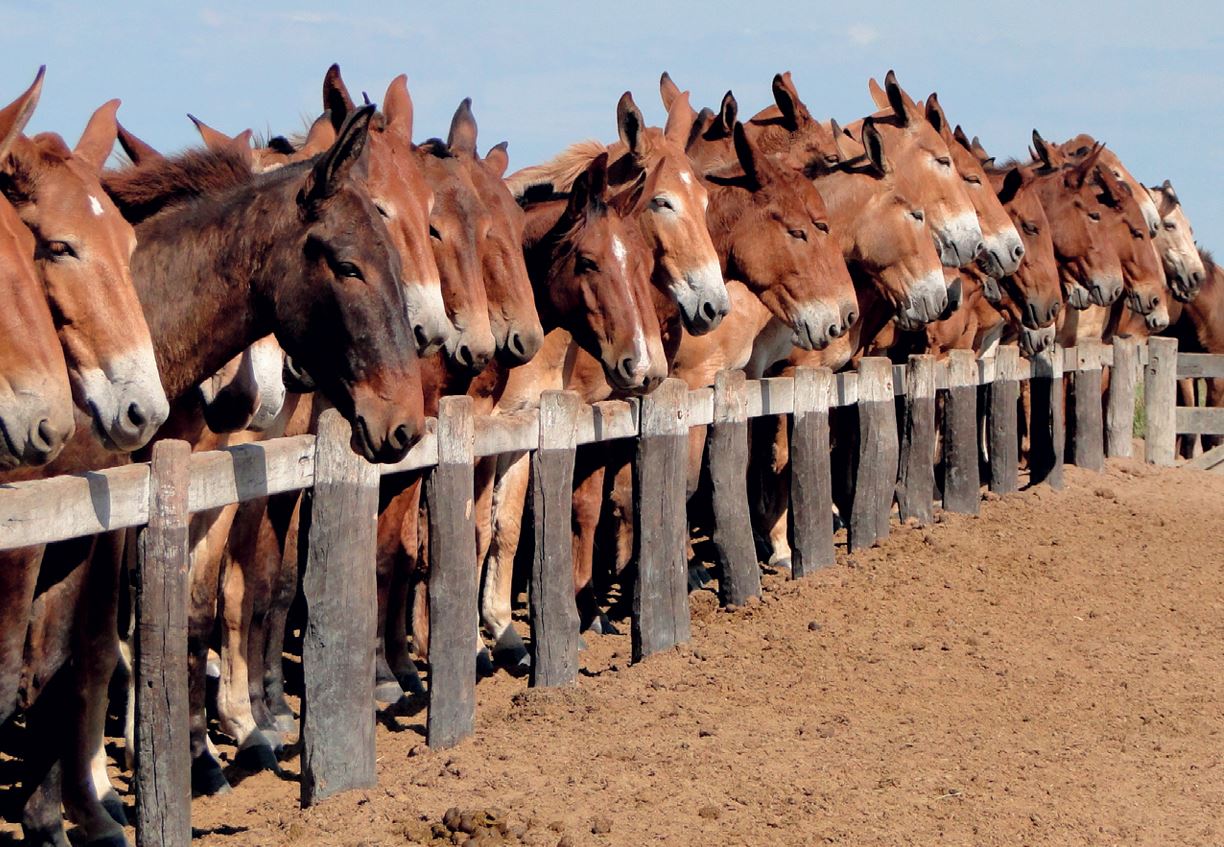
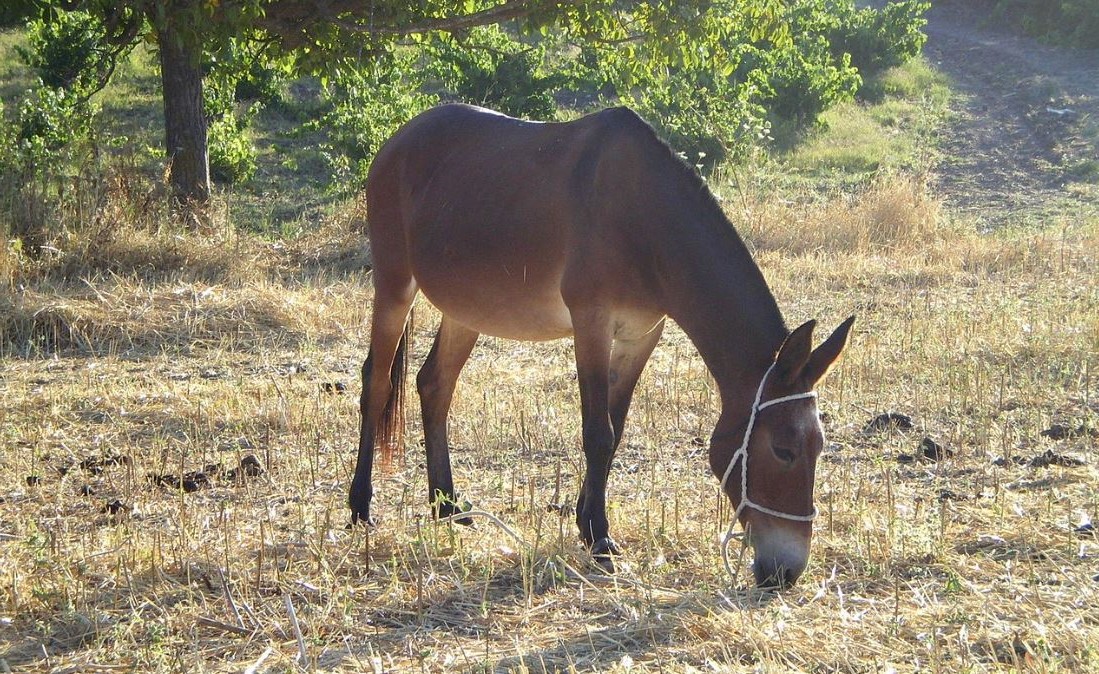
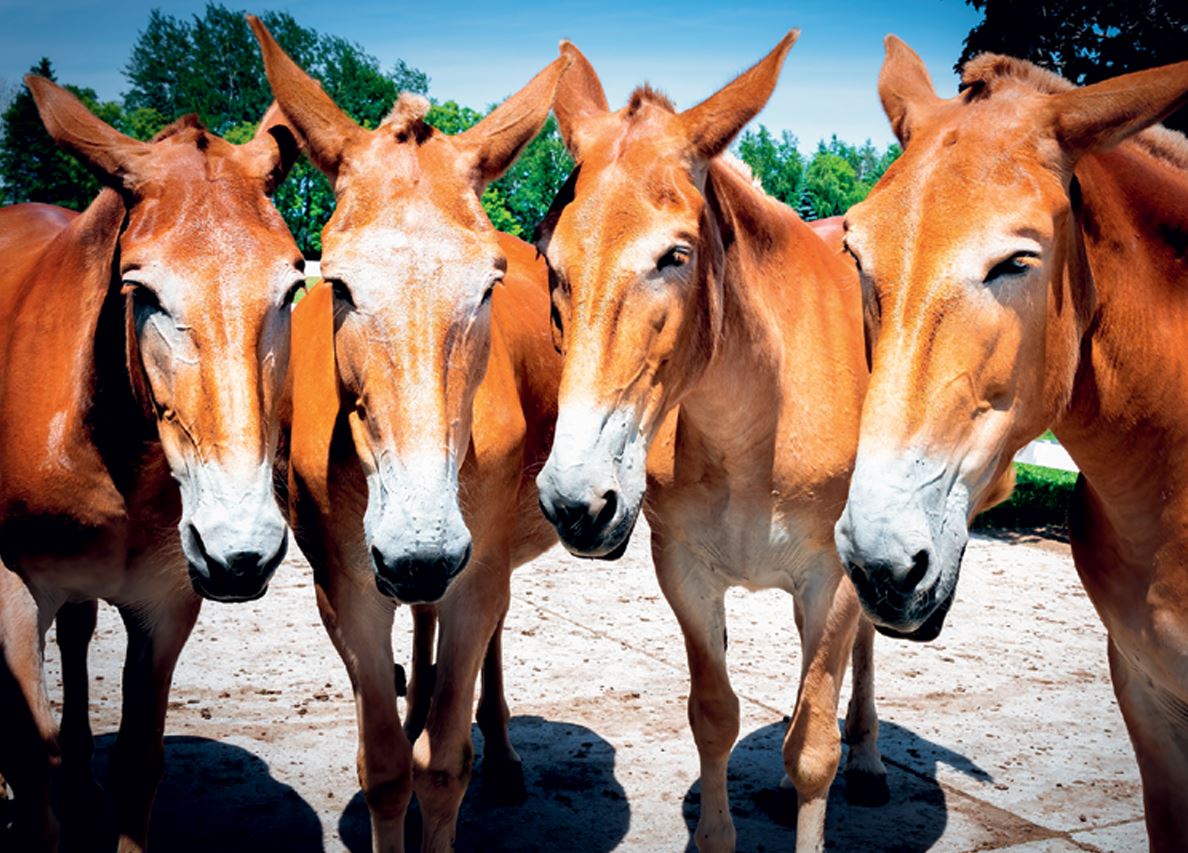
Because the results of this crossbreeding look very different depending on the horse and donkey breeds involved, no general distinguishing feature between mule and hinny can be named. If the parent animals belong to the same breed and both variants can be compared directly, both resemble their mother more closely. That is to say: a hinny looks more like a donkey, and a mule more like a horse. This also applies to social behavior, since the animals grow up with their mother (and usually also with other mares and foals). Before cytogenetic examinations in the laboratory were possible, this was the only reliable proof: the animal was placed between a herd of horses and a herd of donkeys – the mule immediately joined the horses, and the hinny joined the donkeys.
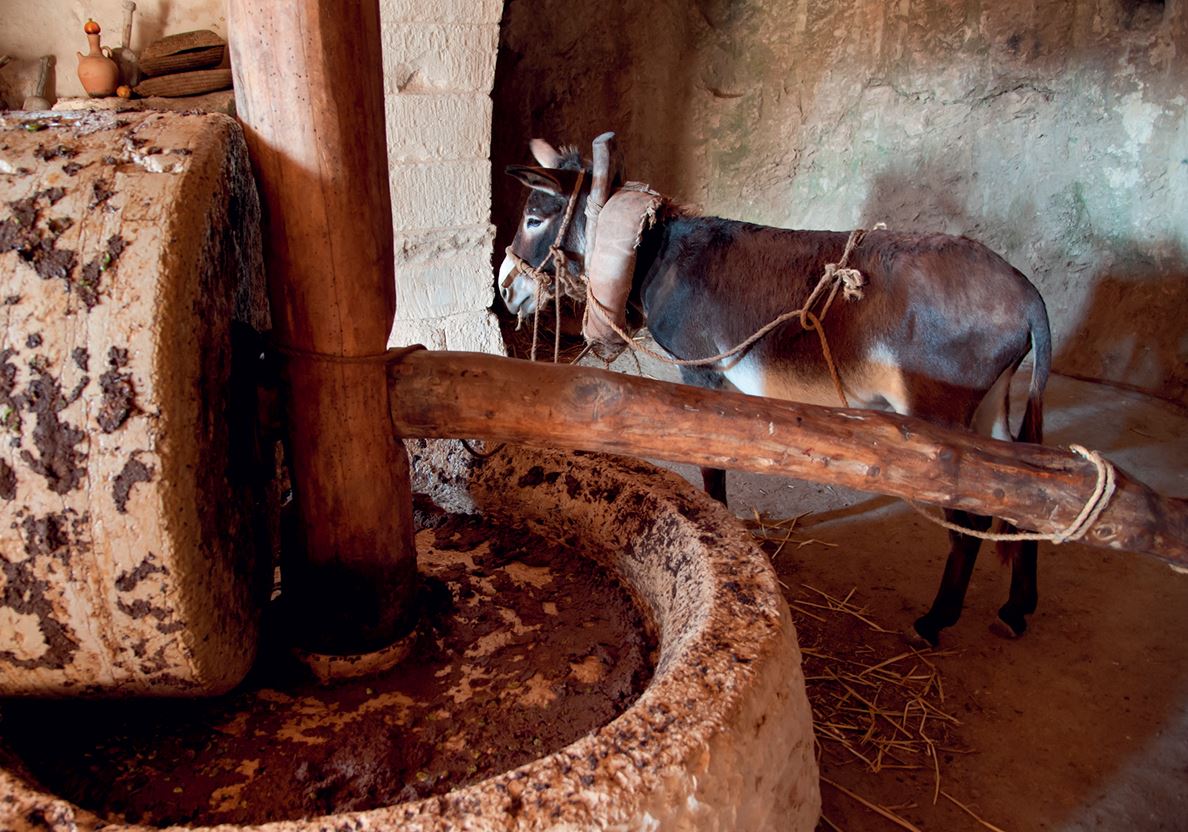
The «production» of these hybrids is no simple undertaking, since the animals must be accustomed to one another and, moreover, in many cases premature termination of pregnancy occurs. In hinnies, the abortion rate is over 80%. This is the main reason why this variant was hardly bred. In mules, by contrast, it is «only» about 20%. The males of both hinnies and mules are fundamentally infertile, and in females pregnancies occur only in rare exceptional cases when they are «covered» by horse or donkey stallions.
Why should one go to so much trouble to breed an animal that is neither horse nor donkey and cannot even reproduce? The answer is simple: because a mule combines the best characteristics of both species. On the one hand, it is docile and obedient like a horse, somewhat slower and smaller, but almost just as strong.
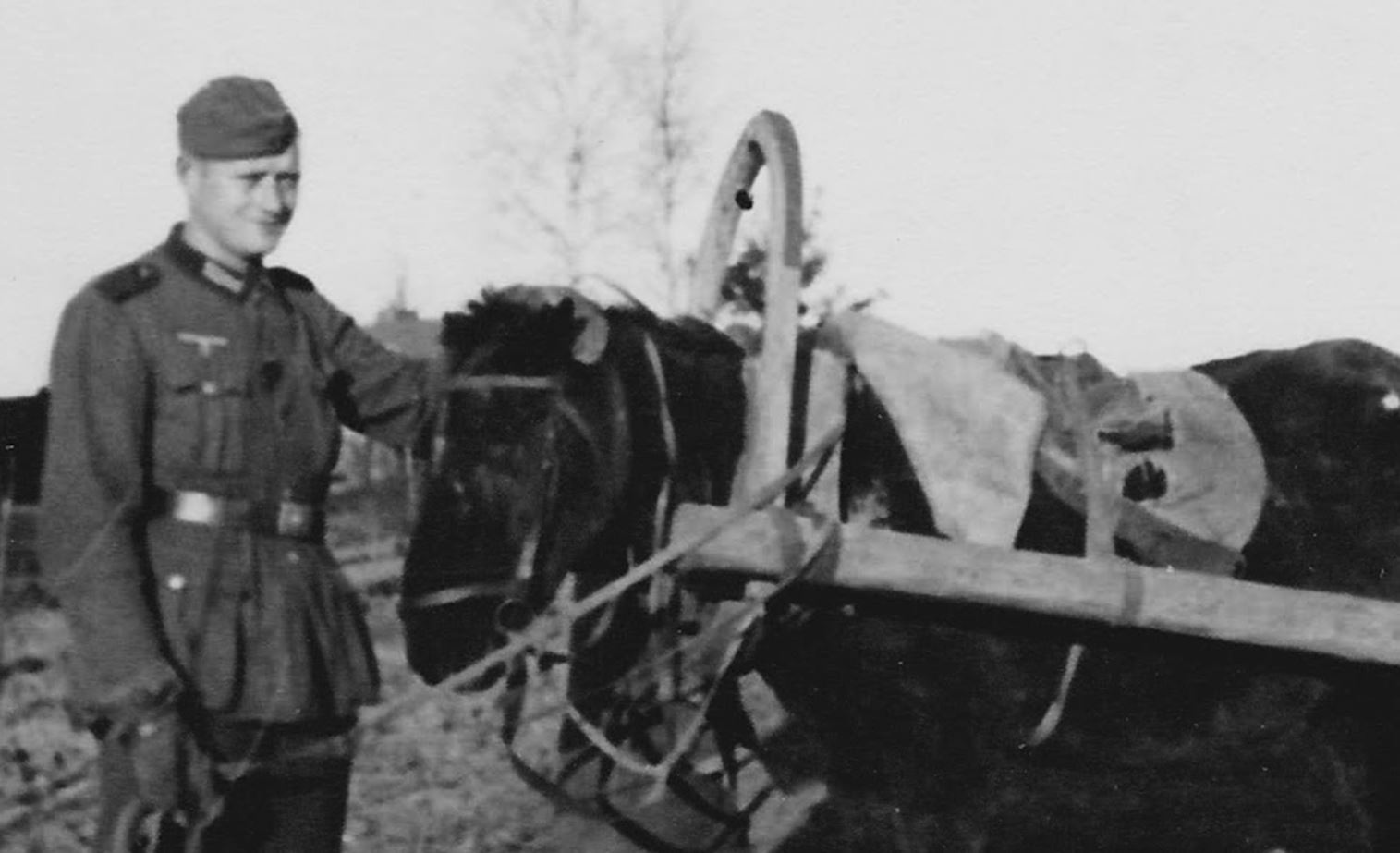
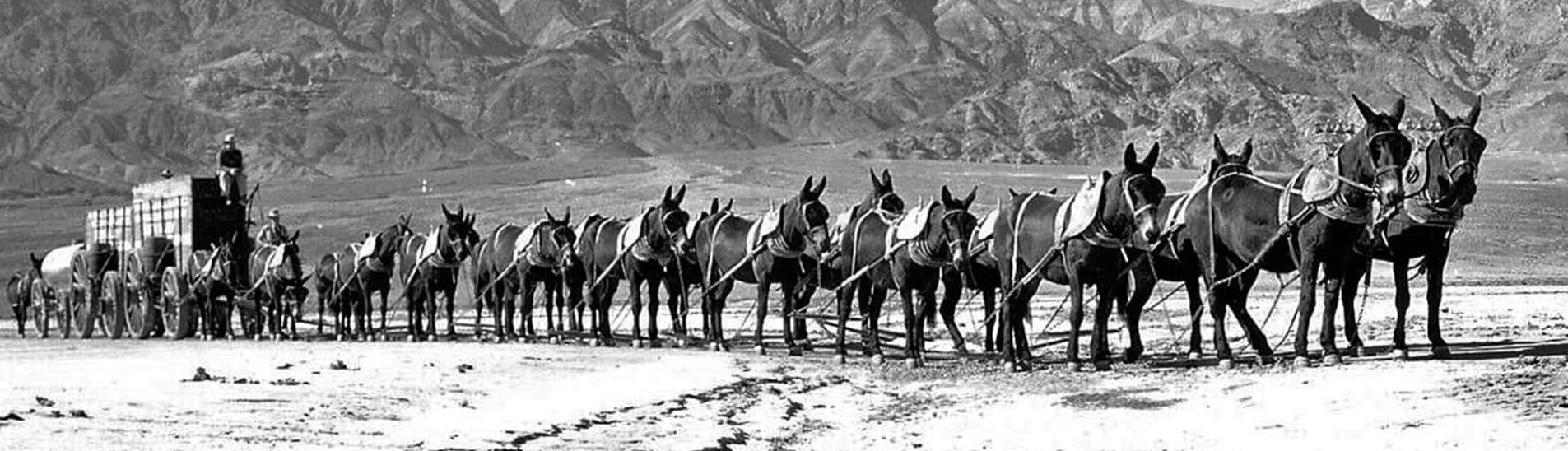
On the other hand, it is as robust, sure-footed, free from vertigo, weather-resistant, enduring, fearless, prudent, long-lived (they often live to be over 50 years old!), and undemanding as a donkey. Where they are still used today (military, disaster relief), they carry a payload of 150–200 kilograms over 40–50 kilometers per day. Since in both donkeys and horses pregnant females were hardly usable for work anyway, and males only became useful after castration (which was forbidden in Judaism), the infertility of mules was not a major disadvantage.
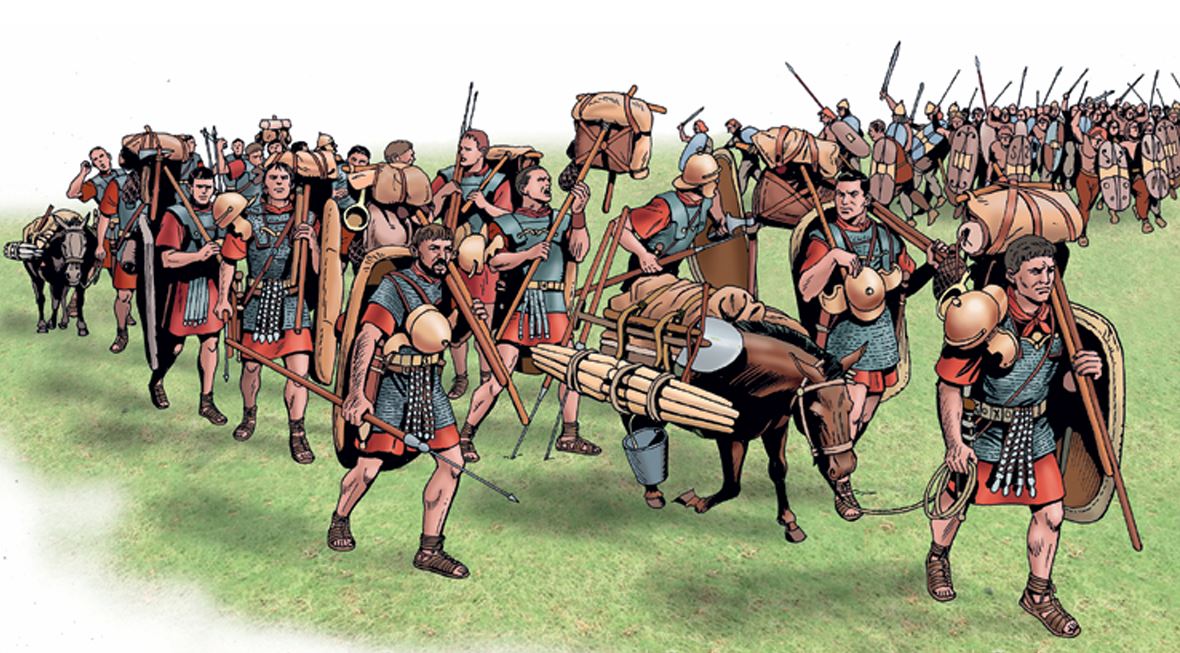
In antiquity, mules enjoyed an excellent reputation and were considered just as noble as horses. In the Roman Empire, where legionaries on foot as perfected infantry bore the main burden of combat, while mounted warriors of the cavalry played only a subordinate role, but where very many transport tasks for the military, trade, and construction projects had to be managed, mules were even clearly preferred. The veterinarians of the legions insisted on being titled not horse doctors (equomedici), but mule doctors (mulomedici).
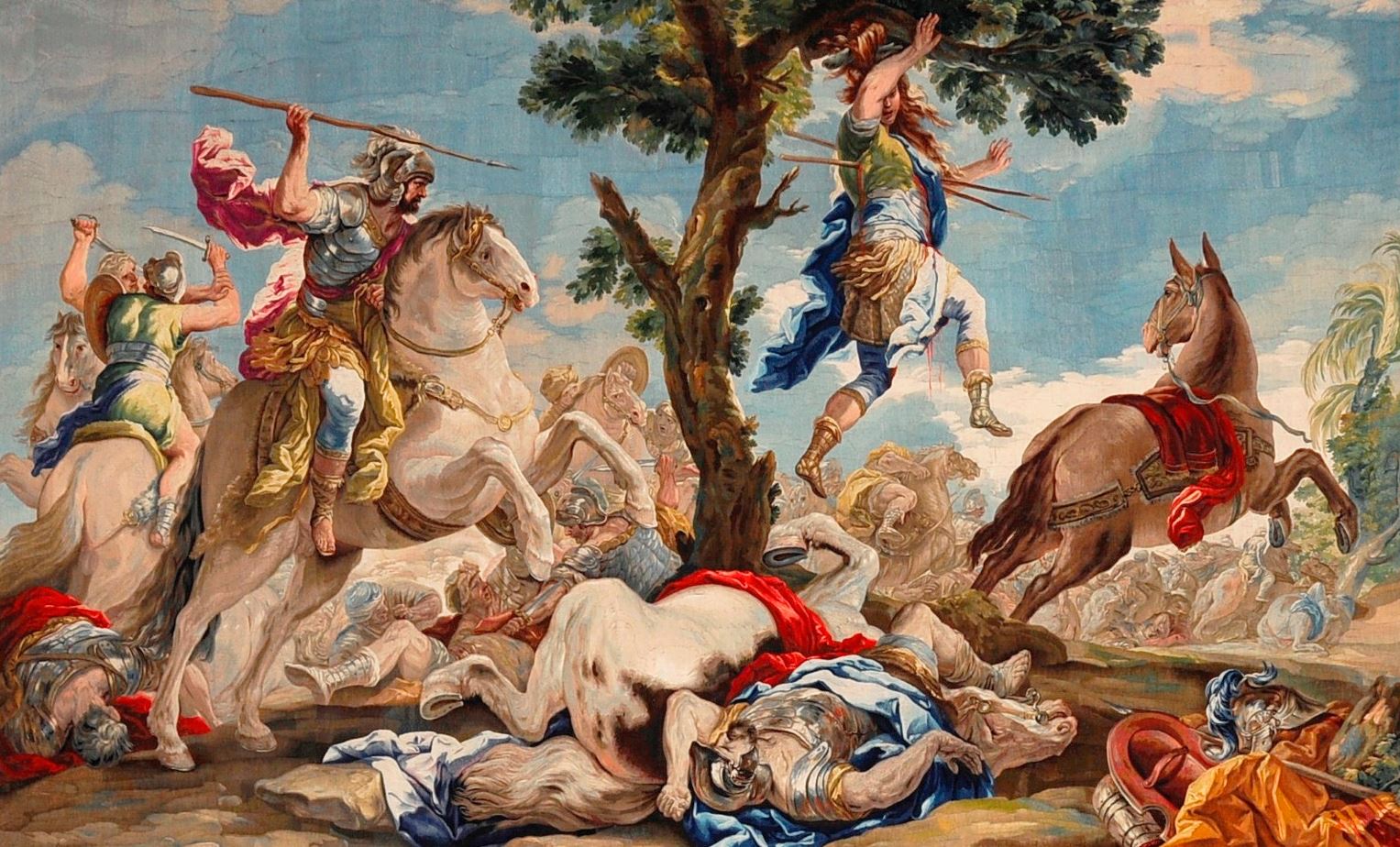
A battle-hardened warrior like David probably deliberately chose a female mule as his royal mount (1Kgs 1:33.38.44), since horses were less suitable in the Judean hill country. His sons also rode mules (2Sam 13:29), and this proved fatal for Absalom when his mount ran on while he became caught by his hair in the branches of a tree and hung there until he was found and killed (2Sam 18:9).
In various military conflicts, the limitations of horses, which are not as sure-footed and free from vertigo, played a role – not only because one could not take chariots into mountainous terrain (Jos 17:16; Judg 1:19), but also because horses could only exploit their strengths on level ground (1Kgs 20:25; Am 6:12).
Sources:
https://www.maulesel.info/index.html; aufgerufen am 22.05.2023
McLean, A; Varnum, A; Ali, A: Comparing and contrasting knowledge on mules and hinnies as a tool to comprehend their behavior and improve their welfare. Animals 2019; 9(8):488; doi: 10.3390/ani9080488
Rong, R; Chandley, AC; Song, J: A fertile mule and hinny in China. Cytogenetics and Cell Genetics 1988; 47(3):134-139; doi: 10.1159/000132531
Savory, TH: The Mule. Scientific American 1970; 223(6):102-109; http://www.jstor.org/stable/24927685
Image Credits:
Wikipedia: mule team with 20 animals / Uzume // tapestry – Muerte de Absalon / CESEDEN // single mule / Juan R. Lascorz
other licenses: mule train in the mountains / Shutterstock ID_1703116336 / Ezequiel Laprida // horse in a group of mules / Shutterstock ID_664925728 / Guaguiar // group portrait of four mules / Shutterstock ID_2342471903 / Bill Chizek // mule driving an oil mill / Shutterstock ID_92128420 / Ryan Rodrick Beiler // Roman legionaries on the march / Shutterstock ID_1730268625 / Massimo Todaro